

The traditional four-month rush of pilot season is dead; that's the best news your acting career has heard all year. If you've ever asked, what is a pilot season in an era defined by streaming and 24-hour self-tape turnarounds, you aren't alone. You've likely felt the weight of industry jargon and the anxiety of feeling behind before the year even begins. It's common to feel like an invisible gatekeeper is standing between you and the rooms where career-defining decisions happen.
We're here to replace that uncertainty with a professional roadmap. This guide helps you master the mechanics of the modern television landscape so you can position yourself for series regular roles with confidence. You'll learn how the 2026 cycle actually functions, from the return of traditional network testing at NBC to the year-round casting models of major streamers. We'll preview actionable steps to audit your portfolio and refine your digital presence, ensuring you're ready the moment a casting director calls. By the end of this article, you'll have the clarity and professional standards needed to navigate the busy season like a savvy industry insider.
Key Takeaways
- Learn exactly what is a pilot season in the 2026 landscape and why this cycle remains the most significant window for booking life-changing Series Regular roles.
- Understand the legal and professional mechanics of pilot production, including the "test option" contracts you sign before your final network audition.
- Navigate the "Streaming Effect" to identify how platforms like Netflix and Apple TV+ have shifted the industry toward year-round casting and straight-to-series orders.
- Discover how to audit your acting portfolio and reel by December to ensure you're technically and creatively prepared for the accelerated pace of modern casting calls.
- Leverage the Network Membership to gain direct access to vetted casting directors and workshops that bridge the gap between emerging talent and industry insiders.
Defining the Pilot Season: The Industry's High-Stakes Audition Cycle
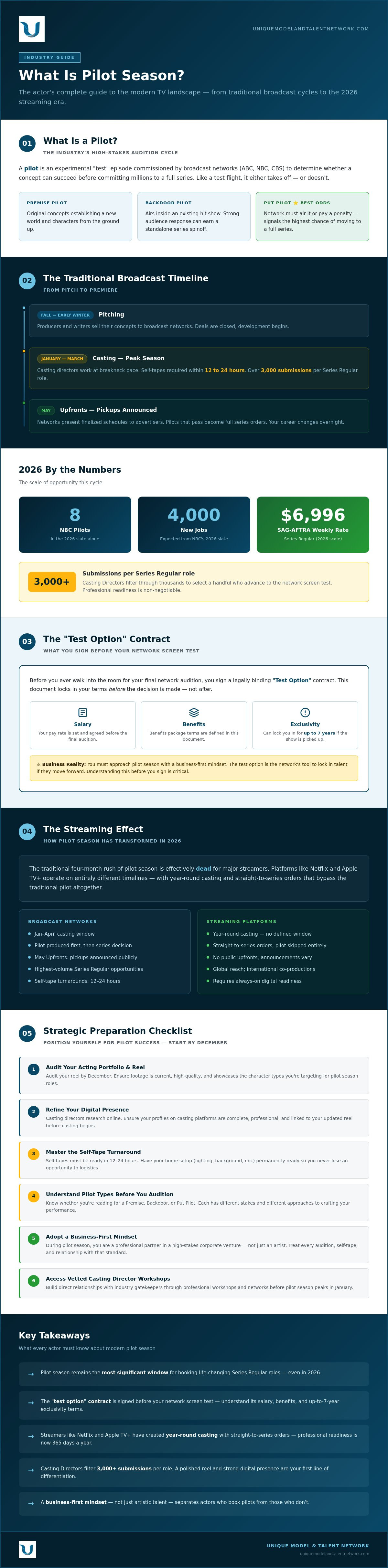
Professional actors define what is a pilot season as the high-stakes window when broadcast networks like ABC, NBC, and CBS greenlight "test" episodes for potential series. For actors, this period represents the ultimate career accelerator. Booking a "Series Regular" role on a pilot isn't just about a single paycheck; it's about long-term financial security and professional recognition. For example, SAG-AFTRA series regular weekly rates for 2026 can reach $6,996 depending on the episode count. NBC's 2026 slate includes eight pilots, a move expected to generate 4,000 new jobs. This cycle historically centered on Los Angeles from January to April, creating a high-pressure environment where casting directors, talent, and networks collide to find the next big hit.
Why is it Called a 'Pilot'?
The term "pilot" refers to the experimental nature of the episode. Much like a pilot light or a test flight, these episodes are designed to see if a concept can "take off" before a network commits millions of dollars to a full season. You can learn more about the technical structure by researching What is a Television Pilot? to see how these scripts differ from standard episodes. It's critical to understand that a pilot is not always the series premiere. Sometimes, characters are recast or storylines are retooled after the pilot is filmed. In many cases, the pilot serves only as a proof of concept and never actually reaches a public audience. It's the network's way of minimizing risk before a multi-million dollar investment.
The Traditional Timeline: From Pitch to Premiere
While the rise of streaming has shifted some casting to a year-round model, the traditional broadcast cycle follows a disciplined rhythm. Understanding this flow helps you time your career development:
- Pitching (Fall and Early Winter): Producers and writers sell their concepts to networks.
- Casting (January to March): This is the peak of what is a pilot season. Casting directors work at a breakneck pace to fill dozens of roles, often requiring self-tapes within 12 to 24 hours.
- Upfronts (May): Networks present their finalized schedules to advertisers and announce which pilots were "picked up" for a full series order.
Success during this window requires a level of professional readiness that goes beyond basic talent; it demands a business-first mindset. You aren't just an artist during this cycle. You're a professional partner in a high-stakes corporate venture.
The Mechanics of Pilot Production: From Script to Series Greenlight
The mechanics of what is a pilot season require more than just acting ability; they demand legal and business awareness. Casting Directors often filter through 3,000 or more submissions for a single series regular role. They act as the primary gatekeepers, narrowing the field to a handful of actors who move toward the network test. Understanding the specific type of project you're auditioning for is the first step in tailoring your performance and managing your professional expectations.
Common Types of Pilots You'll Encounter
In the 2026 landscape, you'll likely see three primary project structures:
- Premise Pilots: These are original concepts that establish a new world and set of characters from the ground up.
- Backdoor Pilots: These episodes air as part of an existing hit show. If the audience responds well, the network spins the characters off into their own series.
- Put Pilots: This is a high-stakes commitment where the network agrees to air the pilot or pay a substantial financial penalty. For an actor, booking a Put Pilot often signals a higher probability of the show moving to a full series order.
Before you reach the final audition stage, you'll encounter the "test option." This is a legally binding contract that outlines your salary, benefits, and exclusivity for up to seven years. You sign this document before you even walk into the room for your screen test. It's a grounded business reality that ensures the network has you "locked in" if they decide to move forward. If you want to refine your approach before these high-pressure sessions, participating in Live Industry Workshops provides the direct exposure and feedback needed to navigate the gauntlet with confidence.
The Casting Gauntlet: Pre-reads to Screen Tests
The journey from self-tape to series regular is a disciplined, multi-step process. It begins with the initial audition, which is almost exclusively handled via self-tape in 2026. If you pass this hurdle, you'll move to callbacks and sessions with directors and producers. The final stage is the Screen Test. This typically happens on a studio lot or a professional set. You'll perform with potential co-stars to check for "chemistry," a factor that often outweighs technical skill during the final decision-making process.
Even after booking the role, the "re-casting" phenomenon remains a professional possibility. Networks may decide to replace an actor after the pilot is filmed to adjust the show's tone or improve ensemble chemistry. It's important to view this as a standard industry pivot rather than a personal failure. Staying prepared for these shifts is what separates the hobbyists from the dedicated professionals.
The 'Streaming Effect': How Pilot Season Has Transformed in 2026
Streaming services like Netflix, Hulu, and Apple TV+ have fundamentally disrupted the traditional television timeline. While broadcast networks still prioritize the spring window, these platforms operate on a rolling development cycle. This shift has evolved the definition of what is a pilot season into a year-round state of readiness. Instead of waiting for a specific month, actors now face a constant stream of opportunities that can arise at any moment. This globalization of casting means you're no longer competing against just the talent in Los Angeles; you're competing with the best actors in the world.
One of the most significant changes is the rise of "straight-to-series" orders. Streamers often skip the pilot phase entirely, committing to a full season of 8 to 10 episodes from the start. This model removes the "test" phase discussed earlier, meaning your audition isn't just for a potential show; it's for a guaranteed series. While this provides more security if you book the job, the casting process is often more intense. Producers are looking for a cast that can carry a finished product, not just a proof of concept. It's a high-stakes environment where the margin for error is slim.
Network vs. Streaming: A Comparative Guide
- Traditional Networks: These maintain a high volume of casting in the spring. They offer rigid schedules and typically larger episode counts for series regular contracts.
- Streaming Services: Development happens year-round. These platforms favor smaller episode orders and provide greater creative flexibility for niche genres.
In the 2026 market, broadcast networks provide the volume and structural stability that emerging actors need, while streaming services offer prestige and a flexible, year-round entry point into the industry.
The Rise of the Self-Tape in Pilot Casting
Digital submissions have effectively removed the geographic barriers that once defined the industry. You can now audition for a US pilot from anywhere in the world, provided you have the right technology. This shift makes Mastering film industry auditions more about your technical setup and your ability to deliver high-quality tapes within 12 to 24 hours. A professional-grade home studio with proper lighting and sound is now a non-negotiable asset for any serious professional. The year-round pilot season is a reality for those who have optimized their digital presence and remain prepared for the next high-stakes notification.
Strategic Preparation: Positioning Yourself for Pilot Success
Success during the high-stakes window requires more than talent; it requires a logistics strategy. If you start defining what is a pilot season in February, you've already lost the race. Your professional materials must be optimized and locked by December 1st. This "Always-Ready" mindset ensures you aren't scrambling when a 12-hour self-tape request arrives. You need a polished acting portfolio that showcases your range within specific genres, from gritty police procedurals to high-energy sitcoms. Speed is a skill in 2026. The ability to deliver a broadcast-quality tape overnight is what separates professional contenders from the unprepared.
Networking is the second pillar of your "pre-game" strategy. Getting on the radar of casting directors before the January rush is essential. This isn't about informal social media interactions. It's about targeted, professional visibility through vetted channels. If you want to refine your materials under the guidance of industry insiders, you can Join the Network Membership to access elite portfolio and reel reviews before the peak season begins.
Essential Materials Checklist
Your digital presence acts as your first audition. Casting directors use these materials to filter thousands of applicants, so clarity is currency. Ensure your profile meets these 2026 standards:
- Character-Specific Headshots: You need distinct looks for different pilot genres. A "neighbor next door" look won't book a gritty medical drama.
- The 2-Minute Reel: Keep your demo reel under 120 seconds. Put your most recognizable or highest-production-value work in the first 30 seconds to hook the viewer immediately.
- Platform Optimization: Ensure your data is current. You can learn more about Optimizing your profile on casting websites to ensure you appear in specific talent searches.
The Power of Professional Coaching
Pilot scripts are often "cold" material that hasn't been performed before. This requires a specific type of mental agility. Professional coaching helps you master the "tone" of a show, which is often the deciding factor in a series regular booking. There is a massive technical difference between the heightened reality of a multi-cam sitcom and the grounded naturalism of a prestige streaming drama. Understanding How modeling career coaching translates to acting can also provide a unique edge in physical presence and camera awareness. These sessions allow you to work through the script's subtext and develop a "choice" that stands out in a sea of identical self-tapes.
Beyond the Audition: Navigating Pilot Season with the Unique Talent Network
Navigating the noise of public casting sites can feel like a full-time job without a paycheck. Understanding what is a pilot season provides the foundation, but professional execution requires a gated environment where information is vetted and opportunities are legitimate. The Unique Model & Talent Network acts as a protective mentor; it filters out the distractions of social media and provides a direct bridge to industry professionals. By joining our private community on Mighty Networks, you gain access to internal perspectives that aren't available on public forums. This transition from an aspiring talent to a vetted professional happens when you surround yourself with high-standard peers and expert advocates who value integrity over vanity.
Workshops and Masterclasses: The Competitive Edge
Live workshops are the most effective way to fine-tune your technique before the peak rush. These sessions offer more than just practice; they provide direct access to the very casting directors who are currently reviewing pilot submissions. You'll receive real-time feedback on your performance, allowing you to adjust your "choices" to match the specific needs of the 2026 market. Understanding the value of acting workshops online ensures you can build these critical relationships from any location. These interactions often lead to professional bonds that last far beyond a single audition cycle, positioning you as a reliable and familiar face when the next series regular role opens up.
Join the Network: Your Pilot Season Roadmap
Career security in the entertainment industry is built on consistent skill development and professional networking. The Network Membership provides a structured roadmap through the often chaotic pilot cycle. You'll benefit from a suite of resources designed for tangible success:
- Monthly Skill-Building Challenges: These keep your self-taping and cold-reading skills sharp during the "off-peak" months.
- Industry Expert Q&A Sessions: Get direct answers to your business-development questions from seasoned insiders.
- Portfolio & Reel Reviews: Ensure your materials meet the high standards expected by major networks and streaming services.
Don't wait for the rush to start your preparation. Join the Unique Model & Talent Network today to gain the clarity, access, and professional standards required to succeed in the modern television landscape. We're here to open the door for those who are serious about their craft.
Take Control of Your Professional Narrative
Understanding what is a pilot season in 2026 means recognizing that the traditional calendar has evolved into a year-round state of readiness. Success depends on more than just talent; it requires high-quality self-tapes, character-specific portfolios, and a deep understanding of the "streaming effect" on series regular contracts. The gap between an aspiring actor and a working professional is bridged by preparation and access. If you audit your materials now and commit to a disciplined networking strategy, you position yourself as a reliable partner for networks and streaming services alike.
We're here to provide the protective mentorship and elite resources you need to stand out. Through our private community, you gain direct access to Casting Directors and professional Portfolio Reviews that ensure your materials meet the industry's highest standards. Don't leave your career to chance in a chaotic market. Ready to book your first pilot? Join the Unique Model & Talent Network for expert guidance and insider access. Our exclusive Industry Workshops and skill-building challenges are designed to accelerate your growth and build lasting professional bonds. Your next career-defining role is waiting for the professional you're becoming today.
Frequently Asked Questions
Is pilot season still a thing in 2026?
Yes, it remains a critical window for broadcast networks, though streaming has made casting a year-round process. NBC, for example, ordered eight pilots for the 2026 season. While the traditional January to April rush still exists, the industry now operates on a hybrid model where new projects are greenlit every month. Actors must maintain a state of readiness regardless of the calendar month to capitalize on these high-stakes opportunities.
Do I need to live in Los Angeles for pilot season?
You don't need to be physically based in Los Angeles to participate in the initial stages of the cycle. The industry standard for first-round auditions is now almost entirely self-taped, allowing talent from across the globe to submit their work digitally. However, if you move toward a final screen test or a series regular booking, you should expect to travel for chemistry reads. A professional home studio is your most important geographic asset.
What is a 'series regular' option in a pilot contract?
A "series regular" option is a legal clause that gives the network the exclusive right to hire you if the show is picked up for a full series. When you sign this contract during the testing phase, you're essentially agreeing to your salary and terms for several years in advance. This ensures the network has its cast locked in before they invest millions into production. It's a foundational part of what is a pilot season from a business perspective.
How do I get pilot auditions without an agent?
You can secure auditions by building direct relationships with casting directors through vetted professional networks. While agents provide traditional access, platforms like the Unique Model & Talent Network offer live workshops and expert Q&A sessions where you can showcase your skills to decision-makers. Focus on optimizing your profile on major casting sites and participating in peer-led skill-building challenges to ensure your materials are seen by the right professionals during the peak rush.
What happens if a pilot doesn't get 'picked up'?
If a network decides not to move forward with a series order, the pilot is considered "dead," and the actors are released from their contracts. In some cases, the pilot may be retooled or shopped to a different network or streaming service. Even if the show never airs, the experience of filming a pilot is a significant professional credit. It often leads to future opportunities with the same casting directors or producers who saw your work.
What is the difference between a pilot and a teaser?
A pilot is a full-length "test" episode designed to demonstrate the show's concept, tone, and character dynamics. In contrast, a teaser or sizzle reel is a short, 2 to 5 minute presentation used to pitch the idea to networks before a full script is filmed. Pilots are high-budget productions that often cost millions of dollars, whereas teasers are more common in independent development or as proof-of-concept pieces for creators seeking initial interest.
How long does it take to hear back after a pilot audition?
The feedback window is incredibly fast, often ranging from 24 hours to one week. Because the production schedule for pilots is highly compressed, casting teams move quickly to secure their top choices. If you haven't heard back within a week, it's standard to assume the project has moved in a different direction. This fast pace is why your technical setup and cold-reading skills must be mastered well before the busy season begins.
Can a model participate in pilot season?
Models can absolutely participate if they've developed the necessary acting skills and professional materials. Many series regular roles, particularly in dramas or procedurals, look for talent with a strong physical presence and camera awareness. Transitioning from modeling requires a polished demo reel and an acting-specific portfolio. Participating in workshops and portfolio reviews can help you translate your existing camera experience into the specific technical requirements of a television audition.


