

What if the most stunning photo in your portfolio is actually the one preventing you from booking the job? It's a painful reality many actors face after spending hundreds of dollars on a session that results in beautiful, but ultimately unusable, images. You likely feel the pressure to get it right the first time, fearing you'll waste your budget on a photographer who doesn't understand your specific casting type or, worse, pressures you into a style that feels inauthentic. Understanding how to find a good headshot photographer is about more than just finding someone with a high-end camera; it's about finding a strategic partner who knows how to capture the version of you that casting directors are actually looking for in 2026.
We agree that the industry can feel predatory and overwhelming, but your headshot should be your most powerful business asset. This guide provides the clarity you need to vet portfolios with confidence and ensures your next shoot is a career-accelerating success. We'll explore the critical differences between commercial and theatrical looks, identify the red flags of over-retouching, and provide a definitive checklist for selecting a professional who respects your craft and your career goals.
Key Takeaways
- Distinguish between a standard portrait and a "working headshot" that functions as a strategic business tool for agents and casting directors.
- Master the art of vetting portfolios by analyzing the "Three-Second Rule" and genuine eye connection to learn how to find a good headshot photographer who understands your casting type.
- Identify industry red flags, such as predatory "package deals" and "free" shoots, that can compromise your professional reputation and budget.
- Approach the pre-session interview as a high-level business consultation to ensure the photographer’s communication style aligns with your brand goals.
- Implement a post-shoot strategy to optimize your new images across casting platforms and social media for maximum industry visibility.
The Strategic Role of a Professional Headshot in 2026
Your headshot is your primary digital calling card in an increasingly globalized entertainment market. In 2026, casting directors aren't looking for a generic "pretty" picture or an overly polished avatar. They want to see the real you, flaws and all, because authenticity has become the industry's most valuable currency. While the fundamentals of portrait photography still apply to lighting and composition, a working headshot must do more than just look good on a screen. It has to communicate your specific brand in less than a second. Learning how to find a good headshot photographer involves searching for a partner who understands that a professional image is a strategic business asset rather than a simple portrait.
Commercial vs. Theatrical: Knowing Your Market
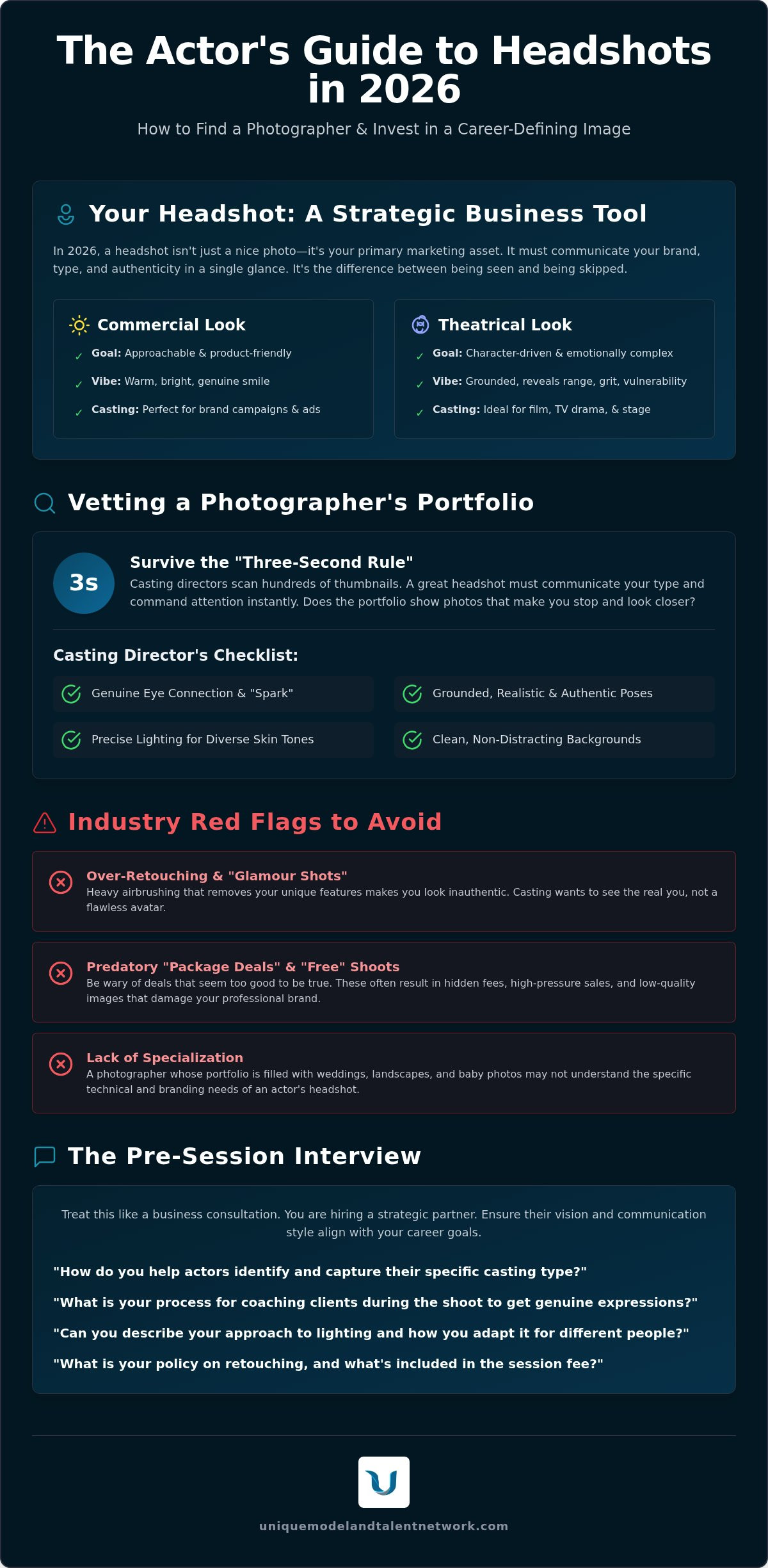
A commercial look is all about approachability. It’s warm, bright, and product-friendly, suggesting you’re the perfect fit for a brand’s next campaign. In contrast, a theatrical look is character-driven, grounded, and emotionally complex. This style reveals your range, showing grit, vulnerability, or authority. If you don't know which market you're targeting, your photos will lack the direction needed to grab an agent's attention. A professional photographer must understand these distinctions before you ever book a session. Without this clarity, you risk walking away with beautiful images that don't actually help you get hired for the roles you want.
The ROI of a High-Quality Image
Investing in a high-tier session might feel daunting, but the return on investment is undeniable. A professional image significantly reduces friction during acting industry networking by giving you instant credibility with decision-makers. The cost of a "cheap" headshot is often much higher in the long run. You'll face missed opportunities and the inevitable expense of a re-shoot when you realize your current photos aren't getting you called in for auditions. Positioning your headshot as a tax-deductible business investment helps you shift your mindset from "spending money" to "growing your career." You aren't just buying a file; you're buying access to rooms that would otherwise remain closed. By mastering how to find a good headshot photographer, you ensure your marketing materials work as hard as you do.
Vetting Portfolios: What Casting Directors Actually Look For
Casting directors often browse hundreds of thumbnails in a single sitting. Your image must survive the "Three-Second Rule" to even be considered for a role. This rule is simple: if your photo doesn't command attention and communicate a clear "type" within three seconds, the decision-maker moves on. When you are researching how to find a good headshot photographer, look for a portfolio where every subject has a distinct "spark" in their eyes. This eye connection is the difference between a flat, vacant portrait and a working headshot that suggests a character’s internal life. If the subjects look like they're just staring at a lens, the photographer likely isn't coaching them through the shoot effectively.
Technical consistency is another non-negotiable factor. A professional must demonstrate the ability to light diverse skin tones and hair textures with precision. If a photographer’s portfolio only features one specific "look" or demographic, they may lack the technical range required to make you look your best. Avoid the "glamour shot" trap. In 2026, the industry has moved away from the heavy airbrushing and dramatic, tilted poses of the past. Today’s standard is grounded, realistic, and authentic. Learning how to find a good headshot photographer involves identifying someone who can capture your "best day" without making you look like a different person entirely.
Technical Standards for Agency Submissions
Agencies and casting platforms have strict technical requirements that your photographer must meet. Clean, non-distracting backgrounds are essential to ensure the focus remains entirely on your face. Whether you opt for natural or studio lighting depends on your current acting portfolio goals. For example, tips from a university photographer highlight that even simple lighting setups require a deep understanding of shadow and highlights to create depth. Ensure your photographer provides high-resolution files in the specific aspect ratios required by major casting sites.
Analyzing the Photographer’s "Vibe"
A photographer’s "vibe" is visible in the physical comfort of their subjects. Do the people in their portfolio look relaxed and empowered, or do they look stiff and "posed"? You want to hire an actor specialist who understands the nuances of the industry, not a generalist who shoots everything from landscapes to weddings. A specialist knows how wardrobe and styling choices influence your casting type without distracting from your features. If you are feeling uncertain about your current materials, getting a professional portfolio review can provide the clarity you need before you invest in a new session.
Industry Red Flags: Protecting Your Career and Budget
The entertainment industry attracts visionary artists, but it also harbors predatory actors who profit from the uncertainty of emerging talent. A "free" shoot is often the most expensive mistake you can make. These sessions frequently result in images that fail to meet professional standards, forcing you to spend more money on a proper session to fix the damage to your brand. Even more dangerous is the "Package Deal" where a photographer promises an introduction to a talent agent in exchange for a booking. Legitimate photographers focus on the technical craft of the image. They are not talent scouts. If a photographer uses the promise of representation as a lure, you are likely dealing with a scam rather than a professional studio.
Understanding usage rights is another critical layer of protection for your career. Under U.S. copyright law, the photographer automatically owns the images they create unless a "work made for hire" agreement exists. You are essentially purchasing a license to use those images for your professional promotion. When you are researching how to find a good headshot photographer, prioritize those who provide a clear, written license for casting websites and social media. If a photographer is vague about who owns the files or charges hidden "buy-out" fees to release high-resolution versions, your budget will suffer. Your studio environment must also remain professional. If you feel pressured, unsafe, or if the photographer lacks a dedicated, secure space for wardrobe changes, trust your instincts and leave the session.
The "Agency Recommendation" Trap
Legitimate agencies often provide a list of preferred photographers because they trust those individuals to deliver "working" headshots. However, they rarely mandate that you use one specific person. If an agency insists you must shoot with a single, specific photographer to be represented, be wary of a kickback scheme. In these arrangements, the agency receives a portion of your session fee, which prioritizes their profit over your best image. You can verify a photographer's industry standing by asking which casting directors have recently called in talent based on their specific portfolio work. A true professional referral is earned through consistent results, not financial kickbacks.
Contract Essentials and Hidden Costs
Never pay a deposit without a signed agreement that protects your investment. A professional contract should explicitly define the number of retouched images included, the delivery timeline, and the policy for re-shoots. Some studios offer a low session fee but hide the true cost in expensive retouching packages or fees for digital delivery. Mastery of how to find a good headshot photographer requires you to demand transparency before any money changes hands. If a photographer cannot provide a clear cancellation policy or refuses to put their promises in writing, they are not a reliable partner for your professional development.
The Pre-Session Interview: Questions Every Talent Should Ask
You are the CEO of your own brand. When you're determining how to find a good headshot photographer, the pre-session interview is your most powerful tool for ensuring a high return on your investment. This conversation isn't just about logistics; it's a strategic consultation to see if the photographer’s communication style aligns with your professional needs. If a photographer is dismissive of your questions or refuses to discuss your specific casting "looks" before you book, they aren't the right partner for your career. A true professional wants to understand your career trajectory so they can tailor the lighting and mood to the roles you're actually targeting.
Establishing a collaborative environment starts with this initial dialogue. You should feel empowered to share your "type" and the specific characters you want to portray. The photographer’s role is to translate that vision into a technical reality. If you're feeling uncertain about how to articulate your brand, joining Live Industry Workshops can help you refine your message before you step in front of the lens. The process of how to find a good headshot photographer should always lead you toward a creator who views the shoot as a partnership rather than a one-sided transaction.
The Top 5 Questions to Ask Before You Pay
- How do you handle direction for people who feel "unphotogenic"? A great photographer is also an expression coach. They should have a clear method for making you feel relaxed and authentic.
- What is your turnaround time for proofs and final retouches? In 2026, the industry standard is typically 3-5 business days for a proofing gallery and 7-10 days for final retouched images.
- Do you provide a hair and makeup artist (HMUA)? Consistency is key. It's usually best to use the photographer’s preferred artist because they understand how that specific photographer’s lighting interacts with makeup.
- How many "looks" or wardrobe changes are included? Ensure the number of looks matches your marketing needs for both commercial and theatrical markets.
- What is your policy on re-shoots? If there is a technical failure or the images don't meet the agreed-upon standards, you need to know how the studio will make it right.
Defining the Deliverables
You must have absolute clarity on what you're receiving after the session. Most professional studios provide high-resolution JPEGs, which are the industry standard for casting platforms. Be aware that most photographers won't release "raw" or unedited files, as these are considered unfinished work. Confirm the delivery method; a secure digital gallery is the modern standard, allowing you to easily share proofs with your team. Finally, quantify the number of retouched images included in your package. High-end retouching takes time and skill, so ensure you aren't hit with unexpected per-image fees after the shoot is over.
Optimizing Your New Headshots for Maximum Impact
Once the final retouched files arrive, your focus must shift from production to distribution. Your headshot is a living document. It needs to be deployed strategically across the digital landscape to ensure it reaches the right decision-makers. Update your profiles on major casting websites immediately to ensure your new brand is visible to casting directors searching for your specific type. In the current market, agents also look for social proof. Using your professional shots to anchor a clean, industry-focused Instagram presence builds credibility before you ever walk into an audition room. Mastering how to find a good headshot photographer is only the first step toward career acceleration; the second step is ensuring those images are seen by the people who can hire you.
Don't stop at just one "hero" shot. Building a "look library" allows you to submit specific versions of yourself for different character types, from the corporate professional to the gritty character role. This variety shows your range and makes it easier for casting directors to visualize you in a script. The process of how to find a good headshot photographer culminates in how you use the final product to build professional bonds and secure your place in the industry.
Getting a Professional Portfolio Review
An unbiased "second set of eyes" is critical for choosing your main submission shots. You might love a photo because you remember feeling confident during the session, but that doesn't mean it's the shot that will book the job. Within our community, you can access Portfolio & Reel Reviews to get direct feedback from seasoned experts. Our live workshops with guest casting directors offer a rare chance to see your image through their lens. This ensures your marketing materials align with real-time industry trends and professional standards rather than personal vanity.
Next Steps: From Image to Audition
Your new headshot is the primary key to securing more film industry auditions. It acts as your silent representative in a crowded digital marketplace. Remember the "two-year rule": if your appearance changes significantly or if your photos are more than 24 months old, it's time for an update. Consistency between your photo and your physical presence is vital for maintaining professional integrity. When you walk into a room, you must look exactly like the person in the thumbnail that got you the call.
Ready to level up? Join Unique Model & Talent Network for a professional portfolio review today.
Take Command of Your Professional Image
Your headshot is far more than a simple photograph; it's the engine that drives your professional visibility. By mastering how to find a good headshot photographer, you have taken the first step toward reclaiming control over your career trajectory. You now know how to vet portfolios for genuine eye connection, identify predatory industry red flags, and approach every session as the CEO of your own brand. Success in the 2026 market requires this level of strategic thinking and disciplined preparation.
However, even the most stunning image needs the right environment to flourish. You don't have to navigate this journey alone. We invite you to Join the Unique Model & Talent Network for Expert Portfolio Reviews. As a member, you'll gain direct access to casting directors, participate in live skill-building workshops, and join a private community of industry insiders dedicated to your growth. We provide the clarity and security you need to turn every audition into a career-defining opportunity. Your future is waiting; let's make sure it sees the best version of you.
Frequently Asked Questions
How much should a good headshot photographer cost in 2026?
Standard professional sessions in 2026 typically range from $150 to $500, while high-quality actor headshots often fall between $200 and $600. In major hubs like New York City or Los Angeles, prices for a standard session average between $295 and $450. When you are researching how to find a good headshot photographer, prioritize value over the lowest price. A session that includes multiple retouched images and wardrobe changes is a better investment than a cheap, rushed shoot.
What should I wear to my headshot session to look professional?
Choose solid, mid-tone colors that complement your skin tone and avoid busy patterns or large logos that distract from your face. For commercial looks, wear approachable clothing like a simple sweater or a clean polo. Theatrical looks benefit from darker, more textured layers that suggest a specific character type. Ensure your clothes are well-fitted and pressed. Bringing a variety of neckline options helps your photographer capture different facets of your professional brand during the session.
How often do I need to update my professional headshots?
You should update your headshots every two years or whenever your physical appearance changes significantly. This includes major hair color changes, significant weight fluctuations, or aging that makes your current photo look like a different person. Casting directors need to know exactly who will walk through the door. Keeping your images current is a badge of professional standards and ensures you aren't wasting anyone's time during the recruitment process or digital talent evaluation.
Can I use a self-portrait or a high-quality phone photo for my portfolio?
A phone photo is rarely acceptable for a professional portfolio in the competitive 2026 market. While phone cameras have improved, they lack the lens compression and lighting control necessary to create a "working" headshot. Using a selfie signals to agents and casting directors that you aren't serious about your craft. Investing in a professional session is a strategic business decision that establishes your legitimacy and helps you stand out in a crowded digital space during networking.
Do I need different headshots for acting and modeling?
Yes, these two industries require different approaches to photography. Acting headshots focus on character and eye connection, emphasizing your "type" for specific roles. Modeling headshots are often more about your physical proportions, bone structure, and ability to sell a product or aesthetic. While some overlap exists, a specialist knows how to adjust the lighting and posing to meet the distinct technical standards of each field. Tailoring your images ensures maximum impact across different professional platforms.
How do I find a photographer who specializes in my specific "type"?
Review a photographer’s portfolio to see if they successfully capture subjects with your specific casting demographic. Look for consistency in their lighting and their ability to bring out authentic character traits. You can also use the Unique Model & Talent Network to get a professional second opinion on a photographer’s work. Our vetted community helps you identify specialists who understand how to find a good headshot photographer who meets the technical standards required for your unique career path.
What is the difference between a headshot and a branding portrait?
A headshot is a tight crop focusing on your face to show casting directors your "type" and essence. A branding portrait is a wider, lifestyle-oriented image that shows you in an environment, often used for social media or personal websites. While a headshot gets you into the audition, a branding portrait builds your broader professional identity. Both are essential tools, but they serve different roles in your career acceleration and overall professional development strategy.
Should I get my headshots retouched, and how much is too much?
Retouching should be natural and invisible. In 2026, industry standards favor authenticity, so you should only remove temporary blemishes like stray hairs or a sudden breakout. Avoid altering your bone structure, skin texture, or permanent features like moles and wrinkles. If a casting director meets you and you look ten years older than your photo, you've lost their trust. Natural retouching ensures your image represents you on your absolute best day without looking artificial.


