

What if a modeling job called for the qualities you bring to everyday life, rather than one high-fashion look? If you’re asking what is lifestyle modeling, the short answer is modeling work that helps audiences picture themselves in relatable situations, such as sharing a meal, exercising, or spending time with family. The goal is to make a product or service feel like part of a believable moment.
It’s easy to confuse lifestyle modeling with fashion, commercial, or influencer work. The categories can overlap, but the casting brief explains what a particular role calls for, from a character or setting to a specific action or skill. There isn’t one appearance standard for every lifestyle campaign.
This guide explains where lifestyle models work, how the role differs from other modeling paths, and how to read a brief before responding. You’ll also find practical ways to prepare, present yourself professionally, and evaluate opportunities so you can explore the field with clearer expectations.
Key Takeaways
- Learn what is lifestyle modeling and how campaigns use images or video to place products in recognizable stories.
- See how movement, expression, and interaction help create natural-looking campaign scenes.
- Compare lifestyle, fashion, fitness, and influencer work by their briefs, presentation, and campaign goals.
- Use a practical casting-preparation sequence, including confirming requested materials, shoot details, and image usage.
- Build skills gradually and evaluate industry guidance by checking its transparency, feedback, and scope.
What Is Lifestyle Modeling? A Clear Definition for Beginners
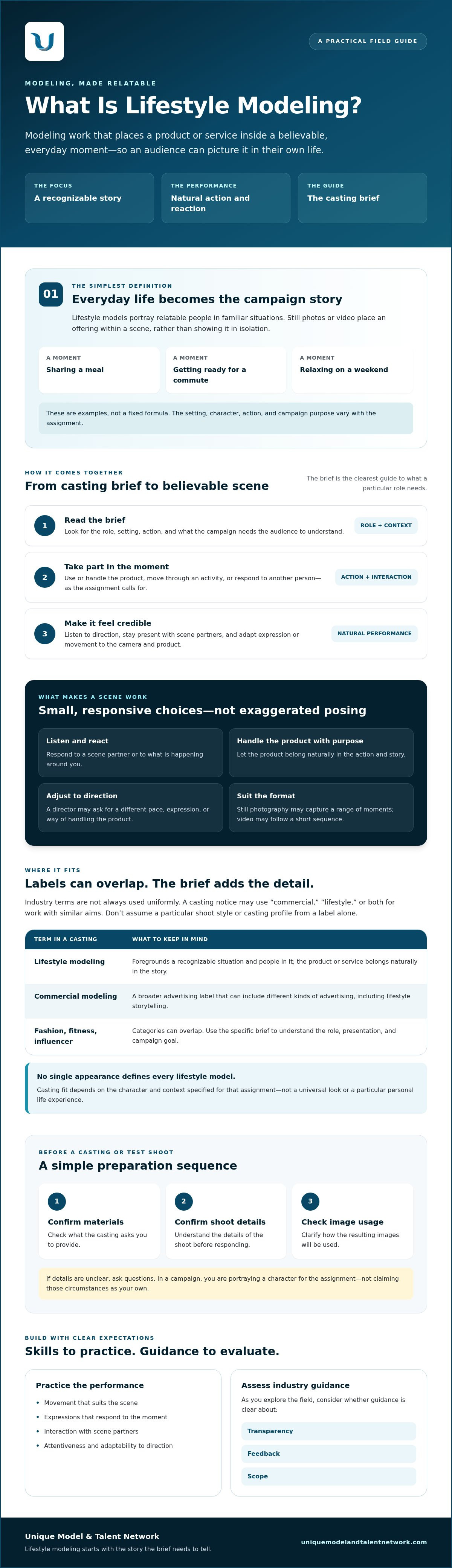
Lifestyle modeling is modeling work in which talent portrays relatable people in everyday brand stories, helping audiences picture products or services in familiar situations. Campaigns use still photography or video to place an offering within a scene rather than show it in isolation. The story might feature someone getting ready for a commute, relaxing on a weekend, or using a product while traveling.
If you’re wondering what is lifestyle modeling in practice, start with the casting brief. It describes the role, what the model is doing, and what the campaign needs the audience to understand. One brief may seek a parent at home; another may call for a professional at work. There’s no single appearance that defines every lifestyle model. The fit depends on the character and context specified for that assignment.
What does a lifestyle model do in a campaign?
A lifestyle model helps make a scene feel credible. Depending on the brief, that might mean holding or using a product, moving through an activity, responding to another person, or changing expression as a moment unfolds. A home, travel, work, or leisure setting provides context, but the model’s job is to serve the story, not simply pose in a location.
In a still shoot, the team may capture a range of expressions and actions that suggest what happened just before or after the frame. In video, the model may follow direction through a short sequence. The format, pace, and level of interaction vary by campaign. Natural-looking performance takes attention: listen to direction, stay present with scene partners, and adjust movement to suit the camera and product.
Is lifestyle modeling the same as commercial modeling?
The labels can overlap. Lifestyle modeling often supports commercial campaigns, since brands use relatable scenes to show how an offering fits into daily life. Industry terms aren’t applied uniformly, so a casting notice may use “commercial,” “lifestyle,” or both for work with similar aims.
A helpful distinction is the campaign’s emphasis. Lifestyle work foregrounds a recognizable situation and the people in it, with the product or service belonging naturally in the story. Commercial modeling is a broader label that can include different kinds of advertising, including lifestyle storytelling. Neither term guarantees a particular shoot style or casting profile. Read the brief and ask questions if details are unclear. You’re portraying a character for the assignment, not claiming to live those circumstances outside the campaign.
What Lifestyle Modeling Looks Like in Photoshoots and Brand Campaigns
A lifestyle campaign builds a small, recognizable story around a product or service. The casting brief guides who appears, what they do, and how the scene should feel. The brief, not a universal look, guides casting: the brand, intended audience, setting, campaign purpose, and creative direction shape the qualities sought for each role. That leaves room for varied appearances and performances while keeping the campaign’s specific needs in focus.
Which settings and stories might a lifestyle campaign use?
These are examples, not guaranteed job types. A campaign could show friends sharing a meal, family members enjoying an activity, or someone running an everyday errand. Other briefs might place talent at home, in a workplace, outdoors, or while traveling. The location and cast serve the concept, while the product or service remains central to the story.
For example, a kitchen scene might show people preparing food together, with the featured cookware used as part of the action. A travel-related campaign could follow someone packing or using a service on a trip. Those examples don’t define the whole category. A brand may choose a different setting, age range, group dynamic, or energy to connect with its intended audience. The brief is the clearest guide to what a particular assignment requires.
What qualities can help a scene feel believable?
Believability often comes from small, responsive choices rather than exaggerated posing. A model might listen to a scene partner, react to what they say, handle a product with purpose, or move comfortably through an activity. In a still photograph, an expression and posture can suggest an interaction just before or after the camera clicks. Video may call for those reactions to unfold over a sequence.
Taking direction matters. A photographer or director may ask for a quieter expression, a different pace, or a change in how the product is handled. Make the adjustment while keeping the response relaxed and suited to the scene. No single personality type or personal life experience guarantees suitability. Preparation, attentiveness, and adaptability help you respond to the brief.
Modeling standards and expectations can vary across assignments. Backstage discusses changing industry standards, a useful reminder that casting criteria are not one-size-fits-all. For practical guidance and structured opportunities to build industry knowledge, you can explore the model and talent learning community. Education and feedback can strengthen your preparation, but they can’t promise a casting outcome.
Lifestyle Modeling vs. Fashion, Fitness, and Influencer Work
To understand what is lifestyle modeling compared with nearby categories, look at the assignment’s purpose, not just the clothes or location. A lifestyle campaign centers on a relatable everyday story. Fashion work may foreground clothing or an editorial concept, fitness work often features movement or wellness, and influencer work centers on content a creator publishes to their own audience. These labels can overlap, and briefs don’t follow one universal industry taxonomy.
| Type of work | Typical brief | Presentation | Intended campaign outcome |
|---|---|---|---|
| Lifestyle modeling | Show a product or service within a familiar situation | Story-led, with natural interaction or activity | Help audiences picture the offering in everyday life |
| Fashion modeling | Feature garments, styling, or an editorial idea | Clothing or visual concept often takes focus | Present fashion or communicate a creative direction |
| Fitness modeling | Show exercise, activewear, or a wellness-related offering | May emphasize movement, athletic activity, or wellbeing | Connect the campaign with fitness or wellness interests |
| Influencer work | Create content for a creator’s own social channels | Creator-led, shaped for their audience and platform | Engage the creator’s audience with branded content |
How is lifestyle modeling different from fashion modeling?
The main distinction is the story’s emphasis. A lifestyle brief may use clothing as part of a believable scene, while a fashion brief may make the garment, styling, or editorial image the central focus. A brand can combine both, such as featuring apparel in a home, travel, or outdoor setting. Neither category has one fixed body type or visual style. Casting depends on the assignment and creative direction.
Is lifestyle modeling the same as being an influencer?
Not necessarily. A model is cast to perform in a campaign, while an influencer or creator typically makes and publishes content for their own audience. Someone can do both, but a modeling booking doesn’t automatically include posting on personal accounts. Before accepting an offer, clarify what content you’re expected to deliver, where and how it may be used, for how long, and what compensation applies.
For questions about professional standards and model protections, consult credible industry guidance from Model Alliance. If you want structured education alongside your own research, the industry workshop and feedback community offers a learning-focused option, not a promise of representation or bookings.
How to Prepare for a Lifestyle Modeling Casting or Test Shoot
Preparation starts with the details, not a dramatic makeover. Whether you’re responding to a casting or arranging a test shoot, use this sequence to clarify expectations and arrive ready to work. Understanding what is lifestyle modeling in practice can help you focus on the brief instead of guessing what a casting team wants.
1. Review the brief. Check who is casting, what the project involves, the role being sought, and how to submit. Look for the location, schedule, requested materials, wardrobe or grooming instructions, and how the resulting images or video may be used. If key information is missing, ask before sending sensitive materials or agreeing to participate.
2. Confirm the logistics and terms. Verify the contact through a credible source and make sure the shoot location, timing, and expectations are clear. Ask what the shoot involves, who will be present, whether you need to bring anything, and where and for how long the work may appear. Get the agreed terms in writing. If you’re under 18, involve a parent or guardian in communications and confirm their role in the process before committing.
3. Prepare to match the brief. Follow the specific directions for clothing, grooming, and submitted images rather than overproducing your look. If you’re asked to bring wardrobe options, choose items that fit the stated concept. Practice relaxed expressions, attentive listening, and simple movements, such as turning, walking, or handling an everyday object. A low-pressure practice session can help you feel more comfortable on camera, but it can’t guarantee a casting result.
4. Follow up professionally. After the casting or test shoot, send a brief thank-you if appropriate and keep a record of agreed next steps. Before images are shared or used, make sure you understand the terms you accepted and whom to contact with questions. Clear communication helps support a professional working relationship.
What should you review before responding to a casting call?
Look for a clear role description, submission instructions, project details, location, schedule, and image usage information. If compensation, wardrobe, requested materials, or other expectations aren’t explained, ask for clarification before committing. A credible opportunity should make it possible to understand what you’re being asked to do.
How can you prepare without overproducing your look?
Keep preparation simple and follow the brief. Practice responding naturally to direction instead of rehearsing a fixed expression. If you’re also assembling materials for acting work, a guide to building an acting portfolio can help you think through how to present relevant experience. For structured skill-building and feedback, the Network Membership includes modeling workshops and portfolio reviews.
Building Lifestyle Modeling Skills and Finding Credible Industry Guidance
Understanding what is lifestyle modeling is a useful starting point; learning to respond to different briefs takes practice. Build gradually. Review sample casting briefs, try short camera exercises, and seek specific feedback on how clearly you follow direction, communicate, and adjust your performance. Focus on learning what works for a role, rather than trying to fit one assumed model persona.
What skills can aspiring lifestyle models develop over time?
Focus on skills that support a range of assignments: listening closely, staying aware of the camera, showing varied expressions, and communicating professionally. Practice a simple action, such as greeting someone or handling an everyday object, then repeat it with different energy or reactions. This helps you explore choices without treating one pose or personality as the only route to a convincing performance.
For broader career-development context, look for a modeling career coaching guide that explains its approach and boundaries clearly. Before paying for coaching or joining a workshop or community, check who leads it, what activities are included, what feedback you’ll receive, and what falls outside its scope. Be cautious of vague promises or pressure to commit before you understand the terms.
How can structured industry learning support your next steps?
Structured learning can give you a place to ask questions, practice skills, and receive feedback as you interpret briefs and prepare materials. Unique Model & Talent Network is a paid educational community for aspiring models and actors. Its offerings include live industry workshops, portfolio and reel reviews, monthly skill-building challenges, Industry Expert Q&A Sessions, and peer networking in a private, moderated environment.
Consider whether the format and stated scope match what you want to learn. Ask what’s included, how feedback is provided, and whether the program offers education and community rather than representation or booking services. The Network provides learning and peer connection; membership doesn’t guarantee representation, auditions, or paid bookings. No workshop, coach, or professional network can promise those outcomes.
For information about the community’s learning approach, see the professional community.
Take Your Next Modeling Step With Clarity
Now you know what is lifestyle modeling: campaign work built around believable stories, where the casting brief defines the role rather than one fixed appearance. You’ve also seen how lifestyle assignments can differ from fashion, fitness, and influencer work, and why it’s important to review project details, image usage, and expectations before committing.
Keep developing your craft through practice, thoughtful feedback, and learning to interpret different briefs. Unique Model & Talent Network offers live industry workshops, expert Q&A sessions, portfolio and reel reviews, and monthly skill-building challenges. It’s an educational community, not a talent agency, and membership doesn’t guarantee representation, auditions, or paid bookings.
To explore whether its learning resources and peer connection fit your goals, join the professional community. Make informed choices, clarify the terms of each opportunity, and give yourself room to grow.
Frequently Asked Questions
What is lifestyle modeling, in simple terms?
Lifestyle modeling is portraying a relatable person in a brand’s everyday story. A campaign might use photos or video to show someone interacting with a product in a familiar situation, helping viewers picture how it fits into real life. The casting brief defines the role and what the campaign needs. Assignments vary, so lifestyle modeling isn’t one fixed pose, setting, or appearance.
Do lifestyle models need a certain look or body type?
No single look or body type defines every lifestyle model. Casting needs depend on the specific brief, including the character, intended audience, setting, and creative direction. One campaign may need a particular age range or group dynamic; another may call for different qualities. Read each notice on its own terms, and don’t assume you must match a narrow standard to explore lifestyle modeling.
Can beginners become lifestyle models without experience?
Beginners can explore lifestyle modeling, though each casting sets its own requirements and experience may be requested for some roles. Start by practicing camera awareness, listening to direction, and following simple movement cues. Prepare materials that match the casting instructions rather than investing in a large portfolio before you know what’s needed. Practice and learning can build readiness, but they can’t guarantee auditions, bookings, or paid work.
How is lifestyle modeling different from commercial modeling?
Lifestyle modeling commonly supports commercial storytelling, so the labels can overlap and aren’t used identically in every casting. Lifestyle work typically emphasizes a relatable situation, with a product or service fitting naturally into the scene. Commercial modeling is a broader term for modeling in advertising and related campaigns, which can include lifestyle stories as well as other approaches. Check the brief to understand the specific role and goal.
Is lifestyle modeling the same as influencer marketing?
No. A lifestyle model is cast to perform in a campaign, while influencer marketing generally involves a creator publishing content to their own audience. The roles can overlap: a creator may be cast as a model, and a model may also maintain social accounts. Before accepting an offer, clarify required content, whether you must post on your channels, intended usage, duration, and compensation.
What should I bring to a lifestyle modeling casting?
Bring what the casting brief requests, which may include specific clothing, submitted images, or other materials. Confirm the location, schedule, contact person, and shoot details in advance. If wardrobe or requested items aren’t specified, ask before preparing extras. Keep your look aligned with the instructions rather than overproducing it, and have a way to refer to any agreed terms or follow-up information.
How can I tell whether a lifestyle modeling opportunity is legitimate?
Look for clear, verifiable information about who is casting, the project, role, location, schedule, submission process, and intended image usage. Confirm the contact independently and ask for unclear terms, including deliverables and compensation, in writing before agreeing. Be cautious of pressure to act immediately or promises of guaranteed work. If you’re under 18, involve a parent or guardian in communications and decisions.


