

What if the agency that promises the fastest path to a modeling career is the one you should question most carefully? If you’re wondering how to find a reputable modeling agency, look beyond polished photos and exciting claims. Evaluate representation like any business relationship: check the agency’s identity and work, understand the written terms, and don’t let anyone rush your decision.
It can be hard to distinguish a legitimate agency from a paid service presented as an opportunity. You may also be unsure what to expect around commissions, portfolio expenses, and contracts. Independent checks can help you tell representation apart from services that sell photos, classes, or access, and give you time to make an informed choice.
This guide explains how to research an agency, identify warning signs, compare representation terms, and ask useful questions before signing or paying. You’ll also learn to assess whether an agency fits your goals. If you want to build skills while you search, workshops, portfolio reviews, and expert Q&As can offer structured feedback. These educational resources are not representation and don’t guarantee agency interest or bookings.
Key Takeaways
- Learn how to find a reputable modeling agency by checking its business identity, professional contact details, and track record before submitting.
- Compare agencies on career fit, communication, and contract terms, including commission, exclusivity, termination, and expenses.
- Treat pressure to sign quickly or pay for access as a reason to pause and investigate further.
- Use a steady process: shortlist agencies, verify them, prepare materials, ask questions, and decide only when you understand the terms.
- Consider workshops and portfolio reviews for industry learning, not as a substitute for representation.
How to Find a Reputable Modeling Agency: Start With Your Goals
If agency websites, social profiles, and conflicting advice leave you unsure where to begin, slow the search down. Learning how to find a reputable modeling agency starts with evidence and fit, not big promises. Clear written terms and professional conduct matter, as does whether the agency’s work matches the career you want to build.
Before contacting agencies, write down your priorities. Use them as a practical filter so you can compare opportunities rather than relying on which agency looks most impressive online.
- Category: Which type of modeling interests you?
- Location: Which markets can you realistically work in?
- Experience: What relevant experience, images, or skills can you present now?
- Priorities: What matters most in a potential professional relationship, such as communication, development, or the kinds of clients an agency serves?
What kind of modeling representation are you looking for?
Consider whether commercial, fashion, fit, lifestyle, or parts modeling aligns with your interests and strengths. Then compare an agency’s roster and verifiable client work with your goals and location. Look for evidence of relevant activity, not just attractive images. No particular look, age, or background guarantees representation. Use the agency’s stated submission criteria to guide your next step.
What does a modeling agency actually do?
A Modeling agency may present talent to clients, coordinate submissions, and negotiate work, depending on its role and the agreement. Responsibilities, exclusivity, and commission terms can vary. Ask what the agency will handle and read the contract before signing. Don’t assume a service offering career advice or photo packages is also representing you.
Representation means an agency agrees to act for talent under defined terms. Education, networking, and paid portfolio services may support development, but they aren’t the same agreement.
Keep that distinction clear as you research. Coaching or workshops can help you build skills; portfolio services focus on creating or reviewing materials; casting platforms may list opportunities; and networking helps you make professional connections. Each can support your development, but none should be mistaken for an agency committing to represent you or submit you for work.
How to Research a Modeling Agency Before You Submit
Independent research can turn an uncertain search into a manageable process. Before sending photos or personal details, check who the agency is, what work it does, and whether its claims hold up beyond its own website. These checks can’t guarantee that an agency is right for you, but they can help you decide whether to take the next step.
- 1. Confirm its identity: Check the agency’s official name, business details, professional contact information, and operating history. Compare details across its website and other reliable sources.
- 2. Review its roster: Look at the talent it represents and the categories it appears to work in. Compare these with your goals and location.
- 3. Check its work: Look for client credits, campaign examples, or other professional activity you can verify outside the agency’s own marketing.
- 4. Assess its communication: Note whether messages are professional, specific to your submission, and clear about what happens next.
- 5. Read reviews carefully: Treat online feedback as one clue. Give more weight to specific accounts with details you can independently check than to broad praise or criticism.
How can you verify an agency’s track record?
Compare roster profiles and claimed credits with sources beyond the agency’s own channels, such as client or campaign materials. If an agency names a client or campaign, see whether you can confirm the connection independently. Missing details are a reason to ask questions, not proof of fraud by themselves. Keep notes on what you verified and what remains unclear.
What should you look for in agency communication?
A professional contact should explain the submission process and next steps without guaranteeing success or demanding an immediate decision. Be cautious if someone insists on secrecy, creates intense urgency, or pressures you to pay on the spot. The Federal Trade Commission’s FTC advice on modeling scams offers additional consumer guidance.
Check the agency’s identity, verify its work independently, and assess whether its communication is clear and professional. Together, these signals can help you decide whether to submit, ask follow-up questions, or pause to research further.
If you’re building industry knowledge alongside your agency search, this modeling career coaching guide offers complementary career-development context. You can also explore structured learning and industry feedback. The Network provides education and networking, not direct talent representation or commission-based booking.
How to Compare Modeling Agencies, Contracts, and Fees
Once you’ve found agencies worth considering, compare them using the same criteria. A simple comparison table or set of notes can keep an impressive roster or persuasive conversation from overshadowing the details that affect your working relationship.
- Career fit: Does the agency represent your modeling category and work in a market you can access?
- Communication: Are the submission process, expectations, and next steps explained clearly?
- Verifiable work: Can you confirm relevant clients, campaigns, or other professional activity?
- Agreement terms: Are responsibilities, commission, exclusivity, expenses, and termination explained in writing?
Record any unclear terms and the questions you need answered. The goal isn’t to choose the agency with the most polished presentation. It’s to identify a professional fit whose work and written agreement align with your priorities.
Which contract terms should a model review?
Read the agreement for its scope, duration, territory, exclusivity, termination process, and commission language. Check how bookings are confirmed, which expenses or deductions may apply, and when payment is expected. Ask how each clause works in practice. Contract structures and applicable rules vary by agreement and jurisdiction, so don’t assume a term is standard because it appears in another model’s contract.
If a phrase is vague, request a plain-language explanation in writing. For example, ask which markets or types of work an exclusivity clause covers and what steps either party must take to end the agreement. If the answer is still unclear, pause before signing and consider advice from a qualified local professional familiar with contracts or talent-agency rules.
How should you assess fees and paid services?
Ask what each requested payment covers, who receives it, and whether it’s optional or a condition of representation. Keep agency representation separate from services such as photography, classes, or portfolio packages. A paid service may be offered alongside an agency relationship, but its cost and terms should be explained separately. Don’t confuse payment for a service with an agreement to represent you.
For consumer-protection context, the FTC guide to modeling scams discusses payment requests and other concerns. Verify rules that apply where you live with relevant local authorities or a qualified adviser. If you’re learning how to find a reputable modeling agency, careful comparison and written clarification are more useful than relying on verbal assurances.
For structured industry learning alongside your independent search, explore modeling education and professional feedback. The Network offers educational and networking opportunities, not direct talent representation or commission-based booking.
Warning Signs to Check Before Signing With a Modeling Agency
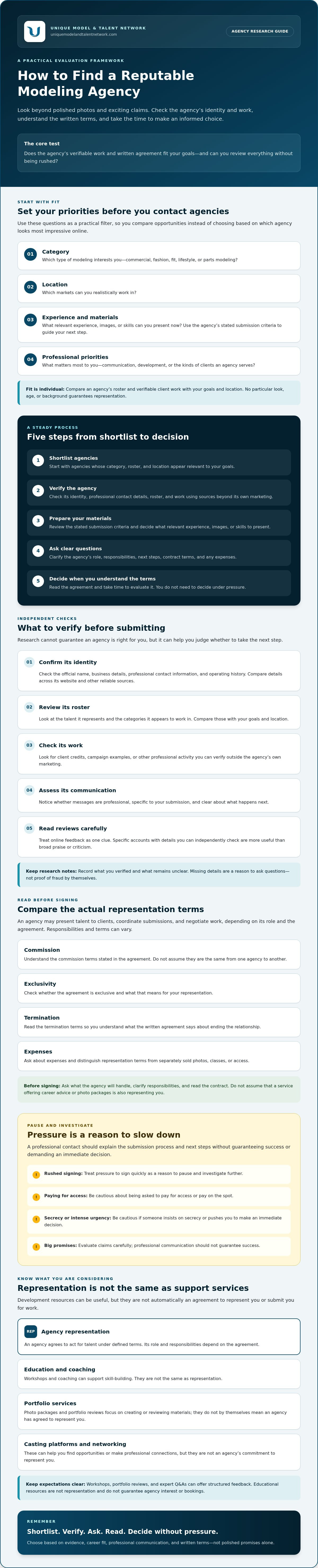
A polished website, impressive roster, or large social following can create a sense of credibility, but none proves that an agency operates professionally. Treat these details as starting points for research, not a substitute for verifying claims and understanding the agreement. A warning sign is a reason to pause and check further, not automatic proof of wrongdoing.
Which promises and payment requests deserve extra scrutiny?
Be wary of guaranteed bookings or income, especially when paired with a demand to sign or pay before you’ve reviewed the terms. Ask for a written explanation of any requested payment: what it covers, who receives it, whether it’s optional, and whether it’s a condition of representation. Representation, photography, training, and portfolio services are not interchangeable. Costs and applicable rules can vary, so verify local requirements rather than assuming every fee is permitted or improper.
Secrecy, unanswered questions, changing explanations, or pressure to decide immediately also deserve attention. The Federal Trade Commission’s guidance on modeling scams can help you assess common warning signs. Check relevant local consumer-protection or talent-agency authorities for information that applies in your area.
How can you protect yourself before agreeing?
If something feels unclear, stop the process before signing, paying, or sending more information. Save messages, agreements, invoices, and claims about specific work or representation. Request the complete terms in writing, then compare them with what you were told. Don’t share sensitive personal or financial information unless you’ve verified who’s requesting it and why. Never sign a document you don’t understand.
For unclear clauses or payment demands, seek independent advice from a qualified local adviser. If you’re under 18, involve a trusted adult before communicating, sharing information, or making commitments. Keeping records helps you review the situation calmly and explain your concerns if you need guidance.
- Pause: Don’t let urgency replace careful review.
- Document: Keep copies of communications and every version of the agreement.
- Clarify: Ask for written answers about promises, payments, and obligations.
- Verify: Consult trusted advisers and relevant consumer-protection authorities.
Knowing how to find a reputable modeling agency includes knowing when to step back. You can decline, request time to review, or seek advice before deciding. If you’d also like structured learning and professional feedback as you develop your skills, explore industry learning opportunities. The Network is an educational and networking community, not a talent-representation or commission-based booking service.
Your Next Steps: Contact Agencies and Build Industry Support
A clear process makes an agency search easier to manage. Shortlist agencies that fit your goals, verify their professional details and work, prepare the materials they request, ask questions about anything unclear, and decide only when you understand the written terms. You don’t need to contact every agency at once. A focused submission tailored to an agency’s instructions is more useful than a batch of generic messages.
What should you prepare before contacting an agency?
Check each agency’s current submission instructions and follow them closely. Send only the requested materials, use recent and appropriate images, and make sure your contact details are accurate. Don’t assume you need an expensive portfolio before applying. First confirm what the agency asks applicants to provide. Keep a simple record of the agency name, submission date, materials sent, reply, questions, and any stated follow-up timing.
Make each submission specific. Use the agency’s preferred contact method, identify the category you’re applying for, and include a concise note about your relevant experience and location. Avoid broad claims or attachments the agency didn’t request. If you’re also developing an acting career, this acting portfolio guide offers a separate perspective on preparing materials across talent disciplines.
Before sending anything, make sure you can explain what you’re looking for and identify the questions you still need answered. If an agency responds, review its next steps and proposed terms at your own pace. Keep your communication professional and organized, even while waiting for a reply.
Where can you find professional guidance beyond an agency?
An independent agency search doesn’t have to be your only source of development. Live workshops, portfolio and reel feedback, expert Q&As, and peer networks can help you build skills and industry knowledge. These resources are separate from representation. Taking part doesn’t promise agency interest, a signing, or paid work.
Unique Model & Talent Network is an educational and networking community. Its membership does not provide direct talent representation or commission-based booking. If structured learning and professional feedback would support your development, you can explore the Network Membership as an optional resource alongside your own agency research.
Ultimately, how to find a reputable modeling agency comes down to steady, informed decisions. Prepare thoughtfully, follow each agency’s process, and choose only when you understand who you’re working with and what the agreement requires.
Take Your Next Step With Confidence
A thoughtful agency search starts with your goals, then moves through independent research and careful comparison. Verify an agency’s track record, read representation terms closely, and pause when promises, payments, or pressure aren’t clear. A strong fit depends on professional practices and transparent expectations, not a polished profile alone.
Professional feedback and industry connections can complement your search, but they aren’t a substitute for representation. Unique Model & Talent Network is a private, moderated community for talent and industry professionals, with live workshops, portfolio and reel reviews, skill-building challenges, and expert Q&A sessions. Membership does not provide direct representation or guarantee bookings.
If you’d like to build skills and industry knowledge alongside your search, explore professional workshops, portfolio feedback, and industry networking. Take time to review your options and make your next move with clear expectations.
Frequently Asked Questions
How can I tell if a modeling agency is reputable?
Look for an agency whose identity, professional contact details, roster, and work can be checked beyond its own marketing. Consider whether its talent and client credits align with your goals, and whether staff explain the submission process and proposed terms clearly. No single detail proves legitimacy. Weigh the evidence, ask about anything you can’t verify, and take time to review an agreement before committing.
Do reputable modeling agencies charge upfront fees?
Be cautious if payment is required as a condition of signing or promised representation. Ask what any requested fee covers, who receives it, and whether it’s optional or required under the agreement. Photography, classes, and portfolio services may be separate paid offerings, not representation itself. Fee rules vary by location, so check local requirements with an appropriate authority or qualified adviser before paying.
What should I look for in a modeling agency contract?
Review the agency’s responsibilities, contract duration, territory, exclusivity, commission, termination process, and how bookings and expenses are handled. Confirm how deductions are explained and when payment is expected. Make sure the written terms match what you were told. If a clause is unclear, request a written explanation and pause before signing. Contract rules vary by jurisdiction, so seek qualified local advice when needed.
Can I submit to more than one modeling agency?
Usually, you can submit to multiple agencies, but follow each agency’s stated submission process and be truthful about your representation status. Before signing with any agency, check whether the contract is exclusive, which work or territories it covers, and whether it affects other representation. Don’t assume sending submissions creates an exclusive relationship. Keep track of where and when you applied so you can manage replies accurately.
What are warning signs of a modeling agency scam?
Warning signs include guaranteed bookings or income, pressure to sign immediately, unexplained payment demands, secrecy, and claims you can’t verify. A polished website or large social following isn’t proof of professional conduct. Treat concerning details as reasons to investigate, not automatic proof of wrongdoing. Pause, save messages and documents, request written terms, and consult the Federal Trade Commission’s modeling-scam guidance or local consumer-protection authorities.
Do I need a professional portfolio before contacting a modeling agency?
Not always. Submission requirements differ, and some agencies ask for simple, current images rather than a professionally produced portfolio. Check the agency’s own instructions first, use appropriate photos, and provide only what’s requested. Avoid spending on a portfolio just because someone says it’s required before you’ve verified the agency and clarified the terms. If you’re unsure what materials to prepare, ask the agency through its official contact channel.
Can a modeling network get me signed with an agency?
A modeling network can offer education, professional feedback, and connections, but it can’t promise that an agency will sign you. Unique Model & Talent Network is a private, moderated community with live workshops, portfolio and reel reviews, skill-building challenges, and expert Q&A sessions. It doesn’t provide direct talent representation or commission-based booking. Treat learning and networking as support for your development while pursuing agency representation independently.


