
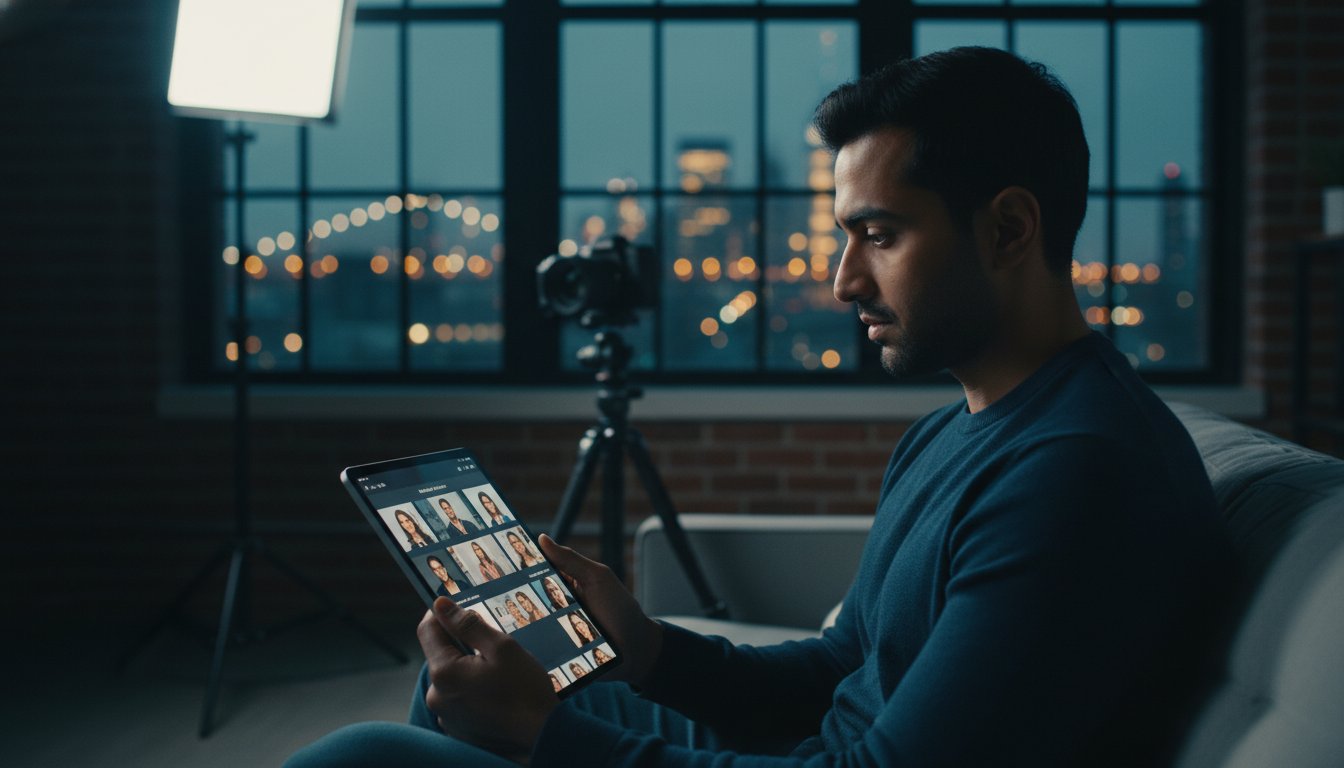
If you're still relying on a single headshot and a prayer to land roles, you're likely feeling invisible in an industry where 90% of first-round auditions are now handled via self-tapes. It's frustrating to invest up to $1,500 in professional photography only to wonder if your acting portfolio is even being seen by the right people. You deserve a career built on professional standards, not the fear of being scammed by predatory scouts or lost in the digital noise of social media.
You're right to want more than just "exposure" in a crowded market. This guide will help you stop guessing and start getting noticed by top casting directors for real, paying jobs. We'll preview the essential 2026 checklist, covering everything from the $3,121 SAG-AFTRA initiation fee to the reality of $299 annual casting subscriptions. You'll gain the confidence that your materials match the high expectations of a hybrid casting world where AI tools and digital reels are the new baseline. It's time to build a professional presence that works as hard as you do, without the noise.
Key Takeaways
- Learn how to transition from static PDF resumes to a searchable digital ecosystem that meets 2026 industry standards.
- Identify the essential components of a modern acting portfolio, including the "Holy Trinity" and new requirements like personality slates.
- Break the "no experience" cycle by using skill-building challenges to create professional-grade self-tape clips from home.
- Master the technical side of casting platforms to ensure your profile ranks higher in searches by top industry professionals.
- Shift your mindset to view your materials as a conversation starter within a vetted community rather than just a collection of files.
What is an Acting Portfolio? The 2026 Industry Standard
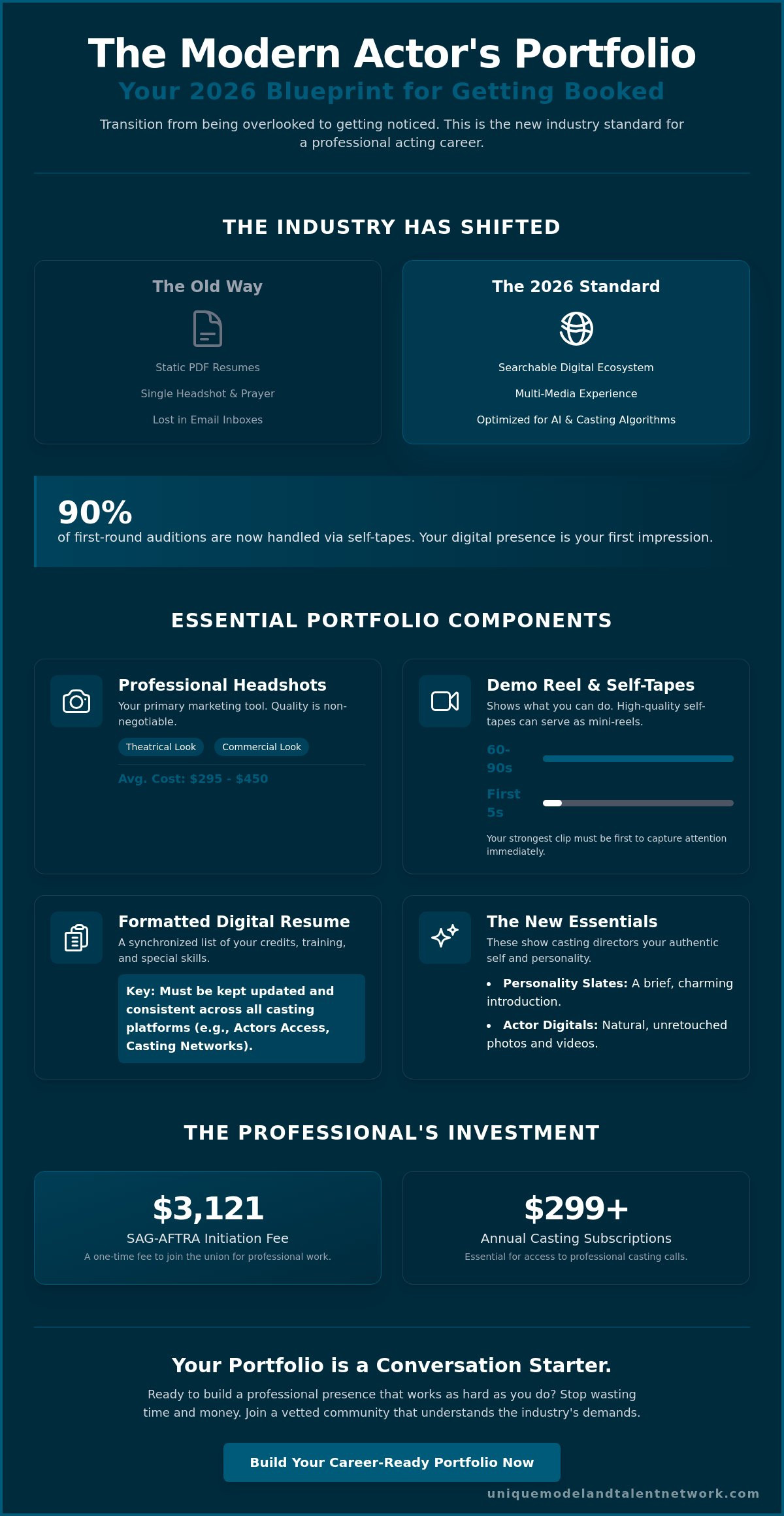
Your acting portfolio is no longer just a folder of files; it's your digital business card and a high-performance marketing ecosystem. In 2026, the industry has shifted away from static PDF resumes that sit buried in email inboxes. Today's casting environment demands searchable talent profiles that allow directors to filter by specific skills, physical traits, and performance styles in seconds. An acting portfolio is a curated collection of vetted materials designed to answer a casting director's questions before they ask. By presenting a polished, professional front, you cut through the noise of public social media where everyone claims to be a star. Instead, you lean into the focus of a professional talent network where your craft is the only thing that matters. This shift is driven by a 30% adoption rate of AI performance tools in the industry, meaning your digital presence needs to be technically sound and easily indexed by modern casting algorithms.
Why Your Portfolio is Your Most Powerful Career Tool
Building a professional portfolio is about establishing immediate trust. When a casting director sees a complete profile with high-quality headshots and clips, they know you're serious about the acting profession. This digital presence allows you to bypass traditional gatekeepers. You don't always need a manager or an agent to get your face in front of decision-makers when your materials speak for themselves. Guessing what a director wants is a recipe for wasted time and money. Investing in industry standards ensures you're ready for the 80% to 90% of first-round auditions that are now conducted via self-tape. It's the difference between being a hobbyist and a professional ready for real, paying jobs. Without this tool, you're essentially invisible to the professionals who have the power to greenlight your career.
Portfolio vs. Resume: Understanding the Difference
A resume is a single document listing your credits and training. It's essential, but it's flat and often static. Your acting portfolio is a multi-media experience. It tells the story of your type and range through visuals and video. While a resume tells them what you've done, the portfolio shows them what you can do right now. It's vital to keep these synchronized across platforms like Actors Access and Casting Networks. If your resume says you're a hybrid performer with motion capture skills but your portfolio lacks video proof, you're losing jobs. A synchronized portfolio ensures that every search for your specific look leads directly to a vetted, high-quality representation of your talent. In a world where agents might pay $400 a month just to access casting platforms, your materials must be sharp enough to justify their attention and your own investment.
The Essential Components of a Modern Actor's Portfolio
Building a competitive acting portfolio requires more than just a few random photos. In 2026, industry standards have evolved to include a "Holy Trinity" of assets plus specific digital additions that prove you’re ready for professional sets. Your package must consist of professional headshots, a formatted resume, and a demo reel. However, the modern standard now demands more. Casting directors look for high-quality self-tape clips, personality slates, and "Actor Digitals" to see your natural, unretouched state. If you include filler content just to look busy, you risk looking like an amateur. Quality always beats quantity. Every piece of your portfolio should be organized in a streamlined hub, making it easy for agents to find exactly what they need in two clicks or less.
Headshots: Theatrical vs. Commercial Looks
If you want to be cast in dramatic series or indie films, your theatrical look must be grounded, dramatic, and focused on character depth. It’s about the "soul" behind the eyes. Conversely, a commercial look is approachable, warm, and geared toward brand storytelling. You need at least one high-quality shot of each to be considered for a wide range of real, paying jobs. Building an acting portfolio starts with these distinct vibes because they define your "type" before you even speak. With professional headshot sessions in 2026 averaging between $295 and $450 in major markets, choosing the right "looks" is a vital business decision.
The Demo Reel and Self-Tape Clips
The 2026 standard for a demo reel is a punchy 60 to 90 seconds of your absolute best work. You must start with your strongest clip to capture attention within the first five seconds. If you don't have professional footage yet, don't worry. High-quality self-tape clips act as effective mini-reels, provided the lighting and sound are professional. You should also include "Actor Digitals" to show your current physical appearance without heavy studio lighting. To understand how these differ from modeling requirements, read our guide on What are Digitals? for the essential visual standard.
The Professional Acting Resume Layout
Your resume needs a clean, standard layout: Theater, Film/TV, Training, and Special Skills. Keep your contact info and "vetted" status at the very top so decision-makers know you’re a professional. Don't underestimate the "Special Skills" section. Dialects, stage combat, or even motion capture experience are often the secret weapons that help you book a role over someone with similar credits. Joining a vetted talent network can help you refine these details and ensure your resume meets the rigorous expectations of top-tier agents.
How to Build an Acting Portfolio with Zero Experience
Every actor starts at the same frustrating crossroads. It's the classic industry catch-22: you need a portfolio to book professional work, but you need professional work to fill your portfolio. If you're currently feeling invisible, don't wait for a casting director to give you permission to exist. In 2026, the most successful emerging talent uses skill-building challenges to generate high-quality self-tape material right from home. By participating in professional training and live workshops, you can add legitimate, vetted credits to your resume that prove your commitment to the craft. Your first acting portfolio should focus on your potential and training while you hunt for your first credits.
Step 1: Invest in Professional Headshots First
Amateur photos are the primary reason actors are ignored by casting professionals. A "pretty picture" taken by a friend on a phone doesn't communicate your type or your professional standards. You need a photographer who specifically understands the 2026 industry standards for theatrical and commercial looks. With professional sessions in major markets like San Francisco and New York averaging $295 to $450, this is your most important business investment. If you're a hybrid performer who also pursues commercial modeling, you'll need to understand the difference between actor headshots and Comp Cards for Modeling to ensure you're marketed correctly for every opportunity.
Step 2: Create 'Pro-Level' Self-Tape Content
Since 80% to 90% of first-round auditions are now self-tapes, your ability to produce high-quality video is a non-negotiable skill. Choose monologues or sides that showcase your specific type rather than trying to show "everything" at once. You must master the technical essentials: a three-point lighting setup, clear audio from a dedicated microphone, and a neutral, distraction-free background. These tapes aren't just for auditions. You can use them to populate your initial reel, giving casting directors a clear look at your performance style before you've even stepped onto a professional film or TV set. This proactive approach turns your home setup into a career-launching studio.
Step 3: Seek a Professional Portfolio Review
It's nearly impossible to be objective about your own work. An outside expert's eye is essential to help you stop guessing about which shots actually represent your "marketable type." A professional review ensures that every file in your digital ecosystem meets the high expectations of top-tier talent networks. This level of scrutiny separates the serious professionals from the hobbyists who are often targeted by predatory scouts. To ensure your materials are ready for the highest level of competition, consider getting a Professional Portfolio Review for Actors. This step provides the clarity you need to move forward with confidence and start booking real, paying jobs.
Maximizing Your Digital Presence on Casting Sites
Your acting portfolio is a dynamic networking tool, not a museum piece. In 2026, simply having a collection of files on your hard drive isn't enough to secure real, paying jobs. Your professional identity must live where the decision-makers are: Actors Access, Casting Networks, and Backstage. These platforms use sophisticated algorithms to present talent to directors, and "Profile Completeness" is the primary metric they use to rank you. If your profile is only 80% finished, you're essentially invisible to the professionals who are actively searching for your type. For a deep dive into which platforms are currently dominating the industry, read our insider's guide to The Best Casting Websites in 2026. Managing your digital footprint ensures that your vetted professional image is the first thing discovered when a director searches your name.
Actors Access vs. Casting Networks: Which to Prioritize?
Actors Access remains the essential hub for theatrical and film projects. As of 2026, the annual Plus membership costs $68, providing unlimited submissions for serious screen actors. Casting Networks, meanwhile, is the dominant force for commercial and print work. As of March 2026, their premium membership is priced at $29.99 per month or $299.90 per year. You must tailor your acting portfolio materials for the specific vibe of each platform. Your dramatic, grounded clips belong on Actors Access, while your warm, approachable commercial work should lead on Casting Networks. While these public sites are necessary, a private network membership offers a curated experience that removes the noise of unvetted competition.
Updating Your Portfolio: The 6-Month Rule
Outdated materials are a major red flag for casting directors. If your headshots don't match your current hair color, age, or physical appearance, you're wasting the production's time and hurting your reputation. We recommend the 6-month rule: audit your entire profile every half-year to ensure every asset is current. Use this time to add new credits and any skill-building achievements from recent workshops. This consistent activity signals to platform algorithms that you're an active, working professional. If you want to stop guessing about your digital presence and start seeing results, apply to join our vetted talent community and get your materials in front of the right people today.
The Secret to a Portfolio That Books: Community and Networking
Your acting portfolio is much more than a collection of digital files stored on a server. If you view your materials as a static archive, you're missing the true potential of your professional identity. In 2026, a successful portfolio functions as a dynamic conversation starter within a vetted talent community. Being part of a curated network immediately elevates your perceived status in the eyes of industry pros. It signals that you've moved past the noise of social media and into a space dedicated to professional business development. High-value industry workshops provide the real-time feedback you need to ensure your materials aren't just "pretty," but actually functional for booking real, paying jobs. This safe haven approach protects you from predatory scouts while positioning your craft front and center in a hybrid casting landscape where human connection still validates the algorithm's choices.
Getting Feedback from Real Industry Experts
Direct access to casting directors through live Q&A sessions is the fastest way to refine your portfolio’s message. These experts provide behind-the-scenes insights that help you understand why a specific theatrical look might be failing to land callbacks. Peer feedback within a moderated community also helps you stop guessing about your type and find the clarity needed for a streamlined hub. When you receive self-tape feedback from highly accredited professionals, you gain the confidence that your materials match the 2026 industry standards. If you're ready to see how a structured environment can accelerate your career and foster meaningful relationships, explore how The Network Membership provides a definitive path for professional growth.
Taking the Next Step: Join the Unique Network
We provide the practical guidance you need through live workshops, professional portfolio reviews, and monthly skill-building challenges designed to keep your materials active. This isn't about the superficiality of "likes" or "followers." It's about legitimate career security and professional standards. By becoming a Founding Member, you secure your place in a professional talent hub that values integrity and efficiency over messy DMs and unorganized communication. You'll gain VIP access to curated opportunities and a community that acts as a reliable bridge between emerging talent and established professionals. We invite you to join a community that values your craft and helps you navigate the complexities of 2026 casting. Stop guessing and start being really seen by the professionals who have the power to greenlight your next project.
Take Command of Your Professional Narrative
Mastering your acting portfolio is the difference between shouting into the void of social media and being seen by decision-makers. You've learned that 80% to 90% of first-round auditions are now self-tapes, making high-quality video assets your most valuable currency. By following the 6-month rule and maintaining a searchable digital ecosystem, you ensure your professional identity stays sharp and relevant. If you're serious about your craft, you don't have to navigate this chaotic industry alone. You can move away from the noise and into a space where your development is the priority.
It's time to elevate your career with direct access to vetted casting directors and monthly skill-building challenges designed for real resume growth. Join a supportive, noise-free community for serious talent where you can receive the behind-the-scenes insights you need to succeed. Stop guessing and start booking; join The Network for professional portfolio reviews and industry access! Your future in the entertainment industry is waiting, and we're here to help you claim it with confidence.
Frequently Asked Questions
How many photos should be in an acting portfolio?
You should include two to four high-quality photos in your acting portfolio to cover your primary theatrical and commercial looks. While some platforms allow for larger galleries, casting directors prefer a curated selection that clearly defines your "type" rather than a gallery of repetitive shots. Quality always beats quantity in a professional talent hub where decision-makers have limited time to review each profile.
Do I need a professional demo reel if I'm just starting out?
You don't need a high-budget demo reel if you lack footage from professional film or TV sets. Instead, use high-quality self-tape clips to showcase your performance ability. Since 80% to 90% of first-round auditions are now handled via self-tapes, a well-lit, clear recording of a monologue is a perfectly acceptable substitute for a traditional reel in the early stages of your career.
What is the difference between a comp card and an acting portfolio?
A comp card is a single-sheet marketing tool used primarily for commercial modeling that features four to five images and physical stats. In contrast, an acting portfolio is a comprehensive digital ecosystem that includes your resume, headshots, and video clips. While a comp card is about a quick visual "read" for print work, the acting portfolio provides the depth needed for theatrical and film casting.
How much does a professional acting portfolio cost to build?
A professional acting portfolio typically costs between $500 and $2,000 to build from scratch. This includes professional headshots, which average $295 to $450 in major markets, and casting platform subscriptions like Actors Access at $68 per year. Additional costs can include professional hair and makeup, which ranges from $50 to $200, and potentially a produced scene for your reel starting around $395.
Should I include my social media links in my acting portfolio?
You should only include social media links if your content is strictly professional and curated for the industry. Avoid linking to personal accounts that contain "noise" or non-professional content that could distract from your craft. If you choose to include them, ensure your profiles showcase your skills, such as clips from a web series or behind-the-scenes insights from a vetted professional set.
How often should I update my acting resume and headshots?
You should audit your materials every six months to ensure they reflect your current appearance and skill level. If you change your hair color or style significantly, you must update your headshots immediately to avoid wasting a casting director's time. Your resume should be a living document that you update after every new credit, workshop, or skill-building challenge you complete to keep your profile active.
Can I build an acting portfolio without an agent?
Yes, you can absolutely build a professional acting portfolio without an agent. Modern casting platforms like Actors Access and Casting Networks allow unrepresented talent to submit themselves for real, paying jobs directly. Joining a vetted talent community can provide the mentorship and professional standards you need to navigate the industry and stop guessing about your career path while you work toward representation.


