What if the hours you spend scrolling through unvetted casting calls are actually sabotaging your career? In 2026, the most successful actors don't treat film industry auditions like a lottery; they treat them like a business strategy. With production activity in New York forecasted to grow between 5% and 12% this year, the opportunities are abundant, but the noise from public platforms is louder than ever. To book work, you must learn to cut through the digital clutter and get directly in front of the gatekeepers who make hiring decisions.
You likely feel the frustration of a fragmented industry where rising subscription fees and changing platform policies make it harder to be seen. It's exhausting to submit self-tapes into a void without knowing if a human will ever view them. We're here to help you stop guessing and start booking. This guide provides the exact workflow you need to master the audition process and secure real, paying roles that command the current SAG-AFTRA daily rate of $1,246. We'll show you how to refine your professional presentation and connect with industry insiders who can truly move the needle on your career.
Key Takeaways
- Adapt to the permanent digital-first casting standard and learn the strategic differences between principal, supporting, and commercial roles.
- Implement the "No Guessing" rule by using professional feedback to refine your 2026 headshot and digital portfolio requirements.
- Master the technical setup and creative analysis needed for high-stakes film industry auditions, including the essential "moment before" technique for professional self-tapes.
- Transition from chaotic public platforms to a curated private network; this allows you to build meaningful relationships with industry insiders without the usual noise.
- Establish a professional audition workflow that prioritizes vetted opportunities and real, paying jobs over unverified, low-quality casting calls.
Navigating Film Industry Auditions in 2026: An Overview
Think of film industry auditions as the essential filter between aspiring talent and high-stakes narrative or commercial projects. While the basic principles of understanding the audition process remain constant, the execution has moved entirely into the digital realm. In 2026, the digital-first model isn't just a temporary fix; it's the permanent industry standard. This means your first interaction with a casting director will almost certainly happen through a screen. If you aren't visible and verified in the digital databases used by top-tier casting offices, you're effectively out of the running before the project even begins.
A professional audition is a high-level business meeting for your talent brand. You aren't just showing off a skill; you're pitching yourself as the specific solution to a production's casting problem. With the industry operating under tighter financial scrutiny following recent labor negotiations, every project is under intense pressure to succeed. This has created a massive "noise" problem on public platforms, where thousands of unvetted applicants flood every open call. Without a strategic filter to manage your submissions, you'll likely face burnout from chasing low-quality leads that don't align with your professional goals.
The Evolution of the Casting Process
The shift from open "cattle calls" to curated digital submissions has fundamentally changed what it means to be a working actor. In 2026, being "vetted" is your most important credential. Studios and producers are looking for talent who can handle the technical and professional rigors of a modern set with minimal friction. Securing real, paying jobs requires more than just a headshot; it requires a digital presence that proves you understand the pace and technical requirements of current production environments. The gatekeepers are looking for professionals who treat film industry auditions as a disciplined business process rather than a game of chance.
Cutting Through the Industry Noise
Identifying the difference between a professional casting call and a hobbyist project is crucial for your career longevity. Public platforms are often flooded with projects that lack the budget, insurance, or professional standards to protect talent. A managed talent community provides a safe haven from these predatory practices by acting as a protective mentor and gatekeeper. It's time to stop guessing about which opportunities are legitimate. By following a proven industry roadmap within a private network, you can focus your energy on the projects that actually advance your career and provide the financial security you deserve.
Understanding the Different Types of Film Auditions
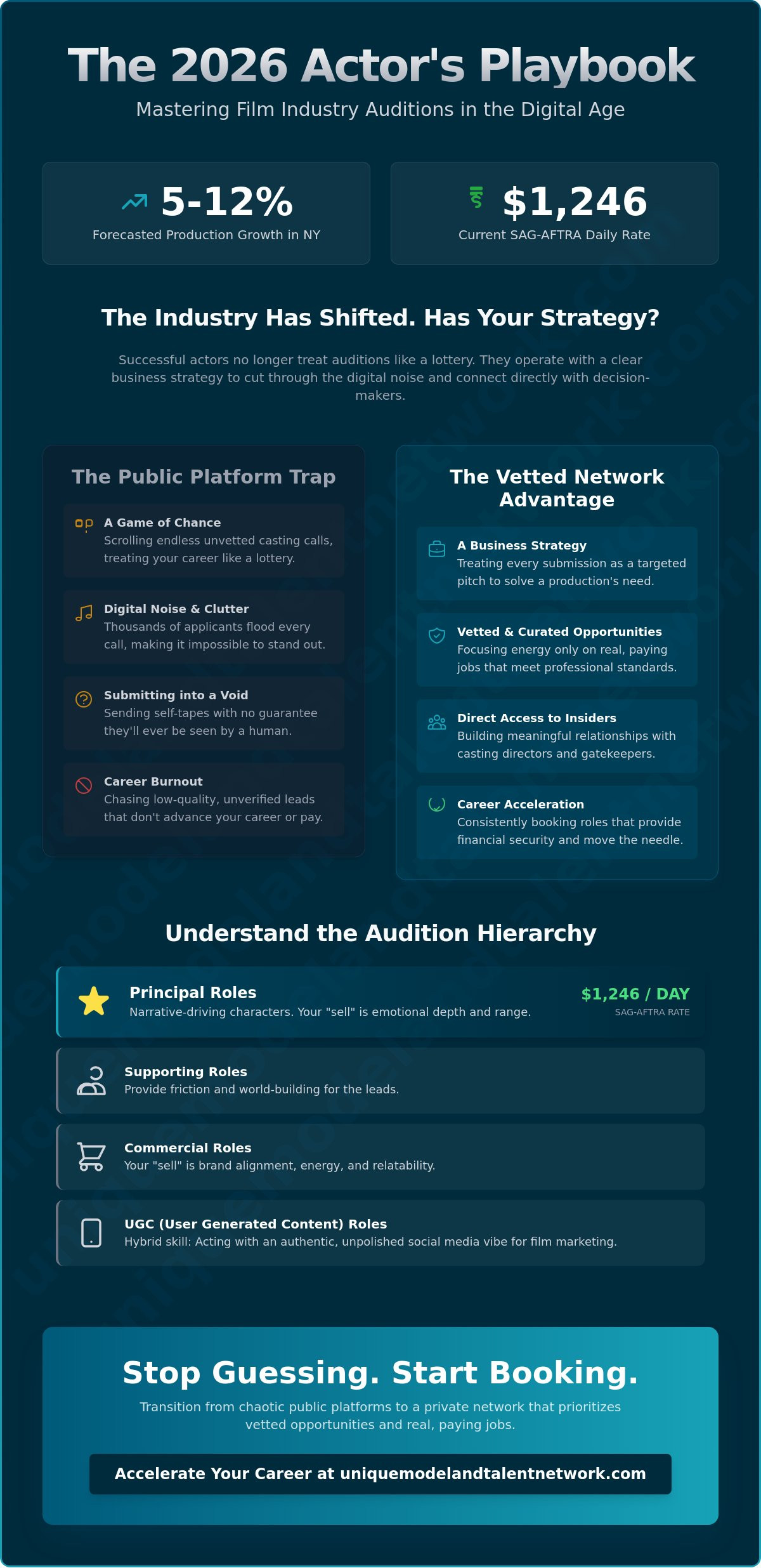
Success in 2026 requires more than just talent; it requires an acute understanding of the specific product you're selling. Film industry auditions aren't one-size-fits-all events. They follow a strict hierarchy that dictates your preparation, your pay, and your professional expectations. At the top of this structure are Principal roles, which drive the narrative and often command the full $1,246 daily SAG-AFTRA rate. Supporting roles provide the necessary friction and world-building for the leads. Below these are Featured Background roles, where you aren't just part of a crowd but are selected for a specific look or action that enhances a scene's authenticity.
The "sell" changes drastically depending on the project type. In narrative film, casting directors look for emotional depth and the ability to live within a character's skin. In contrast, commercial film is about brand alignment. A commercial audition is often a test of energy, relatability, and how well you fit a specific demographic "look." A new trend in 2026 is the rise of User Generated Content (UGC) auditions for film marketing. Studios now hire actors to create authentic-feeling social content to promote a film before its release. This requires a hybrid skill set: the ability to act while maintaining the raw, unpolished vibe of a content creator. Before you record a single frame, you must identify the project's tone. A horror film requires a different internal frequency than a high-energy tech commercial.
Principal and Narrative Film Roles
For narrative work, your reel is your most powerful business card. Casting directors use it to verify your range before they ever invite you to a callback. They want to see "the moment before" and your ability to transition through complex emotions. If your materials feel dated or unpolished, you'll be filtered out by AI tools before a human ever sees your face. This is why a professional portfolio review for actors is essential to ensure your presentation meets the 2026 standard for high-level narrative work.
Commercial and Print Casting
Commercial auditions prioritize immediate impact over long-form character development. With the SAG-AFTRA on-camera session fee for commercials sitting at $822.30 as of February 25, 2026, these roles are highly competitive. There is a significant crossover between modeling and acting here. If you're looking for work in major hubs, following modeling in miami strategies can help you land roles that require that specific high-end, commercial aesthetic. To truly excel, you should join a curated talent community that helps you navigate these different markets with professional clarity and confidence.
Preparation: How to Get Noticed by Casting Directors
Applying to every open call you find is a strategy for burnout, not a career. To win film industry auditions in 2026, you must adopt the "No Guessing" rule. This means you never submit a headshot, reel, or self-tape that hasn't been vetted by a professional who understands the current market. Casting directors are currently overwhelmed by the volume of digital submissions, often spending less than 6 seconds on an initial profile review. They are looking for reasons to say no. Don't give them one by guessing what they want. Instead, research the specific gatekeepers for each project. Many casting offices have distinct preferences for natural lighting in tapes or specific file naming conventions. Ignoring these small details signals that you aren't ready for a professional set.
Since the January 9, 2026, policy shift regarding agent subscription fees on major platforms, the way talent is submitted has become more fragmented. You must know which platforms your target casting directors are actively using to ensure you aren't shouting into a void. If you're targeting acting auditions in new york, your preparation must account for the city's unique production pace. New York casting often moves faster than other hubs, requiring a toolkit that is organized, updated, and ready to send at a moment's notice.
Building Your Professional Toolkit
The 2026 standard for digital portfolios is built on three pillars: speed, clarity, and personality. Your site should load instantly on mobile devices, as many decision-makers review submissions on the fly. Beyond the traditional headshot, your "About Me" video has become a critical tool. It's a 30-second personality check that shows you're a professional who can take direction without ego. While major hubs get the most attention, don't overlook regional opportunities. Using casting in san diego resources can help you build your resume with high-quality local projects before you tackle the larger, more competitive markets.
The Power of Professional Mentorship
Navigating this industry alone is a recipe for frustration. Adopting a modeling career coaching mindset allows you to treat your acting career as a talent brand. This involves seeking "vetted" feedback rather than relying on the noisy echo chambers of social media groups. Public forums are often filled with misinformation that can lead you toward predatory practices or outdated techniques. Live workshops and expert Q&A sessions bridge the gap between aspiring and working talent by providing direct access to the people who make hiring decisions. This professional mentorship ensures you're always following a proven roadmap toward real, paying jobs without the usual industry noise.
The Audition Workflow: From Self-Tape to Booking
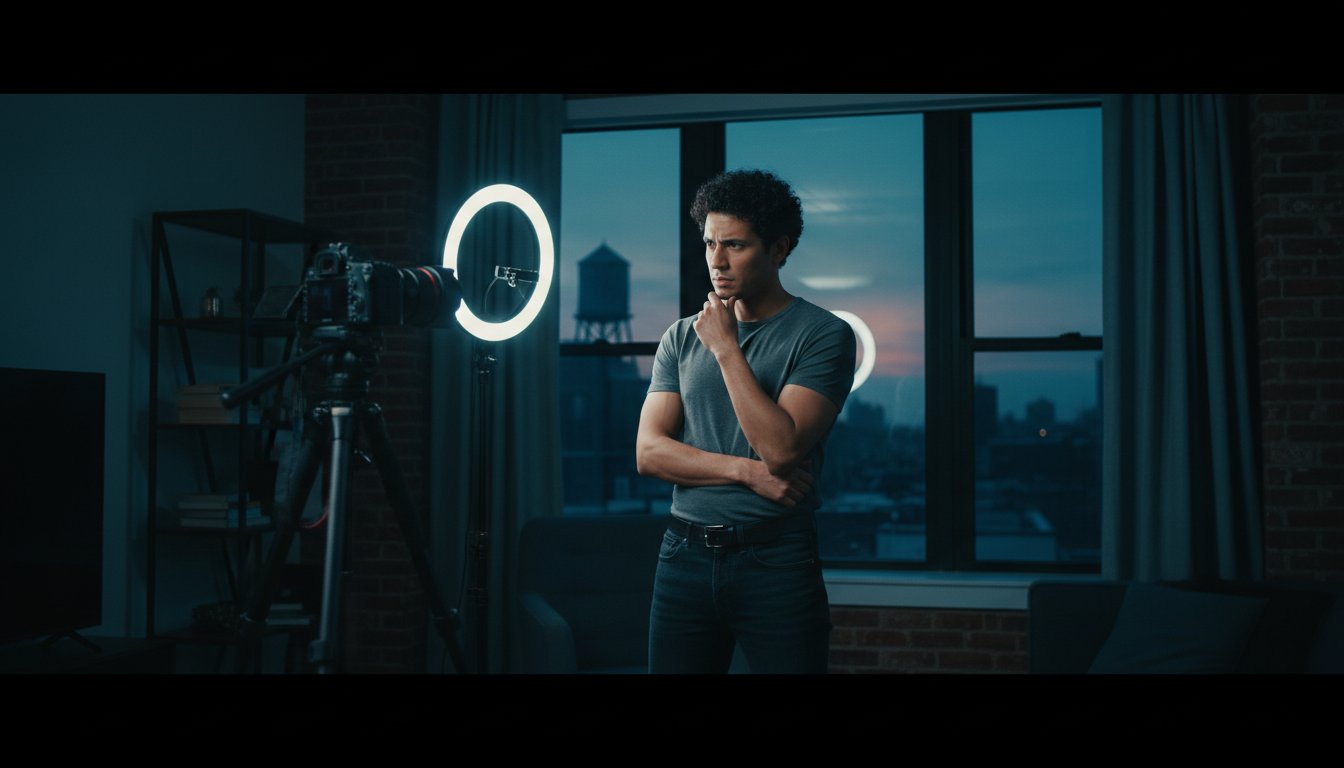
Winning film industry auditions requires a disciplined, five-step workflow that treats every submission as a high-stakes business presentation. It starts with a deep analysis of your sides. You must identify the "moment before" the character speaks; this provides the immediate emotional context that separates professionals from amateurs. If you start the scene with a blank face, you've already lost the room. Next, your technical setup must meet the 2026 standard. This includes three-point lighting, a neutral background, and clean audio recorded with a dedicated microphone. Framing should be a medium close-up, ensuring your eyes are clearly visible and expressive.
When you move to the performance, don't just recite lines. You're delivering a specific "choice." Casting directors want to see your unique interpretation of the character's objective. Once the take is perfect, submission etiquette is your final hurdle. Name your files exactly as requested, usually following a [Name_Role_Project] format, and never miss a deadline. Finally, conduct a post-audition review. This habit of self-analysis is a core part of mastering acting auditions and helps you refine your process for the next role. If you treat every submission as a data point for growth, your booking rate will naturally improve.
Mastering the Self-Tape Technicals
Your technical quality is a direct reflection of your professionalism. In 2026, casting directors expect at least 1080p resolution and a steady, horizontal frame. If your tape is grainy or the audio is echoing, you'll likely be skipped within five seconds. Your "slate" is equally important. It's a 10-second window to show your natural personality. State your name, height, and location clearly. Don't be "extra" or try to stay in character during the slate. Simply be the pleasant, reliable professional they want to have on their set for 12 hours a day.
In-Person and Callback Etiquette
If you're invited to a callback, consistency is key. You must recreate the look and energy of your original self-tape. This isn't the time to debut a new hair color or a different character interpretation unless specifically asked. When you're in the room or on a Zoom session, your directability is being tested. If a director gives you a note, apply it immediately. They aren't just looking for range; they're looking for a collaborator who can pivot without friction. To sharpen these skills before your next big call, consider joining our live industry workshops where you can practice real-time adjustments with seasoned experts.
Accelerate Your Career with the Unique Model & Talent Network
If you're tired of messy DMs and unvetted casting calls that lead to dead ends, you need a different approach. Public platforms often prioritize volume over value, leaving serious talent to drift in an ocean of noise. The Unique Model & Talent Network is designed as a safe haven for those who treat their craft as a business development project. We provide a streamlined hub where you can connect with industry experts and build meaningful relationships without the distractions of traditional social media. Our community moves away from superficiality and toward legitimate career security.
By joining a curated pool of talent, you gain the Founding Member advantage. This status signals to industry pros that you are a vetted professional who understands the 2026 standards of the entertainment business. Our network helps you stop guessing about your portfolio or self-tape quality. Instead, you focus your energy on booking real, paying jobs that offer the security and growth you deserve. While research indicates that actors can spend up to 40% of their time searching for roles on various online platforms, our members use our resources to target film industry auditions with surgical precision. We offer the following tangible benefits to our community:
- VIP Access: Direct connections to industry insiders through live Q&A sessions.
- Curated Opportunities: A focus on vetted, high-quality projects rather than hobbyist noise.
- Professional Advocacy: A network that acts as a reliable bridge between you and established professionals.
- Practical Guidance: Action-oriented advice that replaces vague promises with concrete results.
Beyond the Audition: Continuous Skill Building
Success in this field isn't just about the booking; it's about the growth that happens between them. We offer acting workshops online to ensure your skills stay sharp regardless of your location. Our monthly skill-building challenges push you to create new material and refine your professional presentation. Networking with peers who are at your level and above creates a sense of community belonging that is often missing in this competitive field. You'll find that having a seasoned coach in your corner makes the difference between aspiring and actually working.
Your Invitation to the Network
The door is open for serious models and actors who are ready to move away from the chaotic landscape of public forums. Our curated hub provides access to a library of educational content and industry-vetted resources designed to give you behind-the-scenes insights. You'll find practical guidance that moves you closer to your goals every single day. If you're ready to stop playing the lottery and start building a legitimate career, join the Unique Model & Talent Network today.
Master Your Casting Strategy and Secure the Role
The entertainment landscape of 2026 demands a shift from a lottery mindset to a business strategy. You've learned that mastering film industry auditions requires a precise technical workflow, from identifying the "moment before" in your sides to delivering a high-definition self-tape that meets current studio standards. By treating every submission as a professional meeting, you position yourself to earn the $1,246 SAG-AFTRA daily rate rather than wasting time on unvetted, low-quality calls. Professionalism isn't just about talent; it's about the consistency of your presentation.
You don't have to navigate this journey alone. Our network provides a protective safe haven where you can build meaningful relationships with vetted industry experts and access Red Dot-level guidance. We focus exclusively on real, paying jobs and help you move past the noise of traditional social media. It's time to stop guessing about your professional presentation and start accelerating your career with a community that prioritizes your integrity and growth. Stop guessing and start booking; join the Network today! Your potential is limitless when you have the right roadmap and a seasoned coach in your corner.
Frequently Asked Questions
How do I find legitimate film industry auditions without an agent?
You find legitimate film industry auditions by using established, professional platforms like Actors Access Plus or by joining a private, vetted talent community. Avoid searching on open social media forums where unvetted noise is common. Legitimate casting directors use secured databases to find talent for projects paying the SAG-AFTRA daily rate of $1,246. If you're working without an agent, your digital presence must be impeccable to pass initial filtering tools.
What should be included in a professional acting portfolio in 2026?
A professional 2026 portfolio requires a high-resolution headshot, a concise digital reel, and a 30-second "About Me" video. This video is now a critical tool for showing your personality and directability to decision-makers. Your portfolio should also include a clear list of special skills and physical attributes. Ensure all files are optimized for mobile viewing, as many casting directors review submissions on the fly between production meetings.
Are self-tapes still the standard for film industry auditions?
Self-tapes remain the standard first-round tool for film industry auditions in 2026. Most television and commercial casting starts with a digital submission. Callbacks frequently occur on virtual platforms like Zoom, while in-person sessions are reserved for final chemistry reads. This hybrid model helps productions stay efficient while allowing talent from different regions to be seen by major casting offices without the need for travel.
How can I tell if a film audition or casting call is a scam?
You can identify a scam by looking for "pay-to-play" requirements or a lack of specific production details. Legitimate casting calls never ask for a fee to book a role or require you to pay for "mandatory" photography through their office. If a project doesn't list a production company or a clear pay rate, it's likely not a professional opportunity. Always prioritize vetted platforms over messy DMs or unorganized social posts.
What equipment do I need for a professional-quality self-tape?
You need a smartphone capable of 1080p recording, a three-point lighting kit, and a dedicated external microphone. Good audio is often more important than video quality; a shotgun or lapel mic ensures your voice is crisp and clear. Use a neutral, solid-colored backdrop to keep the focus entirely on your performance. This setup allows you to meet the technical standards expected by major studios and professional casting directors.
Does joining a talent network actually help you book more film roles?
Joining a talent network helps you book more roles by providing a safe haven from industry noise and direct access to expert feedback. These communities offer live workshops and Q&A sessions with industry insiders that aren't available on public sites. By removing the guesswork from your submission process, you can focus on real, paying jobs and build meaningful relationships that lead to long-term career growth.
What is the difference between an open casting call and a private audition?
An open casting call is available to the general public, while a private audition is an invitation-only meeting. Open calls often involve thousands of applicants and serve as a broad search tool for specific looks. Private auditions occur after a casting director has reviewed your digital profile or received a recommendation from an agent. In 2026, most professional narrative roles are filled through the private, curated audition process.
How do I get feedback on my auditions to improve my booking rate?
You get feedback by participating in professional workshops or seeking portfolio reviews from industry experts. Public casting platforms are designed for high volume and rarely provide individual critiques. Private networks offer dedicated skill-building challenges and expert Q&A sessions where you can receive practical guidance. This feedback is essential for identifying technical mistakes in your self-tapes and refining your performance to improve your overall booking rate.


