
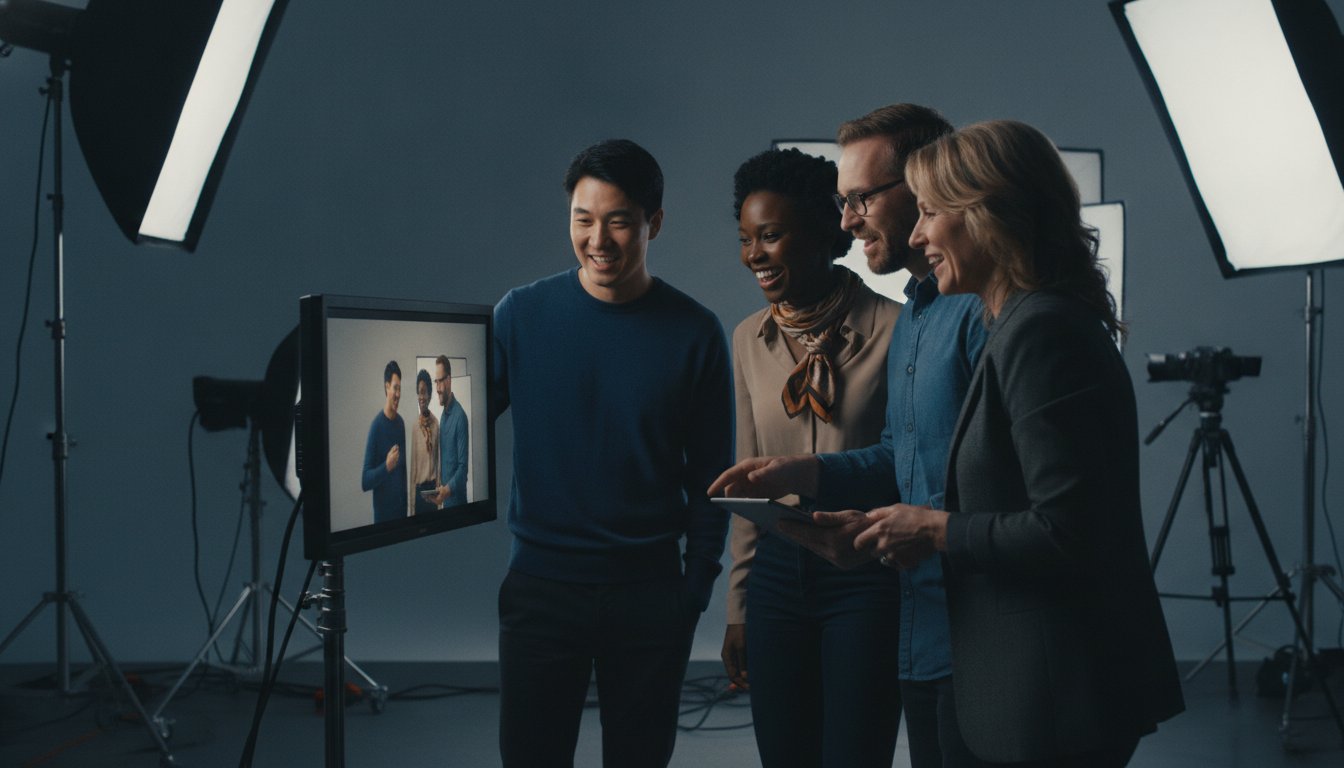
What if the most profitable version of your career didn't require a runway walk or a 5'10" frame? Many aspiring talents waste years chasing high-fashion dreams while overlooking the sector that drives 28% of total industry revenue. If you've ever wondered what is commercial print modeling, it's the professional art of being "super-relatable" rather than a "supermodel." It's about representing brands in advertisements, catalogs, and digital campaigns that real people interact with every day.
You're likely tired of the noise from predatory "modeling schools" and the confusion of social media scouts who offer zero transparency. You want clarity on how to actually get paid. This guide will strip away the mystery to reveal the specific requirements, the $56,049 average annual income potential, and the professional steps you need to take to book real work in 2026. We'll break down the impact of the 2026 New York State Fashion Workers Act on your rights, show you how to build a portfolio that casting directors actually want to see, and help you find a legitimate path into this $5.2 billion U.S. market.
Key Takeaways
- Understand why success in this niche depends on being aspirational yet attainable to the average consumer rather than fitting high-fashion stereotypes.
- Learn what is commercial print modeling by debunking myths about height and age, focusing instead on the "Real People" movement and specific character archetypes.
- Discover how to transition from still photography to "Motion Print" to meet the growing brand demand for short-form video loops in digital ads.
- Identify the five essential steps to launch your career, starting with defining your unique professional archetype and investing in authentic headshots.
- Find out how to bypass social media noise by joining a gated community that offers direct access to vetted industry experts and casting directors.
Defining Commercial Print Modeling: The Business of Relatability
If you want a career that lasts decades rather than seasons, you must understand the core of this industry. At its most basic level, what is commercial print modeling? It is the strategic use of talent who look like "real people" to bridge the gap between a brand's product and a consumer's daily life. While high fashion relies on the avant-garde, this sector thrives on the familiar. It is about being the "mom" who looks organized, the "tech CEO" who appears visionary, or the "fitness enthusiast" who actually looks like they enjoy a morning run.
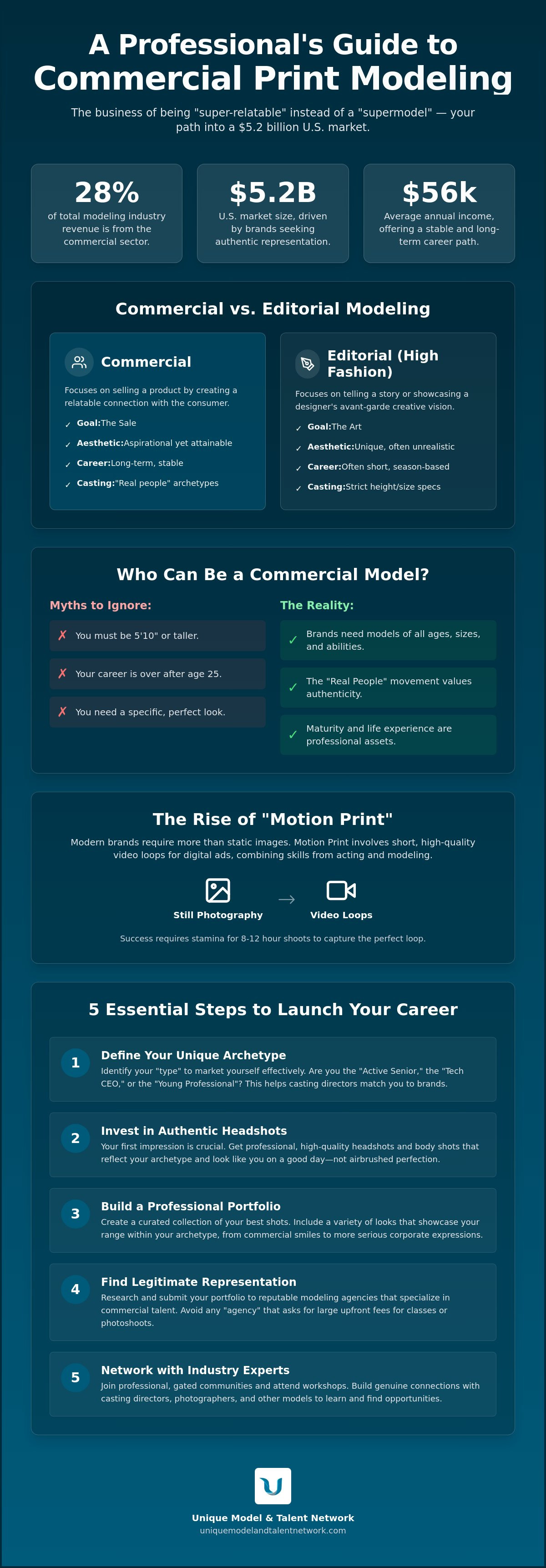
By 2026, the definition of "print" has expanded far beyond the physical page. It now encompasses digital lookbooks, interactive app-based advertising, and the sponsored social media campaigns that dominate our feeds. As noted in Wikipedia's overview of modeling, commercial models are used in advertisements for a wide range of products. This sector is a powerhouse, accounting for 28% of total industry revenue in 2023. It is the most diverse and financially stable path for the modern professional, offering opportunities for models of all ages, sizes, and abilities.
Commercial vs. Editorial: Knowing the Difference
To build a successful portfolio, you need to distinguish between "the art" and "the sale." Editorial modeling is designed to showcase a designer’s vision or a photographer’s creative concept. In contrast, commercial modeling is strictly about the product and the consumer's relationship with it. Brands in 2026 have shifted away from airbrushed perfection and toward authenticity. This shift is why commercial models often enjoy longer, more stable careers. You don't have to be a teenager to book these jobs; in fact, maturity and life experience are often seen as professional assets.
Where You Will See Commercial Print Work
The Mechanics of the Industry: How Commercial Models Work
Understanding what is commercial print modeling requires looking past the lens and into the narrative. You aren't just a face; you are a visual solution to a brand's marketing problem. When you step onto a commercial set, you are hired to play a specific character that resonates with a target demographic. Whether you are portraying a first-time homebuyer or a seasoned executive, your ability to project authenticity is your most valuable asset. As noted by The Miami School of Fashion & Design, the goal is to create relatable content that speaks directly to the consumer's daily life.
In 2026, the industry has shifted toward "Motion Print." This involves capturing short, high-quality video loops alongside traditional stills. Brands use these snippets for digital banners and social media ads where movement catches the eye faster than a static image. Success on set requires the stamina to maintain high energy for 8 to 12 hours while repeating subtle movements for the perfect loop. If you can master this hybrid of acting and modeling, you will become a high-value asset for modern agencies.
The Concept of 'Archetypes' in Casting
Casting directors don't look for "pretty" in a vacuum; they look for a specific demographic that matches their buyer. You must identify your "type" to market yourself effectively. Are you the "Active Senior" who appeals to healthcare brands, or the "Young Professional" who fits fintech advertisements? An archetype is a marketing tool for talent that categorizes their physical traits and personality into a recognizable consumer profile. If you are unsure of your current marketability, participating in The Network Membership can help you refine your archetype through professional feedback.
Usage and Buyouts: How You Get Paid
Financial literacy is the difference between a hobby and a career. In commercial modeling, you typically receive two types of compensation. The "Session Fee" covers your time on set, but the real income often comes from the "Usage Fee." This is what a brand pays to use your image for a specific duration and geographic region. A national billboard campaign pays significantly more than a local brochure because the reach is greater. If a brand wants "Unlimited Usage" or a "Buyout," they are paying for the right to use your image indefinitely, which should always command a premium rate. Always verify that your deal memos clearly outline these terms to ensure your career remains financially legitimate.
Requirements and Myths: Who Can Be a Commercial Print Model?
The biggest barrier to entry for most talent is a set of outdated rules that simply don't apply to this niche. If you've been told you must be 5'10" or taller to succeed, you've been misinformed. In the world of commercial print, height is rarely a deciding factor. Because the goal is to reflect the consumer, brands need models who look like the people buying their products. Whether you are 5'2" or 6'4", your value lies in your ability to be relatable. Understanding what is commercial print modeling means recognizing that "perfection" is often a liability. Authenticity is your true asset.
While there are no strict height or weight charts, the industry does demand a specific set of professional tools. A healthy smile and clear skin are foundational, but the ability to take direction is what gets you re-booked. Modern casting directors increasingly view acting skills as a prerequisite for anyone asking what is commercial print modeling in a practical sense. You aren't just standing still. You are reacting to a scene, interacting with a product, and conveying an emotion. If you can't "act" the part of the happy homeowner or the stressed student, the camera will catch the lack of sincerity. This is why many successful commercial models spend as much time in acting workshops as they do in front of a lens.
Age and Diversity in 2026
The Professional Mindset Over Physical Perfection
Your looks might get you the first audition, but your mindset secures your career. Punctuality and set etiquette are the ultimate tools for longevity. In a high-stakes environment where production costs are thousands of dollars per hour, being five minutes late is a professional failure. Transitioning from a hobbyist to a professional requires a deep understanding of the business. This is where modeling career coaching becomes essential. It provides the roadmap to navigate contracts, manage industry expectations, and treat your talent as a legitimate business enterprise. Success here is about discipline, not just DNA.
How to Start Your Commercial Print Career: 5 Essential Steps
Launching a career in this field requires more than just a few lucky snapshots. It requires a strategic business plan. If you are serious about your craft, you must treat your entry into the market with the same discipline as any other professional startup. Understanding what is commercial print modeling in a practical sense means preparing the specific assets that casting directors demand in 2026. Follow these five steps to move from an aspiring talent to a working professional.
- Step 1: Define your 'Look' and 'Archetype.' Analyze current market trends to see where you fit. Are you the "Reliable Neighbor" or the "Innovative Entrepreneur"?
- Step 2: Invest in a professional headshot. Skip the heavy filters. You need a high-quality image that actually looks like you on a Tuesday morning, not a retouched version of someone else.
- Step 3: Create a 'Comp Card.' This is a double-sided card featuring 4 to 5 diverse lifestyle shots that showcase your range.
- Step 4: Build a digital presence. Your social media should act as a curated extension of your brand, highlighting your personality and professional work ethic.
- Step 5: Master the 'Self-Tape.' Many initial queries in 2026 are personality checks. You must be able to record a clear, engaging video that proves you can follow directions and speak naturally.
Building Your Portfolio and Comp Card
There is a distinct difference between a high-fashion book and a commercial acting portfolio. While fashion portfolios focus on mood and artistic angles, your commercial materials must focus on storytelling. You need three essential shots: the "Clean Headshot," the "Lifestyle/Action" shot showing you in a relatable scenario, and a "Full Body" shot to show your proportions. Your comp card functions as your professional business card in 2026, serving as the primary tool casting directors use to evaluate your range in seconds.
Networking Without an Agent
Many beginners believe an agent is the only way to find work. This is a myth that often leads to stagnation. While agents are valuable, you can find legitimate casting calls on professional industry websites. However, you must be vigilant. The rise of "Social Media Casting" has created a breeding ground for scams. If a "scout" asks for money upfront or uses informal communication methods, walk away. Direct access to casting directors through professional workshops is often the fastest track to booking. If you want to bypass the noise and connect with vetted experts, consider joining The Network Membership to start building real industry bonds.
Accelerate Your Career with Unique Model & Talent Network
Success in the 2026 entertainment market isn't just about what you know; it is about the quality of the environment you choose to work in. While public social media platforms are saturated with informal communication and unverified "opportunities," professional growth requires a concentrated focus. If you are still trying to grasp what is commercial print modeling by scrolling through unvetted forums, you are likely encountering more noise than signal. The Unique Model & Talent Network serves as a definitive solution, acting as a bridge between your emerging talent and the high standards of established industry professionals.
Our gated, professional community removes the guesswork that often stalls a new career. We provide direct access to casting directors, photographers, and industry experts who understand the grounded reality of business development. Through our Portfolio & Reel Reviews, you receive the specific, tangible feedback needed to ensure your marketing materials match current market demands. This isn't a social club; it is an optimized digital space designed for those who are serious about their craft and their financial legitimacy.
Navigating the complexities of the New York State Fashion Workers Act or understanding the nuances of SAG-AFTRA contract rates is easier when you have a supportive peer network. Sharing experiences with other serious professionals helps clarify the value proposition of different bookings and builds professional bonds that last. We foster a sense of community belonging that moves beyond vanity and into the realm of professional business development, providing clarity in an otherwise uncertain field.
The Network Advantage: Education and Access
Participating in our Monthly Skill-Building Challenges allows you to grow your resume in a controlled, supportive setting. These challenges are designed to simulate real-world scenarios, preparing you for the high-level professional environment of a commercial set. Additionally, our Industry Expert Q&A Sessions offer the "inside track" on what is commercial print modeling trends are currently booking in the $5.2 billion U.S. market. By positioning the network as your career mentor and advocate, we help you avoid predatory "modeling schools" and focus on tangible success.
Join a Community That Prioritizes Your Success
A managed community is inherently safer and more productive than any public group. We prioritize integrity and efficiency, ensuring that our members have a reliable source of direction in an often chaotic industry. This "Savvy Insider" approach focuses on building a sustainable, paid career through internal industry perspectives and practical advice. If you are ready to move away from the superficiality of social media and toward career security, the door is open for you.
Join The Network Membership today and start booking real work!
Launch Your Career with Professional Clarity
The shift toward authenticity in 2026 has transformed the industry into a space where relatability is the highest currency. You've learned that success isn't about fitting a specific height or age bracket; it's about mastering the business of visual storytelling. By identifying your unique archetype and understanding the mechanics of usage rights, you position yourself as a professional asset rather than a hobbyist. Understanding what is commercial print modeling is only the first step. The real work begins when you move away from the noise of social media and into a space where your growth is prioritized by experts.
If you are serious about navigating this $5.2 billion market with integrity, you need a roadmap that bypasses the scams and confusion. We provide direct access to Casting Directors and a vetted community of professional talent who are actively booking work. Through our live monthly workshops and professional portfolio reviews, you can remove the guesswork and accelerate your career development with confidence. Ready to turn your look into a career? Join The Network Membership today!
Your journey from aspiring talent to a working professional starts with a single, disciplined decision. We are here to open the door and advocate for your success every step of the way.
Frequently Asked Questions
Do I need an agent to start commercial print modeling?
You don't need an agent to launch your career. Many successful professionals begin by self-submitting to legitimate casting calls found on vetted industry platforms. While agencies provide valuable representation, building your initial resume and archetype through a professional community allows you to enter the market with a proven track record. This proactive approach ensures you are prepared for high-level representation when the time comes.
What is the average height for a commercial print model?
There is no strict height requirement in this sector. Unlike high fashion, which often demands specific vertical standards, commercial brands prioritize relatability and demographic fit. Whether you are 5'2" or 6'4", your marketability depends on your ability to represent a specific consumer archetype. Brands are seeking "real people" to sell products, making your personality and look more important than your physical measurements.
How much do commercial print models make per shoot?
Earnings vary based on the specific contract and usage rights. In 2026, the SAG-AFTRA on-camera principal rate for an eight-hour day is $822.30. Non-union shoots may offer different session fees, but the total income often increases through usage fees paid for the rights to use your image. On average, commercial models in the United States earn approximately $56,049 annually, reflecting the financial legitimacy of this professional path.
What should be on a model's comp card in 2026?
Your comp card must feature a clean, professional headshot on the front and four to five diverse lifestyle images on the back. These images should showcase your range, including an action shot and a full-body photo. In 2026, your card acts as a high-speed marketing tool that allows casting directors to evaluate your archetype instantly. Ensure your contact information and basic measurements are clearly legible to maintain a professional standard.
Is commercial print modeling different from catalog modeling?
Catalog modeling is a specific category within the broader commercial umbrella. While catalog work focuses on showcasing individual garments or products for retailers, what is commercial print modeling generally involves selling a brand's lifestyle or story. Commercial campaigns are often higher-budget and appear in more visible outlets like billboards or national digital ads, whereas catalog work is typically used for inventory listings and e-commerce websites.
Can I do commercial print modeling if I have tattoos or piercings?
Yes, tattoos and piercings are increasingly accepted in the modern market. Many brands now prioritize authenticity and diversity, seeking talent that reflects the actual consumer base. However, you should always disclose visible tattoos during the casting process. Some clients may require them to be covered with makeup for specific conservative archetypes, while others will hire you specifically for your unique, alternative look to reach a younger demographic.
How do I know if a modeling job is a scam?
You can identify a scam by looking for unprofessional communication or requests for upfront registration fees. Legitimate agencies and casting directors earn their income through commissions on your bookings, not by charging you to join their roster. Be wary of scouts who contact you exclusively through social media DMs without a professional email or office. Always verify opportunities through a vetted community to ensure you are pursuing financially legitimate work.
What is the difference between a headshot and a commercial print photo?
A headshot is a tight portrait focused solely on your face and personality, usually used for identification. A commercial print photo involves a lifestyle scene that tells a story, such as a model interacting with a product or a family eating dinner. While a headshot establishes your look, commercial photos prove your ability to act and react within a brand's narrative. Both are essential assets for a professional portfolio in 2026.


