

Did you know that 99% of television casting is now handled through self-tapes, and a single role can attract over 3,000 submissions on its first day? These numbers can feel daunting for any parent trying to support their child's dreams without becoming a "stage parent." You likely feel the pressure of mastering technical setups while worrying about industry scams and the delicate balance between schoolwork and scripts. It is a lot to manage, but you don't have to do it alone.
This guide will show you exactly how to prepare your child for auditions by mastering the modern digital partnership required in 2026. We provide the clarity you need to move past the noise of social media and toward professional business development. You'll learn the industry standards for high quality self-tapes, how to build a portfolio that commands attention, and the specific ways to verify legitimate opportunities.
By the end of this article, you'll have a clear checklist for audition day and the confidence to act as your child's most effective professional advocate. We're diving into the technical requirements, the latest California regulatory changes for 2026, and the insider strategies that turn a simple submission into a career-defining callback.
Key Takeaways
- Understand why the 2026 industry requires a professional home studio setup and how digital etiquette has replaced traditional in-person cattle calls.
- Master the "Manager" mindset to learn how to prepare your child for auditions by handling complex logistics while maintaining healthy artistic boundaries.
- Shift your portfolio strategy from high-glamour portraits toward authentic "digitals" that prioritize your child's natural personality over staged perfection.
- Execute a technical checklist for self-tapes that covers lighting, frame sizing, and audio clarity to meet the high standards of modern recruitment.
- Recognize the value of professional portfolio reviews and expert feedback to ensure your child's submission materials stand out in a competitive field.
The 2026 Audition Landscape: Why Digital Preparation is Non-Negotiable
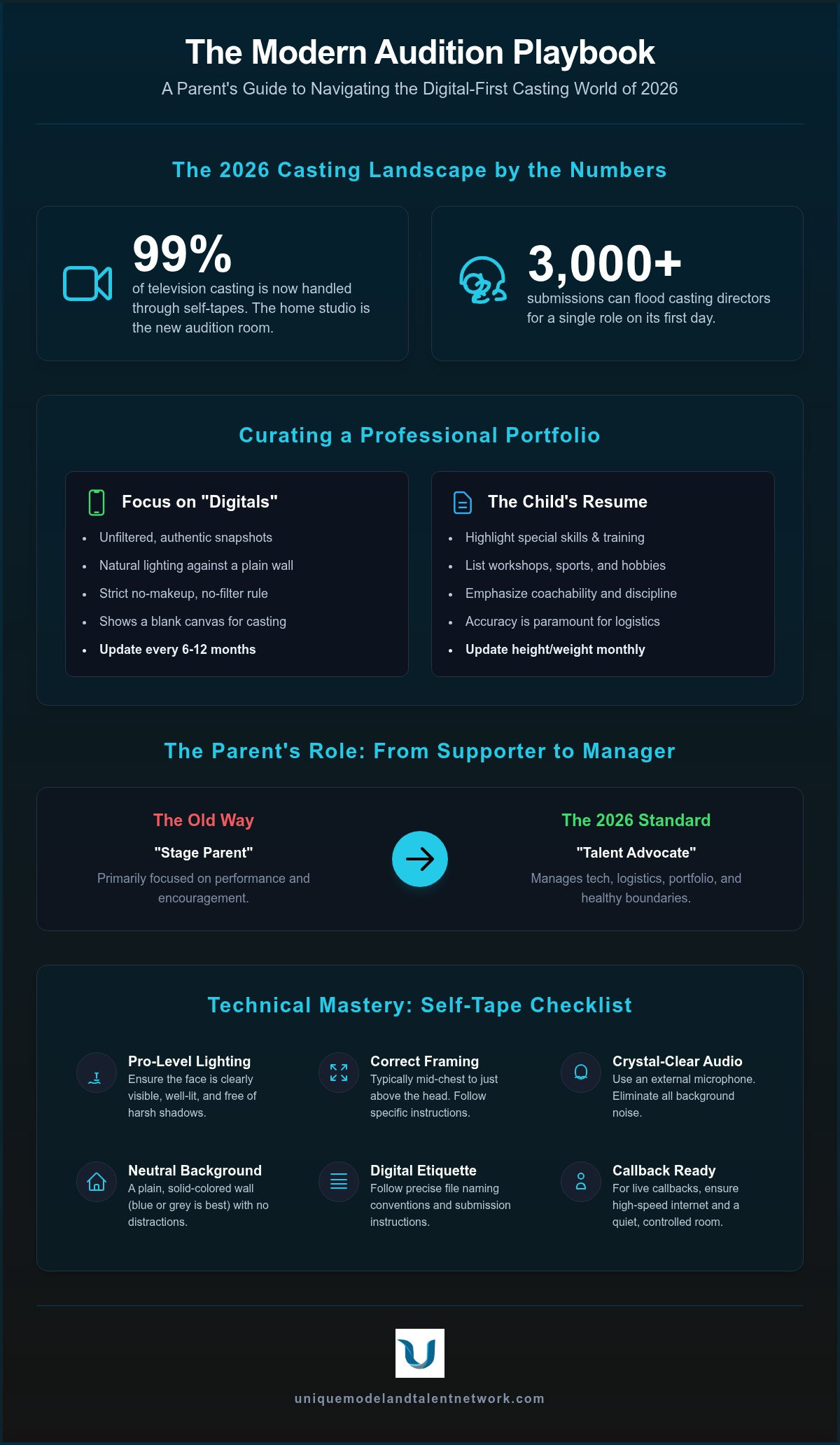
The era of the "cattle call" is over. In 2026, 99% of television casting begins with a digital submission, meaning your living room is now the primary stage for your child's career. If you want to know how to prepare your child for auditions, you must first accept that your technical setup is just as vital as their performance. Casting directors now receive as many as 3,000 submissions on the first day a role is posted. Professionalism no longer just means showing up on time. It means mastering digital etiquette, precise file naming, and studio-grade lighting quality before you ever hit "send."
An audition is a three-part demonstration. It proves your child has the skill for the role, the personality that fits the production, and the coachability required on a fast-paced set. Platforms like Actors Access and other major industry portals serve as the digital infrastructure for this process. They aren't just job boards; they are sophisticated databases where your child's profile must be optimized with the right metadata to even be seen by recruiters. Without a polished digital presence, even the most talented young performers remain invisible to the industry's gatekeepers.
What is a 'Digital-First' Audition?
A digital-first audition is the mandatory electronic screening process that serves as the primary gatekeeper for all professional acting roles in 2026. This process relies heavily on technical stability and rapid communication. If you secure a live Zoom callback, high-speed internet and a controlled, quiet environment are non-negotiable requirements for success. Casting directors use specific metadata tags to filter thousands of young performers based on niche skills or physical attributes. An incomplete profile often results in immediate exclusion from the search results.
The Rise of Global Casting for Local Roles
Geography no longer limits opportunity. Your child can audition for a major New York theatrical project from a living room in Ohio. This global reach brings new challenges, such as managing disparate time zones and responding to rapid-turnaround requests within hours. You need a "ready-to-go" digital kit and a deep understanding of the regulations for child actors that vary by region. Success in this environment requires a disciplined, organized approach to digital management and a clear strategy for how to prepare your child for auditions on a global scale.
Curating a Professional Portfolio: The Essential Materials
Your child's portfolio is the first point of contact between them and a potential casting director. In 2026, the industry has shifted away from overly polished "glamour" shots toward raw authenticity. Knowing how to prepare your child for auditions starts with understanding that recruiters want to see who your child is, not how well they can wear a costume or heavy makeup. A professional portfolio acts as a digital business card that proves your child is ready for the high standards of a professional set.
Digitals vs. Professional Headshots
While professional headshots still hold value, "digitals" have become the industry's most requested material. Digitals are unfiltered snapshots taken against a plain wall with natural lighting. You don't always need an expensive studio session; a high-quality smartphone often suffices for these quick updates. Casting directors look for a blank canvas in young talent to imagine them in various roles. Stick to a strict "no-makeup, no-filter" rule. Since children's appearances change rapidly, you should update these images every 6 to 12 months to ensure they remain a current representation.
The Anatomy of a Winning Child Resume
A child's resume looks different than an adult's. If your child has limited professional experience, focus on "Special Skills" and training. List any workshops, sports, or unique hobbies that signal high levels of coachability and discipline. For a deeper dive into structuring these elements, see The Ultimate Guide to Building an Acting Portfolio That Books in 2026. Accuracy is paramount. You must update height and weight measurements monthly, as production logistics like costumes and framing depend on these details. If you're unsure if your current materials meet these high standards, our Portfolio & Reel Reviews can provide the professional audit you need.
The 30-Second Video Slate
The video slate is your child's primary personality pitch. This 30-second clip allows casting directors to hear your child's natural voice and gauge their energy. When selecting age-appropriate audition material for these clips, avoid overly dramatic scenes. A simple introduction and a brief, upbeat story about a hobby often perform better than a rehearsed script. It's about showing the real kid behind the headshot. This brief moment of connection can make or break a submission before the actual acting even begins.
The Parent’s Role: Becoming a Supportive Talent Advocate
Your transition from parent to talent manager is a critical step in your child's professional journey. Success in this industry requires you to adopt a manager's mindset. You handle the complex logistics of scheduling and technical requirements so your child can focus entirely on their craft. If you are learning how to prepare your child for auditions, you must recognize that your primary job is to create a stable, pressure-free environment. This means knowing when to help with line memorization and when to step out of the frame to let their unique personality shine. Reframing rejection as redirection is also vital; help your child understand that a "no" usually means they weren't the right fit for that specific vision, not that they lacked talent.
Managing the 'Stage Parent' Perception
Industry professionals value families who are low-maintenance and high-efficiency. You set the tone for your child's long-term reputation by being organized and respectful of the production team's time. When communicating with agents or casting directors, keep your inquiries focused on logistics or safety. Avoid questioning artistic decisions or demanding feedback on every submission. By acting as a disciplined professional, you signal that your child comes from a supportive, stable background. This makes them a much more attractive hire for multi-week projects.
Educational Advocacy and Industry Safety
A protective mentor always prioritizes safety over fame. You must be able to distinguish between legitimate opportunities and pay-to-play scams that promise stardom for an upfront fee. In 2026, the regulatory environment is stricter than ever to protect young performers. For example, anyone providing child performer services in California for a fee must now hold a Child Performer Services Permit, which carries a $198 application fee. You are also responsible for securing an Entertainment Work Permit. While a 6-month permit is free, a 10-day permit for first-time registrants costs $50.
Financial protection is equally important. You must set up a Coogan Account, which is a blocked trust where 15% of your child's earnings are held until they reach adulthood. Staying informed about these legal requirements is a core part of being a savvy advocate. To deepen your understanding of these professional standards, read our Modeling Career Coaching: The Professional’s Guide to Navigating the Industry in 2026. As of January 2026, California law AB 653 designates talent managers and coaches as mandated reporters. This adds an essential layer of legal protection for your child's well-being on set and ensures you are working within a professional, regulated framework.
Technical Mastery: Step-by-Step Preparation for Self-Tapes
In 2026, technical errors are the fastest way to have a submission rejected before the acting is even seen. Casting directors now use high-specification filters to sort through thousands of files; if your audio is echoey or your lighting is dim, your child's performance might never reach a human eye. Mastering the "Home Studio" is the most practical answer to how to prepare your child for auditions. You don't need a professional soundstage, but you do need a disciplined approach to your technical setup to ensure your child looks and sounds like a pro.
The 5-Step Self-Tape Setup
- Step 1: Three-Point Lighting. Position your primary light source (key light) at a 45-degree angle to your child, a fill light on the opposite side to soften shadows, and a backlight to separate them from the background. This eliminates distracting shadows and makes their eyes "pop" on screen.
- Step 2: Off-Camera Eyeline. Ensure your child's eyeline is just off-camera toward the "reader." They should never look directly into the lens during a scene unless the instructions specifically demand it. This creates the illusion of a three-dimensional world.
- Step 3: Varied Framing. Capture the wide, medium, and close-up shots exactly as requested in the casting breakdown. Standard scenes usually require a medium shot (waist up), while emotional moments benefit from a tighter close-up.
The "Video Slate" serves as your child's digital introduction. During the slate, your child should look directly at the camera lens with a warm, natural expression. They must clearly state their name, age, height, and current location. Professional file management is the final hurdle. Use clear naming conventions like "ChildName_Role_Project.mp4" and ensure you use modern compression tools. Large, unoptimized files often fail to upload or get stuck in casting portals, which can lead to missed deadlines.
Common Self-Tape Technical Pitfalls
Audio clarity is often more important than video resolution. Avoid echoey rooms with hard surfaces; use rugs, curtains, or even hanging blankets to dampen sound. Distracting background noises like air conditioners or distant traffic can ruin an otherwise perfect take. Never use digital zooms or "beauty" filters, as these distort the natural "blank canvas" that recruiters are looking for. For a deeper look at industry-standard filming requirements, read our guide on Film Industry Auditions: The Professional Guide to Booking Work in 2026.
If you want to ensure your technical setup meets the high standards of elite agencies, join our Live Industry Workshops for real-time feedback on your home studio environment.
Gaining a Competitive Edge through Expert Feedback
Practicing in a vacuum is one of the most common mistakes parents make. While you might feel your child's performance is perfect, industry standards are specific and unforgiving. Without an external, professional perspective, your child's growth can easily become stagnant. Real-time feedback from casting directors before an actual audition provides a massive competitive advantage. It allows you to correct technical issues or performance habits that might otherwise lead to an immediate "no."
The Value of Pre-Audition Portfolio Reviews
A professional review can identify subtle flaws in headshots or resumes that you might overlook. Perhaps the lighting in a self-tape is washing out your child's features, or a resume is missing critical measurements. By catching these errors early, you ensure that every submission meets the high standards of 2026 recruitment. Engaging in monthly skill-building challenges is another effective way to stay sharp. These challenges help your child build a diverse library of usable self-tape clips, ensuring they are always "audition-ready" even during slow periods.
Understanding how to prepare your child for auditions involves more than just memorizing lines; it requires active participation in a high-level professional community. To learn more about where to find these professional connections, see The Ultimate Acting Industry Networking Platform Guide for 2026. Leveraging a managed network allows you to access vetted resources and connect with peers who share your commitment to professional growth.
Direct Access to Industry Decision-Makers
There is a significant difference between a public social media forum and a moderated industry Q&A. Public groups are often filled with misinformation or hobbyist advice that can lead you down the wrong path. In contrast, a gated community provides direct access to casting directors and industry experts who offer legitimate, actionable insights. Live workshops remove the mystery of the casting process by showing you exactly what happens on the other side of the screen. Mastering how to prepare your child for auditions is a continuous process of refinement that benefits from this direct professional exposure.
These sessions empower you as a parent-manager. You gain the clarity needed to navigate a complex field without the distractions typical of unorganized platforms. When you participate in live workshops, you aren't just learning; you're building professional bonds that can accelerate your child's career. This level of mentorship is the bridge between emerging talent and established industry professionals. It’s about moving away from the superficiality of social media and toward a sense of career security and community belonging.
If you are serious about your child's craft, don't leave their success to chance. Join the Unique Model & Talent Network to get professional feedback on your child's audition materials today!
Securing Your Child's Professional Future
Mastering the digital landscape is no longer optional for families serious about the entertainment industry. You now understand that technical precision in your home studio and an authentic, unfiltered portfolio are the keys to catching a recruiter's eye. By adopting a manager's mindset and staying compliant with the latest legal protections, you provide the stability your child needs to flourish. Learning how to prepare your child for auditions is a journey of continuous refinement, but you don't have to navigate it alone.
Accessing a vetted, scam-free community provides the clarity and security you deserve. Our network offers direct access to casting directors and live monthly skill-building challenges to keep your child's talent sharp. If you're ready to move past the noise of social media and toward tangible success, Ready to elevate your child's career? Join the Network for professional portfolio reviews and expert workshops today! Your child's potential is limitless when backed by the right professional standards and a community that values integrity.
Frequently Asked Questions
What should my child wear to a commercial audition?
Choose solid, bright colors that complement your child's features without using distracting patterns or large logos. You want the casting director to focus on the performance rather than the outfit. Avoid pure white or black as these often cause exposure issues with camera sensors. Dress the child in a style that suggests the character's world without appearing like a literal Halloween costume.
How long should a child's audition monologue be?
Aim for a monologue that lasts between 30 and 60 seconds. Casting directors usually make a determination about a performer's fit within the first few moments, so brevity is your ally. Select material that is strictly age-appropriate and allows your child's natural energy to shine. A high-impact, short piece is always more effective than a long, rambling performance that loses the viewer's attention.
Do I need a professional camera for self-taped auditions?
You don't need a professional cinema camera; a modern smartphone is perfectly acceptable for first-round submissions. Your focus should be on stability and clarity rather than expensive gear. Use a tripod to avoid shaky footage and prioritize high-quality lighting to eliminate shadows. Mastering the technical basics of your existing devices is a practical part of how to prepare your child for auditions in 2026.
How can I tell if a casting call for children is legitimate?
Legitimate casting calls never require upfront talent fees or registration costs to audition. Real industry professionals earn their commission only after your child gets paid for the work. Verify the production company's history and look for specific details about the project. Joining a gated, managed community is the most reliable way to ensure you are accessing vetted opportunities while avoiding predatory industry scams.
Should my child wear makeup for a modeling audition?
Children should never wear makeup for modeling or acting auditions unless the casting breakdown specifically requests it for a character. Recruiters are looking for a blank canvas and need to see your child's natural skin and features. Stick to a strict no-makeup, no-filter rule to maintain professional standards. Presenting an authentic, age-appropriate image is what builds trust with elite agencies and casting directors.
What is a 'slate' and why is it important for kids?
A slate is a short digital introduction where your child states their name, age, height, and current location. It serves as a personality check and allows the casting team to hear your child's natural speaking voice. This brief clip is a fundamental step in how to prepare your child for auditions because it proves they can follow directions and present themselves with confidence and professional poise.
How do I handle my child's nerves before a big callback?
Reframe the callback as a fun opportunity to play and share their talent rather than a high-stakes exam. Keep the morning routine as normal as possible and avoid over-rehearsing lines, which can make the performance feel robotic. By focusing on the creative process instead of the final result, you help your child manage their nerves and maintain a healthy, long-term relationship with the craft.
Can my child audition for roles without a talent agent?
Your child can certainly audition for roles without an agent by using reputable self-submission platforms. While agents have access to exclusive breakdowns, many commercial and independent projects are open to the public. Building a track record of bookings on your own is a powerful way to demonstrate your child's marketability. This independent success often acts as the bridge to securing top-tier talent representation in the future.


