

Landing a role in a slasher or a supernatural thriller requires much more than a convincing scream; it demands a specialized technical toolkit that most acting classes simply don't cover. If you have been searching for how to get cast in a horror movie, you likely already know that this genre is a unique beast. You might feel uncertain about your physical safety during intense stunts or frustrated by a reel that lacks the dark, atmospheric footage casting directors crave. It's common to feel lost when trying to separate legitimate opportunities from the chaos of public casting calls.
We understand that building a career in the shadows requires a clear, professional roadmap. This guide provides the mentorship you need to master the technical skills, portfolio requirements, and networking strategies essential for breaking into the horror industry. You'll learn how to navigate the specific demands of a genre set, from vocal health to working with heavy prosthetics. We will preview the audition process, show you how to network effectively with directors, and explain how to build a portfolio that establishes you as a serious professional in the field.
Key Takeaways
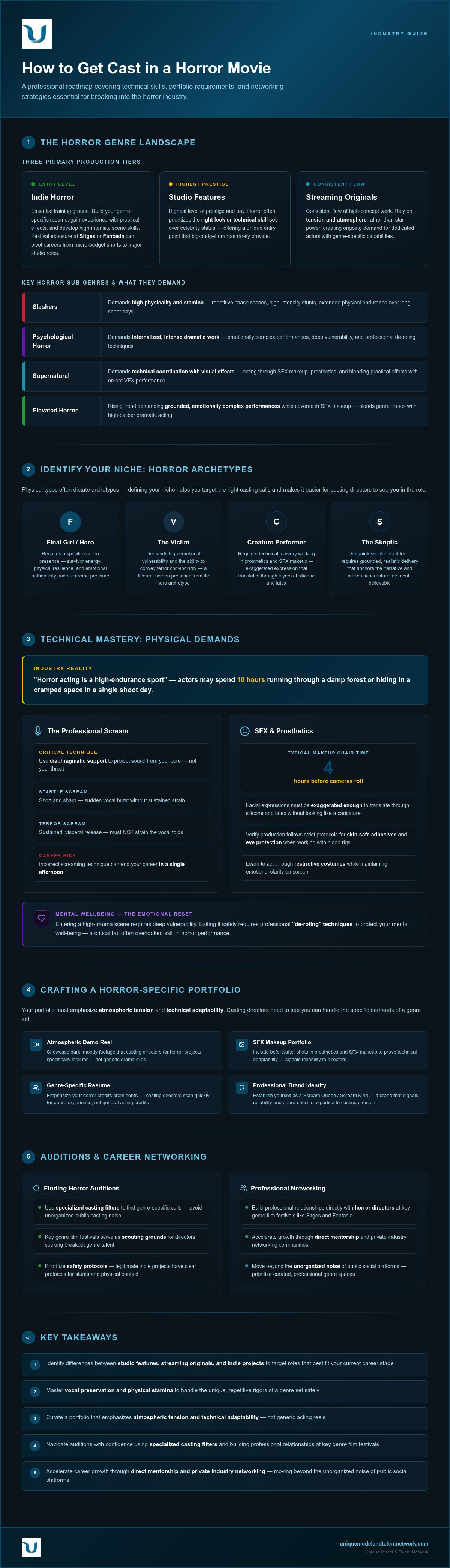
- Identify the differences between studio features, streaming originals, and indie projects to target the roles that best fit your current career stage.
- Master essential technical skills like vocal preservation and physical stamina to handle the unique, repetitive rigors of a genre set safely.
- Discover exactly how to get cast in a horror movie by curating a portfolio that emphasizes atmospheric tension and technical adaptability.
- Navigate the audition process with confidence by utilizing specialized casting filters and building professional relationships at key genre film festivals.
- Accelerate your career growth through direct mentorship and private industry networking, moving beyond the unorganized noise of public social platforms.
Understanding the Horror Genre Landscape in 2026
The horror genre remains one of the most resilient and accessible paths for actors looking to break into the industry in 2026. Unlike big-budget dramas that often require a pre-established name, horror projects frequently prioritize the right look or a specific technical skill set over celebrity status. Understanding the three primary tiers of production is your first step. Indie horror serves as the essential training ground where you'll cut your teeth; studio features offer the highest level of prestige and pay; and streaming originals provide a consistent flow of high-concept work. Because these projects rely on tension and atmosphere rather than star power, they offer a unique entry point for dedicated talent.
Success requires more than just showing up to an audition. The broad horror film genre encompasses various sub-sectors, each demanding a different performance style. Slashers require high physicality and stamina. Psychological horror demands internalized, intense dramatic work. Supernatural films often involve technical coordination with visual effects. If you want to learn how to get cast in a horror movie, you must first identify which of these environments suits your current skill set. Embracing the legacy of the Scream Queen or Scream King isn't just about tropes; it's about building a professional brand that signals your reliability and genre-specific expertise to casting directors.
Indie Horror vs. Major Studio Productions
Starting in indie horror is the most effective way to build a genre-specific resume. These sets are often where you'll gain experience with practical effects and high-intensity scenes. However, it's vital to prioritize professional safety standards on low-budget productions. Legitimate indie projects will have clear protocols for stunts and physical contact. Getting noticed at festivals like Sitges or Fantasia can pivot your career from micro-budget shorts to major studio roles. These festivals serve as scouting grounds for directors looking for the next breakout genre star who can handle the pressure of a larger production.
Identifying Your Niche Within the Genre
Are you a Final Girl, a creature performer, or the quintessential skeptic? Defining your niche helps you target the right casting calls. Physical types often dictate archetypes; the hero, the victim, and the villain all require different screen presences. We've also seen a rise in elevated horror, which blends genre tropes with high-caliber dramatic acting. This trend has increased the demand for actors who can deliver grounded, emotionally complex performances while covered in SFX makeup. By matching your physical type and acting style to these specific archetypes, you make it easier for casting directors to see you in the role.
Technical Mastery: The Physical Demands of Horror Acting
Horror acting is a high-endurance sport. While many actors focus purely on their lines, this genre demands extreme physical stamina for repetitive chase scenes and high-intensity stunts. You might spend ten hours running through a damp forest or hiding in a cramped space. Beyond the physical, you must master the emotional reset. Entering a high-trauma scene requires deep vulnerability; exiting it safely requires professional techniques to "de-role" and protect your mental well-being. Understanding these rigors is essential for anyone researching acting career outlook and requirements within this specific niche. Those wondering how to get cast in a horror movie often overlook the sheer physical toll of the work.
The Art of the Professional Scream
A convincing scream is the hallmark of the genre, but doing it incorrectly can end your career in a single afternoon. You must utilize diaphragmatic support to project sound from your core rather than your throat. A "startle" scream is often short and sharp, while a "terror" scream requires a sustained, visceral release that doesn't strain the vocal folds. Vocal health for actors is the foundation of a long horror career. Mastering these nuances is a key step in learning how to get cast in a horror movie and stay in the industry for years.
Working with Special Effects (SFX) and Prosthetics
Prepare for the reality of the makeup chair. A complex transformation can take four hours before the cameras even roll. You'll need to learn how to act through thick layers of silicone, latex, and restrictive costumes; your facial expressions must be exaggerated enough to translate through the material without looking like a caricature. Safety is paramount when working with "blood rigs" and practical effects. Always verify that the production follows strict protocols for skin-safe adhesives and eye protection. If you want to refine these technical skills, a private acting industry networking platform can connect you with mentors who specialize in genre performance.
Crafting a Horror-Specific Acting Portfolio
Your portfolio is the first point of contact between you and a genre casting director. If your materials only showcase a bright, commercial aesthetic, you'll struggle to communicate your suitability for darker roles. Understanding how to get cast in a horror movie requires a shift in how you present your professional "type." You must demonstrate that you can handle the intensity and grit required for these productions. To ensure your materials are hitting the right mark, consider a professional portfolio review for actors. This step removes the guesswork and aligns your brand with specific industry expectations.
The 'Genre' Headshot: Capturing Intensity
A standard headshot focuses on being likable and approachable. A horror headshot focuses on being interesting and intense. You should prioritize grit over glamour. Choose wardrobe colors that are muted or dark; work with a photographer who understands how to use shadows to create mood. Your goal is to convey fear, suspicion, or even malice through your eyes without overacting. This isn't about "making a face." It's about holding a specific, grounded thought that creates tension behind the lens. This level of intentionality signals to directors that you understand the emotional weight of the genre.
Building a Self-Taped Horror Demo
Don't wait for a professional credit to show you can handle the genre. You can build a compelling reel using high-quality self-tapes. Select a 30-second horror monologue that showcases a range of emotions, from quiet dread to a visceral reaction. Pay close attention to your technical setup. Low-light scenes are common in horror, but you must ensure your face remains visible and the audio is crisp. Additionally, if you are interested in creature work, include "digitals" in your portfolio. These are unedited photos and videos that show your natural skin, bone structure, and range of motion without makeup or filters.
Don't overlook the "Special Skills" section of your resume. Horror directors often look for specific physical capabilities that reduce the need for stunt doubles. Highlighting experience in stage combat, parkour, or contortionism can significantly increase your value on set. As you review current acting career outlook and industry statistics, it becomes clear that specialized skills are key differentiators in a competitive market. By tailoring every aspect of your portfolio to the genre, you position yourself as a prepared professional ready for the unique demands of a horror set.
How to Find and Nail Horror Auditions
Finding the right opportunities is a critical step in learning how to get cast in a horror movie. You shouldn't waste time on generic job boards that lack professional oversight. Instead, focus your energy on specialized casting websites and use filters to target genre-specific projects. Beyond digital submissions, networking at horror conventions and genre film festivals remains a powerful way to meet directors and producers. These environments allow you to build organic professional bonds that often lead to private invitations for auditions before a role ever goes public.
Navigating Horror Casting Calls
You must develop a keen eye for legitimacy to protect your career and safety. Identifying "red flag" horror calls is essential; avoid any production that lacks a clear safety protocol, especially when stunts or physical contact are involved. Research genre-specific casting directors who have a proven track record in horror. While social media can be a tool for finding "open calls" for indie projects, always verify the production's credentials through professional databases. A legitimate project will value your safety as much as your performance, so never compromise your standards for a credit.
Nailing the Genre Audition
Horror auditions often feature "sides" with minimal dialogue and high physical action. You might be asked to perform "cold screams" or demonstrate physical fear without any context. To succeed, you must show this intensity while staying strictly within the camera frame. This requires a high level of physical control and spatial awareness. Following established film industry auditions protocols is mandatory, but you should add a subtle genre flavor to your performance to show you understand the mood. Whether you're in a room or taping from home, your goal is to create an atmosphere that feels dangerous yet professional.
Creating a professional atmosphere in your living room for a self-tape is its own challenge. You need to master low-light setups that maintain clarity while showcasing your ability to hold tension. If you're serious about mastering these technical nuances and accessing vetted opportunities, apply for The Network Membership to gain direct mentorship from industry experts who know exactly what genre directors are looking for in 2026.
Accelerating Your Career through Professional Networking
Public social media platforms are often flooded with noise, making it difficult to find legitimate professional leads. For actors serious about the genre, an unorganized feed is a distraction you can't afford. A private acting industry networking platform serves as a sanctuary for career development. It provides a moderated space where the focus is strictly on professional growth and high-value opportunities. By engaging in acting workshops online, you learn the technical nuances of genre performance from those who actually cast the roles. You can also utilize Monthly Skill-Building Challenges to produce the exact type of horror-specific footage your reel currently lacks.
Direct Access to Genre Decision-Makers
Industry Expert Q&A Sessions offer a level of access that cold emails simply cannot match. Instead of sending messages into a void, you're engaging in direct dialogue with horror directors and casting professionals. This interaction is the most effective way to understand how to get cast in a horror movie while building a reputation for reliability. You'll get real-time feedback on your headshots and reels from vetted experts who know what translates to the screen. Having a peer network of fellow genre actors also provides a layer of protection. You can share experiences regarding set safety and production legitimacy with people who understand your specific professional path.
Joining The Network Membership
The Network Membership streamlines the path to paid work by removing the "gatekeeper" barriers that often frustrate new talent. We've built this community to serve as a reliable bridge between emerging actors and established industry professionals. It's an environment where integrity and efficiency are prioritized over vanity. We focus on career acceleration through mentorship, ensuring you have a clear roadmap in an industry that often feels chaotic. By providing clear directions on how to get cast in a horror movie, we help you avoid the pitfalls of unverified casting calls. This is your opportunity to join a gated community of professionals dedicated to the craft of horror. Join the Network and start your horror journey today.
Step into the Spotlight of the Horror Industry
Breaking into the horror industry requires a specialized blend of technical precision and strategic networking. You now have the roadmap for mastering the physical demands of a genre set and building a portfolio that captures raw, professional intensity. Understanding how to get cast in a horror movie is about more than luck; it's about positioning yourself as a reliable professional in a highly competitive market. By focusing on vocal safety, physical stamina, and niche branding, you establish yourself as a high-value asset for any production.
If you are ready to move beyond the chaos of public casting calls and unorganized social groups, we are here to open the door. Ready to book your first horror role? Join the Unique Model & Talent Network membership today. Our members gain direct access to industry casting directors and participate in monthly skill-building challenges that refine their craft. This private, moderated professional community removes the distractions of the outside world so you can focus entirely on career acceleration. Your first genre role is within reach when you have the right mentorship behind you.
Frequently Asked Questions
Do I need to be able to scream to get cast in a horror movie?
You don't necessarily need a world-class scream for every role, but vocal versatility is a significant asset in the genre. If you're wondering how to get cast in a horror movie, mastering technical vocal support is essential. Professional sets prioritize actors who can project intensity without damaging their vocal folds. We recommend practicing diaphragmatic breathing to ensure you can deliver repetitive takes safely throughout a long production day.
Is it safe to work with SFX makeup if I have sensitive skin?
Professional special effects makeup is generally safe, but you must communicate your skin sensitivities to the department head early. Legitimate productions use high-quality, medical-grade silicone and adhesives designed for skin contact. You should always request a patch test 24 hours before a full application to avoid adverse reactions. If a production uses unlabelled or household products, it's a major red flag regarding their professional safety standards.
How do I find legitimate horror casting calls without an agent?
You can find legitimate opportunities by utilizing specialized industry platforms and private networks rather than relying on public social media. Many independent directors post open calls on vetted casting sites that require production credentials. Joining a professional community like the Unique Model & Talent Network provides direct access to industry experts and curated leads. This approach helps you bypass the unorganized and often predatory listings found on general job boards.
What should I wear to a horror movie audition?
Choose a wardrobe that suggests the character's archetype without wearing a full costume. For horror, this typically means muted tones, layers, or practical clothing that looks grounded in reality. Avoid bright, distracting patterns or glamour styles that clash with the genre's atmospheric tone. Your clothing should allow for full range of motion, as horror auditions often require physical reactions, crouching, or sudden movements to demonstrate your technical range.
Can I get cast in horror if I don't have any professional experience?
Horror is one of the most accessible entry points for new actors because directors often prioritize a specific look or physical skill set over a long resume. If you are learning how to get cast in a horror movie as a beginner, focus on building a portfolio that showcases your intensity. Participating in monthly skill-building challenges can help you generate the genre-specific footage needed to prove your reliability to casting directors.
What is a 'Scream Queen' and is it still a relevant term in 2026?
A Scream Queen is a legacy term for actors who have established a significant professional brand within the horror genre. In 2026, the term remains highly relevant but has expanded to include Scream Kings and diverse Final Girl archetypes. Modern casting directors value actors who embrace this legacy while bringing grounded, elevated dramatic skills to the role. It signals that you understand the genre's history and are a dedicated professional.
How do I know if a horror movie production is safe and professional?
A professional production will always have clear safety protocols, stunt coordinators, and insurance in place. Before accepting a role, ask about the production's plan for physical scenes and SFX applications. Legitimate sets prioritize the well-being of the talent and maintain organized communication through official channels. If a director avoids discussing safety or uses informal messaging platforms for professional business, it's a sign to proceed with extreme caution or decline the project.
Should I include 'horror' as a specific category on my acting resume?
You shouldn't list horror as a separate category, but you should highlight genre-relevant skills in your Special Skills section. Include technical abilities like stage combat, parkour, or experience with prosthetics. A better way to signal your interest is through a dedicated genre reel or a horror-leaning headshot. These professional materials communicate your suitability for the genre more effectively than a resume label while maintaining a standard industry format.


