

A model’s personal brand is the distinct place they occupy in other people’s minds: a clear sense of their story, perspective, and professional strengths. Learning how to build a personal brand as a model starts with defining that position, then expressing it consistently through your portfolio, social platforms, and industry interactions. Strong relationships help make that identity visible and credible beyond the screen.
It’s natural to focus on images and posts, but a memorable brand is shaped by more than appearance. The way you communicate, collaborate, and follow through also tells casting professionals and creative partners what it may be like to work with you. This guide will help you identify what makes your approach distinctive, create a consistent visual and communication style, and build purposeful connections across the industry. The goal isn’t to perform a persona; it’s to make your real strengths easier to recognize.
Key Takeaways
- Define the professional impression you want to leave before choosing what to post, then make your portfolio and social profiles support that direction.
- Use your real strengths and point of view to shape a brand that feels credible, not like a label you’re trying to fit.
- Build recognition through intentional visual choices and a consistent voice, adapting your content to each platform’s format.
- Develop industry relationships through thoughtful collaboration, active engagement, and feedback that helps you understand how others experience your brand.
1. What’s a personal brand?
A personal brand is the distinct territory you occupy in other people’s minds. For a model, it combines your story, visual presence, values, and professional conduct. To build a personal brand as a model, define the impression you want casting professionals and creative partners to remember. Then choose social media content that supports that position instead of posting without direction.
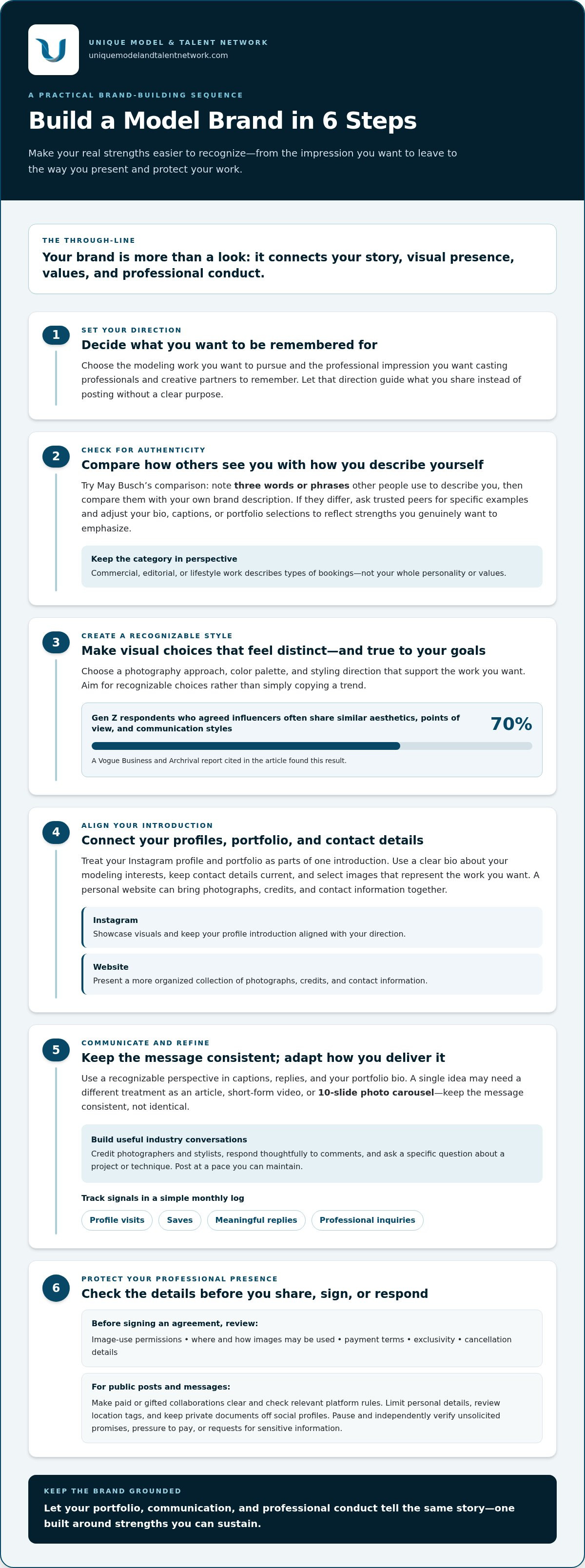
Treat your Instagram profile and portfolio as connected parts of one introduction. Use a clear bio that describes your modeling interests, keep contact details current, and select images that represent the work you want to pursue. A personal website can bring photographs, credits, and contact information together in one place. Review each platform from a professional’s perspective: can they quickly recognize your look, experience, and next step?
Protect your professional image by reading agreements before signing. Pay attention to image-use permissions, where and how images may be used, payment terms, exclusivity, and cancellation details. Ask for unclear wording to be explained. Disclosure expectations can depend on the platform and location, so make paid or gifted collaborations clear to your audience and review the relevant platform rules.
Portfolio, headshot, website, and promotion costs vary with the photographer, shoot scope, editing, printing, website features, and campaign choices. Set priorities first: use suitable existing images, compare itemized quotes, and spend on the gaps that best support your intended work. For a budget-friendly portfolio and comp card, select a small set of strong, varied images, then use a simple layout with your name and professional contact details. Update it when your look or work changes.
Start by choosing your intended modeling direction, writing a short brand statement, and aligning your profiles and portfolio. Post at a pace you can maintain, sharing selected images, behind-the-scenes preparation, project credits, and useful reflections on your work. Instagram can showcase visuals, while a website can present a more organized portfolio. Keep your voice and presentation recognizable across both, and use audience responses to see which content communicates your strengths most clearly.
2. Being authentic rather than defined by a label
A modeling category can describe the work you book, but it shouldn’t define your entire identity. Commercial, editorial, and lifestyle work each call for different skills; none captures your full personality or values. Build an authentic presence by deciding what you want people to perceive beyond your physical appearance. For example, you might be known for expressive movement, thoughtful preparation, or a distinctive approach to styling. Those qualities give your professional story more dimension than a category alone.
Use a practical comparison to test whether your online presence feels true to you. May Busch recommends comparing three words or phrases other people use to describe you with your own description of your brand. If others call you adaptable while you present yourself as highly specialized, explore the difference. Ask trusted peers for specific examples, then adjust your bio, captions, or portfolio selections to reflect the strengths you genuinely want to emphasize.
Authenticity doesn’t require sharing every personal detail. Set clear boundaries before posting: decide what parts of your life stay private, which work experiences you’re comfortable discussing, and what subjects fit your professional voice. A short behind-the-scenes note about preparing for a shoot can feel personal without revealing private routines or locations. Keep your resume, public profile, and professional messages aligned, so collaborators encounter the same dependable person in each setting.
Protect your privacy and reputation by limiting personal details in public posts, reviewing location tags, and keeping private documents off social profiles. Treat unsolicited promises, pressure to pay, or requests for sensitive information as reasons to pause and independently verify who’s contacting you before responding. If you’re unsure how your images and presentation come across, Portfolio & Reel Reviews can offer focused feedback. Use that input to refine your choices, not to copy someone else’s persona. A successful brand grows from choices you can sustain.
3. Creating a consistent visual and communication style
Choose a visual system that helps people recognize your work across platforms. Pick a photography approach, color palette, and styling direction that suit your modeling goals, then use them consistently. A practical answer to how to build a personal brand as a model starts with making your choices distinctive, not simply copying a trend. A 2025 Vogue Business and Archrival report found that 70% of Gen Z respondents agreed influencers often share similar aesthetics, points of view, and communication styles.
Make your communication as recognizable as your images. Decide what you want casting professionals and followers to understand, then express that perspective through captions, replies, and your portfolio bio. For example, a model focused on sustainable fashion could share thoughtful outfit details and credit collaborators clearly. Adapt the format to the platform: Dylan Kelly has explained that an idea may need different treatment as an article, short-form video, or 10-slide photo carousel. Keep the message consistent, not identical.
Develop a community by treating each post as an invitation to engage, not just a display. Credit photographers and stylists, respond thoughtfully to comments, and ask a specific question about a project or technique. Track profile visits, saves, meaningful replies, and professional inquiries in a simple monthly log. Visibility becomes useful when it leads to a clear conversation about a casting, collaboration, or paid assignment. Make your contact route easy to find and your portfolio easy to review.
If you’re considering how to build a personal brand as a model, connect audience interest to a clear professional next step. State your availability and the projects you’re prepared to discuss. Keep a record of who reaches out, what they need, and whether the exchange leads to work. Review the pattern to see which content attracts relevant inquiries, then refine your approach. Your brand can evolve as your career develops while your core point of view remains recognizable.
4. Collaborating and networking with industry professionals
A professional relationship grows through useful, respectful interaction, not a single message asking for work. Start with people whose roles connect to your goals, such as photographers, stylists, casting directors, and fellow models. Follow their work on relevant platforms, respond thoughtfully to a specific project, and explain what you appreciated. A precise note about a photographer’s lighting choices creates a better opening than a generic compliment.
Make collaboration easy to assess. Before a test shoot, agree on the concept, wardrobe, image selection, credits, and intended image use. Arrive prepared, communicate clearly, and credit each collaborator when sharing the pictures. Afterward, send a brief thank-you and keep the connection active by engaging with their next project. This professional follow-through helps you stand out for reliability, not just your look.
Building a career independently and seeking an agent aren’t mutually exclusive. You can shape your public presence, portfolio, and professional relationships yourself while exploring representation that fits your goals. An agent may support career development and industry access, while your own brand helps professionals understand the work you want. Keep your communication, availability, and expectations clear either way.
Ask for career advice with a focused question. For example, after a workshop, ask a casting professional what makes a submission easy to assess, then apply the feedback to your next portfolio update. Look for structured opportunities to learn from industry experts and meet peers with shared interests. The Network Membership connects aspiring models and actors with industry professionals in a private, moderated environment, while Live Industry Workshops and Industry Expert Q&A Sessions create settings for learning and professional conversation. Join The Network Membership to develop those relationships in a focused professional community.
Unique Model & Talent Network: The Network Membership
Unique Model & Talent Network gives aspiring models a professional community for continued learning and industry connection. If you’ve clarified your brand but want informed feedback and structured ways to develop your skills, The Network Membership can be a practical next step. Members can access Live Industry Workshops, Portfolio & Reel Reviews, Monthly Skill-Building Challenges, and Industry Expert Q&A Sessions. Use a portfolio review to refine how your work presents your strengths, then apply workshop insights to future collaborations and content. The network connects emerging talent with industry experts in a private, moderated environment, supporting professional development without replacing your own brand-building work. Visit uniquemodelandtalentnetwork.com to explore the community.
Choose the next step that moves your career forward
Your personal brand can keep evolving as you gain experience, discover new strengths, and meet new collaborators. Choose a practical action for this week: refresh a portfolio selection, follow up with a creative partner, or write down the kind of project you want to pursue. Small, deliberate steps help turn your professional direction into choices others can recognize.
Learning how to build a personal brand as a model is an ongoing practice, not a final version of yourself. Review how your work is being received, keep what feels genuine, and adjust what no longer reflects your goals. When you’re ready to develop your industry connections and skills in a focused community, contact Unique Model & Talent Network. Bring your perspective, stay open to learning, and take the next step with confidence.
Frequently Asked Questions
What’s a personal brand?
A personal brand is the professional impression people associate with your work and interactions. For example, a casting director might remember a model for expressive movement, polished preparation, and clear communication. That impression forms through repeated experiences, not one carefully written bio. Think of your brand as the answer to “What can people expect when they work with me?” Then make your choices support that answer.
How can models choose a niche and define their target audience?
Choose a niche by comparing the work you enjoy with the work you want to pursue next. Note recurring strengths, such as movement, styling, or expression, then identify who hires for that work, such as editorial teams or commercial brands. Review recent projects and feedback for patterns. A niche guides your pitch; it doesn’t prevent you from considering other opportunities that fit your skills.
Which social media platforms work best for building a model's personal brand?
The best platforms depend on how your intended audience discovers talent and what content you can sustain. Use image-led platforms to showcase photos, short-form video platforms for movement or process, and professional networks for industry connections. Keep one platform as your main channel, then adapt selected work for others. A consistent bio, contact route, and portfolio link help people move from discovery to a professional inquiry.
How can models network with photographers, agencies, designers, and clients?
Build relationships by making specific, professional contact. Mention a project you genuinely admire, explain how your skills align, and suggest a clear next step, such as discussing a test shoot. Keep messages concise and follow up politely if needed. At events, workshops, or online discussions, ask relevant questions and listen closely. After collaborating, thank people and credit their work when sharing agreed images.


