

Social media can be a practical casting tool, not just a place to promote your headshot. To learn how to find acting gigs on social media, follow casting professionals and production accounts, search for role-specific casting calls, and submit through the method listed in each post. Look for commercial and short-form video roles as well as film, television, and theatre opportunities.
It can be hard to separate useful casting information from general industry chatter. A focused search and a professional profile help you find relevant calls, understand each role’s requirements, and make a clear first impression when you submit.
This guide explains how to connect thoughtfully with casting directors, find audition and job listings, and present your skills for commercial and short-form video work. You’ll also learn to keep your profile aligned with the roles you want and assess each opportunity with a practical, professional eye.
Key Takeaways
- Build professional connections with casting directors by engaging thoughtfully with their public posts and sharing relevant skills.
- Use focused searches to find casting calls, then match your submission to each role’s requirements and instructions.
- Look beyond traditional screen roles to commercial and short-form video opportunities that may suit your experience.
- Choose platforms and profile content that make your casting materials easy to discover and your professional strengths clear.
1. Connecting with casting directors through social media
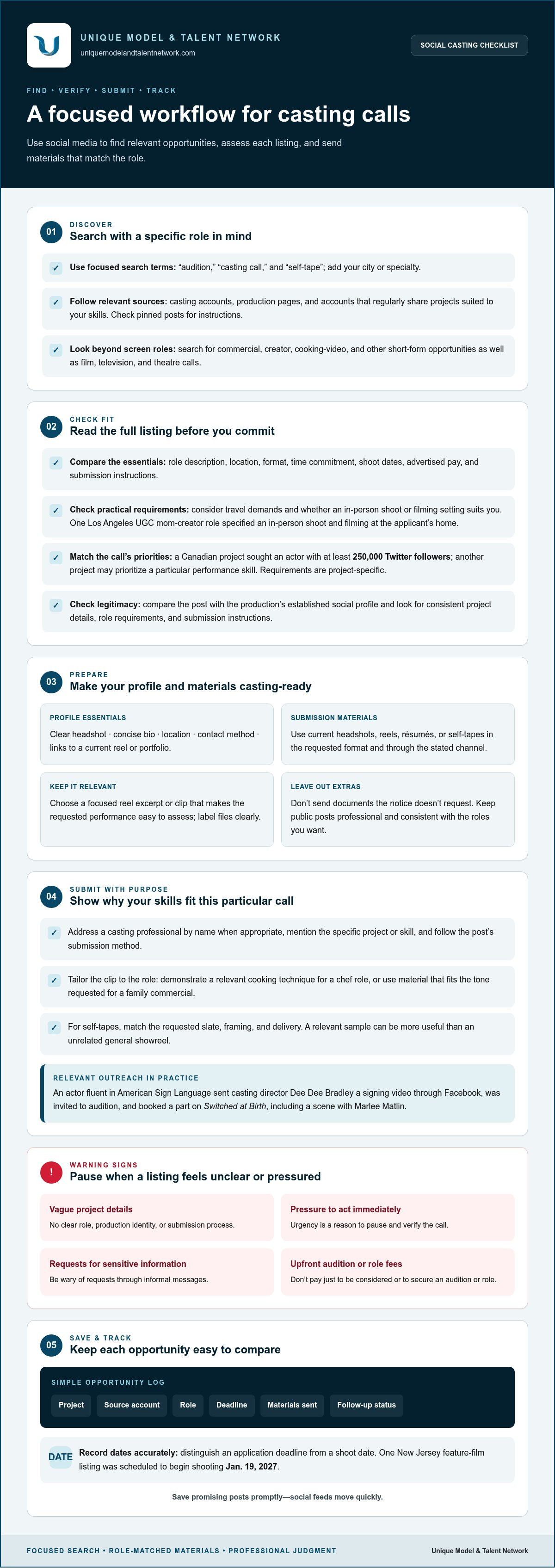
Start by identifying casting directors and production accounts that regularly share projects suited to your skills. Follow their public updates, read linked blogs, and engage with specific work instead of sending repeated generic messages. An actor fluent in American Sign Language sent a signing video to casting director Dee Dee Bradley through Facebook, was invited to audition, and booked a part on Switched at Birth, including a scene with Marlee Matlin. The example shows how a relevant skill and focused introduction can make your work visible.
Build a casting-ready profile with a clear headshot, concise bio, location, contact method, and links to a current reel or portfolio. Keep posts professional and clips easy to view. Use Portfolio & Reel Reviews to strengthen the materials casting professionals may assess. To make your social media search more effective, ensure each interaction supports the roles you’re pursuing.
Following can matter, but it isn’t a substitute for fit. A Canadian casting project sought an actor with at least 250,000 Twitter followers, while another project may prioritize a particular performance skill. Keep public content consistent with the brand and roles you want, and highlight relevant abilities such as Carolyn Faye Kramer’s karate black belt, sought for a Canadian casting project.
Filter listings by location, then compare travel demands, role description, shoot dates, and submission instructions. These are project-specific advertised rates, not standard rates. Confirm the location and requirements suit you before investing time in an application.
Watch for red flags, including vague project details, pressure to act immediately, requests for sensitive information through informal messages, or upfront fees to secure an audition. Pause if a post lacks a clear role, production identity, or submission process. Don’t pay just to be considered.
2. Finding social media acting auditions and jobs
Search casting posts for terms such as “audition,” “casting call,” and “self-tape,” then add your city or specialty. Follow production pages and casting accounts, and check pinned posts for submission instructions. Save promising listings promptly. Social feeds move quickly, and saved posts make it easier to compare role requirements with your availability and materials.
A personalized video can introduce your work when a casting professional invites submissions or welcomes relevant outreach. Address the recipient by name, mention the specific project or skill, and focus the clip on why you fit. For example, a performer with cooking experience could demonstrate a relevant technique for a chef role rather than send a general showreel without context.
For headshots, reels, résumés, and self-tapes, follow the casting post’s requested format and submission channel. Use current materials that match the role, label files clearly, and leave out documents the notice doesn’t request. A focused reel excerpt can make a relevant performance easier to assess than an unrelated collection of clips.
Compare listings by role, location, format, and advertised pay. These examples show why it’s important to read each call’s terms closely.
To assess a casting call, compare the post with the production’s established social profile and look for consistent project details, role requirements, and submission instructions. Treat pressure to pay upfront for an audition or to secure a role as a warning sign. Don’t send money or personal documents through an informal message just because a post uses a production name.
Track each opportunity in a simple log with the project, source account, role, deadline, materials sent, and follow-up status. Record dates from the listing accurately; one New Jersey feature-film production was scheduled to begin shooting Jan. 19, 2027. A clear log helps distinguish an application deadline from a shoot date.
If you’re refining materials for submissions, Portfolio & Reel Reviews can help you present your work with greater focus.
3. Social media commercial and short-form video roles
Commercial and short-form video casting often seeks performers who feel natural on camera. Search for terms such as “social media actor,” “commercial,” “creator,” and “cooking video.”
Read beyond the role title. Compare the role, time commitment, location, and pay format before deciding whether to submit.
Some calls seek a specific personality, skill, or setting. A Los Angeles UGC mom-creator role required an in-person shoot and comfort with a videographer filming at the applicant’s home. Consider whether the setting and filming conditions suit you before applying. For a cooking role, show relevant on-camera experience; for a family commercial, choose material that fits the requested tone.
Pay structures vary across short-form projects. These are distinct project terms, not interchangeable rates.
Use focused searches and follow production accounts that post the formats you can perform. Save each relevant listing, note its submission deadline, then tailor your response to the role. A Los Angeles fashion-shoot social media listing showed a rate of 70-150, demonstrating why it’s important to read the full post for the stated compensation details.
Prepare a concise self-tape or sample that demonstrates the requested style. If a listing seeks an experienced chef, lead with a cooking clip rather than an unrelated dramatic scene. Match your slate, framing, and delivery to the submission instructions, and keep your profile consistent with the work you want to book.
4. Which social media platforms are best for finding acting auditions and gigs?
No single platform carries every casting opportunity. Choose based on the work you want, then use each channel with a clear purpose. Facebook can help you follow casting pages and production groups, while Twitter can surface public calls through casting accounts and search terms. Check who posted the notice and follow the stated submission instructions.
Instagram and TikTok are useful for showcasing short performance clips and on-camera presence. Use a professional profile name, concise bio, and pinned sample that reflects your casting range. Search relevant tags and production accounts, but treat each post as a lead, not a complete brief. Find the original announcement before submitting.
LinkedIn can support professional discovery by helping you identify casting professionals, production companies, and creative teams. Keep your profile focused on acting, list relevant skills, and engage thoughtfully with industry posts. A concise introduction tied to a specific project is more useful than repeated generic messages.
Compare platforms by the casting information they make easiest to assess: role details, location, shoot dates, pay terms, and submission method. Save the original post, record the account name, and note any deadline. Search terms such as “casting call,” “commercial audition,” and your location can narrow results across platforms without relying on a single feed.
Keep your profiles consistent across Facebook, Instagram, TikTok, Twitter, and LinkedIn. Use a current headshot, accurate location, and accessible reel link wherever possible. Remove outdated pinned content that could confuse casting teams about your experience or availability. A focused profile helps connect your public presence with the role you’re pursuing.
Choose the platforms that support your casting goals, then review your profile as a casting professional might. To strengthen your on-camera presence, build your acting skills through focused practice.
Unique Model & Talent Network: The Network Membership
Unique Model & Talent Network offers The Network Membership for actors seeking structured professional development alongside independent casting searches. Members connect with industry experts and build their knowledge through educational opportunities. It’s a practical next step if you’re strengthening your materials, developing your skills, or looking for a professional community.
Use Portfolio & Reel Reviews to refine how you present your work, and Live Industry Workshops for industry-focused learning. Monthly Skill-Building Challenges help you keep practicing between auditions. These resources support your preparation, but they don’t replace direct submissions to casting calls or guarantee a booking.
For ongoing learning and creative connections in a focused community, explore The Network Membership. Visit uniquemodelandtalentnetwork.com to learn more.
Make your next move with intention
To make progress in finding acting gigs on social media, turn occasional browsing into a deliberate career practice. Choose the roles you want to pursue, keep your professional materials current, and set aside regular time to review casting calls. A consistent process helps you act on relevant opportunities without letting the feed dictate your priorities.
Treat each submission as part of your professional development. Note what you sent, consider whether your materials suited the role, and use what you learn to strengthen future applications. Keep building your craft alongside your online presence. Preparation supports stronger connections and auditions, while focused choices help you use your energy well.
If you’d value support as you plan your next career step, contact Unique Model & Talent Network. Bring your goals and questions, and explore a path that supports your continued development. Keep showing up with purpose. Each thoughtful action helps you grow into the actor you’re working to become.
Frequently Asked Questions
What hashtags and search terms help actors find local casting calls?
Combine role type, production format, and location in your searches. Try terms like “casting call Chicago,” “Atlanta commercial audition,” “Boston student film casting,” or “voiceover roles near me.” Add hashtags such as #CastingCall, #ActorAudition, and a city-specific tag, then compare results across platforms. Save useful searches to repeat them and spot new listings without relying on a single hashtag.
How can actors follow casting directors, agencies, theaters, and production companies for opportunities?
Follow the official profiles of local theaters, casting professionals, agencies, and production companies, then turn on post notifications where available. Check each organization’s profile for linked accounts and announcements, such as season auditions from a community theater or casting updates from a production company. Keep a private list by city and organization type to make targeted reviews easier than scrolling through general entertainment posts.
How can actors network with filmmakers and casting professionals on social media without being pushy?
Be relevant and considerate: respond to a filmmaker’s public post with a specific comment about the project, or share a useful reaction to their published work. If they invite messages, send a brief introduction tied to that invitation and include only the material requested. Avoid repeated follow-ups and unsolicited scripts. A thoughtful interaction respects their time and gives them a clear reason to remember your name.
How can actors find legitimate local acting gigs and casting groups by city or region?
Search a city or region alongside terms like “actors casting group,” “local auditions,” or “theater casting,” then review the group’s posting history and moderation rules. Look for calls that identify the project, roles, location, dates, and submission process. Compare the notice with the production’s official profile or announcement. For example, a regional theater’s own account can help distinguish its audition notice from an unrelated repost.


