

A strong cold read isn’t about getting every word perfect. It’s about staying present while you figure out what the scene needs. When unfamiliar sides land in your hands, it’s easy to focus so hard on reading accurately that your performance starts to feel mechanical. Learning how to practice cold reading gives you a repeatable way to settle in, make clear choices, and stay connected to the scene.
If you’ve ever frozen, rushed through the text, or wondered how much preparation is enough, you’re not alone. Cold reading is a skill you can train, not a test of instant perfection. A quick scan, a playable intention, and active listening can help you make useful choices even when the material is new.
This guide walks you through a practical routine for approaching unfamiliar sides, taking in the text quickly, and choosing an intention you can play. You’ll also find solo, partner, and recording exercises, plus a simple way to use feedback on your next attempt. The goal is composure and connection, not memorization: a grounded process you can rely on when audition pressure rises.
Key Takeaways
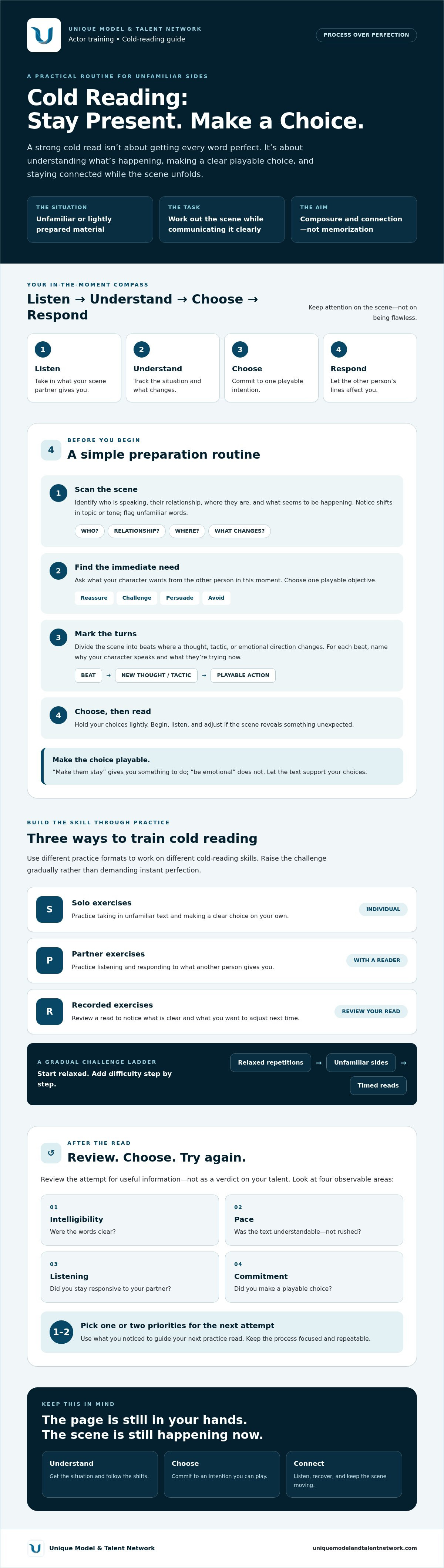
- Scan for relationships, setting, scene shifts, and unfamiliar words before you begin.
- Practice with solo, partner, and recorded exercises to build different cold-reading skills.
- Raise the challenge gradually, moving from relaxed repetitions to unfamiliar sides and timed reads.
- Review intelligibility, pace, listening, and commitment, then choose one or two priorities for your next attempt.
- Use a simple listen, understand, choose, and respond mindset alongside your broader audition preparation.
How to Practice Cold Reading: What Actors Are Actually Training
For an actor, a cold read means performing unfamiliar or lightly prepared material with limited time to prepare. You’re not expected to arrive with every beat solved. The task is to work out what’s happening while communicating the scene clearly and specifically.
A cold read means limited preparation before the scene, followed by active choices in the moment. That distinction matters. A prepared audition gives you more time to explore the text, while a memorized scene removes the script from your hands. Cold reading asks you to work with the page still present. These approaches aren’t opposites: attention to circumstances, intention, and your scene partner can support all three.
The term also has a separate meaning in mentalism, where Cold reading refers to techniques for making seemingly insightful statements about someone. An actor reading sides isn’t doing that. The task is to understand the written scene and respond truthfully, not to guess private facts about another person.
What casting teams can assess in a cold read
Depending on the audition and the people watching, a cold read can make observable skills easier to see: whether your words are clear, your focus stays on the scene, and you respond to what your partner gives you. It can also show whether you’re willing to make a playable choice instead of waiting for certainty. No single read reveals the full measure of an actor’s talent. It’s one performance situation, not a verdict.
Why unfamiliar sides can make actors feel stuck
Unfamiliar sides ask you to decode the text, track your cues, and perform at the same time. If all your attention goes to finding the next line, it can be harder to listen or let a response land. Feeling nervous is normal; confidence doesn’t have to come first. A routine gives your attention a path: identify the situation, follow the shifts, and choose an intention. With less guesswork about what to do next, you can give more focus to connection.
That’s the practical answer to how to practice cold reading: train the process, not a flawless first attempt. Aim to make the text understandable, stay responsive, and commit to a clear choice. If a line feels awkward, keep moving and stay connected to the scene rather than stopping to correct yourself. Those are skills you can build through focused repetition.
A Simple Cold-Reading Preparation Routine Before You Begin
A repeatable routine gives you a clear starting point when the preparation window is short. The aim isn’t to solve every detail or invent a full history for the character. It’s to understand what’s on the page, choose something playable, and leave attention available for your scene partner.
- Scan the scene. Identify who’s speaking, their relationship, where they are, and what seems to be happening. Notice shifts in topic or tone, and flag unfamiliar words so they don’t catch you off guard.
- Find the immediate need. Ask what your character wants from the other person in this moment. Choose one playable objective, such as to reassure, challenge, persuade, or avoid.
- Mark the turns. Divide the scene into beats where a thought, tactic, or emotional direction changes. For each beat, name why your character speaks and what they’re trying now.
- Choose, then read. Hold those choices lightly and begin. Let the other person’s lines affect you, and adjust if the scene reveals something you didn’t expect.
How to mark beats, objectives, and playable actions
A beat is a turn in the scene, not simply a new paragraph. Mark a shift when your character changes their approach or responds to new information. Pick active verbs that give you something to do: “make them stay” is more playable than “be emotional.” Illustration: In a scene where one friend is leaving, the first beat might be to tease, then, after learning why, to persuade. Let the actual text support your choices.
Keep preparation grounded in evidence. A line, stage direction, or clear relationship can suggest a useful choice; an elaborate off-page backstory may distract you without helping the scene. If you’re looking for material to rehearse this process, these cold reading practice scripts offer text to work with.
How to handle the page without losing connection
Hold the page at a comfortable height where you can read without hiding your face. When practical, glance ahead briefly to prepare for the next line, then return your attention to the reader or imagined scene partner. Aim for an understandable pace, not speed. If you stumble, recover at the next thought and keep listening instead of stopping to restart.
This is a practical foundation for how to practice cold reading: scan, identify a need, mark a turn, and respond. Repeating the sequence helps make your preparation purposeful without asking you to control every moment in advance.
Cold-Reading Exercises That Build Listening and Spontaneity
Good practice trains more than reading aloud. Solo drills help you make choices without outside pressure; partner work develops responsiveness; recordings let you review what an audience can actually hear. Start with low-pressure material, then gradually introduce unfamiliar passages and timed reads. Keep the challenge useful, not overwhelming.
Solo cold-reading drills for regular practice
Choose a short passage you haven’t read before and give yourself the same limited preparation window each time. Scan the situation, pick an objective, and read aloud once. Then repeat the passage with one changed objective or tactic, such as shifting from reassuring someone to challenging them. Record selected attempts and listen back for clear words, a pace you can follow, and choices that still make sense to a listener.
Partner practice for active listening
Ask a partner to read the other role without rehearsing the exchange in advance. Your job is to respond to their actual delivery, not to race ahead mentally or prepare a reaction before they finish. Your partner can vary pace or emphasis naturally while keeping the reading clear and supportive, rather than trying to trip you up. Switch roles so each of you practices both delivering lines and listening for cues.
| Exercise | Setup | Focus | Reflection question |
|---|---|---|---|
| Solo repeat | Read an unfamiliar short passage, then repeat with a new objective. | Specific choices and intelligibility | Could a listener understand what I wanted? |
| Partner read | Read opposite a partner without rehearsing first. | Listening and response | Did their delivery affect my next line? |
| Recorded read | Record one attempt and review it afterward. | Pace, clarity, and consistency | Where did the text become hard to follow? |
| Timed unfamiliar read | Use a new passage and a short preparation window. | Composure under pressure | What choice helped me stay grounded? |
Move through the formats in stages: repeat a short solo passage, add a partner, then try fresh material with limited preparation time. A timer can add pressure, but it shouldn’t turn the exercise into a speed contest. Leave enough space to make the words understandable and take in your partner’s cues. This progression gives you a practical way to build listening and spontaneity through cold-reading practice.
How to Review a Cold Read and Improve the Next Attempt
A recording gives you a chance to hear the read as an audience might, after the pressure of performing has passed. Treat it as information, not a verdict. Instead of asking whether the whole performance was “good,” look for specific moments you can work on next.
What to listen for in a recorded cold read
Listen once without stopping. Could you follow the story and understand the important thoughts on a first listen? Then review with a short checklist:
- Intelligibility: Are the words and ends of phrases clear?
- Listening: Do your responses seem connected to what the other character says?
- Pace: Are any phrases rushed or difficult to follow?
- Commitment: Can you hear a clear intention behind your choices?
- Focus: Are there moments when attention seems pulled toward finding the next line on the page?
Keep observations factual. “I rushed the last sentence” gives you something to adjust; “I’m bad at this” is a personal judgment, not useful direction. A dropped ending or a quick glance down is a specific behavior, not a measure of your ability.
How to apply feedback without losing spontaneity
Choose one priority, or at most two, for the next attempt. If the thought was hard to follow, focus on making each idea clearer. If the read felt disconnected, focus on taking in the other person’s line before responding. Don’t try to fix every detail at once.
- Repeat the same material once. Apply your chosen adjustment and notice whether it changes the read.
- Try a different passage. Carry the skill forward without copying the exact delivery you just rehearsed.
- Stay responsive. Let the words and your scene partner shape each moment; feedback is a guide, not a fixed line-reading formula.
Focused feedback turns repetition into practice by giving each new attempt one clear purpose. Notice what happened, select a manageable adjustment, and test it again while keeping the scene alive.
For continued learning with industry context, explore The Network Membership, with access to industry experts and educational resources, including live workshops and expert Q&A sessions.
Bring Cold-Reading Practice Into Auditions and Ongoing Actor Training
In an audition, let your preparation support the scene rather than compete with it. Use a simple sequence: listen, understand the situation, choose an action, and respond. Cold-reading practice builds flexibility, but it doesn’t replace broader audition preparation. If you’ve had time to study the sides, use that time to explore the character and scene more fully; the same skills of focus and responsiveness still matter.
A short routine to use before an unfamiliar audition scene
Pause before you start. Scan the sides for relationships and setting, then notice where the scene shifts. Choose one clear action, such as to reassure or challenge, and direct your attention toward the reader or scene partner. If their delivery surprises you, a word slips away, or you lose your place, take a breath, find the next thought, and continue. Recovery is part of staying in the scene.
For additional context on preparing for film auditions, consult a film industry audition preparation guide alongside your cold-reading drills. The goal is not to treat every audition as a cold read; it’s to carry a dependable process into moments when material is unfamiliar or time is limited.
When outside feedback can help your cold-reading practice
If solo practice stops revealing useful adjustments, try reading with an experienced scene partner or learning in a workshop. Another perspective can help you notice whether your choices are clear and whether you’re responding to the other person. You can also explore online acting workshop practice for ideas on guided learning. Keep the feedback focused, then return to the page and test one adjustment at a time.
To keep developing your cold-reading skills, build a steady rhythm of solo repetition, partner reads, and occasional outside feedback. Unique Model & Talent Network offers live industry workshops and expert Q&A sessions as learning options for actors seeking guidance. These resources support ongoing development; they don’t promise representation or bookings.
Make Your Next Cold Read a Chance to Connect
A composed cold read doesn’t depend on having every line mastered. It grows from a practical routine: understand the situation, choose an action, and stay open to your scene partner. Regular solo and partner practice can build clarity and spontaneity, while focused review helps you carry one useful adjustment into the next attempt.
Keep the goal manageable. You don’t need to fix everything at once or feel completely confident before you begin. Each unfamiliar scene is a chance to practice making a choice, listening, and recovering if you lose your place. That’s the foundation of how to practice cold reading with purpose.
If you’d like to keep developing your craft, Unique Model & Talent Network offers live workshops, industry expert Q&A sessions, portfolio and reel reviews, and a private, moderated community. Explore The Network Membership and its actor-development resources to see whether its approach fits your goals.
Frequently Asked Questions
How do you practice cold reading by yourself?
Choose an unfamiliar passage, set a consistent, limited preparation window, then scan for the situation and your character’s immediate need. Read aloud once, then repeat with a different playable objective, such as persuading instead of reassuring. Record an attempt occasionally and listen for clear thoughts, steady pacing, and choices you can understand. Change one element at a time so you can tell what affects the performance.
How can I get better at cold reading for auditions?
Build the skill through regular practice with both new material and partner reads. Before performing, quickly identify the relationship, circumstances, and any major turn in the scene. Choose an action, then direct your attention toward the reader and respond to what they actually give you. Afterward, review one or two specific details, such as rushed phrases or missed reactions. This gives you a practical routine for cold reading under pressure.
Should you memorize lines for a cold read?
No. A cold read is designed for performing from unfamiliar or lightly prepared material, so use the page rather than trying to memorize every line. Focus on understanding the scene and communicating clearly while keeping your attention available for the reader. SAG-AFTRA’s 2026 contract rules do not require performers to be memorized for self-taped or live auditions. Requirements may differ by production or performer status, so check the applicable audition instructions.
How long should you prepare for a cold read?
There’s no single preparation time that fits every cold read. Use the time you’re given to prioritize the essentials: scan for relationships and setting, notice scene shifts, clarify unfamiliar words, and choose a playable objective. Avoid trying to develop a complete backstory or rehearse every line. If you have only a brief window, a focused understanding of the immediate situation is more useful than rushing through every possible interpretation.
What should you focus on during a cold reading?
Focus on making the scene understandable while staying responsive. Keep track of what your character wants, let the other person’s words affect your next line, and speak at a pace that allows the thoughts to land. Don’t aim to display emotion for its own sake; choose an action you can play, such as to challenge or reassure. If you lose your place, recover at the next thought and remain in the exchange.
How do actors practice cold reading with a partner?
Have your partner read the opposite role without rehearsing the exchange in advance. Ask them to vary pace or emphasis naturally, while keeping the delivery clear rather than deliberately throwing you off. Listen to the actual line before deciding how to respond. Then switch roles: reading the other part helps you experience the cues and understand how your partner’s choices shape the scene. After each read, share one concrete observation.
Can cold reading be learned, or is it natural talent?
Cold reading can be developed through practice. Some actors may feel comfortable with unfamiliar text early on, but skills such as scanning for scene shifts, choosing an objective, reading clearly, and listening actively can be trained. Use recordings and partner work to identify specific areas to improve, then try a new passage. You don’t need to feel confident before you start; a repeatable process can help you become more composed over time.


