

No single website builds an acting career. The best online resources for actors work as a focused stack: tools for finding casting opportunities, developing your craft, understanding the industry, and making professional connections. Being visible or paying for access can open a door to information, but it can’t guarantee auditions, representation, or paid work.
If you’ve felt overwhelmed by scattered advice, competing platforms, and services that are hard to assess, you’re not alone. The challenge isn’t signing up everywhere. It’s choosing resources that match your goals and checking who’s behind the advice, what you’ll actually receive, and whether an opportunity is credible.
This guide will help you compare resource types, use them to strengthen your preparation and professional visibility, and build a manageable routine without overspending time or attention. We’ll look at casting platforms, online learning, industry information, and professional communities, including workshops, reel reviews, and expert Q&As. The aim is practical clarity: a resource stack that supports your next steps without confusing access with a promise of work.
Key Takeaways
- Choose casting profiles, an actor website, and credits databases according to the distinct professional task each serves.
- Before enrolling in an online class or workshop, assess the instructor’s experience, curriculum, feedback, and teaching format.
- Use the best online resources for actors by setting a clear career goal, checking the evidence and terms, and reviewing whether each resource is still useful.
- Pair casting tools and independent learning with a professional community when ongoing peer and expert engagement fits your development needs.
- Unique Model & Talent Network offers a paid private community with workshops, portfolio and reel reviews, skill-building challenges, and expert Q&A sessions. Participation does not guarantee auditions or work.
Best online resources for actors: start with the career need
Acting advice, casting notices, classes, and industry conversations are spread across the internet. That can make career planning feel like a choice between signing up everywhere and missing something important. Start with the task, not the platform. A useful actor resource is a tool, service, or community that helps you complete a clear career task and explains its purpose and terms.
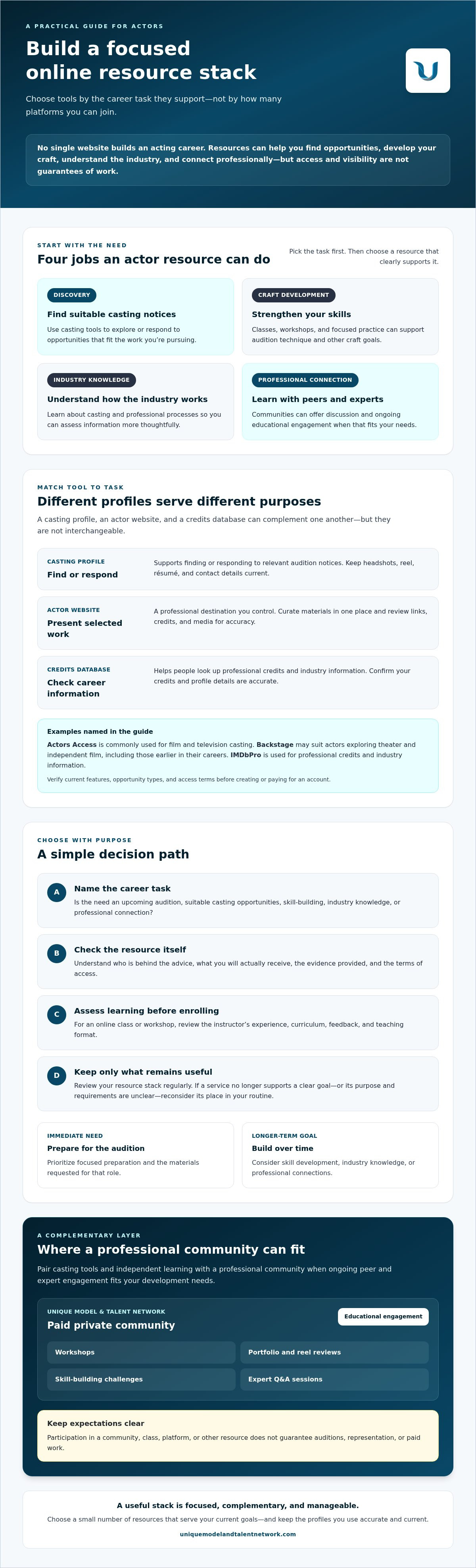
Most resources support one of four needs: discovery, such as finding suitable casting notices; craft development, such as practicing audition technique; industry knowledge, such as learning how casting works; or professional connection, such as exchanging insights with peers and experts. These resources can help you prepare and make informed choices, but visibility, training, and membership don’t guarantee auditions, representation, or paid work.
Which acting career task are you trying to solve?
Separate an immediate need from a longer-term goal. If an audition is coming up, prioritize focused preparation and the materials requested for that role. If you’re building your career over time, consider strengthening your skills, learning about the industry, or developing professional connections. If you’re actively seeking suitable auditions, start with casting discovery tools. Before creating accounts, choose a small number that serve your current goals.
Understanding the process helps you use those tools thoughtfully. The overview of Casting (performing arts) offers foundational context on how performers are considered for roles. Use that context to assess whether a casting resource is relevant to the opportunities you’re pursuing, rather than treating every listing as a fit.
Build a resource stack, not a list of subscriptions
Think in complementary roles. A casting profile helps present your materials for consideration. A learning resource supports your craft or industry knowledge. A professional peer network can provide discussion and educational engagement. These resources aren’t interchangeable, and none can replace your own preparation and follow-through.
Review your stack regularly. Does each resource still support a specific career goal? Do you understand what it provides and requires? If not, reconsider whether it belongs in your routine. For more help weighing the purpose and value of professional communities, explore a guide to acting industry networking platforms.
Casting and professional-profile resources that improve discoverability
Online visibility is easier to manage when each profile has a clear job. Casting platforms help actors find or respond to opportunities, depending on each platform’s features and terms. A personal actor website is a destination you control, where you can present selected materials. A professional credits database helps people look up career information. These tools can complement each other, but no profile or website guarantees casting attention or employment.
Actors Access and Backstage are examples of casting platforms, while IMDbPro is used for professional credits and industry information. Actors Access is commonly used for film and television casting. Backstage may suit actors exploring theater and independent film, including those earlier in their careers. Before creating or paying for an account, verify current features, opportunity types, and access terms.
Compare the resource to the task
| Resource type | Typical task | Maintenance needs |
|---|---|---|
| Casting profile | Find or respond to relevant audition notices | Keep headshots, reel, résumé, and contact details current |
| Actor website | Present selected professional materials in one controlled destination | Review links, credits, and media for accuracy |
| Credits database | Check or share professional credits and industry information | Confirm credits and profile details are accurate |
A complete, accurate presence is more useful than a long list of neglected accounts. Choose platforms based on the work you’re pursuing, then keep the profiles you use aligned. A casting profile might prioritize submission-ready materials; your website can offer a curated overview; a credits database should accurately reflect your work.
Keep actor profiles useful and current
Set a recurring reminder to review headshots, reels, credits, contact details, and profile links. Replace outdated materials when you have stronger, representative work, and make sure credits are consistent across platforms. This helps industry professionals assess your experience without having to reconcile conflicting information. For focused advice on choosing platforms and organizing materials, see a casting websites guide and an acting portfolio guide.
For audition preparation beyond profile upkeep, explore educational resources such as the SAG-AFTRA Foundation's Casting Access Program, and confirm current program details directly. If structured peer and expert engagement would complement your casting tools, learn about a professional actor and model network. A focused resource stack supports your career work; it doesn’t replace it.
Online acting classes, workshops, and industry knowledge
Online learning can take several forms. A structured acting class follows a curriculum over time. A live workshop focuses on a topic or exercise in a session. Coaching is typically individualized work around a performer’s specific needs. Free educational materials, such as articles, union resources, or recorded talks, can build general knowledge, but may not offer interaction or feedback.
Instruction teaches a process; individualized feedback responds to your work; general career information explains the industry. Knowing the difference helps you choose a format that fits, rather than paying for a resource that doesn’t address your actual goal.
Choose training that fits your current skill goal
Start with a specific area to develop, such as audition technique, scene work, or on-camera practice. Then review the instructor’s relevant experience, the course curriculum, and how sessions are delivered. Does the format include active practice? Will you receive actionable feedback, or mainly watch recorded lessons? Confirm instructor credentials, course details, and participation terms before enrolling.
A resource’s title alone won’t tell you whether it supports your progress. Look for a clear description of what you’ll practice and how you can apply it. The Actors' Equity Association resources can help actors explore professional information, including material related to contracts and the business of stage work. Check which guidance applies to your discipline and circumstances.
Use industry information without treating every tip as a rule
Prioritize advice with an identifiable author or organization, a publication date, and a clear purpose. Anonymous posts that present one person’s experience as a universal casting rule deserve extra scrutiny. Separate craft suggestions, which may vary by teacher or role, from specific casting instructions and union information, which may depend on the production, market, or membership requirements.
SAG-AFTRA and the SAG-AFTRA Foundation provide resources and educational programming, but availability and eligibility can differ. Check their current information directly before relying on a resource. Apply the same standard to online workshops: confirm who leads them, what participants will do, and whether feedback is included. A workshop can support learning, but it can’t guarantee an audition or job.
To compare formats, use an online acting workshops guide as a checklist. Look for a defined topic, relevant instruction, meaningful practice, and transparent expectations. Choose learning that addresses a current skill need, then reassess its value as your goals change.
How actors can evaluate online resources for fit, value, and safety
A polished website or confident pitch isn’t proof that a resource fits your career. Before joining a platform, paying for instruction, or responding to a casting notice, check who runs it, what it provides, and what participation requires. Use this four-step review to make a considered choice.
- Define your goal. Name the task you need help with, such as finding relevant auditions, practicing a specific skill, or understanding an industry process. If the resource doesn’t address that task, it may not deserve your time or money.
- Inspect the evidence. Look for an identifiable organizer and relevant instructor or professional background. Check whether descriptions are specific and current. Vague booking promises, pressure to act immediately, or claims that access guarantees work are reasons to pause and investigate further.
- Check the terms and opportunity details. Read written participation terms, privacy details, fees, and refund conditions before committing. For a casting notice, verify who is casting, what the project requires, and how compensation is described. Confirm details through an independent source where possible. Don’t share sensitive information unless you understand why it’s needed and how it will be handled.
- Reassess after using it. Compare the resource’s actual features with your goal and the time it takes. Track practical outcomes, such as completing practice, improving materials, or gaining a clearer next step. Revisit recurring commitments and leave resources that no longer serve a current need.
No checklist can confirm that every opportunity is legitimate without reviewing its specific, current details. If information is missing or inconsistent, contact the organizer through independently verified channels or step back until you can confirm it. Access to a platform, profile, workshop, or community is not evidence of guaranteed auditions, representation, or paid work.
Measure value by practical use, not promises
A resource earns its place by helping you take a useful action, not by promising a particular career outcome. Consider whether its format suits your schedule, whether its features are clearly explained, and whether you can apply what you learn. For example, a casting tool that doesn’t surface relevant notices may not fit your current search, while a learning resource may be valuable if it helps you practice consistently.
The best online resources for actors align with a defined goal, explain their terms clearly, and support steady progress. If peer and expert learning is the gap you’re working to address, explore the professional network and its learning opportunities, then review current membership features and access terms before deciding whether it fits.
Combine online acting resources with a professional network
A useful career routine pairs tools with action. Casting platforms can help you identify opportunities to consider; training helps you prepare; a professional community can add peer connection and educational perspectives. Each serves a different purpose. None replaces your judgment, consistent practice, or follow-through, and none guarantees auditions or paid work.
For actors who want ongoing peer and expert learning, Unique Model & Talent Network is a paid, private community. Its membership includes access to live industry workshops, portfolio and reel reviews, monthly skill-building challenges, and industry expert Q&A sessions. These formats can support learning and professional development. The network does not provide direct talent representation or commission-based booking services.
When a managed acting community may be useful
A community may suit you if you value regular peer connection, structured practice, and educational sessions with industry professionals. Consider whether those formats address a current need, such as getting feedback on your reel or building a consistent skill-development habit. Review the membership’s current features, schedule, and access terms before deciding. Community participation is one part of a broader career plan, not a substitute for casting tools, independent preparation, or your own choices.
Choose a next step you can follow through on
Keep your routine manageable. Choose one profile task, one learning goal, and one professional connection action, then decide when you’ll complete each. For example, update a relevant profile, practice a specific audition skill, and take part in an educational conversation. Small, clear steps make it easier to judge whether your resources are helping.
Revisit those choices as your experience and priorities change. A platform or community that suits one stage of your career may not be the right fit later. The best online resources for actors are the ones you can use with purpose and evaluate honestly. If ongoing peer and expert learning aligns with your goals, explore the Network Membership and check its current features and terms to see whether it fits your development plan.
Choose a focused next step for your acting career
The best online resources for actors aren’t necessarily the ones with the most features. Start with a clear career need, choose tools that address it, and check who runs them, what they provide, and what participation requires. Casting profiles, training, reliable industry information, and professional connections can work together, but online access is never a promise of auditions or employment.
A manageable routine is more useful than a crowded stack of accounts. Keep your materials current, set a practical learning goal, and make space for professional conversations. Then review your choices as your experience and priorities change.
If ongoing peer and expert learning would support your development, explore the Network Membership. It connects emerging creatives and industry professionals in a private, moderated digital community, with member learning formats that include live workshops, portfolio and reel reviews, monthly challenges, and expert Q&A sessions. Review current features and terms to decide whether it fits your goals.
Explore the Network Membership and take your next step with purpose. Your career path is your own, and a focused resource routine can help you keep moving forward.
Frequently Asked Questions
What are the best online resources for actors?
The best online resources for actors are the ones that support a specific career need. Casting platforms can help you find opportunities, classes and workshops can support skill development, and industry organizations can provide professional information. A peer or expert community may add educational engagement. Choose a focused mix, check who runs each resource and what it offers, and review whether it still fits your goals. No online resource guarantees auditions or work.
Which websites do actors use to find auditions?
Actors often use platforms such as Actors Access and Backstage to find or respond to casting notices. Their audiences, opportunities, features, and submission terms differ, so check the current details and see which platform fits the types of roles you’re pursuing. IMDbPro serves a different purpose, with professional credits and industry information. Before paying or submitting, read the listing carefully and confirm that the opportunity matches your experience and availability.
Do actors need a personal website?
No, a personal website isn’t essential for every actor. It can be a useful, controlled place to present selected professional materials, such as a headshot, reel, résumé, and contact information. Casting profiles may be more directly useful for responding to opportunities, depending on the platform and its terms. Start with the materials and profiles relevant to your current goals. Keep anything you use accurate, current, and easy to review.
Are online acting classes worth it?
Online acting classes can be worthwhile if their format and instruction match a skill you want to develop. Before enrolling, check the instructor’s relevant experience, the curriculum, and whether you’ll practice and receive actionable feedback or mainly watch recorded lessons. A class focused on audition technique, scene work, or on-camera practice may suit a specific goal. Confirm current course details and expectations, then assess whether the learning translates into useful practice.
How can actors tell if an online casting opportunity is legitimate?
Review the source and details before responding. Identify who is casting, confirm the project through an independent channel, and check the role requirements, submission process, and how compensation is described. Read any terms before sharing personal information. Pressure to act immediately, vague booking promises, unclear fees, or requests for sensitive details without a clear explanation are reasons to pause. You can’t confirm an offer’s legitimacy from a polished listing alone.
Can an online acting community help me get an agent or book work?
An online community can support learning and professional connection, but it can’t guarantee an agent, auditions, or paid work. Unique Model & Talent Network is a paid, private community for emerging creatives and industry professionals, with formats including live workshops, portfolio and reel reviews, monthly skill-building challenges, and expert Q&A sessions. It doesn’t provide direct talent representation or commission-based booking services. Review current membership features and terms to see whether the learning fits your needs.
What should I include in an actor's online profile?
Include clear, current materials that help someone assess your professional experience: a representative headshot, an updated résumé or credits, and a reel when you have relevant footage. Check that contact details and profile links work and that your information is consistent across platforms. Follow each platform’s submission requirements rather than uploading the same materials everywhere by default. Accuracy and relevance matter more than opening numerous profiles or listing credits you can’t verify.


