

A successful casting session starts before actors arrive. To learn how to host a successful casting session, write a clear casting call, prepare the space and team, and assess performers consistently, both individually and together. Use callbacks and chemistry reads to see whether top candidates bring the right dynamic to the production.
Finding a compelling performance matters, but a smooth process also depends on clear instructions and consistent evaluation. Actors need to know what to prepare and what to expect. The casting team needs a shared understanding of each role and a reliable way to compare auditions.
This guide covers the practical steps: writing a focused breakdown, organizing the room, giving useful direction, assessing chemistry, and handling callbacks thoughtfully. Use these steps to make informed casting decisions while giving every performer a professional, respectful experience.
Key Takeaways
- Write casting calls with clear role criteria, submission instructions, and deadlines so performers know what to expect.
- Give each person in the casting room a defined role, and keep the process focused on the auditioning performer.
- Use consistent direction and shared readings to evaluate how actors respond, collaborate, and connect on screen.
- Make callbacks purposeful by testing specific casting questions and communicating decisions and next steps respectfully.
Checking chemistry and compatibility between actors
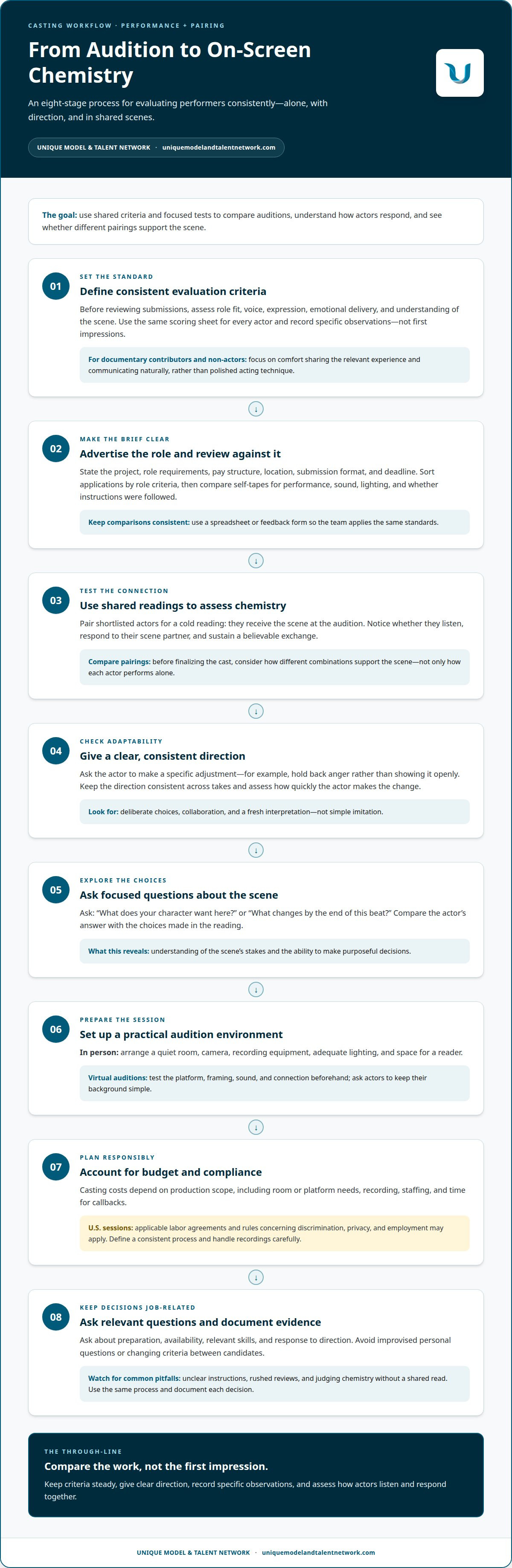
- Set consistent criteria before reviewing submissions. Assess role fit, voice, expression, emotional delivery, and ability to understand the scene. Use the same scoring sheet for each actor, and record specific observations rather than relying on first impressions. For documentary contributors and non-actors, focus on their comfort sharing the relevant experience and communicating naturally, not polished acting technique.
- Advertise the role clearly, then review submissions against the breakdown. State the project, role requirements, pay structure, location, submission format, and deadline. Sort applications by role criteria, then compare self-tapes for performance, sound, lighting, and whether the actor follows instructions. A spreadsheet or feedback form helps the team apply the same standards.
- Test chemistry through shared readings. Pair shortlisted actors for a cold reading, where they receive the scene at the audition. Notice whether they listen, respond to their scene partner, and sustain a believable exchange. Before finalizing the cast, compare how different pairings support the scene, not just how each actor performs alone.
- Give direction to test range and adaptability. Ask an actor to play a moment with a clear adjustment, such as holding back anger instead of showing it openly. Keep the direction consistent across takes and assess how quickly the actor makes the change. Look for deliberate choices, collaboration, and a fresh interpretation, rather than simple imitation.
- Check scene understanding with focused questions. Ask, “What does your character want here?” or “What changes by the end of this beat?” Then compare the actor’s answer with the choices in the reading. This reveals whether they understand the scene’s stakes and can make purposeful decisions.
- Prepare a practical audition setup. For an in-person session, arrange a quiet room, camera, recording equipment, adequate lighting, and space for a reader. For a virtual audition, test the platform, framing, sound, and connection beforehand; ask actors to keep their background simple.
- Plan budget and compliance deliberately. Casting costs depend on the production’s scope, including room or platform needs, recording, staffing, and time for callbacks. U.S. sessions may involve applicable labor agreements and rules concerning discrimination, privacy, and employment; define a consistent process and handle recordings carefully.
- Keep questions and decisions job-related. Ask about preparation, availability, relevant skills, and response to direction. Avoid improvising personal questions or changing criteria between candidates. Common mistakes include unclear instructions, rushed reviews, and judging chemistry without a shared read; use the same process and document each decision.
Assigning casting-room roles
- Appoint one session lead. This person welcomes each actor, explains the process, and keeps the audition moving. They should know the role requirements and the planned order of readings. If the director needs to change an instruction, the lead communicates it clearly so every performer receives consistent information.
- Give the audition reader a focused job. The reader recites the other characters’ lines for actors auditioning for speaking roles. Keep the reader off camera, quiet, and supportive rather than performative. Their delivery should give talent a clear cue without drawing attention away from the scene.
- Assign a camera operator or recording lead. That person checks framing, sound, and recording before each take, then labels files with the actor’s name and role. A steady process helps the creative team compare auditions later. The operator should avoid interrupting a performance unless a technical issue makes the take unusable.
- Choose a note-taker for evaluation. Ask them to capture specific observations, such as a clear character choice, a missed cue, or a strong response to direction. They should record evidence, not broad labels like “good” or “not right.” This gives the team useful details to discuss after the actor leaves.
- Separate evaluation from logistics. A coordinator can greet performers, manage the schedule, and guide each person to the waiting area. That lets the session lead focus on the audition and keeps the room calm. Share timing changes promptly, especially if a previous reading runs long.
- Agree on decision-making roles beforehand. The director and producers make the final booking decision, while other team members provide relevant observations. Decide who gives instructions, who asks follow-up questions, and who closes each audition. Avoid competing directions that leave an actor unsure which note to follow.
- Use a consistent handoff after each reading. Confirm the recording is saved, collect notes, and reset the room before the next performer enters. If the team needs another take, the lead should deliver one agreed adjustment. Clear ownership keeps the camera, reader, and evaluation process working together.
Callbacks and chemistry reads
Prepare audition sides from the production script and provide clear callback instructions. For an in-person audition, you might use two or three scenes; for an e-casting submission, candidates usually receive one or two.
- Define what the callback must reveal. Choose a specific open question, such as whether an actor can shift from guarded to vulnerable. Invite only performers whose first audition gives the team a reason to explore that question. A focused goal makes each callback useful to the production.
- Test pairings with the same scene. Have shortlisted actors read together, then observe listening, timing, emotional response, and whether they make room for one another. A strong individual audition doesn’t automatically mean two performers create a convincing relationship on screen.
- Keep direction consistent across takes. Give each pairing the same adjustment, such as playing a tense exchange with more restraint. Note how quickly actors understand and apply the direction. Their choices can reveal flexibility, communication, and whether the scene remains clear after a change.
- Use script sides that serve the decision. Select excerpts that show the relationship, conflict, or tonal shift the team needs to evaluate. Tell actors what material to prepare and what to expect at the callback. Share the relevant production expectations and avoid adding surprises that don’t help assess the role.
- Record observations against the role’s needs. Note specific moments, such as a believable pause or an unresponsive exchange, rather than vague impressions. Compare each actor’s performance and each pairing’s dynamic. The director and producers make the final booking decision, using the audition evidence to guide their choice.
- Close the process with clear communication. Tell callback attendees promptly and respectfully when they aren’t selected, and thank them for their time. For selected actors, explain the contract, schedule, script, expectations, and next steps. Clear details help performers understand what the production requires.
Casting calls and breakdowns
- Open with the project and role. Give performers a concise picture of the production, the character, and the scene’s purpose. For example, describe a supporting role as a neighbor who changes the direction of a family argument. Specific context helps actors decide whether they can perform the part authentically.
- Describe role criteria precisely. Include relevant age range, skills, experience, and physical features required for the role. Use descriptive, brief language and avoid wording that could be offensive or needlessly restrictive. Distinguish essential abilities, such as a specific performance skill, from preferences that aren’t necessary to tell the story.
- State compensation and location. Explain the pay structure and where the work takes place, so applicants can assess the opportunity. Include practical location details for an in-person audition, or state that submissions are remote. A clear breakdown supports informed decisions and helps reduce avoidable follow-up questions.
- Specify exactly how to submit. Say whether you want a self-tape, audio file, or live audition. Add the required format, length or quality standards, deadline, and contact information. For e-casting, candidates usually receive one or two scenes to record. A traditional casting may provide two to three scenes to prepare in advance.
- Give actors enough notice to prepare. Promote the casting call in advance and provide the script sides with the announcement or submission instructions. Same-day auditions can leave performers little time to prepare. State whether you’ll review video footage before scheduling a live audition, so applicants understand the selection process.
- Review the wording before publishing. Read the breakdown from an actor’s perspective. Check that each criterion connects to the role and that the instructions don’t conflict. A legal professional can review casting-call copy to help reduce the risk of language being perceived as offensive, racist, or discriminatory.
- Make every instruction easy to find. Organize the project description, role criteria, pay, location, submission format, deadline, and contact details in clear sections. If you want to sharpen your casting decisions, explore industry casting insights.
Unique Model & Talent Network: Industry Expert Q&A Sessions
Unique Model & Talent Network helps actors and aspiring models build practical industry knowledge through its professional community. If you’re unsure how to prepare or present your work, Industry Expert Q&A Sessions let you learn from industry professionals and ask focused questions.
The Network Membership connects members with industry experts, including casting directors and photographers. Live Industry Workshops support skill-building, and Portfolio & Reel Reviews offer feedback on materials actors use to present their work. These educational resources can deepen your understanding of auditions and support informed career decisions. They do not provide talent representation or booking services.
If you’d like to explore these learning opportunities, contact Unique Model & Talent Network.
Carry Your Casting Practice Into the Next Production
Every casting decision shapes the working relationships behind a production. Keep developing your judgment beyond the audition room: reflect on which choices served the scene, where communication could improve, and what to refine next time. Learning how to host a successful casting session takes thoughtful practice and informed perspectives.
For actors and emerging creatives seeking industry insight, Unique Model & Talent Network offers The Network Membership, Live Industry Workshops, and Portfolio & Reel Reviews. These resources can help you develop your craft, present your work more effectively, and gain perspective from industry professionals. Choose what best matches your current goals, whether you’re preparing a portfolio or broadening your understanding of the industry.
Take your next step with clarity and keep creating room for meaningful professional growth. Contact Unique Model & Talent Network to explore the learning opportunities available to you.
Frequently Asked Questions
How do you plan a casting session?
Planning how to host a successful casting session starts with turning the production’s needs into a clear workflow. Decide which roles need auditions, what evidence will help you assess each one, and who will make the final decision. Choose an in-person or virtual format, assign responsibilities, and agree on how to manage submissions. For example, decide how the team will label recordings and share notes before auditions begin.
What is a casting call?
A casting call invites performers to submit for roles in a production. It helps actors decide whether the opportunity suits their experience and availability, and explains how to be considered. A useful notice identifies the project and role, outlines relevant requirements and compensation, and provides submission instructions and a deadline. It is not the audition itself; it guides candidates to that next step.
What are the steps to plan and host a successful casting session?
To learn how to host a successful casting session, follow a deliberate sequence: define the roles, publish the opportunity, screen submissions, schedule auditions, and agree on how to record observations. During the session, communicate consistently and capture performances for review. Afterward, assess the evidence against each role’s needs, arrange callbacks to resolve open questions, and communicate decisions respectfully. For example, reserve time after each audition to label its recording accurately.
How do you write a casting call and attract the right talent?
Write for the performer who needs to decide quickly whether to submit. Describe the project and character in plain language, explain which qualifications are essential, and state the audition format and submission deadline. Avoid vague phrases such as “must have the right look”; name a story-relevant quality instead, such as strong comedic timing. Clear, relevant criteria help suitable actors recognize their fit and prepare a focused submission.
What should a casting session schedule and audition format include?
Plan time for arrival, check-in, audition order, recording review, and breaks to reset or handle delays. Twenty-minute segments can help organize appointments, with room to accommodate an audition that runs long. Choose live auditions when interaction matters, or self-tapes when recorded submissions suit the process. Tell actors what to prepare, how to submit, and whether you may request another take or a callback.
What are typical casting session costs and budget considerations in the U.S.?
Costs depend on the production’s needs, including the room or platform, recording, staffing, and callback time. Video casting can be arranged at short notice and does not cost anything.


