

Small details can make a print-model portfolio feel polished and purposeful. Learning how to get your start in print modeling begins with clear, natural photos that show your range, followed by thoughtful choices about which images fit the work you want to pursue. You don’t need an elaborate concept to make a strong first impression; you need images that let casting professionals see you clearly.
It’s natural to focus on big decisions, such as what to wear or how to pose. But finer choices matter too: your expression, grooming, framing, background, and the way each photo adds something new to your portfolio. Together, these details present you as prepared and versatile.
This guide explains how to build a focused portfolio, highlight qualities that read well in print, and choose photos and presentation details that support your goals. You’ll also learn how to refine your materials over time and recognize when expert feedback can help you choose your next step.
Key Takeaways
- Build a focused portfolio with natural, clear images that show your range and let casting professionals see you easily.
- Assess agency opportunities carefully by looking for clear professional processes and legitimate routes to submit your materials.
- Make applications easy to review with well-chosen photos and a concise, professional submission.
- Understand how print, commercial, fashion, and editorial modeling differ so you can tailor your portfolio to the work you want.
How do you build a print modeling portfolio and what photos should it include?
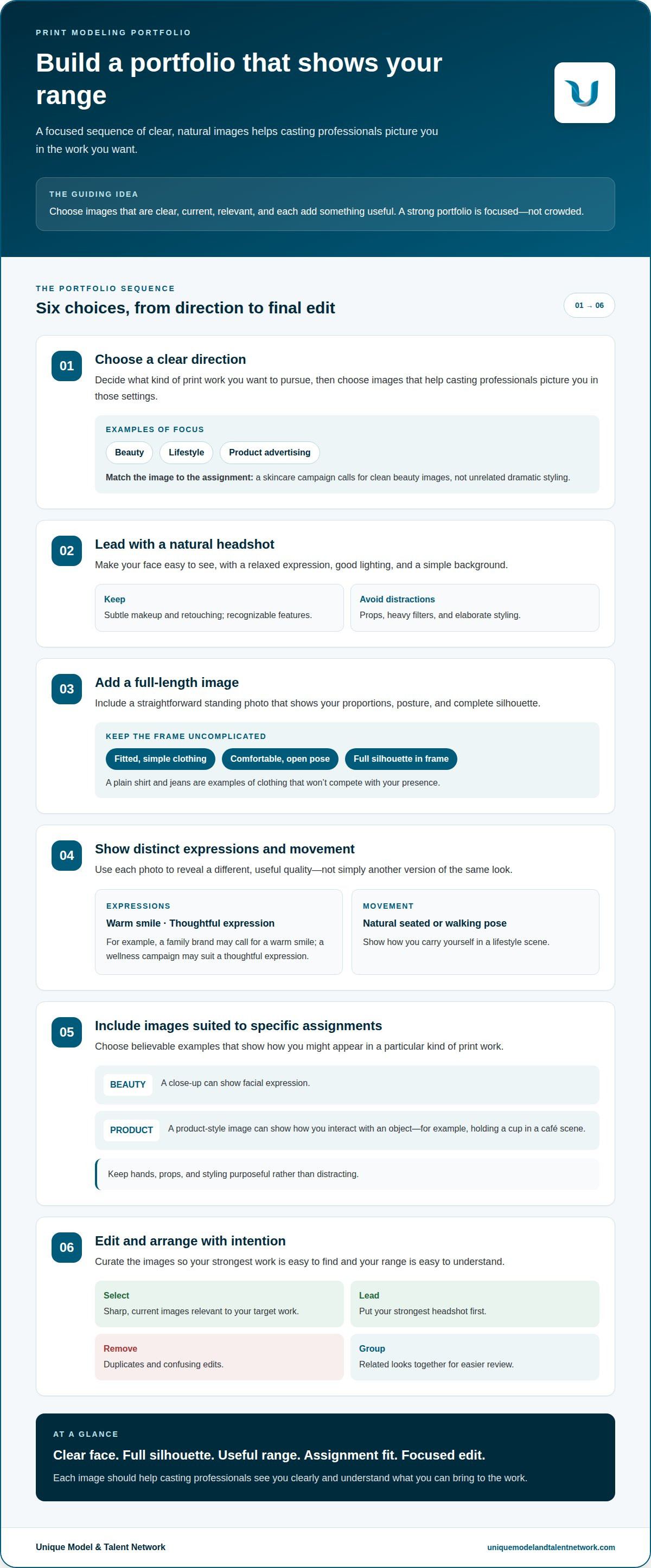
- Choose a clear direction. Start with the print work you want to pursue, such as beauty, lifestyle, or product advertising. Select images that help casting professionals picture you in those settings. A skincare campaign, for example, calls for clean beauty images rather than unrelated dramatic styling. If you’re considering how to get your start in print modeling, let your target assignments guide your choices.
- Lead with a natural headshot. Use a well-lit image that shows your face clearly against a simple background, with a relaxed expression. Keep makeup and retouching subtle so your features remain recognizable. Casting professionals should be able to see your face without distractions from props, heavy filters, or elaborate styling.
- Add a full-length image. Include a straightforward standing photo that shows your proportions and posture. Choose fitted, uncomplicated clothing, such as a plain shirt and jeans, so the outfit doesn’t compete with your presence. Stand comfortably, keep your pose open, and make sure the frame includes your complete silhouette.
- Show distinct expressions and movement. Include images with different moods, from a warm smile for a family brand to a thoughtful expression for a wellness campaign. Add a natural seated or walking pose to show how you carry yourself in a lifestyle scene. Each photo should reveal a different, useful quality.
- Include images suited to specific assignments. A beauty close-up can show facial expression, while a product-style image can demonstrate how you interact with an object. Choose believable examples, such as holding a cup in a café scene. Keep hands, props, and styling purposeful rather than distracting. This focused approach makes how to get your start in print modeling a practical portfolio goal.
- Edit and arrange with intention. Select only images that are sharp, current, and relevant to the work you want. Put your strongest headshot first, then group related looks so the portfolio is easy to review. Remove duplicates and confusing edits. A focused selection makes your range clearer than a crowded collection.
A 3D-printed model should use watertight manifold volume parts. Hollowing a model can save resin, and the hollow area should have a vent hole connecting it to the outside.
How can beginners find legitimate print modeling agencies and open calls?
- Define the representation you want. Search for agencies that represent print or commercial models, not only runway talent. Read about their specialties and look for examples of lifestyle, beauty, or product campaigns. This helps you focus on opportunities that match your look and the assignments you want.
- Start with the agency’s official channels. Find its website and social accounts using consistent business information, then locate its submission page or open-call announcement. If an Instagram post invites applications, compare its details with the agency’s official site before sending photos or personal information.
- Read the submission instructions closely. Note the requested photos, contact details, file format, and submission method. For example, if an agency requests natural snapshots through an online form, follow that process rather than sending a large portfolio through an unrelated account. Clear instructions indicate an organized intake process.
- Assess the offer, not just the invitation. An open call should explain who is recruiting, what type of talent is sought, and how to apply. Be cautious if a message promises guaranteed work, creates urgent pressure, or presents paid services as necessary for representation. Pause before sharing sensitive information or paying.
- Separate representation from related businesses. Some opportunities promote photography sessions, classes, or portfolio packages alongside auditions. Consider whether the message is inviting you to be considered for modeling work or primarily selling a product. A casting notice for a skincare campaign, for instance, should describe the project and how to apply.
- Keep a simple application record. Track each agency’s name, submission date, contact channel, and response. This prevents duplicate applications and helps you recognize unusual follow-up messages. If someone claims to represent an agency, compare the sender’s details with the agency’s official contact information before replying.
For beginners choosing between materials for 3D printing, PLA is generally recommended as a beginner material for 3D printing because it is cost-effective and easy to print with a standard configuration. PET-G is considered beginner-friendly and can withstand higher temperatures, making it suitable for functional prototypes. Both are beginner-oriented material options.
How to submit photos and apply to print modeling agencies?
- Follow the agency’s submission route. Use the application form or email named on its official website. If the agency requests an online form, don’t send your materials through an unrelated social media account. Following the stated process helps your application reach the right place.
- Choose photos for the specific request. Select clear, current images that meet the agency’s instructions. If it asks for natural snapshots, don’t send heavily edited, campaign-style images instead. Use simple filenames, such as “Jordan-Lee-headshot,” so each photo is easy to identify.
- Prepare a concise introduction. Include your name, location, reliable contact details, and a brief note about the type of print work you’re pursuing. For example, say you’re interested in lifestyle and beauty campaigns. Keep the message professional and direct instead of adding a long personal history.
- Complete every requested field accurately. Check spelling, contact details, and any measurements or experience the form asks you to provide. If a field doesn’t apply, follow the form’s instructions rather than guessing. Consistent information helps the agency understand your application and contact you about next steps.
- Review files before sending. Open each attachment to confirm it displays correctly and matches the requested format. Make sure images are sharp, properly oriented, and free from distracting filters. A quick review also helps catch accidental extras, such as an unrelated document or duplicate photo.
- Keep a record and respond professionally. Note the agency, submission date, and method in a simple tracking document. If you receive a reply, read it carefully and answer the questions asked. If a request seems unusual, pause and compare the sender’s details with the agency’s official contact information.
What are the differences between print, commercial, fashion, and editorial modeling
- Separate the medium from the assignment. Print modeling describes work created for still images, including advertisements, catalogs, and magazines. Commercial modeling is defined more by its purpose: promoting a product, service, or brand to consumers. A skincare advertisement can therefore be both print and commercial. For your portfolio, choose images that show how naturally you can communicate a product’s appeal.
- Recognize commercial work’s everyday storytelling. Commercial campaigns often show relatable people in familiar situations, such as friends sharing a meal or a family using a household product. The goal is to make the brand feel relevant to its intended audience. Practice expressions and gestures that look believable in context rather than relying on one dramatic pose.
- Distinguish fashion modeling by its focus on clothing. Fashion images present garments, accessories, or a designer’s visual direction. The pose, styling, and composition may draw attention to silhouette, fabric, and movement. For example, a fashion shoot might show how a coat hangs as you turn. Build relevant skills by practicing controlled movement and poses that keep the clothing visible.
- Identify editorial modeling through its concept. Editorial images tell a visual story for a magazine or other publication. They may use expressive styling, unusual settings, or a sequence of images to develop an idea rather than directly promote a product. Study how a fashion story combines wardrobe, expression, and setting. Then choose portfolio images that show you can take direction and sustain a mood.
These categories can overlap: a fashion editorial may appear in print, while a commercial image may feature fashion. If you’re unsure which images best demonstrate your range, get expert portfolio feedback and refine your presentation for the assignments you’re pursuing.
Unique Model & Talent Network: The Network Membership
Unique Model & Talent Network gives aspiring print models a professional community for continued learning and feedback. If you’ve prepared your photos but want clearer direction on presenting your portfolio, The Network Membership connects you with industry expertise in a focused setting.
Use Portfolio & Reel Reviews to strengthen how you present your materials, and Live Industry Workshops to build practical knowledge. Monthly Skill-Building Challenges give you a structured way to keep developing between applications. These resources can help as you refine your approach, learn industry expectations, and seek feedback from professionals familiar with talent evaluation.
Explore The Network Membership and contact Unique Model & Talent Network if you’d like to learn more.
Build momentum with your next professional step
Your next move is to turn preparation into a steady, thoughtful practice. Treat each application as a chance to learn how your materials represent you, and keep notes on the roles and image styles that feel like a strong fit. Over time, these observations can help you make more deliberate choices about your direction and present yourself with greater confidence.
If you’re considering how to get your start in print modeling, remember that progress combines creative work with professional judgment. Stay selective about opportunities, keep developing your skills, and seek informed feedback when you need a fresh perspective. A supportive industry community can help you keep learning as your goals take shape.
Contact Unique Model & Talent Network to explore your next step. Keep building with purpose, and let your preparation guide you toward the work you want to pursue.
Frequently Asked Questions
What are the basic requirements to become a print model in the US?
There isn’t one fixed checklist for every print modeling role in the US; clients select talent based on the campaign. Focus on professionalism, following direction, and matching the brief’s requested look or skills. For example, a hand-care advertisement may seek expressive hands, while a lifestyle shoot may need natural interaction with props. Read each casting notice closely and provide accurate information about your experience and availability.


