

You don’t have to rebuild your acting career all at once. A practical way to learn how to get back into acting after a long break is to assess your current skills, choose one area to refresh, and set manageable practice goals. Then update your materials and take deliberate steps toward new opportunities.
If returning feels daunting, that’s understandable. Your confidence may need time to catch up with your experience, and the industry may have changed while you were away. A break doesn’t erase your ability. It can give you fresh perspective and a clearer sense of the work you want to pursue.
This guide will help you create a focused return plan, manage self-doubt through practice and support, and identify the acting skills and professional materials to revisit. You’ll also learn how to reconnect with the industry at a pace that suits your circumstances, so your next steps feel purposeful rather than overwhelming.
Key Takeaways
- Turn your return into manageable steps with clear goals, deadlines, and regular progress reviews.
- Build confidence through focused practice and supportive opportunities to share your work.
- Refresh one acting skill at a time, then bring your headshots, reels, credits, and listed skills up to date.
- Explore casting opportunities across film, television, theater, and online media, and use workshops or reel reviews to strengthen your professional readiness.
Creating a career-return plan with short-term tasks and deadlines
A practical plan for how to get back into acting after a long break pairs clear deadlines with deliberate practice. Make room for creative work, emotional support, and recovery time when plans change.
-
Set Short-Term Tasks and Deadlines
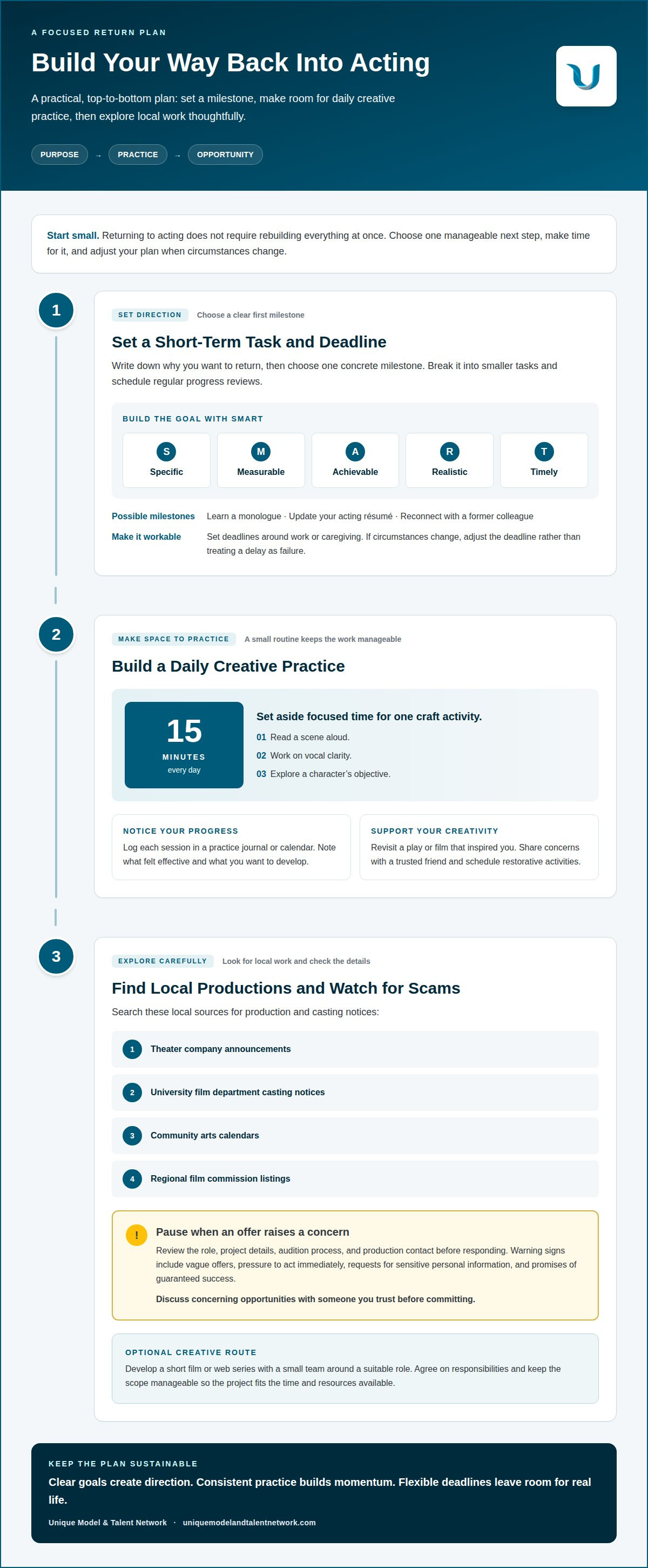
Write down why you want to return, then choose a concrete first milestone. Use SMART goals: specific, measurable, achievable, realistic, and timely. For example, set a deadline to learn a monologue, update your acting résumé, or reconnect with a former colleague. Break the milestone into smaller tasks and schedule regular reviews. Set realistic deadlines around work or caregiving, and adjust them when circumstances change rather than treating a delay as failure.
-
Build a Daily Creative Practice
Set aside 15 minutes every day for focused practice. Read a scene aloud, work on vocal clarity, or explore a character’s objective. Log each session in a practice journal or calendar, noting what felt effective and what you want to develop. To reconnect with creativity, revisit a play or film that inspired you. Share concerns with a trusted friend, and schedule restorative activities so your plan supports emotional resilience as well as craft.
-
Find Local Productions and Watch for Scams
Search theater company announcements, university film department casting notices, community arts calendars, and regional film commission listings for local productions. Before responding, review the role, project details, audition process, and production contact. Treat vague offers, pressure to act immediately, requests for sensitive personal information, and promises of guaranteed success as warning signs. Discuss concerning opportunities with someone you trust before committing.
If you’re considering how to get back into acting after a long break, creating a project can also give your return direction. Gather a small team to develop a short film or web series around a suitable role. Agree on responsibilities and keep the scope manageable so you can complete the work with the time and resources available to you.
Managing self-doubt through practice and support
Acting ability doesn’t disappear during a break, but confidence may need rebuilding. Use manageable goals, constructive support, and deliberate preparation to regain momentum.
-
Set Manageable Acting Goals
Choose one specific acting goal you can complete and assess, such as learning a short monologue or preparing a scene for class. Break it into practical actions, then note what you completed and what needs more work. If a goal feels overwhelming, narrow its scope rather than abandoning it. Measure progress by preparation and follow-through, not by whether every audition leads to a role.
-
Practice With Support
Identify the concern behind your self-doubt, then choose a useful response. If you worry about being out of practice, rehearse with a scene partner, take a class, or share a short piece at an open mic. Ask a trusted peer for specific feedback on listening, clarity, or choices. A Monthly Skill-Building Challenge can also give practice a defined focus.
- Reconnect with a former agent or manager if you had professional representation before your break. Ask whether they’re open to discussing your return, and prepare a concise update about your current goals, availability, training, and recent work. If you’re seeking new representation, research agents and managers experienced in rebuilding careers. Tailor your introduction to their professional focus, and present current materials rather than relying only on past credits.
- Make auditions one part of a broader confidence-building routine. Before each audition, prepare the sides, clarify the character’s objective, and practise a calm introduction. Afterward, record one thing you handled well and one skill to develop. When a setback stings, speak with a supportive colleague or mentor before deciding what it means. Preparation, perseverance, thoughtful choices, and a positive attitude can help keep rejection from becoming a verdict on your talent.
Assessing and refreshing acting skills
Start with an honest skills audit, then refresh the areas your next roles require. There’s no single fixed total: budget separately for headshots, classes or coaching, and casting subscriptions, then prioritize what your target work needs.
- Choose one skill to assess first, such as vocal delivery, physicality, or interpreting a scene. Record yourself performing a monologue, then watch for clear choices, listening, pacing, and moments that feel forced. Avoid trying to rebuild every skill at once. A focused review gives you a practical starting point and helps direct your practice toward specific improvements.
- Repeat the same recording after a few weeks of practice. Comparing both versions can reveal changes in clarity, confidence, and character choices more reliably than memory alone. Keep the script and recording conditions similar, and note one strength and one area to work on next. If feedback from a trusted scene partner points to another issue, use that observation to refine your next practice goal.
- Refresh your technique through a class or work with a qualified acting coach. Choose a format that addresses your current needs, such as camera auditions, voice work, or scene study. Review casting notices and watch productions in your desired genre to identify the skills those roles call for. Then bring a specific question to class, such as how to make a scene’s emotional shift more credible.
- Review your headshots, showreel, voice reel, credits, and listed skills together. Remove outdated details, correct inaccuracies, and make sure each item reflects your current work and abilities. A headshot should represent your present appearance; a reel should show performances relevant to the roles you’re pursuing. If your experience is limited, a theater production can help you practise, gain exposure, and build new professional connections.
There is no set overall cost; your budget depends on what you need to refresh. Allocate funds separately for headshots, classes or coaching, and casting subscriptions, prioritizing what best supports your target roles.
How can actors find auditions and casting calls in the United States?
Build a focused search across film, television, theater, and online media. Track relevant opportunities and industry changes so your outreach reflects the work you want.
- Choose the formats and roles that fit your current skills, then search their casting notices consistently. For example, an actor pursuing screen work can follow film and television projects, while a stage performer can monitor theater productions. Include online media, such as scripted digital projects, in your search. Record each suitable notice, its submission instructions, and its deadline in one calendar.
- Follow production companies, theaters, casting professionals, and film organizations connected to your target market. Their announcements can reveal projects and changes among professionals working in your area. Use specific searches such as “student film casting” or “regional theater auditions” alongside your city or state. Compare each notice with your experience, schedule, and preferred medium before preparing an application.
- Reconnect with former colleagues who remain active in the business. Send a concise message describing your return, the kind of work you’re pursuing, and any updated materials. Attend acting classes, showcases, or industry events to renew professional relationships and hear about projects. Keep the conversation focused on shared work and genuine interest, rather than asking every contact for an immediate referral.
- Prepare a tailored submission for each role. Follow the casting notice’s requested format, select a headshot and reel suited to the project, and make your availability clear. Keep a simple record of the project, contact, submission date, and follow-up instructions. Review it regularly to spot patterns, such as which formats match your profile. Adjust your search as casting priorities and industry professionals change, rather than relying on one channel alone.
Unique Model & Talent Network
Unique Model & Talent Network can support your return with a professional community, skill development, and feedback as you prepare for auditions. If you’re looking for structure after a break, The Network Membership connects you with industry professionals and fellow creatives.
Use Live Industry Workshops and Industry Expert Q&A Sessions to strengthen your understanding of the field. Portfolio & Reel Reviews can help you assess how your materials present your current work, while Monthly Skill-Building Challenges offer a focused way to keep practising. These resources support your career development, while leaving you in control of your choices about roles, training, and representation.
For support as you plan your next acting steps, contact Unique Model & Talent Network.
Make Your Next Move With Purpose
Returning to acting is not a single test you pass or fail. Treat each new experience as useful information: which roles energize you, where your preparation holds up, and what you want to develop next. This perspective can keep your career choices grounded in your priorities rather than comparisons with someone else’s timeline.
A thoughtful approach to how to get back into acting after a long break is to stay curious while building a professional path that fits your life now. You don’t need to recreate the career you had before your break. Let your current interests, perspective, and circumstances inform the performer you’re becoming. Reassess your direction as projects and professional relationships develop, and make room for choices that feel both artistically and practically right.
If you’re ready to strengthen your connection to the acting community, explore your next step with Unique Model & Talent Network. Your experience is part of what you bring to the work ahead. Move forward with intention, and give your return room to grow.
Frequently Asked Questions
What steps should actors take to restart their career after a long break?
Begin by choosing the kind of acting work you want to pursue now, then identify what that work requires. For example, a performer targeting commercials may prioritize on-camera audition technique, while a theater actor may focus on live scene work. Set a practical sequence: refresh relevant materials, practise for the format, and submit to suitable opportunities. Review your direction as you learn what fits.
How can returning actors update their headshots, résumé, and demo reel?
Make each item easy for casting professionals to understand and use. Choose a headshot that reflects your current appearance, organize résumé credits with clear production and role details, and select reel clips that quickly show your strongest relevant work. Use consistent professional names across files and profiles. Before submitting, open each file on your device to ensure it displays correctly and contains no outdated contact details.
Do actors need new training or classes after time away from acting?
Not automatically. Choose training based on the demands of the roles you’re pursuing and the skills you want to sharpen. A camera audition class can help if self-taping feels unfamiliar; voice or movement work may suit a different performance goal. If you’re unsure where to focus, ask an experienced instructor for targeted feedback before committing to a longer course.
Which casting websites and agencies are best for actors returning to the industry?
The right casting platform depends on your market, medium, and experience. Look for notices that clearly describe the project, role, submission process, and production team. An agency is a separate consideration: research its client roster and the kinds of roles it represents, then assess whether your profile aligns. Keep submissions selective and use professional channels instead of relying on unverified direct messages.
How can actors rebuild professional networks and reconnect with agents or casting directors?
Send former contacts a short, personal update that acknowledges your previous connection and explains the work you’re pursuing now. For example: “I’m returning to on-camera work and have updated my reel. I’d enjoy hearing what you’re working on.” Avoid asking for a favor in the opening message. For casting directors you don’t know, engage through appropriate professional events or educational sessions.
Should actors disclose a career break on their résumé or in auditions?
Usually, a résumé can focus on relevant credits, training, and current skills without explaining every gap. If someone asks about your break, answer honestly and briefly, then bring the conversation back to your readiness for the role. For instance, you can mention that other responsibilities took priority and describe what you’ve done to prepare for returning. Keep the explanation professional and don’t apologize for your timeline.


