

A short film needs a clear casting plan, a realistic talent budget, and auditions held in a professional setting, not a private home. To learn how to find talent for a short film, define each role, write a focused casting notice, and give actors the project details they need to decide whether to audition. Keep submissions, audition notes, and contact details organized so you can compare candidates fairly and follow up promptly.
Finding the right performers means balancing strong, suitable work with a manageable, safe process. This guide covers budgeting for cast and casting support, planning secure auditions, building a useful cast list, and deciding when an indie film casting director can help. You’ll get practical steps for making casting organized, respectful, and focused on the story you’re bringing to the screen.
Key Takeaways
- Build a casting budget around the roles, production needs, and compensation you can realistically support.
- Choose a professional audition setting and set clear expectations so performers know what to expect.
- Keep submissions, audition notes, and role details organized to make casting decisions easier to track.
- Write a focused casting notice, and consider when a casting director’s expertise could support the process.
1. Budgeting for actors, auditions, and a casting director
Start with the roles your script needs, then estimate the full cost of bringing each performer onto set. Include compensation, travel, meals, lodging when needed, and time for rehearsals or additional shooting. A well-known performer might receive $1,000 for a day on set and an appearance in the film. That amount might represent ten percent of a film budget, so assess the trade-off against other production needs.
Pay cast members where possible, and make the terms clear before anyone accepts a role. If your production is union, include the related pension and healthcare costs in your budget: those costs are 17% as of this writing. Distinguish that union-production context from your other spending rather than treating the percentage as a universal casting expense.
Audition costs depend on your process and production setup. For in-person sessions, account for a suitable professional venue and the crew’s time. For self-tapes, plan how you’ll receive and review submissions and arrange callbacks. A casting director can help define the breakdown, manage submissions, coordinate auditions, and narrow candidates. Weigh that support against the time your team can devote to each task, rather than assuming a standard fee.
An actor release or talent agreement should clearly identify the performer, project, compensation or unpaid terms, role, and agreed work dates. It should also explain how the production may use the performer’s recorded image, voice, and performance, including the film’s intended distribution and promotion. Put the terms in writing before filming.
Before outreach, build a role-by-role budget and spell out the responsibilities and terms for each line. Then reserve funds for production needs that can affect a performer’s participation, such as travel or schedule changes. Keep the casting notice consistent with the budget: state compensation and the expected commitment plainly. This helps actors assess the opportunity and prevents your team from promising terms the production cannot support. A clear budget also shows whether a casting director’s help could make the process more manageable.
2. Holding auditions safely
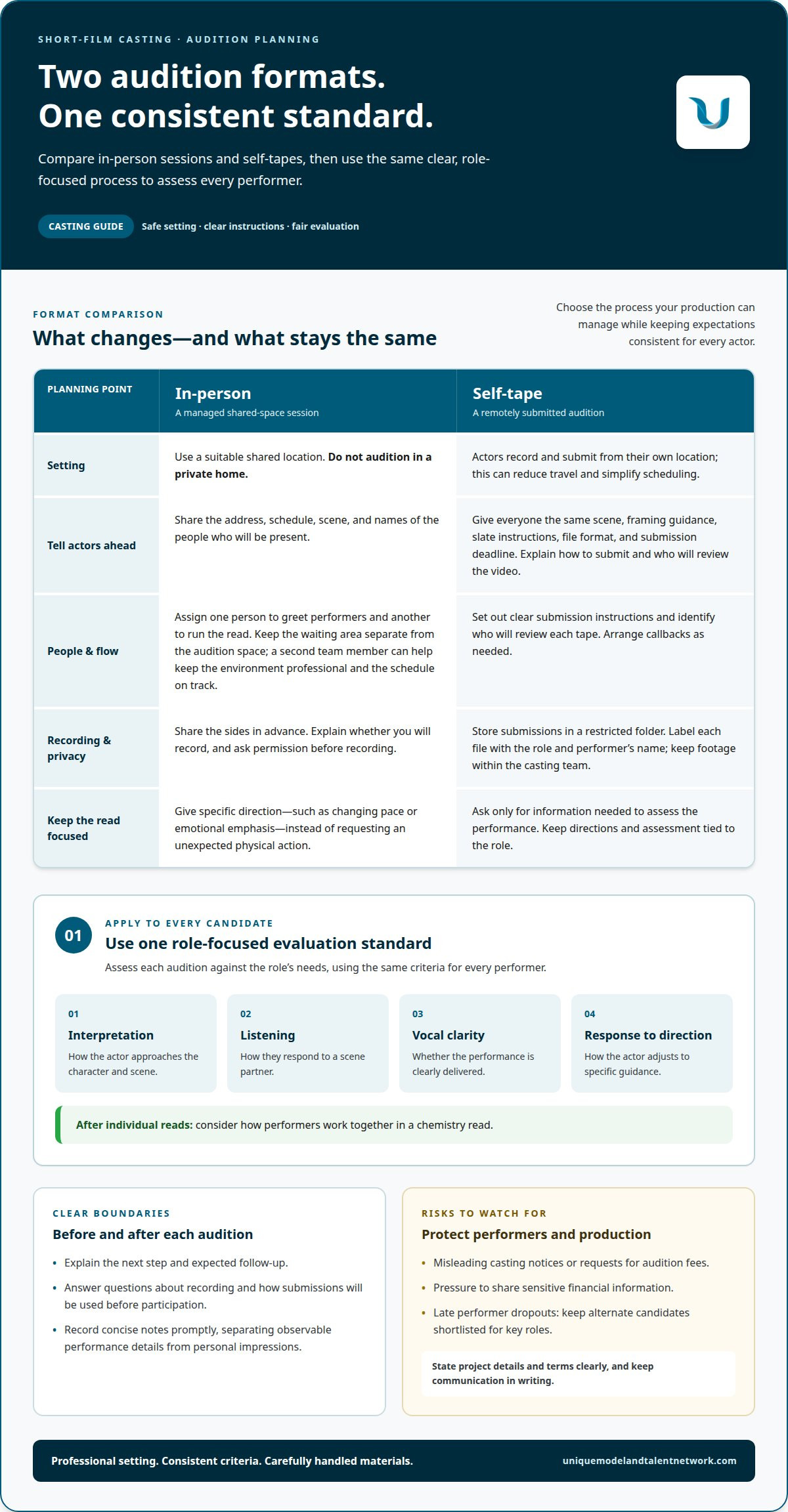
Set audition boundaries before inviting actors. Don’t hold an indie-film audition in a private home. Choose a suitable shared location, and give each performer the address, schedule, scene, and names of the people present beforehand. Keep the session organized with a clear arrival process and a waiting area separate from the audition space. A second production team member can help maintain a professional environment and keep the schedule on track.
For each in-person session, assign one person to greet performers and another to run the read. Share the sides in advance, explain whether you’ll record, and ask permission before recording. Keep the audition focused on the role. If you want a different performance, give specific direction, such as changing the pace or emotional emphasis, rather than requesting an unexpected physical action.
Self-tapes can reduce travel and simplify scheduling. Send every actor the same scene, framing guidance, slate instructions, file format, and submission deadline. Explain how to submit the video and who will review it. Ask only for information needed to assess the performance. Store submissions in a restricted folder, label files with the role and performer’s name, and don’t share audition footage beyond the casting team.
Evaluate each audition against the role’s needs: interpretation, listening, vocal clarity, and response to direction. Use the same criteria for every candidate, then consider how performers work together in a chemistry read.
Common risks include misleading casting notices, requests for audition fees, pressure to share sensitive financial information, and performers dropping out close to filming. State project details and terms clearly, keep communication in writing, and maintain a shortlist of alternate candidates for key roles.
Close each session by explaining the next step and expected follow-up. Record concise notes right away, separating observable performance details from personal impressions. If an actor asks about recording or how their submission will be used, answer plainly before they participate. Consistent boundaries, clear instructions, and careful handling of audition materials protect both the production and performers.
3. Organizing the cast list
Build one master cast list as soon as submissions arrive. Give each character a separate entry, such as “Maya, lead” or “Shopkeeper, supporting.” Track each performer’s name, preferred contact method, role, submission date, and audition format. A consistent record helps prevent offering the same role twice and makes follow-up easier when decisions move quickly.
Use clear casting stages instead of scattered notes. For example, label each submission “received,” “reviewing,” “callback,” “offer,” “confirmed,” or “declined.” Add the date whenever a performer changes stages, and assign one production team member to update the file. If an actor is being considered for two roles, record both options in the same profile.
- Role fit: Note the character and the performance qualities shown during the audition.
- Availability: Record the actor’s stated schedule against planned shoot dates.
- Production status: Track callbacks, offers, accepted terms, and outstanding responses.
- Follow-up: Capture the last contact date and the next action owner.
Keep audition assessments factual and tied to the role. Write “clear comic timing in the café scene,” not “seems difficult.” Note whether the performer took direction, sustained a scene partner’s energy, or fit a specific character requirement. These details help the team compare candidates using relevant evidence, rather than relying on memory after several auditions.
Separate private contact details from notes that may be shared with the wider crew. Limit access to the people handling casting, and don’t copy personal information into open production documents. Use a filename pattern such as “Role_Performer_Date” for audition files, then connect each file to the matching cast-list entry. Keep the selected performer’s agreement and production communications together.
Before confirming the cast, review the status of every role and identify unanswered offers. Mark the selected actor clearly, notify other candidates respectfully, and update the list when availability changes. A final cast sheet should show who is confirmed, which role they play, and the production details the team needs. This single reference keeps casting decisions clear from callbacks through the first day on set.
4. Working with an indie film casting director
An indie film casting director can shape the role breakdown, manage submissions, and coordinate callbacks. Agree on responsibilities early, including who communicates with actors and who approves casting decisions. Share the script, role descriptions, shoot schedule, budget, and production constraints so the director can focus the search on performers who fit the project.
To find local actors, contact film schools, theater groups, and community networks with a concise, shareable casting notice. Ask instructors or group organizers to circulate it, and include clear submission instructions so interested performers can respond directly.
For a no-budget short, be transparent about compensation and the expected commitment. Explain the project’s creative purpose, schedule, location, and available support so actors can decide with the terms in view.
Write the project and role description in 1-2 sentences, then explain what makes the story distinctive. List the role’s character details, production logistics, production team information, and the submission process. A sample notice might describe a short-film shoot lasting 2-3 days in Greater Los Angeles in mid-March. Specific details help performers assess the opportunity.
Use casting websites to publish the notice and collect submissions in one place. Keep the listing consistent with your project’s terms, and review each platform’s submission fields before posting. Track responses in the cast list rather than relying on inbox searches. For local reach, pair online listings with outreach through film schools and theater communities.
For union and non-union casting, decide which production context applies before outreach. That choice affects the terms you communicate and the performers you seek. Make the notice match the actual production plan, and state compensation and expected work clearly.
Begin casting early enough to allow submissions, auditions, callbacks, and schedule coordination before filming. The timeline depends on role complexity, performer availability, and how much preparation each scene requires. If you’re building industry connections as an emerging actor, explore The Network Membership to engage with industry professionals.
Unique Model & Talent Network
Unique Model & Talent Network helps emerging actors build the skills, materials, and industry connections that support a focused casting journey. If you’re preparing to submit for short-film roles, The Network Membership connects you with a professional community. Live Industry Workshops and Industry Expert Q&A Sessions offer opportunities to learn from entertainment professionals. Portfolio & Reel Reviews can help you strengthen how you present your work, while Monthly Skill-Building Challenges give you structured ways to keep developing your craft.
Turn to the network for practical guidance and a clearer understanding of how to prepare for opportunities. The Network Membership is a professional community, not a direct representation or booking service. To learn more about joining, contact Unique Model & Talent Network.
Make your next casting move with confidence
Your next step is to turn your creative vision into a clear professional plan. Keep building the skills and industry connections that help you recognize strong opportunities, present your work, and collaborate with confidence. Knowing how to find talent for a short film is one part of that growth; developing as a performer helps you make the most of each audition and build lasting working relationships.
Unique Model & Talent Network supports that development through The Network Membership, Live Industry Workshops, and Portfolio & Reel Reviews. These offerings can help you sharpen your materials, learn from industry professionals, and stay connected to a focused creative community.
Take the next step in your professional journey. Connect with Unique Model & Talent Network and keep moving toward your goals with clarity and purpose.
Frequently Asked Questions
Where can I find actors for a short film?
Look for performers through local film schools, theater groups, community arts organizations, and online casting platforms. A practical starting point for how to find talent for a short film is to match your outreach channel to the role: a student project may suit a school’s filmmaking community, while a character role may benefit from theater-network outreach. Ask contacts to share consistent project details and submission instructions.
How do I write a casting call for a short film?
Start with a brief description of the project and role, then give actors the details they need to assess the opportunity. Include character traits, shoot location and schedule, compensation terms, audition instructions, and production-team information. For example, describe a character’s motivation rather than relying only on appearance. A focused notice helps performers decide whether the role fits their experience and availability.
What casting websites and platforms are best for indie short films?
Choose a platform based on its audience and submission process. For producers deciding how to find talent for a short film, a local casting board can support location-specific searches, while film-school networks and community groups may reach emerging performers directly. Review each platform’s audience focus, submission tools, and listing requirements. The right fit helps you receive relevant materials and organize responses efficiently.
Should I cast short-film roles through self-tapes or in-person auditions?
Use self-tapes when distance or scheduling makes a shared audition session difficult, so performers can record scenes independently. Choose in-person auditions when you need to assess live direction, scene chemistry, or movement in the space. A hybrid process can work well: review tapes first, then invite shortlisted performers to read together. Keep the scene and evaluation criteria consistent so candidates can be compared fairly.
How much does it cost to hire actors for a short film?
There’s no single cost for hiring actors; the amount depends on the role, shoot commitment, compensation terms, and production context. Separate performer compensation from related expenses so the casting budget reflects the full commitment. A well-known performer might receive $1,000 for a day on set and an appearance in a film, but that example isn’t a universal rate.


