

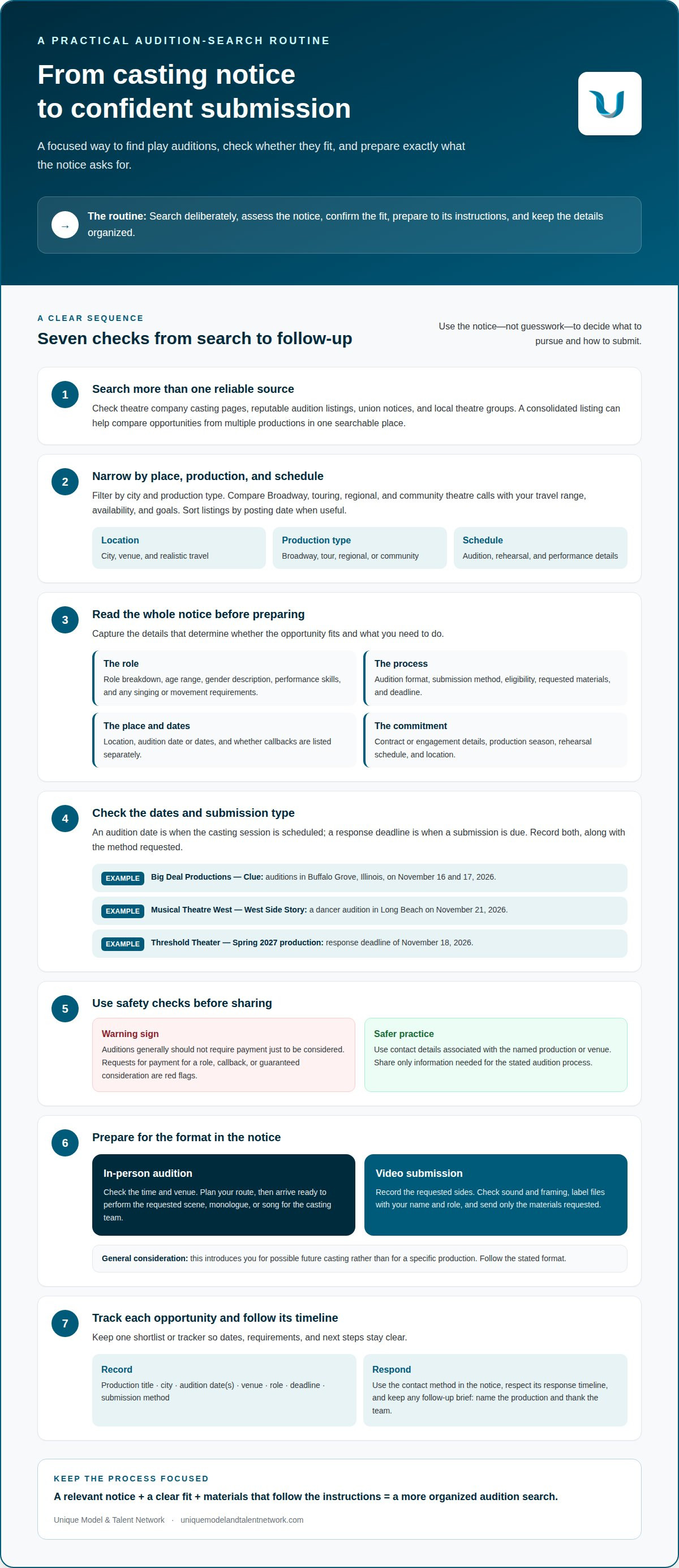
The strongest audition search relies on a focused routine, not a lucky scroll. To learn how to find auditions for plays, regularly check theatre company casting pages, reputable audition listings, union notices, and local theatre groups. Before applying, read each notice for the role, location, submission format, eligibility, and deadline.
It can be hard to tell which opportunities suit your experience or whether a notice calls for an in-person audition or a video submission. This guide explains how to find and assess play auditions, compare submission formats, and distinguish union from nonunion opportunities. You’ll also learn how to organize your search, prepare materials that match the instructions, and focus on roles that fit your skills and availability. The aim is a clear, professional process, from finding a casting notice to deciding whether to submit.
Key Takeaways
- Read each notice for its format, role requirements, location, and deadline before preparing your submission.
- Build a repeatable search routine across theatre casting pages and audition listings to keep relevant opportunities organized.
- Use the production type and location to narrow Broadway, touring, regional, and community theatre opportunities to roles that fit your goals.
- Compare union and nonunion notices carefully, then strengthen your audition readiness with focused practice and professional feedback.
In-person auditions and video submissions
An in-person audition is a live casting session at a stated venue. Arrive prepared to perform the requested scene, monologue, or song. Big Deal Productions scheduled Clue auditions in Buffalo Grove, Illinois, on November 16 and 17, 2026. Check the time and location, then plan your route before audition day.
A video submission is a recorded audition sent as directed in the notice. Film the requested sides, check the sound and framing, and label files with your name and role. A general consideration submission introduces you for possible future casting rather than for a specific production. Follow the stated format and send only the requested materials.
An audition notice outlines roles, eligibility, format, and deadlines. For actors learning how to find auditions for plays, comparing those details across notices helps narrow the search. Musical Theatre West listed a West Side Story dancer audition in Long Beach for November 21, 2026. Threshold Theater’s Spring 2027 production had a November 18, 2026, response deadline. Record each date and submission method.
A casting notice shares details about an upcoming production. It should include the role breakdown, location, audition format, eligibility, and deadline. Knowing how to find auditions for plays also means understanding which details help you decide whether to apply.
Auditions generally shouldn’t require payment just to be considered. Treat requests for payment for a role, callback, or guaranteed consideration as warning signs. Don’t send money or sensitive personal information without a clear reason tied to the production.
At an in-person audition, expect to check in and perform for the casting team. A virtual audition may ask you to record or present material remotely, following the notice’s instructions.
To reduce the risk of scams, use contact details associated with the named production or venue. Share only the information needed for the stated audition process.
Follow up through the contact method in the notice and respect its response timeline. Keep your message brief, name the production, and thank the team.
Finding theatre audition notices in one location
A consolidated audition listing gathers casting notices from multiple productions in one searchable place. Use it to compare the theatre, role, location, date, and submission method without relying on scattered posts. Filter by city and production type, then save notices that fit your schedule. For each promising listing, record the audition date, venue, role, and deadline in one tracker.
A location filter narrows listings to auditions you can realistically attend. New York City notices included Yangtze Repertory Theatre of America’s Tiger Beat audition on November 17, 2026, and a Phantom of the Opera tour singers audition on November 18. Philadelphia also had an immersive theatre performers audition scheduled for November 15, 2026. These examples show why searching by city and role type helps singers and actors compare opportunities.
An audition date is the scheduled time for a casting session, while a location identifies where it happens. The Drama Group scheduled Choir Boy auditions for November 15 and 16, 2026, with callbacks on November 18. Theatre Above the Law listed Space Girl auditions for October 31 and November 1. Note whether a notice says Sunday, lists a callback separately, or gives more than one audition date.
A casting breakdown describes the roles and qualities a production is seeking. Before submitting, read the age range, gender description, performance skills, and any singing or movement requirements. Use each detail to assess your fit rather than guessing what the creative team wants. Then review the contract or engagement details, production season, rehearsal schedule, and location before committing.
Keep a shortlist with the production title, city, audition dates, role, and next action. For example, note Philadelphia auditions separately from New York calls, then prepare materials for each production’s stated requirements. A spring season listing may appear well before rehearsals, so revisit saved notices and deadlines. This simple system makes a broad search more focused and helps you act on relevant opportunities.
Finding Broadway and regional theatre audition listings
A Broadway audition listing announces casting for a New York production or tour. Disney Theatrical Productions listed a The Lion King audition in New York City for November 18, 2026. Search by show title, city, and role type. Then read whether the notice covers Broadway, touring, or both. Those details help you target the right casting call before preparing materials.
A regional theatre listing covers a production outside Broadway’s New York market. Capital City Theatre listed a Come From Away performer audition in Middleton, Wisconsin, for November 30, 2026. Compare the city with your travel range and schedule. Check the production’s rehearsal and performance details in its notice. A role’s location and dates can shape whether submitting is practical.
Chicago theatre audition listings are notices for productions and performers in the Chicago area. Listings included Celestia - Chicago, posted two days earlier, and Elephant & Piggie’s We Are in a Play!, posted three days earlier. Search both the city name and nearby production titles. Sort results by posting date, then open each notice to review the role details and audition instructions.
Community theatre auditions are casting calls for local theatre productions. Applause Community Theatre’s 2027 MacBeth auditions had a response deadline of November 18, 2026. Look for local company announcements alongside broader audition listings. Check whether the notice welcomes new performers, names particular roles, or requests a specific submission. Community productions can offer a different schedule and format from touring calls.
Musical theatre auditions seek performers for productions that combine acting and music. Search listings by both show and skill, such as singer, dancer, or actor. For example, Disney Theatrical Productions listed The Lion King in New York, while Capital City Theatre listed Come From Away in Wisconsin. Theatre company casting pages and centralized audition-listing websites are useful places to find professional and community notices. Search by location, production type, and role, then submit only through the method named in the notice. If a Tuesday audition date is listed, add it to your calendar with the venue and call time.
Union and nonunion opportunities
Union auditions are calls with eligibility or contract terms tied to a performers’ union. International City Theatre listed Equity principal actor auditions for its 2027 season in North Hollywood on November 13, 2026. La Mirada Theatre also listed Equity principal auditions for Hairspray in Los Angeles that day. Read each breakdown for eligibility, role details, and submission instructions before applying.
Nonunion auditions are casting calls for performers who aren’t required to hold union membership. Walnut Street Theatre contracts with both union and nonunion talent. It sought local nonunion actors to understudy all roles in Glengarry Glen Ross. The notice illustrates why you should read the full casting breakdown: a production may seek nonunion performers for specific roles, even when other opportunities have different eligibility terms.
Youth actor opportunities are auditions with age ranges designed for young performers. The Guthrie’s notice for children sharing a role in A Tale of Two Cities specified ages 8 to 10. Highland Park Players sought three young performers aged 10 to 16 for Elephant & Piggie’s We Are in a Play!. Match the stated age range and role requirements before preparing a submission.
An understudy is a performer prepared to take over a role when needed. Walnut Street Theatre’s Glengarry Glen Ross notice sought local nonunion actors to understudy every role. Look for terms such as “understudy” in casting notices, then assess the rehearsal expectations and role coverage described. Pay close attention to the production schedule and the responsibilities attached to the assignment.
Before submitting, sort notices by union eligibility, location, role type, and rehearsal schedule. For example, compare the two Equity calls posted for November 13 with Walnut Street Theatre’s nonunion understudy opportunity. Keep separate notes for each production, including deadlines and required materials. If a notice uses terms such as “ensemble,” confirm which roles it covers and whether the breakdown describes a specific contract or audition category.
Unique Model & Talent Network: The Network Membership
After identifying auditions that fit your goals, Unique Model & Talent Network’s The Network Membership can support your continued growth. Use Live Industry Workshops to build practical industry knowledge, Portfolio & Reel Reviews to strengthen how you present your work, and Monthly Skill-Building Challenges to keep developing your craft. Industry Expert Q&A Sessions give you a chance to learn from professionals and ask focused questions about your next steps.
These resources offer structured development alongside your audition search, whether you’re refining your materials or preparing for auditions. They complement the work of reading notices and submitting for roles; they don’t replace applying directly to productions.
Contact Unique Model & Talent Network to learn more about The Network Membership and its learning opportunities.
Turn Your Audition Search Into a Consistent Practice
Make auditioning part of your ongoing professional development. Set a routine for reviewing notices, preparing thoughtfully, and reflecting after each submission. Over time, these habits can help you make sharper choices about the roles you pursue and the skills you want to strengthen. Learning how to find auditions for plays is easier when you treat the search as a continuing practice, not a one-time task.
As you build that routine, keep your goals specific. Choose a craft area to develop, note what you want feedback on, and use each audition as a chance to learn about your process. If structured support would help you stay focused, contact Unique Model & Talent Network to explore a next step that fits your development.
Keep showing up prepared and curious. Each thoughtful step helps you move forward.
Frequently Asked Questions
Where can I find local theater auditions for plays?
Check local theatre company websites, community arts calendars, and regional casting listings. Combine your city name with search terms such as “play auditions” or a production title. Check company event calendars too, since notices may appear there before broader listings. Save the source and posting date so you can revisit the original notice and catch updates.
How do I find theater auditions near me?
Search by city or neighborhood, then compare each notice’s venue with your travel options. A map can help you find nearby theatres, while company websites show their current casting calls. If you’re open to traveling, include surrounding communities in your search. Keep separate notes for local and farther-away opportunities to make scheduling easier.
How do I submit for an audition and contact the theater?
Follow the submission method in the casting notice, whether it requests an online form, email, or an in-person appointment. Include only the requested materials, and use a clear subject line naming the production and role. For questions, use the theatre’s stated contact channel and keep your message specific. If you follow up, respect any timeline in the notice.


