

A safer audition isn’t one where everyone feels comfortable every moment. It’s one where respect, clear expectations, and meaningful boundaries make room for both creative risk and personal safety. Creating a safe space for auditions means treating every performer with dignity, sharing potentially sensitive material in advance, and making it possible to pause when something crosses a boundary. That distinction matters: stretching into unfamiliar work can feel uncomfortable, while feeling pressured or unable to speak up signals a different problem.
If you’re wondering how auditions can encourage bold performances without asking people to ignore their limits, the answer starts with inclusion. Trust supports creative choices, while clear safeguards help distinguish productive discomfort from feeling unsafe. Transparent communication, fair treatment, physical boundaries, and thoughtful room management all help performers participate with confidence. The goal isn’t to remove challenge from performance, but to let performers take artistic risks without trading away their dignity or wellbeing.
Key Takeaways
- Clear expectations and room to pause can help performers take creative risks without feeling pressured to ignore their boundaries.
- Inclusive auditions treat every performer with respect and make space for different perspectives and needs.
- Discomfort can accompany artistic growth; feeling unsafe calls for attention, communication, and support.
- Thoughtful preparation of the audition space and process supports both physical wellbeing and creative focus.
Expressing ideas and taking creative risks
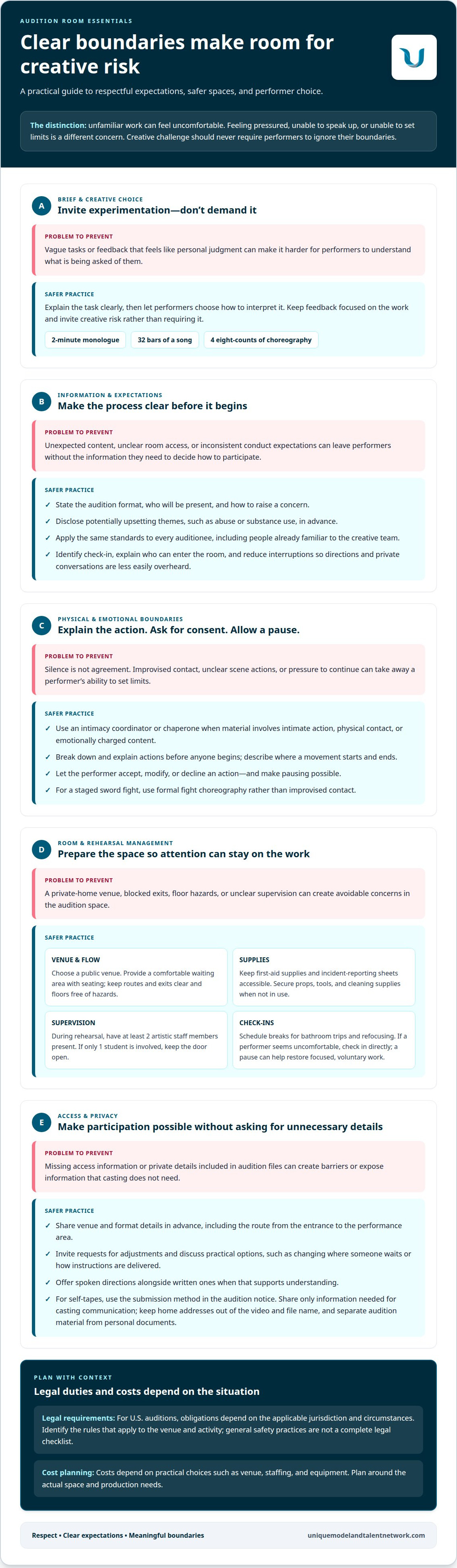
Creative work needs room for experimentation, not pressure to ignore boundaries. An audition brief might request a two-minute monologue, 32 bars of a song, or four eight-counts of choreography. Explain the task clearly, then let performers make informed choices about interpretation. A performer can try an unexpected character choice more confidently when feedback focuses on the work rather than personal judgment. Creative risk should be invited, not demanded.
For U.S. auditions, legal obligations depend on the applicable jurisdiction and the circumstances. Identify the rules that apply to the venue and activity, and don’t treat general safety practices as a complete legal checklist.
The cost of a safer audition depends on practical choices such as the venue, staffing, and equipment. Plan around the actual space and production needs, and keep a first-aid kit and incident-reporting sheets accessible.
Use an intimacy coordinator or chaperone when audition material involves intimate action, physical contact, or emotionally charged content. Break down the scene actions, explain them clearly, ask for consent, and make it possible to pause before anyone begins.
For self-tapes, use the submission method named in the audition notice and share only the information needed for casting communication. Don’t include private details, such as a home address, in the video or file name. Keep audition material separate from personal documents.
Choose a public audition venue rather than a private home, and provide a comfortable waiting area. Keep exits clear, floors free of hazards, and first-aid supplies and incident forms accessible. During rehearsal, have at least two artistic staff members present; if only one student is involved, keep the door open. Schedule breaks for bathroom trips and refocusing, and check in directly if a performer seems uncomfortable. A pause can help the room return to focused, voluntary creative work.
Creating an environment of inclusion
Creating a safe space for auditions starts with clear expectations and fair treatment. An inclusive process also makes it easier for performers to raise access needs.
Communicating Audition Safety Rules
Clear rules explain how the audition works and what conduct the team expects. Include the audition format, who will be present, and how performers can raise concerns. Disclose potentially upsetting themes, such as abuse or substance use, so people can make informed choices about participating. Apply the same standards to every auditionee, including performers already familiar to the creative team.
Room Privacy, Accessibility, and Comfort
Thoughtful room planning helps performers understand where to go and what to expect. Use a public venue, identify the check-in point, and explain who can enter the audition room. Seating in the waiting area gives performers room to prepare without crowding the performance space. Keep routes and exits clear, and reduce interruptions so private conversations and directions aren’t easily overheard.
Access for Disabled Performers
Accessible auditions make participation possible without requiring performers to disclose more than necessary. Share venue and format details in advance, including the route from the entrance to the performance area. Invite requests for adjustments, then discuss practical options, such as changing where someone waits or how instructions are delivered. For example, offer spoken directions alongside written ones when that supports understanding.
Creating a safe space for auditions also means treating feedback as useful information, not a challenge to authority. Set group agreements for respectful conduct, provide a clear way to raise concerns, and communicate casting decisions consistently. These steps help each person understand the process and participate with greater confidence.
An inclusive rehearsal or performance environment welcomes all team members and helps them feel valued. A safe space is one where participants can feel comfortable in the rehearsal room or performance area. Include content disclosures in audition materials to alert performers to potentially upsetting story points or themes, so they have information before taking part.
Create a classroom code of conduct with the class or cast, including shared expectations for treating everyone with respect and dignity. A mutually supportive environment is one where participants take responsibility for their language and behavior and work to resolve conflict respectfully. At Berridge, faculty use the first week on the grounds to help students and instructors build trust.
Discomfort versus feeling unsafe
Acting can involve vulnerability and unfamiliar choices, but challenge should never take away a performer’s ability to set limits. That distinction should guide how audition teams respond when someone hesitates or asks to pause.
Physical Safety in Audition Spaces
Physical safety means managing hazards and activities that could cause injury. Clear precautions let performers focus on the work instead of avoidable risks. Secure props, tools, and cleaning supplies when they aren’t in use, and use them only under a teacher’s supervision. If a scene includes aerial work, plan precautions to prevent injury. A staged sword fight calls for formal fight choreography, not improvised contact.
Consent matters whenever an activity carries physical or emotional risk. Explain the action before inviting someone to take part, and don’t treat silence as agreement. For example, describe where a movement begins and ends, then let the performer accept, modify, or decline it. This makes boundaries part of the process, not an interruption.
Emotional Safety and Discomfort
Emotional safety lets performers explore demanding material while retaining agency. Some discomfort can accompany growth in acting, such as trying a less familiar interpretation; feeling unsafe is different and needs attention. A “positive no” lets someone express discomfort and request a pause without having to continue the activity.
Respond to a pause with a direct check-in, not persuasion. Ask what would help the performer continue, change the exercise, or stop. Break emotionally complex work into manageable actions, and check in about comfort as the scene develops. A difficult theme may be artistically valuable, but that value doesn’t override a participant’s boundaries.
Warm-ups and cool-downs can help performers prepare for and detach from intense material. A facilitator can model self-care by pausing when needed and inviting participants to do the same. If a performer says a scene action feels wrong, stop that action first. Discuss alternatives only after giving them space to respond.
These practices help distinguish creative challenge from pressure to endure harm. When teams treat consent, pauses, and physical precautions as part of the work, performers can make choices with greater clarity and control.
What makes an audition space physically and emotionally safe?
A well-prepared audition space combines clear access, practical safety measures, and respectful communication. Every detail, from the waiting area to the room’s acoustics, can affect a performer’s ability to focus.
Start with the route through the venue. Keep rehearsal floors clear of debris such as staples, nails, screws, and safety pins. Leave fire exits unobstructed, and make first-aid supplies and incident-reporting sheets accessible. These measures support a response when a hazard or incident occurs, but they don’t replace attentive supervision during physical activity.
Room setup matters, too. Provide enough space for movement, clear acoustics, and minimal distractions so performers can hear directions and complete the audition task. A waiting room should offer a comfortable place to prepare, warm up, or focus. Holding auditions in a public space rather than a private home can also help auditionees feel more secure. Explain where performers should wait and how they’ll be called in.
Physical arrangements work best alongside clear boundaries. Before an activity involving physical or emotional risk, explain what it involves and seek explicit consent. A performer should be able to request a pause without being pressured to continue. If an exercise changes, describe the new action and check in about comfort again. Clear explanations give participants the chance to make informed choices.
For emotionally demanding material, check in during the process, not only afterward. A facilitator can ask whether the performer wants to continue, adjust the action, or stop. Warm-ups and cool-downs can help actors prepare for intense work and leave it behind. Scheduled breaks also give people room to recharge, attend to personal needs, and refocus before the next audition.
Use expert guidance for audition preparation to strengthen your craft while keeping clear boundaries around the work.
Making safety a shared priority helps create inclusive spaces where participants feel comfortable and consent remains active and explicit throughout physically or emotionally risky work.
Unique Model & Talent Network
Unique Model & Talent Network helps aspiring models and actors build industry knowledge and prepare for professional opportunities. For guidance beyond audition-day safety practices, The Network Membership connects you with a professional community. Live Industry Workshops and Industry Expert Q&A Sessions offer opportunities to learn from industry perspectives. Portfolio & Reel Reviews can help you present your work clearly, while Monthly Skill-Building Challenges offer structured ways to develop your craft.
These resources support preparation and professional growth; they don’t replace clear boundaries or safety practices at an audition. To strengthen your skills and connect with industry learning opportunities, contact Unique Model & Talent Network.
Carry Respect Into Every Audition
Treat inclusion as an ongoing practice, not a statement made once before auditions begin. Each interaction can show whether performers are heard, respected, and able to make thoughtful choices about their work. For casting teams, that means considering how instructions are delivered, how concerns are received, and whether decisions are communicated consistently. For performers, it means recognizing that professional boundaries and artistic ambition can coexist.
Creating a safe space for auditions isn’t about removing challenge or controlling every response. It’s about building a process where people can participate with clarity and creative work doesn’t depend on staying silent about discomfort. Keep learning, stay open to feedback, and let respect guide the choices that shape the room.
If you’re ready to keep developing your craft within a professional community, Contact Unique Model & Talent Network. Your next step can be a confident one.
Frequently Asked Questions
What are best practices for preventing harassment and discrimination at auditions?
Set clear conduct expectations and a reporting route before auditions begin. Tell performers who they can speak with if behavior feels inappropriate, and ensure that person can listen privately and take concerns seriously. For example, if a comment targets someone’s identity, address the conduct promptly rather than treating it as creative feedback. Apply expectations consistently, and limit reports to the people who need to respond.
How should casting teams handle complaints or safety incidents during auditions?
Pause the activity if someone may be at immediate risk, and address urgent needs before resuming. For an injury, arrange appropriate assistance and record a factual account, including what happened and when. For a conduct complaint, listen without arguing or promising a particular outcome, then follow the organization’s established process. Afterwards, review what needs to change before the next audition.


