

A polished audition can impress, but it doesn’t reveal the whole actor. To spot potential in an actor’s audition, look for curiosity, emotional understanding, and the ability to adjust when given direction. A compelling performance isn’t only about delivering lines smoothly: according to the U.S. Bureau of Labor Statistics, actors interpret characters’ feelings and motives to portray them convincingly.
It’s natural to notice confidence, memorization, and stage presence first. But potential often appears in less obvious moments: how an actor listens, makes a specific choice, responds to a new direction, and stays connected to the scene. This guide explains how to assess those qualities, distinguish adaptability from polish, and consider how an actor might contribute to an ensemble. You’ll have a clearer framework for recognizing promise without expecting every performer to arrive fully formed.
Key Takeaways
- Use a second reading with a different approach to see how an actor responds to direction.
- Assess casting potential in context, including the needs of the ensemble and the role’s visual fit.
- Look beyond the performance itself by considering preparation, availability, and professionalism throughout the audition process.
- Explore structured ways to keep developing, including workshops, reel reviews, and skill-building challenges.
How to spot potential in an actor's audition
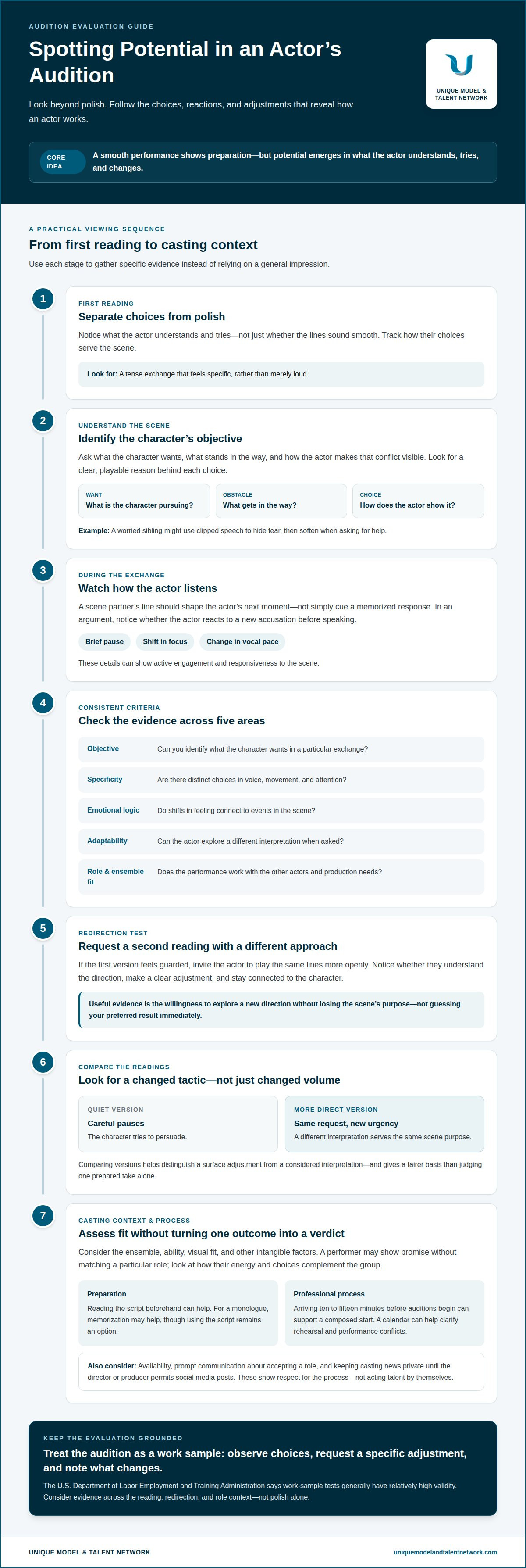
To judge potential, separate the actor’s choices from the polish of the performance. A smooth delivery can show preparation, but it doesn’t reveal every skill a role may demand. Track what the actor understands, what they try, and how their choices serve the scene. For example, consider whether a tense exchange feels specific or merely loud. That gives you evidence to discuss instead of relying on a general impression.
Start with the character’s objective. Ask what the character wants in the scene, what stands in the way, and how the actor makes that conflict visible. The U.S. Bureau of Labor Statistics explains that actors interpret characters’ feelings and motives to portray them compellingly. In practice, an actor playing a worried sibling might use clipped speech to hide fear, then soften when asking for help. Look for a clear, playable reason behind the choice.
Then watch how the actor listens. A scene partner’s line should shape the actor’s next moment, not simply cue a memorized response. In a two-person argument, notice whether the actor reacts to a new accusation before delivering the next line. A brief pause, a shift in focus, or a change in vocal pace can show active engagement. These details help reveal whether the performer is responding to the scene or repeating a fixed presentation.
Use consistent criteria so a confident entrance doesn’t overshadow less visible strengths:
- Objective: Can you identify what the character wants in a particular exchange?
- Specificity: Does the actor make distinct choices about voice, movement, and attention?
- Emotional logic: Do shifts in feeling connect to events in the scene?
- Adaptability: Can the actor explore a different interpretation when asked?
- Role and ensemble fit: Does the performance work alongside the other actors and the production’s needs?
A useful test is to ask for a second reading with a different approach. If the first version feels guarded, for example, invite the actor to play the same lines more openly. Notice whether they understand the direction, make a clear adjustment, and stay connected to the character. They don’t need to guess your preferred result immediately. The useful evidence is their willingness to explore a new direction without losing the scene’s purpose.
Compare the revised reading with the first. Did the actor change only the volume, or did they alter the character’s tactic? A quiet version might use careful pauses to persuade; a more direct version might make the same request feel urgent. Comparing the two helps distinguish a surface change from a considered interpretation. It also gives you a fairer basis for assessing potential than judging one prepared take alone.
Keep the casting context in view. A decision may depend on the ensemble, ability, visual fit, and other intangible factors. Consider whether the actor’s energy and choices complement the group, rather than evaluating the audition in isolation. A performer may show promise without matching a particular role. This distinction prevents one casting outcome from becoming a verdict on someone’s ability.
Preparation and professionalism provide additional evidence, but assess them in context. When possible, an actor can read the script before auditioning; for a monologue, memorization may help, though using the script remains an option. Arriving ten to fifteen minutes before auditions begin can support a composed start. A calendar can help an actor answer questions about rehearsal and performance conflicts clearly.
Availability also affects whether someone can take part in a production. A conflict the actor believes they can reschedule may still be workable. If cast, they should tell the director promptly whether they’ll accept the role. Casting news should remain private until the director or producer permits social media posts. These actions show communication and respect for the process, not acting talent by themselves.
Treat the audition as a work sample: observe choices, request a specific adjustment, and note what changes. The U.S. Department of Labor Employment and Training Administration says work-sample tests generally have relatively high validity. When considering how to spot potential in an actor's audition, focus on evidence across the reading, redirection, and role context, not polish alone.
Unique Model & Talent Network
Unique Model & Talent Network helps actors turn audition observations into practical development goals. Whether you’re building confidence, refining your on-camera work, or strengthening your professional materials, its learning opportunities can support your growth beyond a single casting decision.
Live Industry Workshops and Industry Expert Q&A Sessions offer ways to learn from professionals and explore audition skills in a focused setting. Portfolio & Reel Reviews can help you assess how your materials present your strengths, while Monthly Skill-Building Challenges provide structured ways to keep practicing. The Network Membership brings these development opportunities together in a professional community.
If you’re ready to keep building your craft and industry perspective, contact Unique Model & Talent Network.
Turn Each Audition Into a Learning Opportunity
Strong talent evaluation grows through attention and reflection. After an audition, consider which choices felt convincing, what changed with direction, and what the scene revealed about the performer’s process. This habit can sharpen your ability to spot potential in an actor’s audition while keeping each casting decision grounded in the production’s needs.
Actors can use the same kind of reflection to identify a practical next step in their development. A focused workshop, thoughtful feedback on a reel, or a professional community can provide structure for continued learning. Unique Model & Talent Network supports that growth through The Network Membership, Live Industry Workshops, and Portfolio & Reel Reviews. These opportunities can help actors strengthen their craft and gain industry perspective without treating one audition as the measure of their future.
Whether you’re developing your own skills or seeking a more informed view of talent, keep learning from each professional opportunity. Contact Unique Model & Talent Network to explore a purposeful next step in your industry journey.


