

Trust can shape a model test shoot as much as lighting. A photographer's guide to model test shoots starts with the goal: create versatile images, separate from a specific campaign, that show a model’s range and potential. The session leaves room to explore looks and poses, while clear expectations and respectful collaboration help everyone do their best work.
It’s natural to focus on the camera, wardrobe, and final images. But a productive shoot also depends on how well the photographer understands the model’s experience, explains the creative vision, and welcomes the model’s input. These choices can turn a photo session into a more valuable portfolio-building collaboration.
In this guide, you’ll learn how test photography supports a model’s portfolio, how to plan wardrobe and shoot details, and how to work with models at different experience levels. You’ll also find practical ways to build trust and create images that show more than one pose or look.
Key Takeaways
- Shape each test shoot around the model’s range and the portfolio images they need next.
- Align the creative team with a clear visual direction and practical shoot-day details.
- Build versatile wardrobe looks from thoughtful choices, not an expensive shopping list.
- Adapt your direction to a model’s experience and use respectful collaboration to build trust.
What Is Model Test Photography?
Model test photography creates versatile images that show a model’s range, skills, and potential. Unlike a paid modeling job tied to a client or campaign, a test shoot is a collaborative portfolio-building session, and models usually aren’t paid. TFP means “trade for print,” a related collaboration. Agree on image use and delivery before shooting.
- Choose natural hair and makeup unless the concept calls for a specific look. For a fresh test, use minimal neutral eyeshadow and a natural lip color. Keep hair close to its natural texture so the images show the model as they may appear at a casting. Clean nails and neutral polish keep close-up details polished without distracting from the face.
- Decide who handles grooming before shoot day. Models generally bring their own wardrobe and do their own hair and makeup unless they hire a stylist and makeup artist. If an artist is involved, share the mood and intended looks in advance. A friend can help with touch-ups, but assign that role clearly rather than leaving support on set to chance.
- Pack practical hair products and styling supplies, even when an artist is expected. Hairspray, bobby pins, and hair ties can tame flyaways or help with a quick change if the hairstylist or makeup artist can’t attend. Add a hairbrush and makeup for touch-ups. Keeping these basics together in the model’s shoot bag makes transitions between wardrobe looks easier.
- Coordinate wardrobe, hair, and makeup as one visual plan. For example, pair a simple top with natural hair and fresh makeup for a clean portrait, then change one element for a more editorial frame. Ask the photographer which looks the shoot needs, and prepare clothes that won’t compete with the face. A short plan keeps the team consistent while still showing range.
Model test shoot photographers’ role in portfolio building
A photographer helps shape a portfolio around a model’s strengths and the images agencies may need. Plan each session collaboratively, using creative and technical choices to serve clear portfolio goals.
1. Collaborate on Portfolio Goals
Ask what the model wants the portfolio to communicate, then discuss your vision and any input from the agent. A test session builds portfolio material collaboratively rather than serving a specific campaign. Distinguish portfolio tests from digitals, which give agencies a straightforward view of current appearance. Use this photographer's guide to model test shoots to keep the session focused on the model’s next professional steps.
2. Plan Poses, Shots, and Camera Setup
Create a shot list with full-length, three-quarter, and portrait frames. Direct poses and expressions while leaving room for the model’s ideas. An 85 mm lens suits many portraits; switch to a 50 mm lens when the composition calls for it. Start around f/4 to f/8 and 1/160 to 1/500 seconds, then adjust for available light and movement.
3. Prepare the Call Sheet and Set Boundaries
Send a call sheet with the location, schedule, contact details, wardrobe notes, and mood board. Agree on image-use expectations before the shoot. Give clear direction, ask permission before adjusting clothing or posing, and respect the model’s boundaries. Keep the setting professional and make sure everyone understands the plan before the camera is ready.
4. Select, Edit, and Deliver Images
Select frames for expression, focus, pose, and variety. Apply consistent color correction without altering the model’s appearance in misleading ways. Photographers typically deliver 10 to 30 edited images, depending on session duration and complexity. Agree on delivery and image use beforehand, then share selected files with the model and creative team. A photographer's guide to model test shoots should also account for agencies that may initially request unedited images. For another perspective on portfolio choices, consider Portfolio & Reel Reviews.
Arranging wardrobe through rentals, stylists, and designers
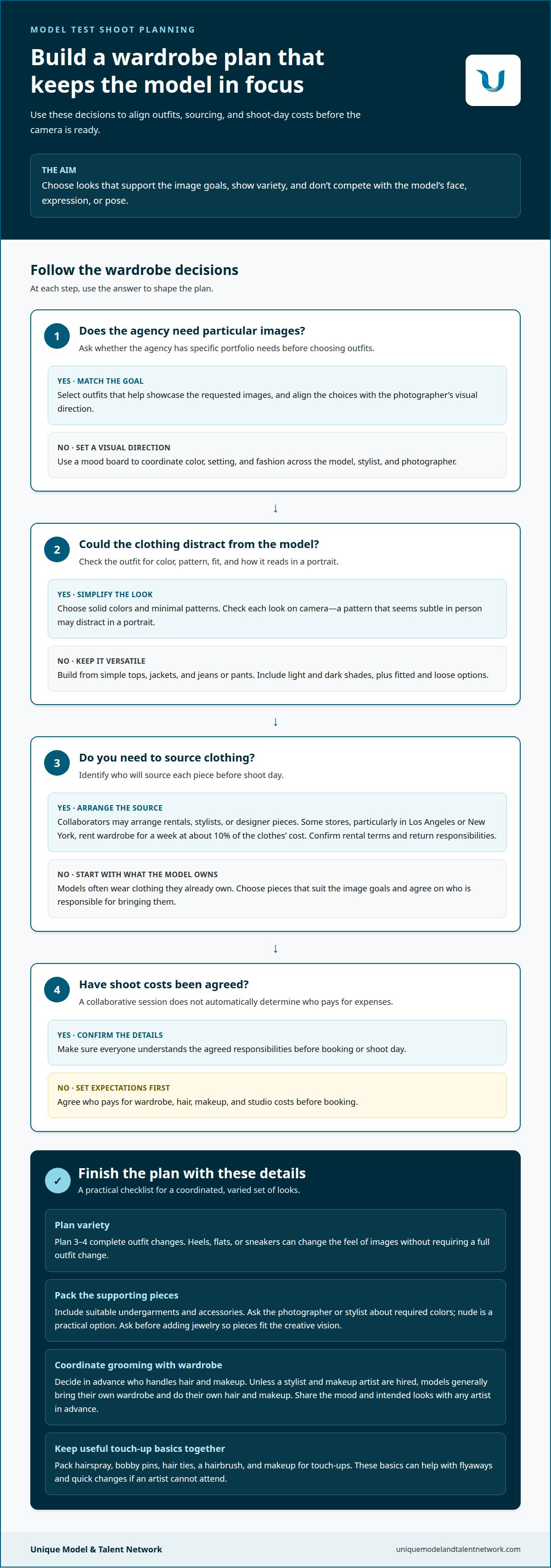
Choose wardrobe that supports the purpose of the images and keeps attention on the model. Models often wear clothing they already own, but collaborators may also arrange rentals, stylists, or designer pieces. Agree before booking who pays for wardrobe, hair, makeup, and studio costs. A collaborative session doesn’t automatically determine who covers those expenses.
1. Plan Wardrobe and Inspiration
Start with a visual direction, then match each clothing choice to the photographer’s vision. A mood board can show the model, stylist, and photographer how color, setting, and fashion should work together. Ask whether the agency needs particular images, then select outfits that help showcase those goals. Plan 3-4 complete outfit changes for variety, and identify who will source each piece. Some clothing stores, particularly in Los Angeles or New York, rent wardrobe for a week at about 10 percent of the clothes’ cost. Confirm rental terms and return responsibilities before the shoot.
2. Choose Simple, Versatile Styling
Build a versatile base with solid colors and minimal patterns so clothing doesn’t compete with expression or pose. Pack simple tops, jackets, and jeans or pants in light and dark shades, with fitted and loose options. Heels, flats, or sneakers can change the feel of images without requiring a full outfit change. Add suitable undergarments and accessories; ask the photographer or stylist about required colors, with nude as a practical option. Check each look on camera, since a pattern that seems subtle in person may distract in a portrait. Ask before adding jewelry so the creative team can choose pieces that fit the vision.
Assessing experience and building relationships with models
Assess a model’s experience through preparation, communication, and response to direction, not portfolio polish alone. A respectful working relationship helps both people create stronger images and develop professionally.
- Start with a clear conversation about the model’s goals, previous sessions, and comfort with posing. Ask what they want the portfolio to show, then explain your creative vision and the direction you’ll offer. A newer model may need specific prompts for hands, posture, or expression; an experienced model may bring ideas that sharpen the concept. Keep expectations clear and mutual.
- Assess readiness through practical preparation, not assumptions about appearance. Discuss the planned outfit, hair and makeup, timing, and any stylist support before the shoot. For example, ask whether the model has practiced poses from the mood board or would benefit from more direction on set. Preparation helps you adapt the session while treating the model as a professional collaborator.
- Build experience gradually, and remember that a photographer’s portfolio may include friends as well as professional models. That distinction isn’t universal, and a friend can help you practice giving direction before you approach modeling agencies. Agencies may arrange tests for models who need new images to supplement existing portfolios. A model’s experience can also strengthen your work through confident posing and expressive choices.
- Strengthen the relationship through attentive direction and useful feedback. Give one adjustment at a time, explain what it changes in the frame, and acknowledge when a pose or expression works. Afterward, discuss which images best support the model’s career goals and agree on image use. If you want to keep developing your assessment skills, explore further industry learning.
Unique Model & Talent Network
Unique Model & Talent Network gives models and industry professionals a place to build skills and professional connections. If you’re refining your portfolio, considering your next steps, or looking for informed industry perspectives, its community can support your development.
The Network Membership, Live Industry Workshops, Portfolio & Reel Reviews, Monthly Skill-Building Challenges, and Industry Expert Q&A Sessions offer different ways to learn, get feedback, and strengthen your professional approach. Use them to develop your portfolio judgment and collaboration skills beyond an individual shoot.
For guidance on your next steps, contact Unique Model & Talent Network.
Turn Each Test Shoot Into Professional Momentum
A portfolio grows through deliberate choices, but a photographer’s influence extends beyond the images. Each session can strengthen communication, sharpen creative judgment, and build trust that carries into future collaborations. Treat those relationships as part of your professional practice, not an afterthought once the camera is put away.
Use this photographer's guide to model test shoots as a starting point, then keep refining how you work with emerging talent. Seek informed feedback, stay curious about different perspectives, and make every collaboration purposeful. Consistent, respectful practices help build a stronger foundation for photographers and models alike.
If you’re ready to keep developing your industry connections and skills, Contact Unique Model & Talent Network. Take your next step with clarity and confidence.
Frequently Asked Questions
How long does a test shoot take?
A model test shoot usually lasts 2 to 4 hours, depending on the number of looks and setup complexity. A session with several wardrobe changes may take longer than a simple portrait setup. Build the schedule around the planned images, allow time for transitions, and communicate the expected finish time so the model and creative team can plan their day.
Can I bring a friend or someone to the shoot?
A friend may be able to attend if everyone agrees and the location can accommodate them. Tell the photographer beforehand so the call sheet and space account for the full team. When more than two people are involved, a location with room for changing clothes, makeup, restroom access, and snacks can make the day more manageable.
How do I prepare?
Prepare by packing your wardrobe and shoot bag two days before the session. Include outfit options, suitable undergarments, shoes, touch-up supplies, snacks, and water. Review the mood board and call sheet, then practice a few expressions and poses in a mirror. This helps you arrive ready to follow direction and adapt when the photographer develops an idea on set.
What about makeup and hair?
For a natural portfolio look, choose fresh makeup and keep hair close to its natural texture unless the shoot calls for a specific style. Bring a hairbrush, hairspray, bobby pins, hair ties, and makeup for touch-ups. If a makeup artist or hairstylist is involved, coordinate the intended look beforehand so grooming complements the wardrobe and photography rather than competing with them.
What is a model test shoot, and what is its purpose?
A model test shoot is a collaborative photography session that creates or improves images for a model’s portfolio. Unlike digitals, which present a straightforward view of current appearance, test images can explore styling, expression, and creative direction. The resulting portfolio material can help show a model’s range to agencies and support applications for suitable modeling work.
How should a photographer plan and prepare for a model test shoot?
Start with a creative concept, then choose a location with suitable light, scenery, and backgrounds. Ask the agency’s booker which images the model needs, and shape the mood board around those priorities. Coordinate wardrobe and creative collaborators, then send a call sheet with the plan. Prepare the camera and lighting for the location and intended frames.


