

A strong headshot can get an actor in the room, but it can’t show how they listen, adapt, or connect on camera. The best practices for casting short films are to assess role suitability, adaptability, and acting talent through auditions, then review recorded performances and test scene partners together. Aim to audition 4-6 actors for each character so you can compare performances against the role, not just against each other.
Casting the right performers takes more than spotting a familiar look or a polished reel. You need a process that sets clear expectations and shows how actors respond to direction. These best practices for casting short films cover audition formats, performance evaluation, detailed casting calls, and practical ways to find local talent, including referrals from theater professors, working actors, and established filmmakers. A focused approach helps you make informed decisions and find performers who fit your film.
Key Takeaways
- Assess more than appearance: compare each actor’s connection to the role, adaptability, and on-camera performance.
- Choose self-tapes or in-person auditions based on the role and what you need to observe, then give every candidate clear direction.
- Make casting calls useful and specific by outlining character details, project information, and audition expectations.
- Find emerging local talent through community connections, including theater educators, working actors, and filmmakers.
1. Finding actors who resemble or share traits with characters
Start with the character’s needs, not a headshot match. List visible traits, motivations, skills, and emotional range, then assess how each actor can perform those qualities on camera. Audition 4-6 actors for each character; compare their choices, listening, and response to direction. A performer who shares a character’s temperament may fit better than someone who only resembles the description.
Promote the casting call where local performers and industry contacts will see it. Share a clear breakdown with colleges and theater companies, and ask theater professors, working actors, or established filmmakers for referrals. Use one submission form to collect each actor’s name, contact details, role of interest, availability, and relevant experience. Recording availability alongside contact information makes scheduling callbacks easier.
Record auditions and review the footage before deciding. Tell actors in advance how the recording will be used, keep the session focused, and give each candidate the same scene and basic instructions. Before filming, prepare a written appearance release and agreement covering permission to record and use the performance, compensation terms, credit, and schedule. Keep the process respectful by sharing audition details clearly and following up with everyone who auditioned.
For chemistry reads, pair likely scene partners at callbacks and observe how they listen and respond to each other. Weigh that connection alongside role fit and confirmed availability for rehearsals and filming. To cast diverse actors without relying on stereotypes, describe characters through specific histories, goals, strengths, and flaws. Identity is not a substitute for personality. Don’t cast from headshots alone or leave dates and expectations vague.
Once the cast is set, schedule a table read to hear how the story works aloud. Give actors each scene’s objective, discuss character motivations, and invite questions before rehearsals. Then work out blocking together so movement suits both the performers and the camera. Clear direction and practical blocking help actors perform confidently without forcing a single interpretation.
2. Choosing between self-tapes and in-person auditions
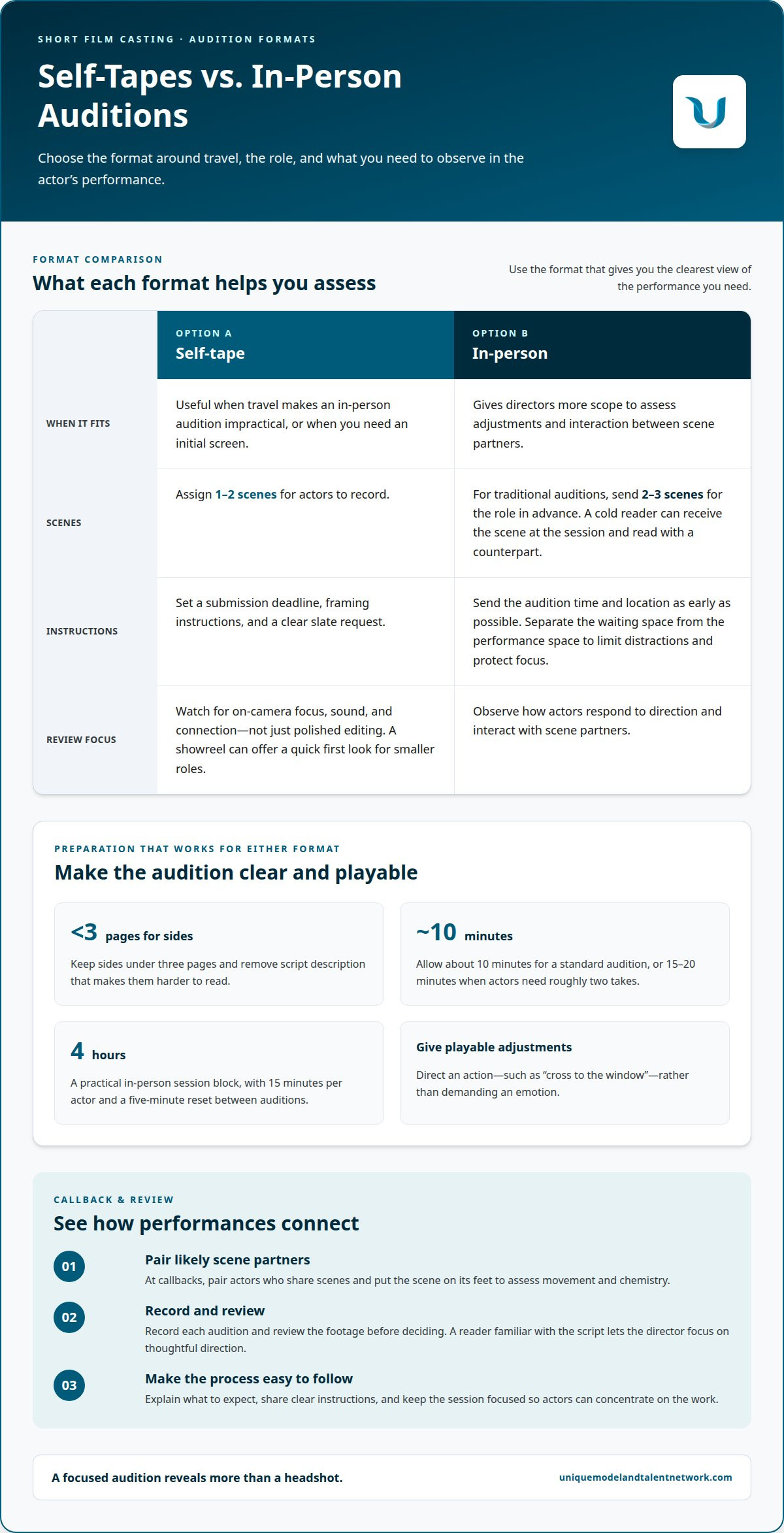
Choose self-tapes when travel makes an in-person audition impractical or when a role needs an initial screen. Give each actor one or two scenes, a submission deadline, framing instructions, and a clear slate request. Review the on-camera performance for focus, sound, and connection, not just polished editing. A showreel can provide a quick first look for smaller roles. In-person auditions give directors more scope to assess adjustments and interaction between scene partners.
For in-person sessions, send the audition time and location as early as possible. Use two separate spaces, one for waiting and one for performing, to limit distractions and protect each actor’s focus. A four-hour block with 15 minutes per actor is a practical schedule; include a five-minute reset between auditions. Keep the welcome simple: greet candidates, explain the process, and avoid making anyone perform before they know what to expect.
Prepare sides that stay under three pages and remove script description that makes them harder to read. For traditional auditions, send two to three scenes for the role in advance; for e-casting, assign one or two scenes to record. Cold readers receive their scene at the session and can read with a counterpart. Allow about 10 minutes for a standard audition, or 15-20 minutes when actors need roughly two takes. Give adjustments as playable actions, such as “cross to the window,” rather than demanding an emotion.
Conduct callbacks by pairing actors who share scenes, then put the scene on its feet so you can assess movement and chemistry. Record each audition and review footage before deciding. A reader familiar with the script lets the director focus on thoughtful direction. For more practice giving clear, creative adjustments, a live industry workshop can strengthen your audition technique. Use professional casting websites to share instructions consistently and keep the process organized.
3. Writing a detailed casting-call breakdown
A useful audition notice answers actors’ practical questions before they submit. Include the film title, logline, union status, key team members, character descriptions, production dates, contact information, and audition dates and times. Add recall and filming dates when available, so performers can assess their schedules before responding.
Keep the synopsis to a couple of sentences, then make every role description specific. Give each character, including supporting roles, a history, goals, strengths, and flaws. For example, describe a cautious paramedic who wants to protect a sibling but struggles to trust others. State whether a particular accent is required and what actors should wear to the audition.
Design the breakdown for quick reading on a phone or printed page. Use a clear title, short sections, and no more than 2 or 3 fonts. Put the role name and essential dates near the top, then use consistent labels for character details and submission instructions. A simple layout helps actors scan the production information without losing important requirements in decorative graphics.
Make the terms clear before asking performers to invest time in an audition. State the acting fee and explain production support, such as meals every 6 hours, when applicable. Avoid vague phrases like “some compensation” or “dates to come”; list the specific terms and dates the production has set. If filming dates are still being arranged, identify the expected scheduling process without presenting an estimate as final.
Before publishing, read the casting call from an actor’s perspective. Can someone quickly identify the story, role, audition process, and next step? Check that the contact method works, the script sides match the character description, and the submission instructions explain what to send. A clear breakdown sets professional expectations and helps suitable performers decide whether to audition.
4. Finding local community talent
Local talent can bring specific knowledge of a place, community, or way of speaking to a character. Start by contacting theater professors, working actors, and established filmmakers. Ask for referrals and share the script so they can suggest performers who suit its tone. To find actors for short films, build referrals through people already connected to local acting and filmmaking communities.
Make every referral request specific. Describe the character’s age range, goals, essential skills, and availability, then explain the production’s location and schedule. If a role depends on a convincing local accent, for example, ask contacts to recommend actors with relevant experience rather than making assumptions about someone’s background. A focused request helps contacts identify promising matches beyond familiar faces.
Keep the process open to new talent. A performer’s résumé may be short, so assess the audition against the character’s needs, the actor’s choices, and their response to direction. Don’t treat identity as shorthand for personality or experience. Describe characters through individual histories, motivations, strengths, and flaws, then invite actors who can credibly perform those details.
Track every referral in one casting record. Note who recommended the actor, the role considered, contact details, availability, and next steps. This makes follow-up manageable and helps the production compare candidates consistently. If a referred performer isn’t right for this character, consider whether another role fits or whether they’d welcome consideration for a future project.
Community connections work best when they lead to respectful, clear opportunities. Share the same project details with every referral, respond to submissions, and tell candidates what happens after auditions. If you’re building stronger industry connections and want expert guidance on finding talent, explore the professional talent network.
Unique Model & Talent Network
Unique Model & Talent Network helps actors and filmmakers build skills and stronger industry connections through a professional community. If you’re refining your audition technique or preparing a reel for casting, The Network Membership, Live Industry Workshops, Industry Expert Q&A Sessions, and Portfolio & Reel Reviews offer focused ways to develop your craft and gain industry insight.
For performers, these opportunities can support clearer audition choices and more confident presentation. For filmmakers, learning from industry professionals can sharpen your approach to assessing performances, communicating direction, and connecting with emerging talent. Choose the support that matches your next step, whether you’re improving a reel or building your understanding of casting.
Contact Unique Model & Talent Network to explore how its professional community can support your creative goals.
Build your next creative connection
Every casting decision can shape the professional relationships behind your film. Treat each audition as the start of a respectful connection, whether an actor joins this project or might fit another role later. Applying the best practices for casting short films means valuing performers’ craft and keeping communication clear, even after the final decision.
If you’re developing your industry skills, Unique Model & Talent Network offers The Network Membership, Live Industry Workshops, and Portfolio & Reel Reviews. These opportunities can help actors strengthen their professional presentation and build confidence, while industry-focused learning supports clearer, more considered casting decisions.
Take the next step that fits your goals and keep building your creative community. Contact Unique Model & Talent Network to explore how its professional network can support your growth.
Frequently Asked Questions
But how do you evaluate performances?
Evaluate each performance against the scene’s objective, clarity, listening, emotional shifts, and response to redirection. A useful practice for casting short films is to use a scorecard with observable examples, such as “held eye contact after the reveal.” Compare notes after reviewing audition recordings, then consider whether the actor’s choices serve the film. Separating evidence from personal taste makes decisions easier to discuss.
What are the best steps for casting a short film?
The best practices for casting short films begin with translating each character into specific performance needs, then choosing an audition format that reveals those qualities. Share the opportunity through relevant community and industry connections, assess submissions against consistent criteria, and invite promising candidates to callbacks. Before confirming the cast, weigh chemistry between scene partners and schedule fit alongside individual performances. Communicate decisions and next steps clearly so candidates understand the process.
How do you write an effective casting call for a short film?
An effective casting call gives actors enough information to decide whether the role and production suit them. Lead with a concise premise, then describe the character’s behavior and goals rather than relying on vague labels such as “mysterious” or “strong.” Explain how to submit, what materials to include, and how candidates will learn about next steps. A clear notice helps reduce mismatched submissions and unnecessary follow-up.
How should short film casting sides and self-tape instructions be prepared?
Choose script sides that give actors a meaningful choice to play, such as concealing a concern while asking for help. In self-tape instructions, explain framing, sound expectations, reader setup, slate details, file naming, and submission method. Keep technical directions practical and consistent across candidates. This lets the casting team focus on the performance instead of guessing whether differences in recording setup affected what they saw.
What are typical actor pay rates and casting costs for short films in the US?
There isn’t one typical rate that fits every short film; compensation depends on the role, production schedule, budget, and applicable union terms. Disclose the actual acting fee before asking actors to audition. A low-fee example in casting guidance is $100 or less per day, but that isn’t a universal rate. Casting expenses also vary with choices such as venue, travel, and submission tools.
What SAG-AFTRA rules apply when casting actors in short films?
SAG-AFTRA requirements depend on whether the production becomes a signatory and which agreement applies. Signatory status can give a production access to a wider pool of professional actors, while adding logistical and financial responsibilities. Establish the production’s intended status before making casting commitments, then plan the schedule and administration around the applicable agreement. Don’t assume every short film follows the same terms.


