
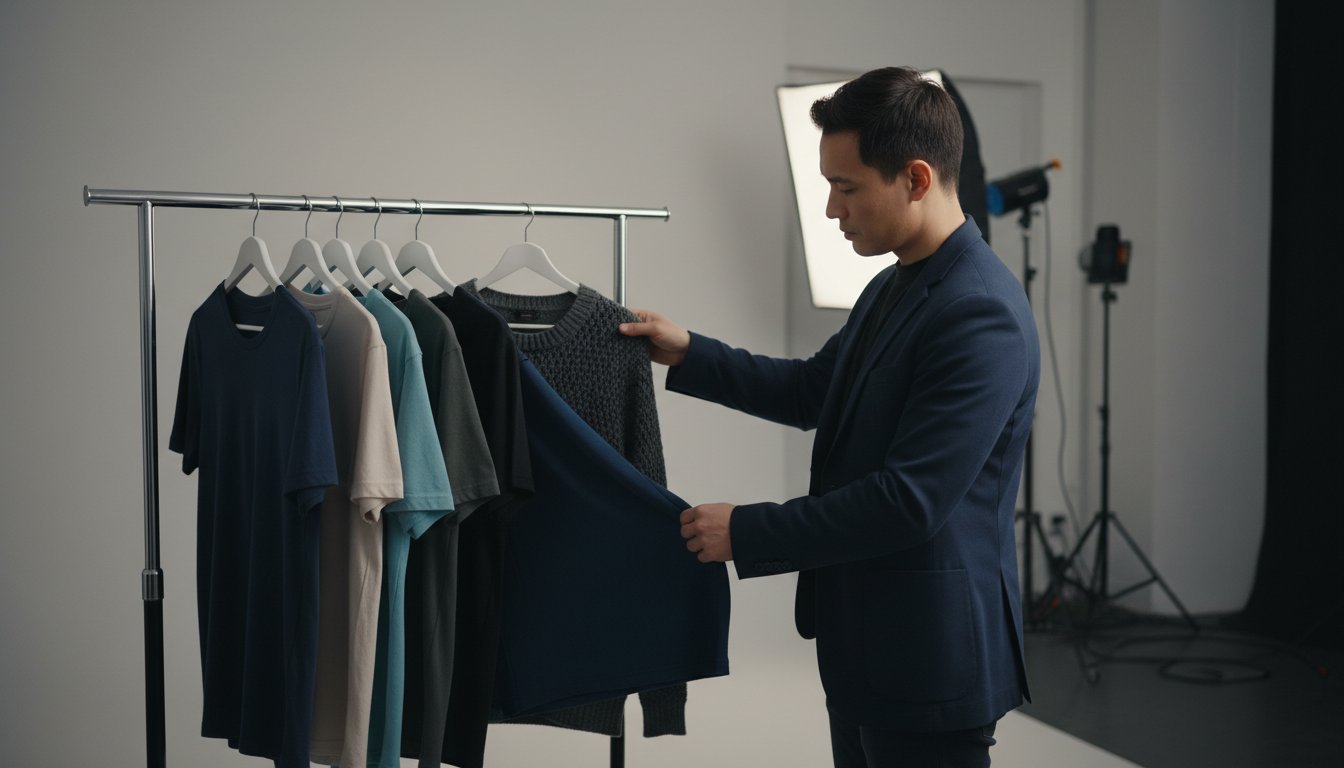
The most expensive designer outfit in your closet might be the single biggest reason a casting director ignores your submission. In 2026, the industry has shifted away from high-fashion polish toward a raw, "intentionally human" authenticity. Deciding what to wear for an acting headshot is no longer about looking your best in a traditional sense; it's about signaling your specific "type" with surgical precision. If your wardrobe choice distracts from your eyes or feels like a costume rather than a character, you've already lost the room.
It's completely normal to feel anxious about how a specific fabric fits or whether you should lean into a commercial or theatrical vibe. You want to look professional without breaking your budget on a whole new wardrobe. This guide provides the clarity you need to master character-driven selection. We will break down the 2026 standards for color and layers, provide a definitive packing list, and show you how to align your look with the roles you're actually ready to book. You'll walk into your next session with the confidence of a seasoned pro who knows exactly how to get noticed.
Key Takeaways
- Learn to treat your wardrobe as a strategic visual resume that communicates your professional range and "type" to casting directors within the first three seconds.
- Understand the essential differences between approachable commercial looks and complex theatrical styles to ensure your portfolio meets 2026 competitive standards.
- Master the technical nuances of what to wear for an acting headshot by selecting color palettes that enhance your natural features while eliminating distracting patterns.
- Implement the "Rule of Three" packing strategy and professional garment care techniques to maintain a high-standard presentation throughout your entire session.
- Discover how professional portfolio reviews and community feedback can validate your wardrobe choices before you invest in a professional photography package.
The Strategy of Wardrobe: Why Your Clothes Are a Character Shorthand
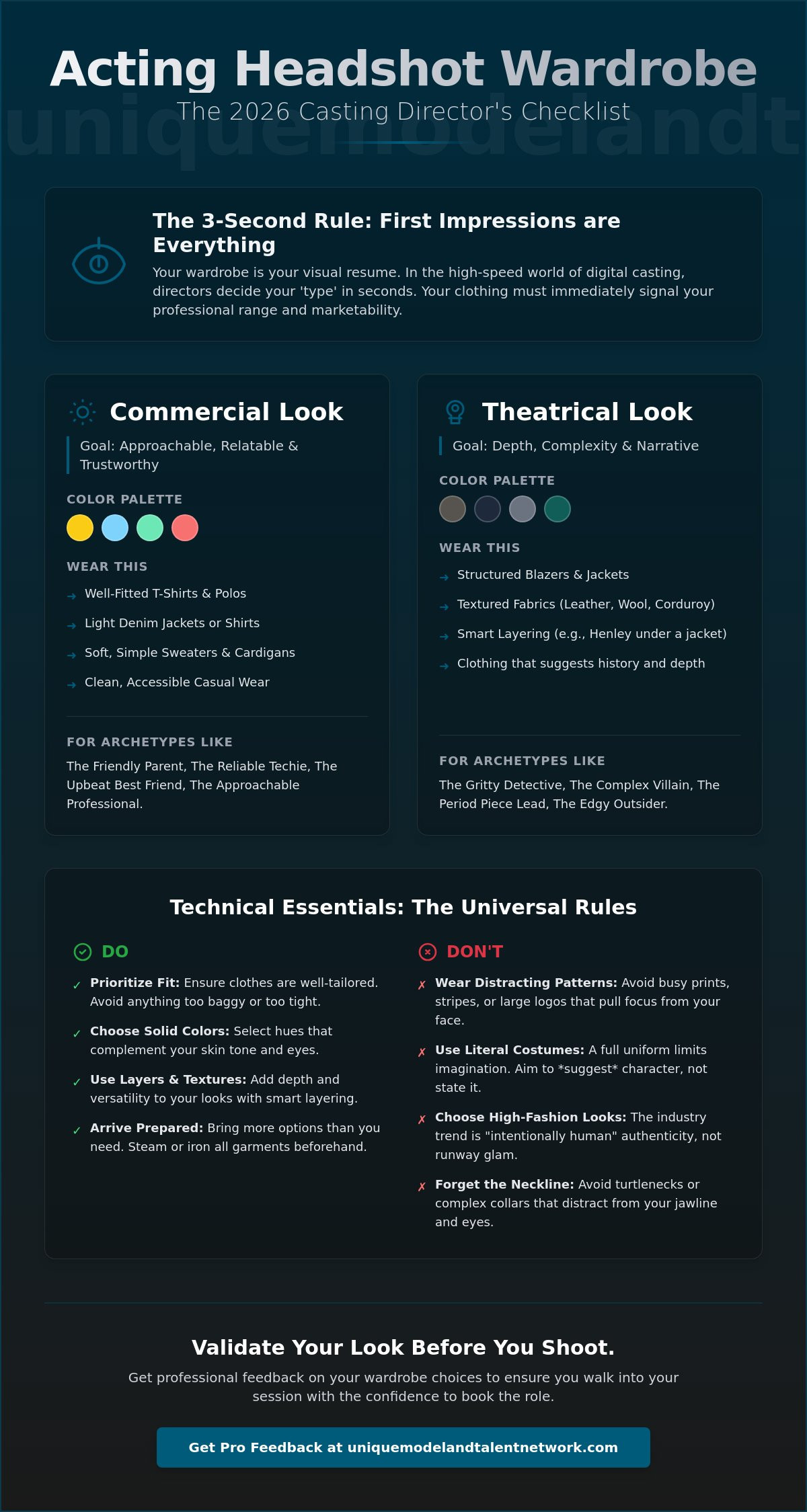
Your wardrobe isn't a fashion statement; it's a strategic business asset. In the high-speed world of digital casting, the "3-second rule" dictates your success. Casting directors make split-second decisions about your "type" before they even read your credits. If your clothing doesn't immediately communicate a clear role, you've lost the opportunity. The purpose of an actor's headshot is to act as a visual resume that signals your professional range and marketability the moment a thumbnail appears on a screen.
The 2026 industry standards have moved decisively away from the glossy, over-staged "glam" looks of the past decade. Today, authenticity is the primary currency. Casting professionals are looking for "intentionally human" portraits that show realistic skin texture and genuine personality. You don't need to be a fashion expert or own a designer wardrobe to master what to wear for an acting headshot. You simply need to understand the specific archetypes you are built to play and choose fabrics that support that narrative.
Understanding Your 'Type' and Marketability
To book work, your look must align with the roles you are actually being called in for. If you naturally fit the "Young Professional" archetype, your wardrobe should lean toward structured collars and clean lines. If you're more of the "Edgy Outsider," you might favor worn-in denim or a textured leather jacket. Identifying these most bookable archetypes allows you to curate a wardrobe that acts as a shortcut for the viewer. Casting type is the intersection of your physical traits and perceived personality.
Authenticity vs. Costuming
One of the most common mistakes emerging talent makes is wearing a literal costume. Showing up in a full police uniform or a doctor's lab coat feels amateur and limits the casting director's imagination. Instead, aim for a "suggestive" look. A crisp, light-blue button-down can hint at a medical professional, while a dark, structured blazer suggests authority without being literal. This subtle approach helps you build a professional acting portfolio that feels grounded and versatile. Balancing your personal style with these industry expectations ensures you look like a working professional who understands the craft. When deciding what to wear for an acting headshot, always prioritize textures and necklines that draw focus to your eyes rather than the garment itself.
Commercial vs. Theatrical: Choosing Looks for Specific Roles
A single headshot can't tell your whole story. To remain competitive, you must develop a profile that speaks two distinct industry languages: commercial and theatrical. Commercial looks sell products through relatability, while theatrical looks sell narratives through complexity. Mastering what to wear for an acting headshot requires you to separate these two categories in your mind before you pack your bag. Bringing only one "vibe" to a session is a missed opportunity that limits your visibility to casting directors.
The Commercial Look: Approachable and Relatable
Commercial casting is about trust and approachability. You want to look like the person a consumer would trust with their bank account or their morning coffee. Focus on bright, warm tones and friendly pastels that pop against simple backgrounds. Wardrobe staples like well-fitted tees, light denim, and soft sweaters work best here. If you're aiming for archetypes like "The Mom/Dad" or "The Techie," your clothing should feel accessible and clean. Following established headshot wardrobe tips helps you avoid the "busy" patterns that distract from a friendly, open expression.
The Theatrical Look: Depth and Narrative
Theatrical looks are designed for film and television dramas, where the stakes are higher and the characters are more layered. This is your chance to showcase depth. Use earth tones, neutrals, and darker shades like forest green, navy, or charcoal to create a moodier atmosphere. Texture plays a huge role here. A structured blazer or a rugged leather jacket can instantly suggest a character's history. These choices help casting professionals envision you as "The Detective" or "The Period Piece Lead" without you needing to wear a literal costume.
Smart layering is the secret to a productive session. You can quickly pivot from a warm commercial look to a dramatic theatrical one by adding a dark outer layer or changing a neckline. This efficiency keeps your momentum going and allows for more variety in your final gallery. Always remember that your wardrobe should support your eyes. While your commercial look might feature an inviting smile, your theatrical look requires a more grounded, intense gaze. If you're struggling to narrow down your options, a portfolio review can help you identify which looks will actually land you the audition. Learning what to wear for an acting headshot is ultimately about giving your performance the right visual frame.
Technical Essentials: Colors, Textures, and Fits That Work
Selecting the right palette starts with understanding your skin's undertone. If you have cool undertones, jewel tones like sapphire or emerald will make your skin glow. For those with warm undertones, earthy terracottas or deep olives provide a grounded, professional look. When you're deciding what to wear for an acting headshot, the goal is to enhance your natural coloring rather than competing with it. Avoid neons at all costs; they cast unnatural colors onto your jawline and distract from your expression.
The technical execution of your wardrobe also depends on the 'No-Fly' list. Busy patterns, such as small checkers or tight stripes, create a moiré effect that jitters on digital screens. Logos and branding are equally problematic, as they date your photo and pull the viewer's eye away from your face. Instead, lean into solid colors and rich textures. Fabrics like wool, linen, and denim add visual weight and depth without the distraction of a print. In 2026, the industry favors "fitted but not tight" silhouettes. Clothes that are too baggy look sloppy, while clothes that are too tight bunch up under studio lights and create unflattering lines.
Texture is often the missing ingredient in amateur headshots. While flat cotton is fine, materials like corduroy or heavy knits react beautifully to studio lighting, creating subtle shadows that add dimension to your frame. This depth makes the image feel more cinematic and high-end. Always ensure your fabrics are clean and free of pilling, as high-resolution cameras in 2026 will pick up every stray fiber or loose thread.
The Power of the Neckline
Your choice of neckline can fundamentally change your face shape. V-necks are excellent for elongating the neck and creating a leaner profile. Crew necks offer a classic, approachable look perfect for commercial roles. If you're aiming for an intellectual or high-drama theatrical vibe, a turtleneck provides a sophisticated frame for the face. Collared shirts add a layer of structure and authority, signaling to casting directors that you're ready for professional or leadership roles.
Colors That Pop Without Distracting
Jewel tones like ruby and sapphire are universally flattering because they provide enough contrast to make you stand out without being overwhelming. Be careful with solid black or white; you don't want to "disappear" into a matching background. A smart trick for choosing what to wear for an acting headshot is to look at your eye color. Selecting a shirt that matches or complements your iris can make your eyes appear more vibrant and engaging, which is the ultimate goal of any professional portrait.
Preparation & Logistics: How to Pack and Style Your Session
Success in a headshot session is often determined hours before you arrive at the studio. Professional preparation ensures that your focus remains on your performance rather than your clothing. The "Rule of Three" is the industry standard for logistics; always bring three times as many outfits as you plan to shoot. If your package includes three distinct looks, you should have nine options ready to go. This volume allows your photographer to select the fabric that reacts best to their specific lighting setup and background color.
Garment care is non-negotiable. High-resolution sensors in 2026 capture every minute detail, meaning a "suitcase wrinkle" can ruin an otherwise perfect shot. Steam your clothes the night before and transport them on hangers in a garment bag. Don't fold your selections into a backpack or duffel. Additionally, pay close attention to undergarment essentials. Nude-toned, seamless options are vital to prevent visible lines or color bleed through lighter fabrics. These small technical details separate the hobbyists from the professionals who are serious about their career development.
When considering jewelry, simplicity is your best friend. A small pair of studs or a delicate chain can add a touch of personality without pulling focus from your eyes. Unless a specific "signature" piece is central to your character archetype, it's usually safer to leave it out. The goal of what to wear for an acting headshot is to provide a clean frame for your face, not to showcase your accessories.
The Pre-Shoot Wardrobe Audit
Perform a rigorous audit of every item under bright, natural light. Check for pilling, faded collars, or small stains that might be invisible in a dim bedroom but glaring under studio strobes. Once you've verified the quality, perform the "Mirror Test." Move through various poses; sit, stand, and lean forward. If a shirt bunches awkwardly or a neckline gapes when you move, it isn't the right choice for the day. Organize your final selections by character type so you can transition between looks with efficiency and speed.
Collaborating with Your Photographer
Your photographer is your technical partner. Present your options and ask for their input on which colors will pop against their intended backdrops. This collaboration extends to your hair and makeup transitions. Your styling should evolve alongside your wardrobe to maintain a cohesive narrative for each look. Having this level of organization allows you to walk into film industry auditions with the confidence that your materials are already working for you. If you want to ensure your choices align with current market demands, consider booking one of our Portfolio & Reel Reviews to get an expert's eyes on your wardrobe before you shoot.
The Insider Edge: Getting Professional Feedback Before You Shoot
Investing in a professional session without a strategy is a significant financial gamble. A "do-over" due to poor wardrobe choices is a setback most emerging actors can't afford. A second pair of expert eyes provides the objective distance you need to verify your choices before you commit to a photographer. By utilizing an acting industry networking platform, you can stress-test your looks against the current market and ensure your clothing doesn't undermine your talent. Getting this feedback early prevents the frustration of receiving a gallery that looks "nice" but fails to communicate your bookable range.
Member feedback is a powerful tool for refining your "type." Often, we see ourselves differently than the industry sees us. You might think a specific jacket makes you look like the "hero," while a panel of experts identifies it as perfect for the "unreliable best friend" archetype. Embracing this clarity allows you to walk into your session with a definitive plan. Once you've secured that perfect shot, you can confidently upload it to the top casting websites to start booking real work. Your wardrobe is the foundation of your digital brand; make sure it's built on professional consensus rather than guesswork.
Portfolio Reviews: The Secret Weapon
Your friends will tell you that you look great; a casting director will tell you if you look bookable. There's a massive difference between a subjective opinion and a professional evaluation of what to wear for an acting headshot. Within the Unique Model & Talent Network, you can participate in virtual wardrobe checks to ensure your textures and necklines align with your specific archetypes. Professional feedback ensures your headshot meets the specific standards of 2026 recruitment, moving you from the "maybe" pile to the "must-see" list.
Joining a Community of Serious Talent
Isolation is the enemy of progress in the entertainment industry. Networking with seasoned photographers and coaches through live workshops accelerates your understanding of how clothing interacts with on-camera presence. These interactions help you refine your presence and professional standards, giving you a decisive edge over hobbyists. Our monthly skill-building challenges and expert Q&A sessions provide the mentorship needed to navigate the complexities of what to wear for an acting headshot and beyond.
Ready to elevate your image? Join the Network and get your portfolio reviewed by experts today.
Step Into Your Most Bookable Year Yet
Your headshot is your most powerful marketing tool. By treating your wardrobe as a strategic character shorthand rather than a simple fashion choice, you align yourself with the high standards of 2026 casting. You now understand how to distinguish between commercial and theatrical looks, how to select colors that make your features pop, and how to prepare your garments to avoid technical distractions that can derail a session. These decisions move you away from the chaos of amateur submissions and toward the grounded reality of professional business development.
Mastering what to wear for an acting headshot is just the beginning of your career acceleration. To truly stand out, you need the support of a community that values integrity and provides tangible results. Unlock professional portfolio reviews and industry access by joining the Unique Model & Talent Network today. As a member, you will gain access to live workshops with casting directors, personalized reel reviews, and a private network of vetted industry professionals. You have the tools and the strategy. Now, it's time to step in front of the lens with total confidence. Your future on set starts with the professional standards you set today.
Frequently Asked Questions
Should I wear black for my acting headshot?
Avoid solid black unless you're intentionally shooting a very specific, moody theatrical look. Black can often absorb too much light and look flat on camera, making it harder for the viewer to see your silhouette. Opt for deep navy, charcoal, or forest green instead. These shades provide the same dramatic weight without losing the detail and texture that make a professional portrait stand out.
How many outfits should I bring to a headshot session?
You should bring three times as many outfits as you plan to shoot to ensure variety and technical compatibility. If your session includes three looks, aim to have nine distinct options ready for your photographer to review. Having this abundance of choice allows you to pivot if a specific fabric doesn't react well to the lighting or if a color clashes with the background.
Can I wear patterns or stripes in my headshots?
Avoid patterns, stripes, and small checkers because they create a distracting visual jitter known as a moiré effect. When deciding what to wear for an acting headshot, solid colors are always the superior choice. Patterns pull the casting director's eyes away from your face and toward your clothing, which is the opposite of what a successful headshot should accomplish.
What is the best color for commercial headshots?
Bright, warm jewel tones and friendly pastels are the most effective colors for commercial headshots. These shades communicate approachability and trust, which are the primary requirements for commercial casting. Colors like sapphire blue, ruby red, or a soft peach help you appear relatable and energetic, making you the ideal candidate for brands looking for "the helpful neighbor" or "the reliable professional."
Should I wear glasses in my headshot if I wear them in real life?
Wear your glasses if they are an essential part of your daily appearance and the roles you typically book. If you have multiple pairs, bring them all to see which frames best complement your face shape under studio lights. To avoid glare, ensure your lenses have an anti-reflective coating, or consider bringing a pair of frames with the lenses removed for the session.
How do I dress to look younger or older in my headshots?
Use specific necklines and layering to shift your perceived age. To look younger, choose casual items like crew neck tees, hoodies, or soft sweaters in brighter colors. To look older or more established, lean into structured items like collared shirts, blazers, and darker, sophisticated tones. These subtle wardrobe shifts allow you to expand your range without needing a complete physical transformation.
Is it okay to wear a suit for a theatrical headshot?
Wear a suit only if you are specifically targeting high-power roles like a corporate executive or a high-stakes attorney. For most theatrical looks, a full suit feels too formal and can look stiff. A better alternative is to wear a structured blazer over a high-quality tee or a simple button-down, which suggests authority while remaining grounded and versatile for modern television dramas.
What should I avoid wearing for an acting headshot?
Avoid neons, large logos, and literal costumes that make you look like you're playing dress-up. Neons cast unflattering colors onto your skin, while logos date your photos and distract from your eyes. When choosing what to wear for an acting headshot, stay away from anything that feels like a caricature. The goal is to hint at a character archetype through high-quality, professional clothing that feels like an authentic version of yourself.


