
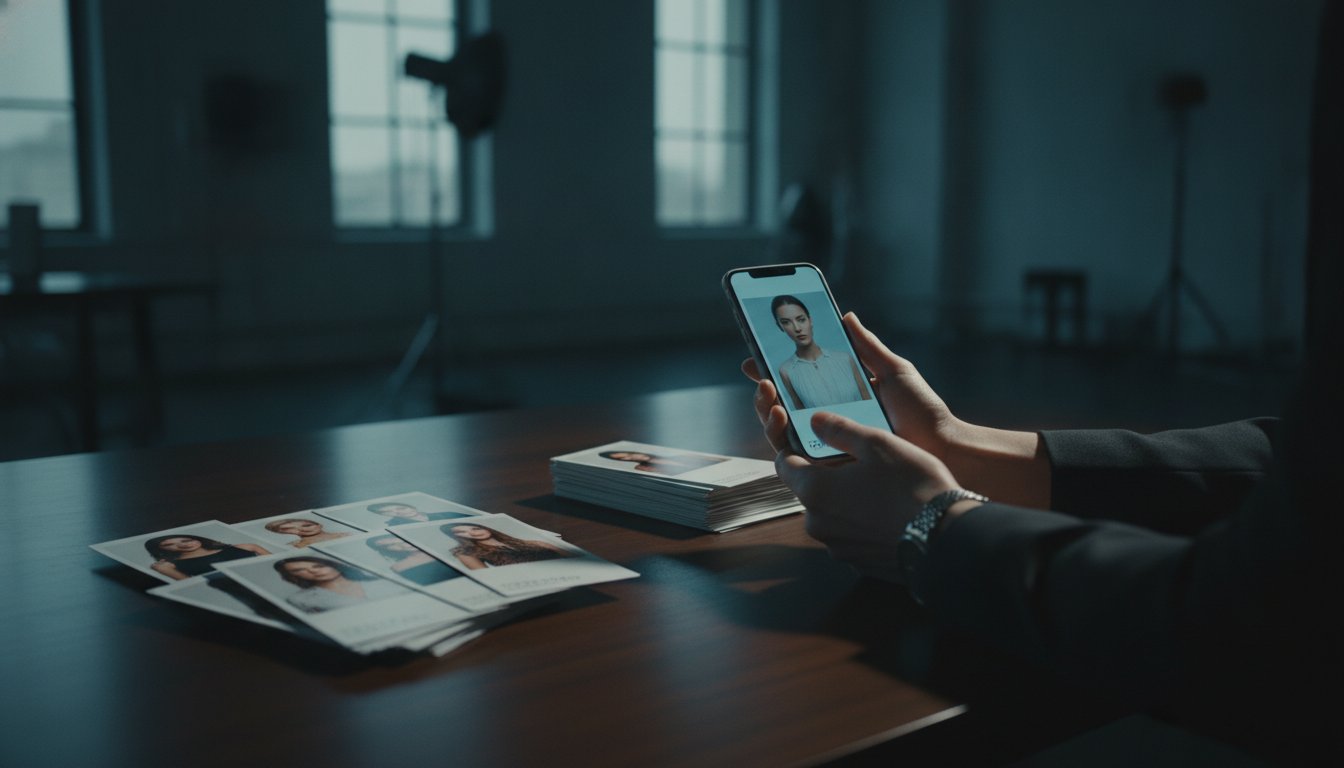
Your comp card isn't a collection of your favorite selfies; it's a high-stakes, five-second sales pitch that determines whether a casting director keeps your card or tosses it. When you're learning how to build a model portfolio, the comp card acts as your professional business card and your ultimate first impression. It's natural to feel anxious about getting your measurements wrong or choosing the "wrong" photos, especially when industry standards shift as fast as they have for 2026.
You want to walk into a go-see with the confidence of a signed pro, not the uncertainty of an amateur. We're going to master the exact anatomy of a professional comp card so you can capture attention and secure your next booking with authority. This guide provides a definitive checklist of current agency requirements, from the mandatory stats you must include to the specific photo variety that proves your versatility to modern scouts. You'll learn how to present a raw, authentic look that meets the high standards of elite agencies like Elite and Wilhelmina.
Key Takeaways
- Identify the essential photo types, from the clean "hero shot" to the full-body physique shot, that prove your versatility to casting directors instantly.
- Ensure your card meets elite agency standards by including the exact mandatory measurements and niche-specific stats required for 2026.
- Learn how to build a model portfolio that bridges the gap between physical and digital worlds using QR codes and streamlined, minimalist layouts.
- Protect your career investment by prioritizing professional expert critiques over amateur feedback before you commit to high-volume printing.
What is a Model Comp Card and Why is it Essential?
A model comp card, often called a zed card or composite card, is your primary marketing weapon in the entertainment industry. This double-sided tool features your most striking images alongside your vital statistics, acting as a high-impact business card that stays with casting directors long after you leave the room. If you are researching What is a Comp Card?, you'll find it has been the gold standard for talent evaluation for decades. In 2026, its role hasn't diminished; it has simply evolved to bridge the gap between physical casting calls and digital submissions.
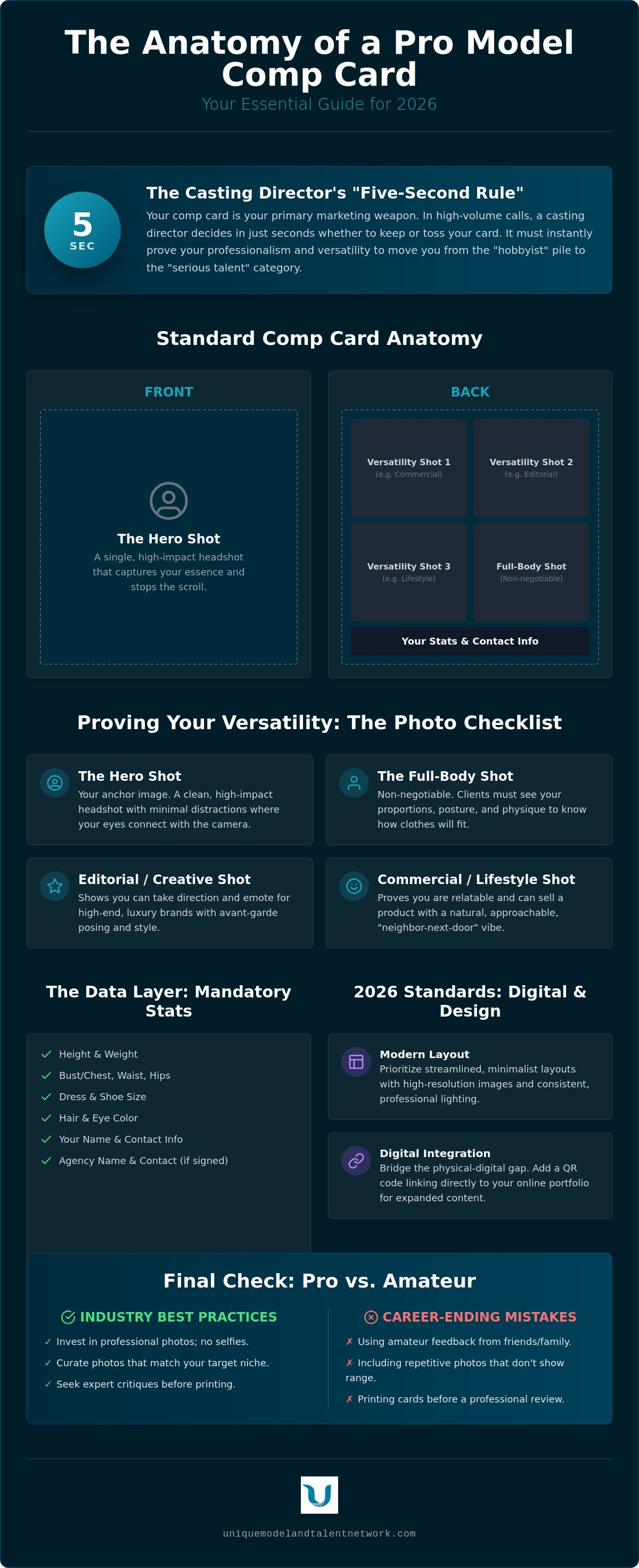
Casting directors often operate under the "Five-Second Rule." During high-volume calls, they may review hundreds of faces in a single afternoon. Your card must communicate your range and professionalism instantly. If your card looks amateur, you're filtered out before you even speak. A professional card signals that you understand the business side of the industry, moving you from the "hobbyist" pile to the "serious talent" category. While social media is a great scouting tool, agencies still require high-quality PDF versions of your card to share with clients for final approval.
The Anatomy of a Standard Comp Card
A professional card follows a strict, standardized layout. The front side features a single, high-impact "hero shot." This is usually a clean, professional headshot that captures your essence without distracting backgrounds. On the back, you'll find a grid of three to four supporting images that demonstrate your versatility, such as lifestyle, commercial, or high-fashion looks. Your professional statistics and contact information are placed in a standardized footer, ensuring a client can book you without hunting for your details.
Comp Card vs. Portfolio: How to Build a Model Portfolio Strategy
Understanding the difference between these two assets is vital when learning how to build a model portfolio. Your portfolio is your full resume, showcasing the breadth of your experience and every successful shoot you've ever done. In contrast, the comp card is your elevator pitch. You should never include every photo you've taken on a single card; instead, select only the elite shots that prove you can do the job. This card often acts as a crucial leave-behind after a successful film industry audition, giving casting directors a physical reminder of your performance and look.
Selecting the Right Photos: Proving Your Versatility
Your comp card is only as strong as its weakest image. When you're learning how to build a model portfolio, the goal is to demonstrate range, not repetition. Every photo on your card must serve a distinct strategic purpose for the client. If two photos tell the same story, you're wasting valuable real estate. Casting directors want to see that you can transform to meet the needs of different brands, from luxury fashion houses to relatable lifestyle campaigns.
The Hero Shot is your anchor. It belongs on the front of the card, acting as the primary hook that stops a casting director from flipping to the next talent in the stack. This should be a clean, high-impact headshot with minimal distractions. Whether your focus is high-fashion or commercial, your eyes must connect with the camera to prove you can hold a viewer's attention. If you are unsure about which images highlight your range, a professional portfolio review can provide the clarity you need before you go to print.
The Full-Body Shot is non-negotiable. Clients need to see your proportions, posture, and physique without the guesswork of baggy clothing or awkward angles. This isn't about vanity; it's about providing the technical data a client needs to see how clothes will fit. To round out the back of the card, include an Editorial or Creative shot alongside a Commercial or Lifestyle image. The editorial shot shows you can take direction and emote for high-end luxury brands. The commercial shot proves you're relatable and can sell a product with a natural, approachable vibe.
Curating for Your Specific Niche
Quality Standards for 2026
Selfie comp cards are an automatic rejection in professional circles because they lack the lighting and resolution required for agency standards. You must prioritize consistent lighting and professional retouching that enhances your look without using heavy filters that hide your true features. Your photos must be updated every 6-12 months to ensure your card reflects your current appearance and maintains your professional legitimacy. Industry standards in 2026 demand authenticity; if you walk into a room and don't look like your card, you've already lost the job. This consistency is why many professionals invest in high-quality NBR extensions Austin to maintain a reliable, camera-ready look that matches their portfolio at all times.
The Data Layer: Essential Stats and Contact Info
While your photos capture a casting director's imagination, your data confirms whether you're physically right for the job. In the professional world, "the data layer" isn't just a list of numbers; it's a technical specification sheet that clients use to filter talent. When you're learning how to build a model portfolio, you must treat your statistics with the same precision an architect uses for blueprints. If a client is looking for a model to fit a specific sample size for a 2026 runway show, they need to know your exact measurements before they even consider your "look."
Accuracy is king in this industry. It's tempting to add an extra inch to your height, but lying about your stats is the fastest way to get blacklisted from professional agencies. If you arrive at a fitting and the clothes don't fit because you provided false measurements, you've wasted the client's time and money. Major agencies like IMG or Wilhelmina have strict height requirements, such as the 5'7" minimum for women at Wilhelmina's 2026 open calls. Professionalism starts with honesty; if you don't meet a specific requirement, it's better to find a niche that fits you than to burn bridges with deceptive data.
Your comp card must include these mandatory stats in a clear, legible format:
- Height: Your exact height without shoes.
- Bust/Chest: Measured at the fullest part.
- Waist: Your natural waistline, typically an inch above the belly button.
- Hips: The widest part of your hips and seat.
- Shoe Size: Standardized for your primary market.
- Hair and Eye Color: Your current, natural appearance.
How to Present Measurements Correctly
To target a global market, you should present your measurements in both Imperial (US) and Metric (International) units. Casting software filters typically follow a standard "order of operations," starting with height and followed by bust, waist, and hips. For commercial bookings, women should include their dress size, while men should list their jacket or suit size. This helps wardrobe stylists prepare for your arrival without needing a second round of questions. Mastering this technical side is a core part of knowing how to build a model portfolio that actually converts into bookings.
Agency vs. Freelance Contact Details
The way you present contact information signals your current professional status. If you're signed with an agency, your card should only feature the agency's name, logo, and your booker's contact info. This ensures all financial negotiations go through your legal representation. Freelance models must use a professional email address and a link to their dedicated talent website. Never put your home address or personal phone number on a comp card. The industry can be unpredictable, and maintaining this boundary is essential for your personal safety and professional reputation.
Modern Standards: Layout, Design, and Digital Integration
In 2026, the visual noise of social media has made minimalism the ultimate mark of a professional. When you are mastering how to build a model portfolio, your layout should prioritize white space and clean, sans-serif fonts. These design choices aren't just about aesthetics; they ensure that the casting director’s eyes stay fixed on your face and form rather than being distracted by decorative borders or trendy typography. A busy layout suggests an amateur trying to hide a lack of quality behind clutter, whereas a clean design screams confidence and high-level experience.
Standard physical dimensions for the US market remain 5.5 inches by 8.5 inches on high-quality cardstock. However, the most significant shift in 2026 is the QR code revolution. By placing a discreet QR code in the corner of your physical card, you provide an instant bridge to your expanded digital presence. This allows casting directors to view your full acting portfolio or video reel with a single scan, effectively expanding your five-second pitch into a deep-dive into your talent. If you want to ensure your design meets these rigorous industry standards, consider joining The Network Membership to access expert-led workshops on digital branding.
Digital organization is just as critical as visual design. If your file is named "IMG_4022.pdf", it will likely be lost in a casting director's download folder within minutes. Use a professional naming convention such as "FirstName_LastName_Height_Agency.pdf" to ensure your data remains searchable and accessible. This level of discipline signals to agencies that you are organized, reliable, and ready for the logistical demands of a professional set.
Common Design Mistakes to Avoid
Busy backgrounds are the most frequent mistake; they pull focus away from your bone structure and silhouette. You should also avoid using more than two different fonts or any decorative typography that feels like a hobbyist project. Finally, never use low-resolution images. What looks acceptable on a small phone screen will appear pixelated and unprofessional when viewed on a high-resolution monitor or printed for a physical casting board.
Preparing for Digital Submissions
Optimizing your PDF file size is essential for email attachments. You want to maintain crisp image quality without creating a massive file that triggers a spam filter or takes too long to download. As you refine your strategy for how to build a model portfolio, create a Link-in-Bio version of your card to make your stats easily discoverable on social media. The Digital Comp Card is the primary tool for 2026 casting professionals, serving as your digital passport to global markets.
Expert Validation: Getting Your Card Industry-Ready
You have selected your hero shots, verified your measurements, and refined your digital layout. However, before you invest in high-volume printing or submit your materials to elite agencies, you must seek a second pair of expert eyes. In an industry where a single "weak link" photo can disqualify you from a major booking, subjective feedback from friends or family is often more dangerous than no feedback at all. While your loved ones will focus on your beauty, a professional casting director focuses on your marketability and your ability to solve a client's problem. Learning how to build a model portfolio effectively requires moving past emotional validation and toward objective, results-oriented critique.
Professional standards can vary significantly between regional markets. A card designed for the commercial lifestyle market in Miami may look entirely out of place for a high-fashion house in Paris or Milan. By networking with peers and industry insiders, you can stay updated on these shifting expectations. This transition from a beginner card to a professional card with agency backing is a milestone that signals you are no longer a hobbyist. It proves you have the discipline to subject your work to the highest standards of scrutiny before presenting it to the world.
The Power of Professional Portfolio Reviews
A professional portfolio review is the most efficient way to identify the images that are holding you back. An expert can see patterns you might miss, such as repetitive expressions or outdated styling that makes your card look like it belongs in 2022 rather than 2026. Using this feedback to rearrange your photo order can have a massive psychological impact on the viewer, ensuring your strongest "look" matches the current needs of the market. Investing in the right modeling career coaching saves you hundreds of dollars in wasted printing costs by ensuring your card is perfect on the first run. This is a critical step for anyone serious about how to build a model portfolio that actually generates income.
Join a Community of Serious Creatives
Success in the entertainment industry is rarely a solo endeavor. By joining a community of serious professionals, you gain access to live workshops with casting directors who can tell you exactly which cards they are currently booking. These environments remove the distractions of general social media and replace them with concentrated, professional development. You can build professional bonds that lead to referral opportunities and gain the confidence that your marketing materials meet the financial legitimacy of top-tier jobs. To refine your strategy and secure your place in the industry, Apply for membership in The Network to refine your marketing materials today.
Secure Your Next Booking with a Professional Edge
Mastering your comp card is about more than just picking your favorite photos. It is a strategic exercise in marketing your unique range to a specific audience. By combining high-impact hero shots with precise technical data and modern digital integration, you provide casting directors with exactly what they need to say yes. Learning how to build a model portfolio that converts requires moving past amateur habits and embracing the rigorous standards of the elite industry. Your card is your first impression; ensure it reflects your commitment to the craft.
If you are ready to remove the guesswork from your career development, Join The Network for Professional Portfolio & Comp Card Reviews. Our private community, hosted on Mighty Networks, offers you direct access to casting directors and industry experts who provide the objective feedback family and friends cannot. You will also benefit from monthly skill-building challenges designed to keep your content fresh and your booking rates high. Your talent deserves a professional platform that prioritizes your growth and career security. Take this final step to ensure your marketing materials reflect the high-level professional you are becoming.
Frequently Asked Questions
Do I need different comp cards for different agencies?
You should tailor your card to the specific market you are targeting rather than creating a different version for every agency. If you are submitting to a high-fashion agency, your photos should emphasize editorial range; for commercial agencies, focus on relatability and lifestyle. Having a versatile set of images is a core part of learning how to build a model portfolio that works across different industry segments.
Can I use black and white photos on my model comp card?
Yes, including one black and white photo on the back of your card is a common practice that highlights your bone structure and classic features. While color photography is the primary requirement for 2026, a single monochrome shot adds a level of sophistication and variety to your presentation. It proves you can handle different lighting styles and moods without distracting from your natural look.
What should I wear for my comp card photos?
You must wear simple, form-fitting clothing that doesn't distract from your physical features. Think of "casting attire" such as a plain tank top, fitted jeans, or a simple bodycon dress in neutral tones like black, white, or grey. Avoid busy patterns, large logos, or heavy jewelry. The goal is to show the client a "blank canvas" that they can easily imagine in their own brand's styling.
How much does it cost to have comp cards printed in 2026?
Printing costs vary by quantity, but you can expect to pay around $50 to $64 for a small batch of 25 cards from specialized services like Headshots2Go or SameDayRushPrinting. If you need a larger volume, prices can reach approximately $120 for 100 cards. Digital comp cards are a more cost-effective alternative for online submissions, with some professional platforms offering digital-only versions for around $50.
Should I include my age or date of birth on my card?
No, you should never include your actual age or date of birth on a professional comp card unless you are a minor. Casting directors are interested in your "look age," which is the age range you can convincingly portray on camera. For safety and privacy reasons, keep your stats limited to physical measurements and professional contact details to maintain a professional boundary.
How many photos is too many for the back of a zed card?
Three to four photos on the back is the industry standard for 2026. If you include more than that, the images become too small to see clearly, and the layout begins to look like a cluttered, amateur collage. When you're figuring out how to build a model portfolio, remember that quality always beats quantity. Select only your most diverse shots to prove your range in a single glance.
Is it okay to use professional photos from a shoot I did for a brand?
Yes, using "tearsheets" or high-quality images from actual brand campaigns is an excellent way to show you are a working professional. Just ensure you have the legal right to use the photos for your personal marketing and that they aren't overly edited. These images add immediate legitimacy to your card because they prove you have already been trusted by a paying client in a professional environment.
What is the best paper stock for printing physical comp cards?
A 14 pt or 16 pt gloss or semi-gloss cardstock is the preferred industry standard for physical prints. This weight feels substantial and professional in a casting director's hand, ensuring it doesn't easily bend or tear in a high-volume environment. Services like EconomicalCompCards often use these specifications to provide a finish that balances durability with the high-resolution image clarity required for 2026.


