
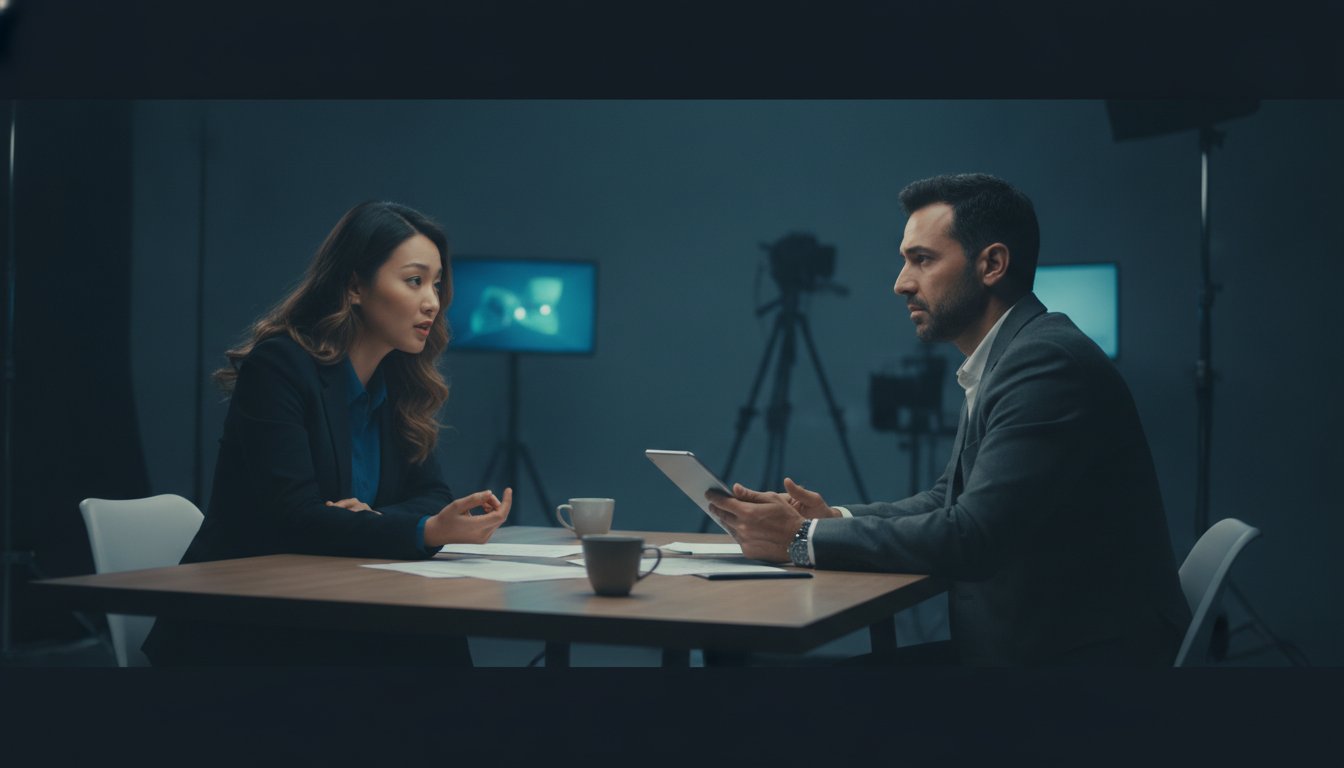
The silence at the end of an audition isn't a cue to rush out the door. It's actually your most underutilized opportunity to prove you're a professional collaborator rather than just another face in the database. Most talent walk into the room feeling like they're being interrogated, but the most successful actors know how to flip the script. Learning the right questions to ask a casting director is the fastest way to signal that you understand the business of production and the nuances of the craft.
If you've ever felt the fear of sounding "green" or overstepping professional boundaries during a high-pressure session, you understand the tension of the audition room. Staying silent often leaves valuable performance insights on the table. This article helps you master the art of professional inquiry so you can build memorable rapport and gain the character depth needed to stand out. We've compiled 2026's most effective questions to help you handle networking settings with total confidence. You'll learn how to ask about technical preferences, character subtext, and project vision in a way that makes every industry decision-maker want to work with you again.
Key Takeaways
- Reframe the audition room as a collaborative workspace where thoughtful inquiry signals your readiness for high-level production.
- Identify the specific questions to ask a casting director to gain character depth and technical clarity without overstepping professional boundaries.
- Learn high-impact questions for workshops and Q&A sessions that build genuine rapport and uncover current industry standards for self-tapes.
- Avoid common "green" mistakes by recognizing red-flag questions that suggest a lack of preparation or professional etiquette.
- Discover how to refine your networking skills through monthly skill-building challenges and direct access to industry experts.
Why Asking the Right Questions is a Career-Defining Skill
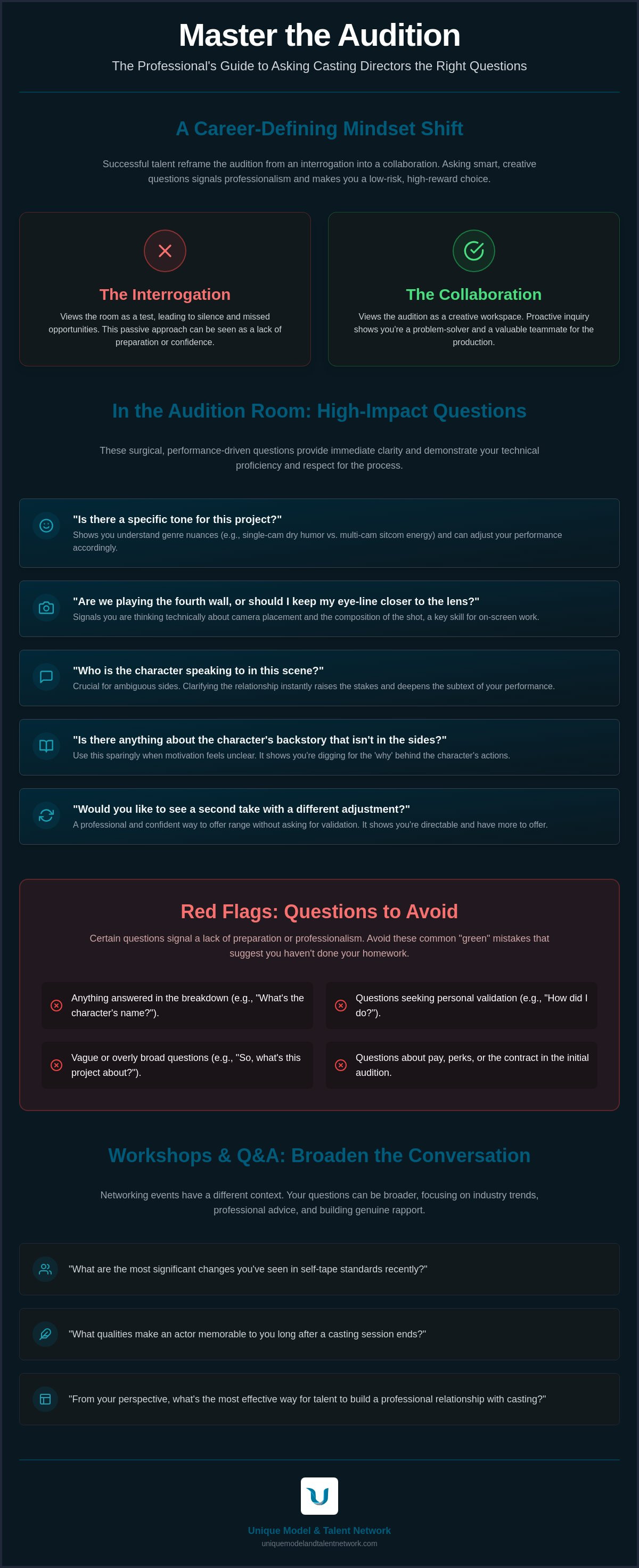
In the high-stakes environment of a 2026 audition, your silence might be interpreted as a lack of preparation. If you view the room as an interrogation chamber, you've already lost the mental game. The most successful talent treat the audition as a collaborative workspace. When you prepare smart questions to ask a casting director, you signal that you're a "pro" who understands the technical demands of a modern set. This is about more than just curiosity; it's about professional alignment.
Smart inquiries demonstrate that you've done your homework. They show the CD that you're thinking about:
- The specific tone and genre requirements of the production.
- The technical blocking or camera needs for the scene.
- The director's unique visual language or stylistic preferences.
You must distinguish between "needy" questions and "creative" questions. Needy questions seek validation or ask for information already provided in the breakdown. Creative questions, however, explore the character's internal logic or the project's specific world-building. By shifting your focus, you transition from "talent" to "teammate" in the CD’s mind. You want them to see you as an asset who will make their job easier once the cameras start rolling.
The Psychology of the Casting Director
Casting directors are professional problem solvers. They are under immense pressure from producers and directors to fill roles with precision and speed. To truly understand the role of a casting director, you must recognize they are the ultimate gatekeepers of production stability. A casting director’s primary goal is finding reliable, low-maintenance talent who can execute the vision without causing production delays. If your inquiry shows you’ve considered the character’s relationship to the camera or the specific pacing of the scene, you alleviate their fear of hiring a difficult actor. You become the low-risk, high-reward choice they need to present to the producers.
The Difference Between Auditions and Networking
Context is everything in this industry. In an audition room, you have seconds to make an impression. Your questions here must be surgical, performance-driven, and brief. In a workshop or Q&A setting, the environment is different. You have the luxury of exploring long-term industry trends and personal preferences. Understanding this distinction is a core part of using an acting industry networking platform to build a sustainable career. Knowing which questions to ask a casting director in a workshop versus a room is the mark of a seasoned professional. Your list should be a living document that shifts based on whether you're under the heat of a spotlight or sharing a professional conversation in a digital community. Tailoring your approach shows you respect the CD's time and understand the nuances of professional etiquette.
Essential Questions to Ask a Casting Director in the Audition Room
When you step into the audition room, the clock is already ticking. Your objective is to deliver a performance that fits the project's specific needs while demonstrating your technical proficiency. To truly understand the casting director's role, you have to recognize that they are looking for a collaborator, not just a performer. They want to see that you can take direction and adjust on the fly. The right questions to ask a casting director in this setting are those that provide immediate clarity for your performance.
Consider these high-impact inquiries for your next session:
- "Is there a specific tone for this project?" This helps you distinguish between the dry humor of a single-cam comedy and the heightened energy of a sitcom.
- "Are we playing the fourth wall, or should I keep my eye-line closer to the lens?" This shows you're thinking about the technical composition of the shot.
- "Who is the character speaking to in this specific scene?" If the sides are ambiguous, clarifying the relationship instantly raises the stakes of your performance.
- "Is there anything about the character’s backstory that isn’t in the sides?" Use this if the character’s motivations feel unclear or contradictory.
- "Would you like to see a second take with a different adjustment?" This is a professional way to offer range without being pushy.
Focusing on Technical Nuance
Technical questions signal that you possess on-set experience. Asking about energy levels or pacing demonstrates that you understand how the medium dictates the performance. For example, a film performance requires a different internal life than a stage production. You should also feel comfortable asking about the "reader." Knowing if they represent a lover, an enemy, or a neutral party allows you to ground your reactions in reality. These nuances make you look like a seasoned professional rather than a beginner who is just hoping for the best.
How to Read the Room Before Opening Your Mouth
Timing is everything. Use the "Three-Second Rule" to determine if there is space for a question. If the room is moving at a frantic pace or the CD is deep in conversation with a producer, it's better to stay focused on your work. Try to identify the roles of the people present. A Casting Associate might handle the logistics, while a Director or Producer is looking for your creative spark. If the room feels tight, save your questions for the "slate" or wait until the end of your first take. If you're looking for a safe place to sharpen these instincts, you can join a skill-building challenge to practice these interactions before your next big call.
High-Impact Questions for Industry Workshops and Q&A Sessions
Industry workshops provide a unique "practice ground" where the pressure of a booking is removed. This environment allows you to explore the nuances of the business that a standard three-minute audition simply doesn't accommodate. When preparing your list of questions to ask a casting director in a Q&A setting, focus on actionable insights that help you optimize your professional workflow. You aren't just looking for a "yes" or "no"; you're looking for the data that helps you pivot your strategy.
Try these high-value inquiries to gain a competitive edge:
- "What are the most common mistakes you see in self-tapes for this specific genre?" With actors spending up to 40% of their time on digital platforms in 2026, understanding technical deal-breakers is vital.
- "How do you prefer to receive follow-ups or industry updates from talent?" This clarifies the boundary between professional persistence and being a nuisance.
- "What makes a headshot stand out to you in a sea of digital submissions?" This uncovers their visual preferences before you invest in your next session.
- "Are there specific training programs or coaches you hold in high regard?" This identifies the "vetted" sources the CD trusts.
- "What is one thing you wish actors understood about the casting process from your side of the desk?" This builds empathy and signals your maturity as a teammate.
Building Long-Term Industry Relationships
Workshops are about more than a single interaction; they are about establishing a professional trajectory. Leveraging acting workshops online allows you to practice these networking skills from anywhere, building a bridge to major markets. Always conclude your interaction by asking for permission to stay in touch. This simple "follow-up" question transitions you from a workshop attendee to a vetted professional on their radar. It ensures your name stays in their digital ecosystem long after the session ends.
Asking for General Career Advice
A workshop is the ideal time to seek clarity on your "type" and branding. Ask how the CD perceives your current marketability or what regional casting trends they anticipate for the remainder of 2026. If you are crossing over into commercial or fashion spaces, seeking modeling career coaching can help refine your specialized branding inquiries. By asking about market shifts, you demonstrate that you are an informed professional who values business development as much as creative expression.
The Red Flags: Questions You Should Never Ask a Casting Director
While curiosity is a trait of the seasoned professional, certain inquiries act as immediate red flags. These questions reveal a lack of industry awareness and can instantly cool the room's energy. When you are refining your list of questions to ask a casting director, you must vet each one for professional maturity. If a question suggests you haven't done the basic work, it's better left unsaid. Every interaction is an audition for your level of professionalism, not just your acting ability.
Avoid these specific "green" inquiries to protect your reputation:
- "What is the role?" This information is always in your breakdown or sides. Asking this shows you didn't do the most basic preparation.
- "Did I get the part?" Never ask this in the room. It puts the CD in an awkward position and signals desperation.
- "Can you give me feedback right now?" Casting directors are on a razor-thin schedule. Forcing them to give an impromptu coaching session is a boundary violation.
- "Who else is being considered for this role?" This is irrelevant to your performance and makes you look insecure rather than collaborative.
- "Can I have your personal email or phone number?" Respect their professional boundaries. Use the established channels for follow-ups.
The "Do Your Homework" Rule
Professionalism begins long before you enter the room or log into a workshop. If you utilize the top casting websites effectively, you'll already have the character breakdown, project tone, and production details at your fingertips. Researching a CD’s past credits before an industry workshop allows you to tailor your inquiries to their specific style. This preparation ensures that your questions to ask a casting director add value to the conversation rather than wasting time on logistical basics that were already provided.
Managing Your Energy in the Room
Needy questions kill the professional vibe of a high-level session. They shift the dynamic from a peer-to-peer collaboration to a talent seeking validation. Professional boundaries in the context of a 10-minute audition slot mean respecting the CD's time by focusing exclusively on the creative and technical needs of the scene. If you're unsure how to handle a specific interaction, it's always safer to prioritize the work over the small talk. Even if a question doesn't get a full answer, you must exit gracefully and maintain your composure. If you want to refine your presence and practice these interactions in a safe environment, join our Network Membership to gain direct access to industry experts who can guide your development.
How to Practice Your Professional Inquiry Skills
Mastering the right questions to ask a casting director requires more than just a memorized list. It demands a level of poise and timing that only comes with consistent practice. You don't want your first time asking a technical adjustment question to be in front of a major production's decision-maker. Instead, you need a controlled environment where you can fail, adjust, and refine your presence before the stakes are high. By joining a supportive community like the Unique Model & Talent Network, you gain access to a dedicated practice ground designed specifically for professional development.
Before you even open your mouth, your digital materials should already be doing the heavy lifting. Getting a professional portfolio review ensures your headshots and reels answer the CD’s silent questions about your type and range. When your materials are vetted and professional, your verbal inquiries carry more weight. They signal that you are a talent who clearly understands the industry standards of 2026 and respects the recruitment process.
The Safe Space of The Network
Practicing with seasoned mentors is infinitely more productive than "learning on the job" during a major audition. In our live industry workshops, you can observe how other talent navigate Q&A sessions. This allows you to identify which questions to ask a casting director that land well and which ones feel intrusive. Our monthly skill-building challenges provide a structured way to refine your slate and practice your Q&A presence until it feels like second nature. You'll receive peer feedback that helps you spot "green" habits you might not even know you have. This collaborative environment prepares you for the next Industry Expert Q&A Session, where you can engage with real decision-makers with total composure.
Taking Action Today
As you move forward, your goal is to stay ambitious yet disciplined. Every workshop and audition is a chance to prove you are a high-level collaborator. Use this final checklist for your next session: Research the CD's recent work, ensure your questions are performance-focused, and wait for the natural break in the rhythm of the room. If you're ready to stop guessing and start building a vetted professional reputation, Join the Unique Model & Talent Network today. We provide the clarity and direct access you need to navigate this industry with total confidence.
Elevate Your Professional Presence in 2026
Mastering the nuance of professional inquiry is a career-defining move that separates serious talent from the hobbyist. By preparing specific questions to ask a casting director, you demonstrate a level of technical awareness and collaborative spirit that industry decision-makers crave. You now have the tools to navigate the high-pressure environment of the audition room and the strategic networking opportunities found in workshops. The final step is moving from theory to execution in a gated, professional environment where your growth is the priority.
Our network provides the direct access you need to bridge the gap between training and booking. You'll benefit from live workshops, real-time portfolio reviews, and direct interaction with guest casting directors and photographers. This is a vetted community built for those who value professional standards and financial legitimacy in their career development. Master your industry networking inside the Unique Model & Talent Network.
Your career acceleration depends on your ability to act as a professional teammate. Stay disciplined, keep your materials sharp, and approach every room with the confidence of an insider. We're ready to help you open the next door.
Frequently Asked Questions
Is it okay to ask for feedback after an audition?
It's generally unprofessional to ask for immediate feedback in the audition room because casting directors are managing tight production schedules. Forcing an impromptu coaching session can disrupt the flow of the day and signal a lack of professional boundaries. Instead, save these performance-based inquiries for dedicated industry workshops where feedback is the primary objective. This approach respects the CD's time while positioning you as a talent who understands the high-pressure reality of a working set.
Should I ask about pay or SAG-AFTRA status during the first audition?
You should never ask about pay rates or union status during a first audition since these details are typically handled by your representation or outlined in the initial project breakdown. Focusing on financial logistics in the room shifts the focus away from your creative collaboration. If you have specific concerns regarding the 2026 SAG-AFTRA theatrical rates, discuss them with your agent before the session. This ensures you enter the room ready to work as a teammate rather than a negotiator.
How many questions are too many in a casting workshop?
Aim for one or two high-impact questions during a workshop to ensure you remain memorable without dominating the session. Professional etiquette requires that you leave space for other talent to engage with the guest expert. When you're selective about the questions to ask a casting director, you demonstrate that you value efficiency and collective growth. Quality inquiries about genre-specific trends or technical preferences always carry more weight than a long list of logistical basics.
What if the casting director seems rushed or grumpy?
If a casting director seems rushed or irritable, your best strategy is to remain the calmest, most prepared person in the room. CDs often face intense pressure from producers and tight deadlines, so don't interpret their mood as a reflection of your talent. By staying focused and keeping your interactions brief, you prove that you are the reliable, low-maintenance solution to their casting problem. This professional resilience is a key trait that gatekeepers look for when hiring.
Can I ask a casting director to look at my headshots during a Q&A?
Asking a casting director to review your headshots during a general Q&A is typically considered a boundary violation unless they have explicitly invited such submissions. Most professionals prefer to focus on the topic at hand rather than conducting individual portfolio reviews in a group setting. To get expert eyes on your materials, seek out dedicated workshops or private review sessions. This shows you respect the structure of the event and understand the formal channels for talent evaluation.
How do I ask a question without sounding like a beginner?
To avoid sounding like a beginner, focus your questions to ask a casting director on the creative subtext or technical blocking of a scene. Beginners often ask about information that is already provided in the sides or breakdown, such as the character's age or basic plot points. Pros ask about the director's visual style or the specific pacing required for the medium. This transition in focus signals that you have the set experience necessary to handle a high-level production.
What is the best way to follow up after a CD answers my question in a workshop?
The best way to follow up is to send a concise note through the casting director's preferred professional channel, referencing the specific insight they shared. Mentioning a direct piece of advice shows that you were attentive and value their expert perspective. Avoid sending generic messages or social media DMs unless they specifically requested them. This structured approach helps you transition from a workshop participant to a vetted professional who is now on their industry radar.
Should I ask questions during a self-tape submission?
You should avoid asking questions during a self-tape submission unless there is a glaring technical error in the instructions that prevents you from filming. Most self-tape requests are automated or handled by assistants, so there's rarely a direct line for performance-based inquiries. Your job is to interpret the sides and follow the technical specs exactly as written. If you're unsure of the tone, research the project's genre to make an informed creative choice that demonstrates your professional instincts.


