
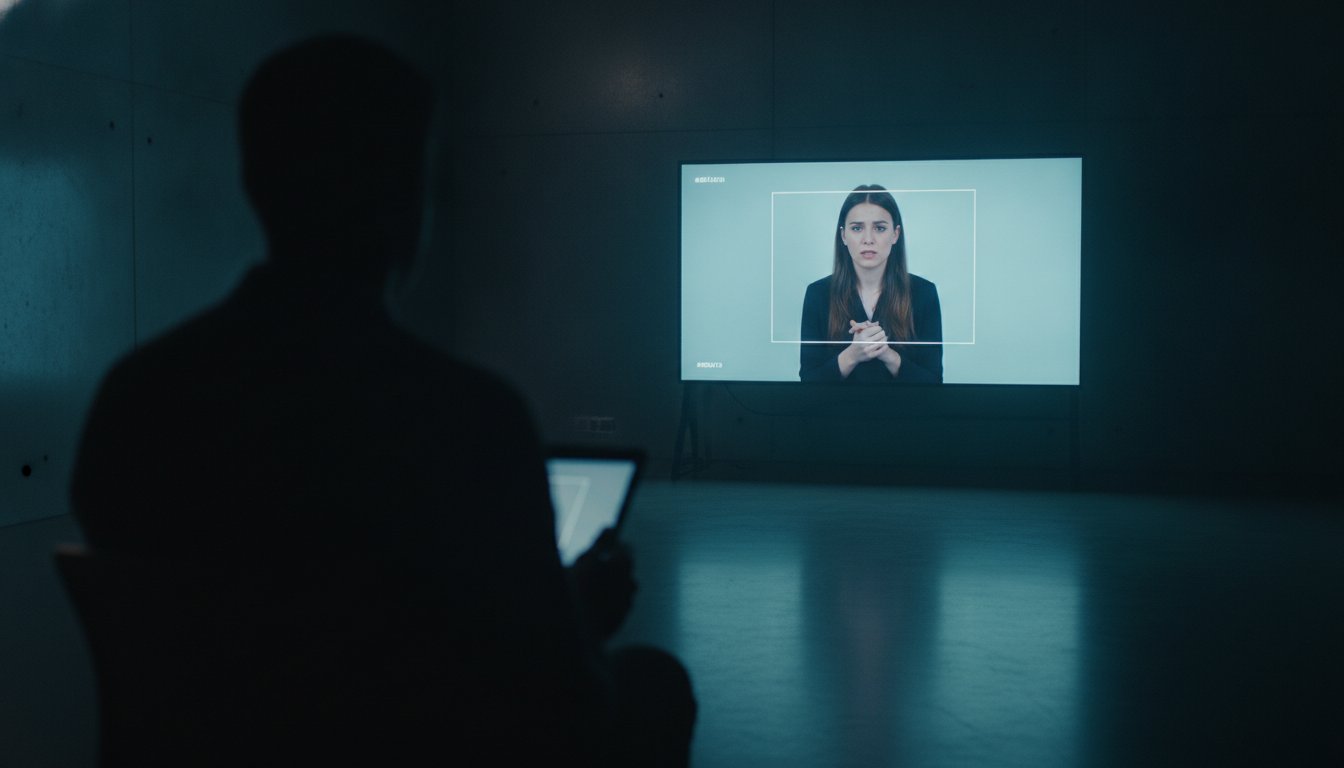
Did you know that in 2026, many casting directors decide to reject a self-tape within the first 10 to 20 seconds? It's a sobering reality for any dedicated actor or model. You might feel like you're shouting into a void, especially when you're left wondering if your performance was too theatrical or if your technical setup simply wasn't up to par. Understanding what not to do in a casting audition is often more important than the performance itself. If you've ever feared that you're coming across as unprofessional without realizing it, you're not alone.
We're here to provide the clarity you need to stop guessing and start booking. By mastering the unspoken rules of the modern industry, you can transform from an overlooked talent into a high-level professional that casting directors trust. This article breaks down the critical mistakes that lead to immediate rejection, from file labeling errors that trigger automated filters to the subtle etiquette blunders during live virtual callbacks. We'll show you how to build lasting industry relationships by projecting an elite image that commands respect and increases your booking rates.
Key Takeaways
- Learn why technical compliance and resume integrity are the first hurdles to booking in a competitive 2026 market.
- Discover the behavioral deal-breakers regarding what not to do in a casting audition to ensure you project a high-level professional image.
- Identify the performance traps that signal a lack of training, including the mistake of being too result-oriented during a scene.
- Master the current technical standards for self-tapes to ensure your environment never distracts from your talent.
- Protect your professional reputation by avoiding common post-audition mistakes that can lead to being blocked by casting offices.
Before You Enter the Room: Preparation Mistakes That Kill Careers
One of the most dangerous mistakes is lying about special skills. The "can you ride a horse?" question is a classic industry trap. If you claim a skill you haven't mastered and the production hires you based on that lie, you've created a safety risk and a financial nightmare. Similarly, showing up with headshots that don't match your current look is a waste of everyone's time. If you've changed your hair or aged since your last shoot, get new photos. Your headshot is a contract of what you will look like when you walk through the door.
Preparation also involves deep research. Failing to look into a casting director’s previous work or their office style shows a lack of commitment. This knowledge is essential for understanding the screen test process and tailoring your energy to the specific room. Professionalism starts at the clock. Arriving late without a legitimate "force majeure" excuse tells the team that your time is more valuable than theirs. It's a quick way to ensure you aren't invited back.
The Resume and Portfolio Red Flags
Trust is your most valuable currency in this industry. Listing background work as a "featured" or "lead" role is a major trust-breaker that casting offices catch easily. Beyond your credits, your digital presentation matters. Using unprofessional contact info like "[email protected]" immediately marks you as an amateur. When you are refining your acting portfolio, you must vet every link. Sending a casting director to an expired reel or a password-protected site is an avoidable error that reflects poorly on your organizational skills.
Lack of Technical Preparation
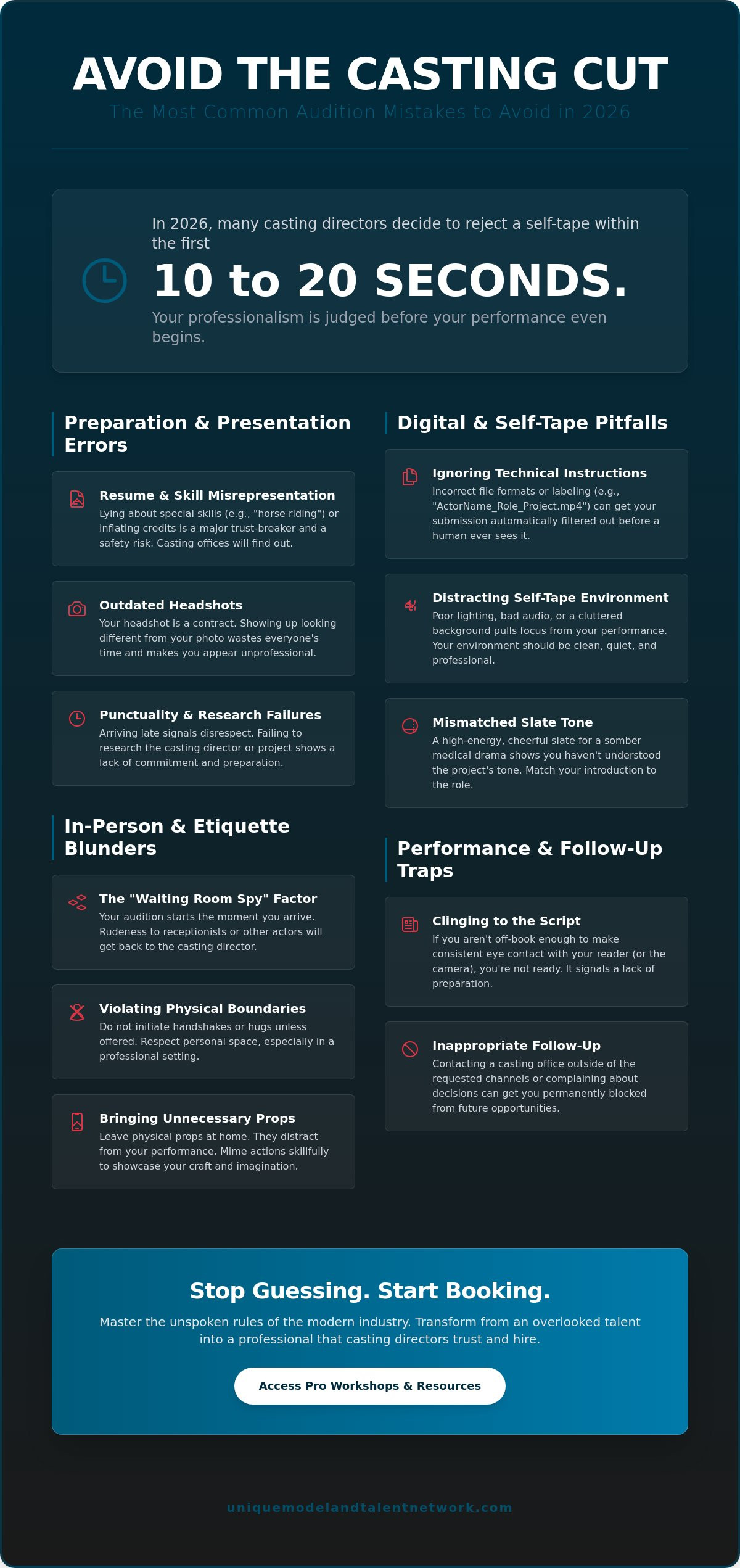
Technical readiness is just as vital as emotional truth. Script-clinging in the room is a common error; if you aren't off-book enough to maintain eye contact, you aren't ready to work. You also need to ensure your "slate" matches the project’s specific tone. A cheerful, high-energy introduction for a somber medical drama suggests you haven't read the room. Professional readiness is the first metric a casting director uses to vet whether a talent is a reliable partner or a potential distraction on set.
The Unspoken Rules of Audition Room Etiquette
The audition doesn't start when you deliver your first line. It begins the moment you pull into the parking lot. Casting directors often check with the front desk to see how talent behaved while waiting. This is the "waiting room spy" factor. If you're rude to the receptionist or dismissive of other actors, that feedback will reach the decision-makers. Treating everyone with total respect isn't just about being a good person; it's a professional standard that proves you're a team player.
When you walk into the room, remember this is a business meeting. One of the most frequent common audition mistakes is violating physical boundaries. Don't initiate a handshake or a hug unless the casting director offers first. In a post-2020 world, personal space is highly valued. Similarly, leave the elaborate props at home. Bringing a physical phone or a fake weapon distracts from your face and your craft. If the scene requires a prop, mime it skillfully to show your range.
Casting directors are looking for someone who can solve their problem. They don't want to hear about your traffic stress or your bad morning. Bringing your "day" into the room makes you look like a high-maintenance hire. If you find yourself struggling with the social pressure of these environments, participating in Live Industry Workshops can help you build the confidence to remain composed and professional under pressure.
Waiting Room Conduct and the 'Spy' Factor
Your audition begins the moment you enter the building. Avoid being overly competitive, loud, or distracting in common areas. You never know who is watching or listening to your conversations. Handle the "reliable spy" situation with grace. If someone is being unprofessional around you, maintain your focus and quiet confidence. This discipline shows you can handle the distractions of a busy set without losing your character.
Physical Space and Professional Boundaries
Once inside, find your "mark" and stay there. Moving outside the designated lighting setup is a technical fail that ruins the shot for the camera operator. Respect the personal space of the panel and the reader at all times. Regarding eye contact, focus your attention on the reader, not the casting director, during the scene. Looking directly at the panel can feel confrontational and breaks the "fourth wall" of the performance. Understanding what not to do in a casting audition regarding physical space ensures you look like a seasoned pro who understands the mechanics of production.
Performance Pitfalls: Why 'Perfect' is Often the Wrong Choice
Many actors strive for a "perfect" take, but in a professional environment, perfection is often the enemy of collaboration. If you walk into a room with a single, unchangeable vision of the scene, you're signaling that you might be difficult to direct on set. Casting directors are looking for a partner in the creative process, not a robot. Understanding what not to do in a casting audition involves recognizing that your performance is a living, breathing thing that must respond to the room. When you're too focused on the "right" way to say a line, you lose the spontaneity that makes a performance magnetic.
One of the most common mistakes is being result-oriented. This happens when you try to perform an emotion, like "sadness" or "anger," rather than focusing on the action or objective of the character. It feels hollow and forced to a seasoned pro. Similarly, never apologize for your performance. If you stumble on a word or feel you missed a beat, keep going. Apologizing signals a lack of professional confidence and forces the casting team to take care of your ego rather than focusing on your talent. They're looking for solutions, not someone who needs constant reassurance.
The Danger of Being 'Locked In'
Casting directors value flexibility over a polished first take. If you've over-rehearsed to the point where every inflection is set in stone, you become a "one-way" actor. This is a red flag for directors who need to know you can pivot quickly on a fast-paced set. To avoid this, prepare multiple options for the scene rather than a single, rigid performance. When a panel gives you notes, listen carefully. A redirection is a compliment, not a critique of your first take. It means they saw something they liked and want to see if you have the range to explore a different direction.
Communication Mistakes with the Panel
Professionalism extends to how you speak between the takes. Avoid being the "over-sharer" by keeping your slate and any introductory chat concise and professional. Don't waste time asking questions that are already clearly answered in the sides or the project breakdown; it suggests you haven't done your homework. If you truly need clarification, ask a targeted, intelligent question that shows you've thought deeply about the material. Finally, don't ask for a "re-do" for minor errors. Trust the casting director to know if they have what they need. Knowing what not to do in a casting audition means knowing when to stop talking and let your work speak for itself.
Self-Tape and Digital Audition Errors to Avoid in 2026
In 2026, your home studio is your primary stage. If you treat your self-tape like a casual social media post, you're already behind. Poor lighting and muffled sound are the two technical errors that scream "amateur" before you even speak. Casting directors often review hundreds of tapes for a single role, and research shows they'll often reject a submission within the first 10 to 20 seconds due to avoidable technical mistakes. Understanding what not to do in a casting audition in the digital era means treating your technical setup with the same reverence you give your script.
A major distraction is the "busy background." Cluttered shelves, unmade beds, or vibrant posters pull focus from your face and make you look unprofessional. Likewise, shooting vertically on a mobile phone is a cardinal sin for film and TV auditions. These mediums are horizontal; your audition should reflect that reality. If you want to ensure your digital environment meets industry standards, getting Portfolio & Reel Reviews can provide the specific feedback needed to elevate your presentation.
Technical Standards for the Modern Actor
A simple ring light and an external microphone are no longer "optional extras." They're entry-level requirements for anyone serious about booking work. Your framing should typically be a medium close-up, from the chest up, allowing the panel to see your expressions clearly without unnecessary empty space above your head. Stick to a neutral, solid-colored background. This maintains the "Industry Insider" look that tells casting teams you understand the professional environment of a set.
The Submission Process: The Last 10%
The work isn't done when you finish the scene. You must follow the "eye line" rules; never look directly into the lens during the performance unless specifically instructed. Instead, place your reader just off-camera to create a natural perspective. Before you hit send on Casting Websites, check for audio-sync issues. A slight delay between your lips moving and the sound can be incredibly jarring for a viewer.
Finally, pay attention to the details that help a casting director's workflow. Incorrect file naming is a fast way to get lost in the shuffle. Many productions now use automated systems to filter out incorrectly labeled files before a human even sees them. Never upload a file named "IMG_402.mp4." Use the standard convention: "Name_Role_Project." This ensures your tape remains attached to your identity throughout the casting process. Knowing what not to do in a casting audition means respecting the casting office's digital organization as much as their physical space.
The Aftermath: Post-Audition Mistakes and Professional Follow-Ups
The work doesn't end when the camera stops rolling or you walk out the door. The silence that follows a performance is often the hardest part of the process for talent to navigate. If you've ever felt the urge to email a casting director three days later to "check in," you're touching on one of the most common post-performance errors. Understanding what not to do in a casting audition cycle includes knowing when to walk away. Casting directors are managing hundreds of schedules and shifting production timelines. Reaching out too often doesn't show passion; it signals a lack of professional boundaries.
The "ghosting" myth is a frequent source of stress for emerging talent. In the 2026 industry, no news is simply part of the business cycle. If you aren't right for this specific role, the office moves on immediately. It isn't a personal slight or a critique of your talent. Instead of obsessing over the outcome, focus on tracking your progress. Maintaining an audition log is essential for career growth. Record what you wore, the notes you received, and the tone of the room. This data helps you identify patterns and professionalize your approach over time.
Social Media and NDA Etiquette
In an era of instant sharing, the "Social Media Trap" is a career-killer. Posting "auditioning for [Major Brand]" is a massive liability for production. Most projects require strict confidentiality regarding sides and plot details. Even a vague photo of your script or a selfie in the casting office parking lot can violate an NDA. Respect the confidentiality of the process. If you want to share your wins, wait until the project is officially public. Professionalism means being a safe pair of hands for a production's secrets.
Building Long-Term Casting Relationships
Your goal isn't just to book one job; it's to build a decade-long rapport with casting offices. The "Thank You" note debate remains a hot topic, but the consensus is clear: if you must send one, keep it to a single, professional sentence via the requested channel. Avoid cold-calling or "dropping by" the office. To build rapport outside the high-pressure audition environment, consider engaging in acting workshops online. These settings allow you to showcase your craft and work ethic without the immediate stress of a casting decision.
Navigating the unspoken rules of 2026 requires a support system that values integrity and results. Join the Unique Model & Talent Network to get vetted feedback and avoid the critical mistakes that keep talented people from booking work. By aligning yourself with high professional standards, you stop being a "hobbyist" and start being a reliable industry partner. Master what not to do in a casting audition aftermath, and you'll find that the "yes" follows much more frequently.
Elevate Your Professional Standards for 2026
Mastering the industry's professional standards is what separates the dedicated professional from the hobbyist. We've explored why technical precision in self-tapes and behavioral integrity in the room are the bedrock of a sustainable career. By internalizing what not to do in a casting audition, you shift your focus from avoiding mistakes to delivering magnetic performances that solve a director's problems. This commitment to detail signals to every casting office that you're a reliable and elite partner in the creative process.
Ready to stop guessing and start growing? Join the Unique Model & Talent Network for expert feedback and industry access today. Our members benefit from live workshops with real Casting Directors and receive personalized portfolio and reel reviews by industry experts. You'll gain access to a private community focused on tangible success, completely free from the noise and distractions of general social media platforms.
The path to booking more work starts with a commitment to excellence and a willingness to be coached. Your talent deserves a professional platform that values your growth as much as you do. We're here to help you build it.
Audition Standards and Frequently Asked Questions
Should I shake hands with the casting director when I enter?
No, you shouldn't initiate a handshake or any physical contact when you enter the room. In the modern industry, personal space is a high priority for every professional panel. Wait for the casting team to offer a greeting first. If they don't, a professional nod and a warm smile are perfectly sufficient. This shows you respect their boundaries and understand the business nature of the environment.
What should I do if I forget my lines during a live audition?
If you forget your lines, stay in character and take a breath. Don't break the moment by apologizing or making a frustrated face. If you truly can't recover, ask the reader for a line calmly and continue. Casting directors value your ability to handle stress and stay grounded. Showing that you can recover with grace is often more impressive than a flawless but robotic delivery.
Is it okay to ask for another take if I'm not happy with my performance?
You should generally avoid asking for another take. Trust that the casting director has seen what they need or will give you a redirection if they want to see something different. Asking for a "re-do" can make you seem high-maintenance or insecure about your craft. If the panel is happy with the take, you should be too. Your confidence in your work is a key professional trait.
Can I bring a prop if it’s essential to the character’s action?
It's best to leave physical props at home. Even if an action seems essential, miming the item shows your skill and keeps the focus on your performance. A physical prop can be a technical distraction for the camera and the panel. If you must use something, ensure it's small and doesn't make noise. Usually, your imagination is the only tool you need to convey the story.
What is the biggest deal-breaker for a casting director?
The biggest deal-breaker is a lack of professional preparation or a poor attitude toward the staff. Knowing what not to do in a casting audition often comes down to respecting the time and effort of the casting team. If you haven't researched the project or you're rude to the receptionist, your talent won't matter. Casting directors are looking for reliable partners who are ready for a high-stakes set.
Should I follow up with a thank-you email after my audition?
You don't need to send a thank-you email after every audition. In fact, it can sometimes be seen as an unnecessary distraction for a busy office. If you have a specific, meaningful connection with the director, a very brief note through your agent is acceptable. Otherwise, the best way to say thank you is by being prepared, professional, and respectful during the audition itself.
Is it unprofessional to look at my script during a callback?
It isn't strictly unprofessional to have your script in hand during a callback, but you should be mostly off-book. The script should be a safety net rather than a crutch. If you're constantly looking down, you lose the essential connection with your scene partner. Try to memorize as much as possible so you can remain flexible and responsive to any redirection the director provides.
How do I handle a 'cold reading' without making mistakes?
Handle a cold reading by focusing on the character's objective rather than perfect line delivery. Take a moment to look at the text, then look up to connect with the reader before speaking. Don't worry about making a small mistake; instead, focus on listening and reacting truthfully. Casting directors use cold readings to test your instincts and your ability to take direction on the fly.


