
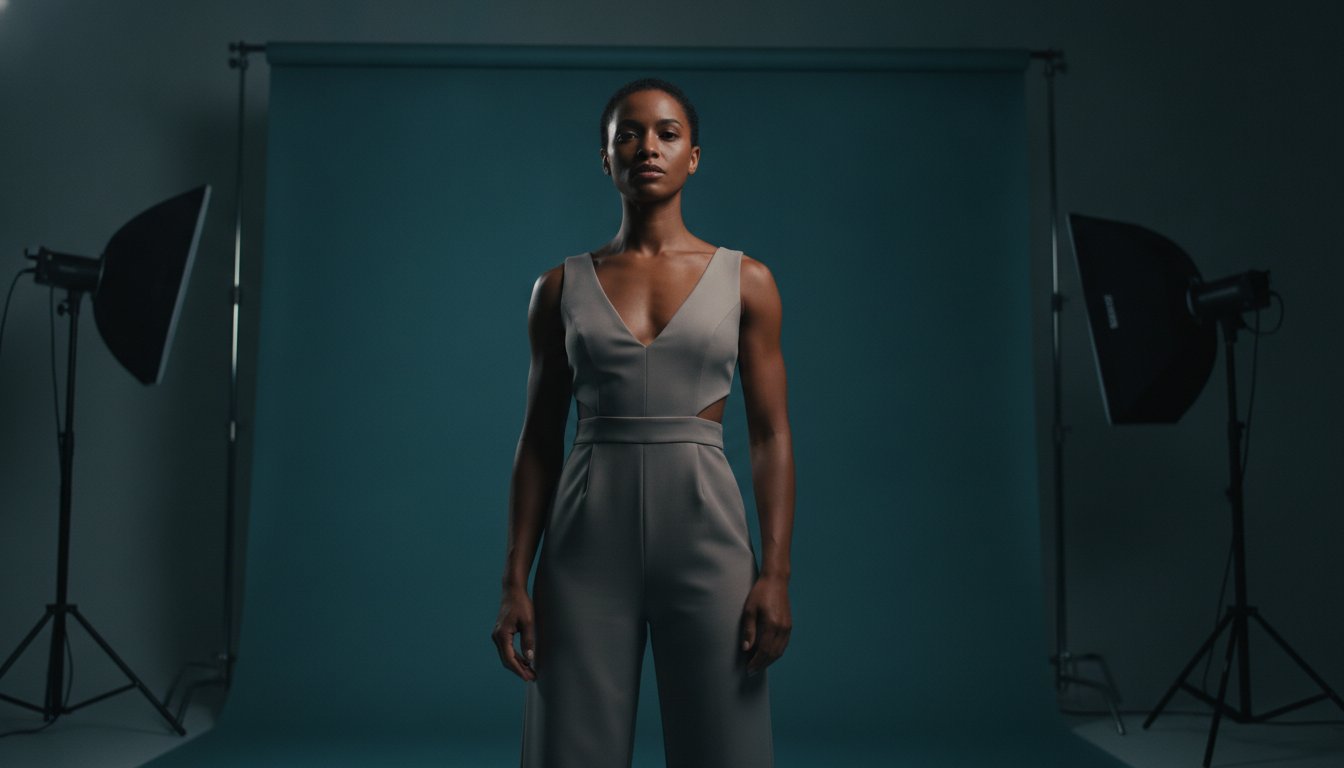
The 5'9" height requirement is no longer the industry's golden rule; it's a filter that most of the modern commercial world has already discarded. If you've ever been told you're too short to succeed or felt overwhelmed by conflicting advice, you aren't alone. Many aspiring talents feel sidelined by a measuring tape before they even get a chance to show their range. Understanding the actual 2026 petite model requirements is the first step toward reclaiming your career and realizing that your height is a niche, not a barrier. For women, the professional standard now comfortably includes those between 5'1" and 5'7", while men find success between 5'4" and 5'9".
You're about to discover the exact measurement targets, niche opportunities, and networking strategies needed to build a professional modeling career on your own terms. We'll clarify the differences between commercial, parts, and beauty niches so you can target the most profitable path for your specific look. You'll also learn how to identify legitimate opportunities while avoiding the predatory scams that often target shorter models. This guide provides a clear strategy to get noticed by professional casting directors and secure bookings without relying on a traditional mother agency.
Key Takeaways
- Define the modern petite model requirements for 2026, focusing on specific height ranges and body proportions across commercial, fit, and parts modeling niches.
- Understand the "Golden Ratio" of head-to-body proportions and how to use your unique frame to appeal to brands prioritizing relatability and inclusivity.
- Learn to bypass traditional industry gatekeepers by implementing a direct-to-casting networking strategy that places your portfolio in front of decision-makers.
- Master the technical portfolio essentials, from high-resolution digitals to stylized editorial shots, ensuring your presentation meets elite professional standards.
- Explore how structured professional development via The Network Membership and Live Industry Workshops can bridge the gap between emerging talent and established industry veterans.
Breaking the Height Myth: What Are the Real Petite Model Requirements in 2026?
The industry's obsession with 5'11" runway stars is a legacy standard that no longer reflects the reality of the global market. Petite modeling isn't a "shorter version" of high fashion; it's a specialized, high-demand professional niche that requires its own set of technical skills and business strategies. Brands have realized that consumers want to see clothes on bodies they actually recognize. This shift toward inclusivity means that meeting petite model requirements is less about hitting a single number on a tape measure and more about how you represent a brand's target demographic.
While high fashion still clings to strict height minimums, the vast majority of the industry operates in spaces where relatability drives revenue. Understanding the different types of modeling is crucial for any talent under 5'8". Editorial work might remain gated, but commercial, lifestyle, and digital campaigns are actively looking for petite talent. Being "too short" is often just an outdated gatekeeping tactic used by agencies that haven't adapted to the e-commerce explosion. Don't let a traditional agent's narrow focus dictate your career potential.
The 2026 Petite Height Range
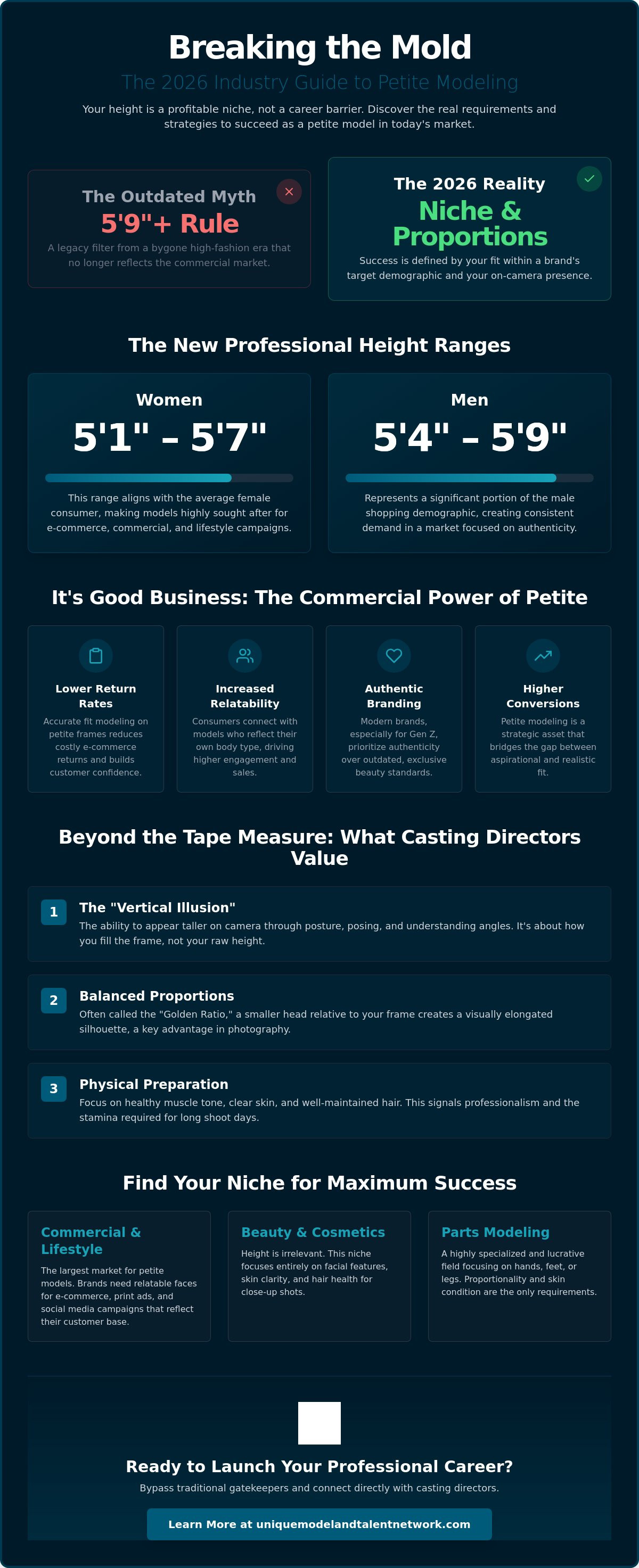
In 2026, the professional range for petite women is typically 5'1" to 5'7", while petite men find consistent work between 5'4" and 5'9". These aren't just random figures; they reflect the height of the average consumer. Proportionality often matters more than the raw height measurement. Casting directors look for a "vertical illusion," which is the ability of a model to appear taller through posture, camera angles, and limb extension. If you have long lines and a balanced frame, your height becomes secondary to your presence on screen. It's about how you fill the frame, not how many inches you stand from the floor.
Why Diversity in Height is a Business Trend, Not a Fad
This isn't about charity; it's about the bottom line. E-commerce brands are increasingly using petite models to reduce high return rates. When a shorter customer sees a dress on a 5'11" model, the fit is often misleading, leading to dissatisfaction and costly returns. Gen Z brands are leading this charge by explicitly rejecting traditional standards to build trust with their audience. They prioritize authenticity over the "perfect" runway silhouette. Petite modeling is a strategic asset for commercial conversion because it bridges the gap between aspirational imagery and realistic fit. By showcasing products on a variety of heights, brands create a more transparent shopping experience that boosts customer loyalty.
The Industry Standard: Height, Proportions, and Niche-Specific Criteria
Mastering petite model requirements involves moving beyond the tape measure to understand how your specific proportions fit into different market segments. While height is a starting point, casting directors prioritize the relationship between your head size and your overall height, often referred to as the "Golden Ratio." A smaller head relative to your frame creates the visual illusion of being taller, which is a significant advantage in e-commerce and catalog photography. This shift toward technical proportionality mirrors the Rise of Diverse Fashion Models, where brands value unique silhouettes that represent real consumers rather than a single, rigid prototype.
Your physical preparation should focus on muscle tone and skin health rather than a specific number on the scale; holistic facial sculpting from Face Up is an excellent way to maintain natural definition for high-resolution close-ups. Modern brands look for a "fit" physique that demonstrates stamina and vitality; long shoot days require significant physical endurance. For beauty and parts modeling, requirements become even more granular. Casting directors prioritize:
- Skin Clarity: A clear, even complexion with minimal blemishes for close-up beauty shots.
- Hair Health: Shiny, well-maintained hair that can withstand frequent styling.
- Hand Proportions: Long, slender fingers and healthy nail beds for jewelry and tech campaigns.
Commercial and Lifestyle Requirements
This is the most accessible path for talent under 5'8". The goal here is to embody the "girl next door" or a relatable professional. A height of 5'2" is often the sweet spot for catalog work because it represents the average consumer perfectly. Beyond physical stats, your most valuable asset is your range of facial expressions. You must be able to switch from a warm, approachable smile to a serious, corporate look in seconds. Casting directors value models who can tell a story with their eyes, making the product the hero of the shot.
Fit and Parts Modeling: The Hidden Petite Markets
Fit modeling is a lucrative, behind-the-scenes career where you act as a live mannequin for clothing manufacturers. It requires absolute precision in your measurements, as you are the template for an entire size run. Measurement consistency is the absolute priority for fit models because manufacturers rely on these precise dimensions to ensure a standardized fit across entire production lines. Parts modeling is another high-value niche where height is irrelevant. When you understand the specific petite model requirements for these technical niches, you realize that the industry is much wider than just the runway. If you have elegant hands or perfect skin, you can build a career modeling jewelry or luxury watches without ever worrying about the height requirement on a casting call.
The Business of Being Petite: Why Networking Trumps Traditional Height Barriers
Traditional agencies are built on filters. If your digital application lists a height under the 5'8" threshold, an algorithm often deletes it before a human sees your face. This "Gatekeeper Problem" is why so many talented individuals feel the industry is closed to them. Breaking through petite model requirements in 2026 demands a shift from passive application to active networking. You need to position yourself where the decision-makers actually look, rather than waiting for a machine to grant you permission to work. When you bypass the automated rejection loop, your talent and professionalism become your primary currency.
Direct-to-Casting networking acts as a career accelerator. It moves you from a database pile to a direct conversation with the people who sign checks. Utilizing professional modeling career coaching is essential here. A seasoned coach helps you identify whether your look is better suited for high-street commercial work or technical fit modeling. This clarity prevents you from chasing the wrong goals and ensures your outreach is targeted, professional, and effective. Understanding your niche allows you to speak the language of casting directors with confidence.
Bypassing the Agency Filter
The distinction between "representation" and "access" is critical for your success. Representation means an agency manages your career; access means you have a seat at the table where bookings happen. You don't need a mother agency to find casting directors who specialize in commercial and petite-friendly brands. Many boutique casting offices explicitly seek out talent who represent the average consumer height for lifestyle campaigns. A managed community provides far more security than public social media groups. Public groups are often unmoderated and rife with predatory scams. A private, gated network ensures that every opportunity is financially legitimate and vetted by industry experts before you ever see it.
The Power of a Managed Talent Community
An acting industry networking platform often provides the same high-level professional environment for models. These spaces allow you to build professional bonds with photographers who actually understand petite lighting and angles. They know how to elongate your frame through specific lens choices and positioning. Peer support within these communities helps you navigate the inevitable "no's" of the industry. When you share insights with others facing the same petite model requirements, you turn individual frustration into collective intelligence. This collaborative environment moves you away from the vanity of social media and toward a grounded sense of career security and community belonging.
Portfolio Essentials: How to Showcase a Petite Frame for Casting Directors
Your portfolio is more than a collection of aesthetic images; it's a strategic business tool designed to answer a casting director's questions before they even meet you. When you're working within petite model requirements, your photos must work harder to demonstrate proportionality and presence. High-resolution digitals, often called "polas," are the foundation of your professional package. These unfiltered, natural shots allow agents to see your raw bone structure and skin health without the distraction of heavy styling or strategic lighting. While stylized editorial shots show your creative range, your digitals prove you meet the technical standards of the industry.
The 2026 Comp Card remains your primary leave-behind, but it now requires specific data points to stay competitive. Beyond your height and basic measurements, including your social media handles is now standard, as many brands look for talent with established digital engagement. Ensure your card features a clear headshot on the front and a variety of looks on the back. If you want to ensure your presentation meets these elite standards, getting professional Portfolio & Reel Reviews is a critical step in your career development. This feedback allows you to identify gaps in your visual narrative and correct them before submitting to major calls.
The Essential Photo Set
Every professional petite portfolio needs three foundational images to be considered complete. First, a clean headshot is mandatory to showcase your skin clarity and facial symmetry. Second, a full-body "look" shot must demonstrate your ability to wear clothing proportionally, proving that your frame doesn't get lost in the fabric. Finally, a "personality" shot is essential for commercial bookings. This image should feel spontaneous and approachable, showing that you can embody the "relatable" quality that 2026 brands prioritize. These three photos tell a complete story of your professional capabilities.
Camera Angles and Wardrobe Choices
Strategic posing and wardrobe selection can significantly impact how your height is perceived on camera. Shooting from a slightly lower angle creates a "high fashion" illusion by elongating the legs and making the frame appear taller. When choosing your wardrobe for a shoot, monochromatic looks and high-waisted cuts are your best allies; they remove visual breaks in your silhouette and create a longer vertical line. Clean digitals are the most important part of a petite submission because they provide an unfiltered view of your proportions and skin health. Master the "walking" pose to add movement to your frame, or use a "seated" angle to focus on your facial range while minimizing height as a variable.
Strategic Career Growth: How Unique Model & Talent Network Supports Petite Talent
Navigating the technical side of petite model requirements is only half the battle. The other half is finding a professional infrastructure that values your potential enough to provide a clear path forward. The Network Membership serves as the definitive solution for talent seeking legitimate industry access without the noise of public platforms. It moves you away from the chaotic, often predatory nature of general social media and into a gated environment where career development is the primary focus. Here, you aren't just another profile; you're a professional in training.
Our Live Industry Workshops provide a rare opportunity to learn directly from guest photographers and casting directors who specialize in diverse talent. These sessions help you refine the vertical illusion and posing techniques discussed earlier, giving you real-time feedback from the people who actually make hiring decisions. If your current book isn't getting hits, our Portfolio & Reel Reviews can identify and fix specific height-limiting mistakes. Sometimes a simple change in lens choice or wardrobe can be the difference between a rejection and a booking.
The industry is unfortunately rife with pay-to-play schemes and predatory scams that target emerging talent. We position ourselves as a protective mentor, vetting every opportunity and expert to ensure financial legitimacy. We believe that your career security is just as important as your portfolio quality. By emphasizing high standards and professional bonds, we help you build a career that is both sustainable and respected.
Direct Access to Decision-Makers
Our Industry Expert Q&A Sessions remove the mystery surrounding 2026 petite model requirements by allowing you to ask questions directly to those in the room. You'll gain internal perspectives on what brands are looking for right now, not what they wanted five years ago. To keep your skills sharp and your portfolio current, our Monthly Skill-Building Challenges push you to experiment with new styles and niches. This consistent activity makes you significantly more attractive to casting directors who value talent that is disciplined, organized, and proactive—especially when you use tools like SafeKeep to manage your professional documents and admin in one secure hub.
Your Next Steps to Professional Recognition
The journey from an aspiring enthusiast to a vetted professional requires more than just a headshot. It requires a strategic community that advocates for your growth and protects your professional experience. By joining our early adopter group, you gain access to exclusive 2026 networking opportunities that aren't available to the general public. This is your chance to take shared ownership of your career and join a prestige network of like-minded professionals. Join the Unique Model & Talent Network and start booking the work you deserve.
Master Your Professional Future in the Modeling Industry
Success in 2026 is defined by technical skill and strategic networking rather than outdated height filters. You now understand that meeting petite model requirements is about showcasing proportionality and targeting specific niches like commercial or fit modeling. By focusing on clean, professional digitals and building direct relationships with casting directors, you bypass the automated rejection loops that hold others back. Your height isn't a limitation; it's a specialized asset in a market that craves authenticity and relatability.
If you're serious about your craft, it's time to transition from an aspiring talent to a vetted professional. Our community offers access to live industry workshops with casting directors and professional portfolio reviews by industry experts to ensure your book meets elite standards. You'll gain a private, scam-free networking environment where your career security is a top priority. Secure your spot in our professional talent community and get noticed today. The door is open for those ready to do the work. Your talent deserves a stage that values your unique frame.
Frequently Asked Questions
How short can you be to be a petite model?
The standard height range for petite female models is typically 5'1" to 5'7", while petite male models generally stand between 5'4" and 5'9". These petite model requirements are established to reflect the average consumer's proportions for commercial and e-commerce work. If you fall below these ranges, you may still find success in specialized niches like parts modeling or specific beauty campaigns where height is not a primary factor.
What are the typical weight requirements for petite models in 2026?
The industry has shifted away from specific weight targets toward a focus on "fit" and "proportionality." Brands in 2026 prioritize a healthy, toned physique that demonstrates physical stamina for long shoot days. Instead of chasing a number on a scale, you should focus on maintaining consistent measurements that align with standard sample sizes for clothing manufacturers, especially if you're targeting fit modeling opportunities.
Can petite models walk the runway at major fashion weeks?
While high-fashion editorial runway shows often maintain a strict 5'8" minimum for women, petite models frequently walk in commercial runway shows and brand activations. Many Gen Z focused brands and inclusive designers now explicitly cast shorter models to better represent their audience. Your success on the runway depends heavily on your walk, presence, and the specific aesthetic of the designer's collection.
Do I need a professional modeling agency to be a petite model?
You don't need a traditional mother agency to build a legitimate career in the current market. Many petite models succeed as freelancers by utilizing direct-to-casting networking and professional talent communities. These platforms provide the access you need to secure bookings without the gatekeeping often found in major agencies that prioritize high-fashion height standards.
What is the difference between a petite model and a commercial model?
Petite refers to a specific height category, whereas commercial refers to the type of modeling work you perform. Most petite talent works within the commercial niche, which includes advertisements for catalogs, magazines, and digital campaigns. A commercial model can be any height, but a petite model must specifically meet the 5'7" or under height standard for women.
Are there age requirements for petite modeling?
There are no upper age limits for petite modeling, as brands actively seek diversity in age to reach different consumer demographics. While youth is often prioritized in high fashion, the commercial and lifestyle markets have a high demand for talent in their 20s, 30s, 40s, and beyond. If you have a professional look and the right proportions, you can find work at any stage of your life.
How do I avoid petite modeling scams online?
Legitimate agencies and networks operate on a commission basis and won't ask for large upfront fees for "training" or "guaranteed bookings." Always research the financial legitimacy of any opportunity and be wary of anyone who pressures you to pay for expensive photography packages before you've seen a contract. Joining a vetted, gated community can provide a protective layer against these predatory schemes.
How much does a petite model typically earn per shoot?
Freelance petite models typically earn between $50 and $150 per hour, with day rates ranging from $400 to $1,200 depending on the project. If you're booked through an agency for a standard e-commerce shoot, day rates can range from $800 to $1,500. High-level campaigns or editorial work can command significantly more, sometimes reaching $2,000 to $5,000 per day plus usage rights fees.


