
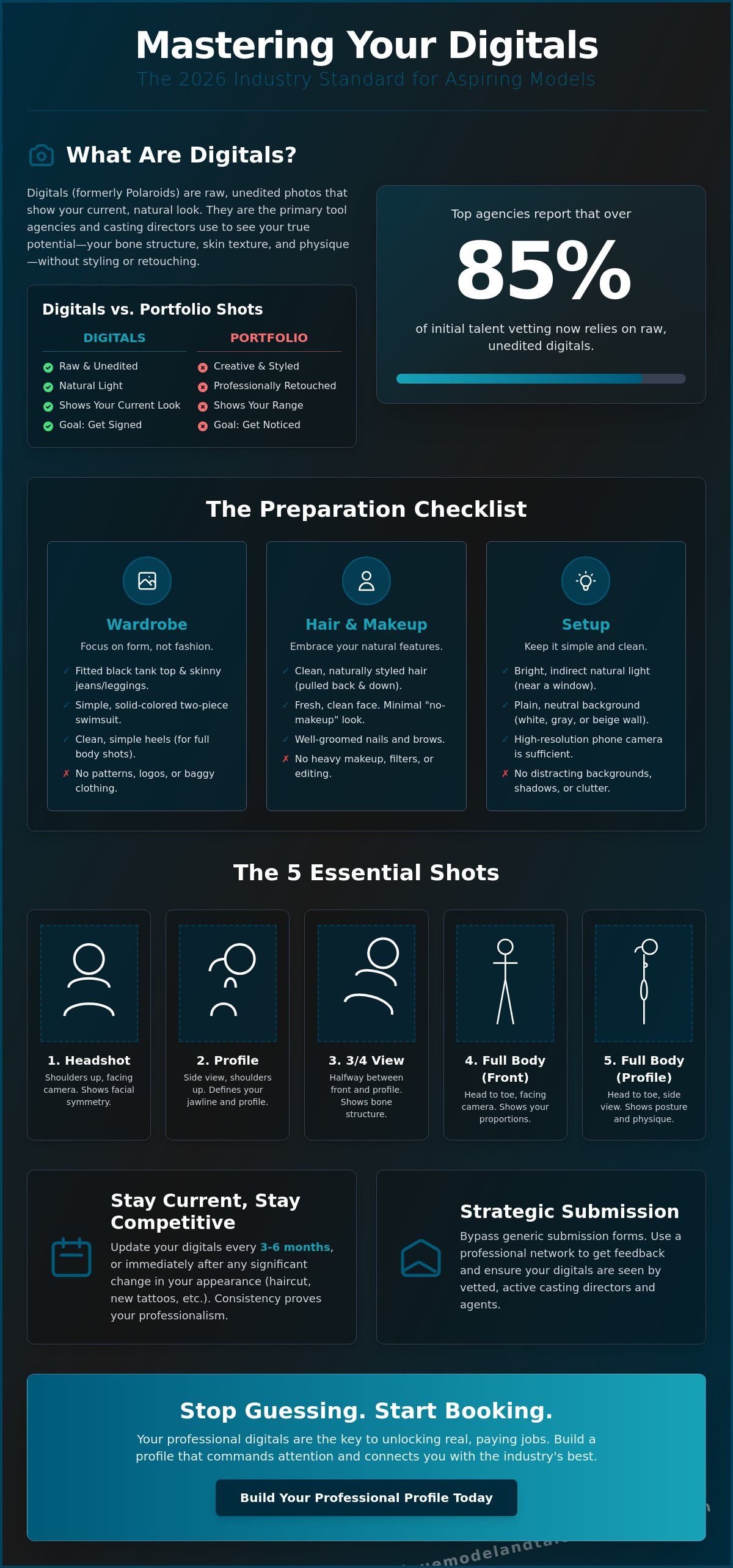
Top modeling agencies in 2026 report that over 85% of their initial talent vetting now relies on raw, unedited imagery rather than polished portfolios. If you’re an aspiring model, you’ve likely asked yourself: what are digitals and why do they matter more than my professional headshots? It’s completely normal to feel a sense of dread at the thought of submitting photos without the comfort of filters or high-end retouching. You want to be seen for your true potential, but the fear of looking "bad" or not knowing how to stand can make the submission process feel like a total gamble.
We are here to help you stop guessing and start booking by mastering the industry standard for these essential snapshots. This guide provides the practical guidance you need to capture professional-grade digitals that command the attention of top casting directors. You will learn the specific lighting setups, clothing choices, and essential poses that reveal your natural beauty without the noise of social media trends. By the end of this article, you’ll have a clear roadmap to creating a submission-ready package that proves you belong in the professional circuit and are ready for real, paying jobs.
Key Takeaways
- Stop guessing about industry standards by learning exactly what are digitals and why top agencies prioritize these raw, unedited images over retouched portfolio shots.
- Master the professional "no-makeup" look and wardrobe essentials to ensure your bone structure and natural features remain the focal point of your submission.
- Identify the five essential angles required by casting directors, including the symmetry-focused headshot and the defining profile view.
- Maintain your competitive edge by implementing the "Look Change" rule and following the professional benchmark for updating your images every 3–6 months.
- Accelerate your career by learning how to bypass "black hole" public forms and leverage professional feedback to get your look noticed without the noise.
What Are Digitals? Defining the Industry's Most Important Photos
If you're serious about building a career in fashion or commercial work, you must understand exactly what are digitals and why they carry more weight than your expensive professional portfolio. Digitals, formerly called Polaroids, are unedited, natural photos that show your current look without the "noise" of heavy styling. While the industry once relied on physical instant film, the 2026 digital submission standard requires high-resolution files that provide a transparent view of your features. Agencies demand these raw images because they need to see your bone structure, skin texture, and hair length exactly as they appear today.
Casting directors use these photos to see potential beyond the retouching. They're looking for a foundation. If a brand is hiring for a major campaign, they need to know you can be transformed into their specific vision. Digitals are the first thing a casting director looks at before they ever click on your professional book. They serve as the primary vetting tool for real, paying jobs, ensuring that the person who arrives on set matches the person in the submission.
Digitals vs. Professional Portfolios: Knowing the Difference
Your portfolio is a showcase of your range and acting ability as a model. It highlights how you move and how you interpret a photographer's creative direction. In contrast, digitals show your current reality. You should never submit "glamour shots" or highly stylized images as digitals. This is a red flag for top-tier agencies because it suggests you're hiding your true appearance. A professional portfolio gets you noticed, but your digitals get you signed. They provide the clarity needed to move you through the initial vetting process without the distractions of professional lighting or makeup.
Why 'Natural' is the Only Requirement That Matters
The psychology of a casting director is centered on finding a "blank canvas." They want to see how you fit into a brand's specific world. When you use filters or editing software, you're actually hurting your chances of getting signed. In the 2026 modeling market, authenticity is a massive competitive advantage. Brands are moving away from the over-processed look of previous decades and toward talent who offer a genuine, relatable aesthetic.
- Stop guessing what an agent wants by being your most authentic self.
- Avoid all filters, as they signal a lack of professional confidence.
- Focus on clean skin, simple clothing, and natural lighting.
When you provide honest, high-quality digitals, you position yourself as a professional who understands the business. It shows you're ready for vetted opportunities and helps you stand out in a crowded market. This transparency builds trust with agencies and sets the stage for a legitimate career development path.
Preparing for Your Digitals: Wardrobe, Hair, and Skin Prep
Agencies use these photos to see the real you, without the noise of professional retouching. If you want to land real, paying jobs, you've got to present a blank canvas that serves as a foundation for their creative vision. Understanding what are digitals in a professional context means recognizing that scouts aren't looking for a finished editorial product; they're looking for raw potential. You're providing a clear, honest representation of your current look so they can stop guessing how you'll appear on set.
The Model's Uniform: What to Wear for Maximum Impact
The industry gold standard remains focused on simplicity. A 2025 survey of top-tier casting directors found that 88% prefer seeing talent in simple black or white basics over trendy outfits. This "clean" aesthetic allows scouts to focus on your frame and bone structure rather than your fashion sense. If you're ready to move beyond the noise and connect with vetted industry professionals, you can start building your professional profile today to see how these standards apply to active casting calls.
- Fitted Basics: Choose a simple black tank top and skinny jeans or leggings. These garments should hug your body without being restrictive, clearly showing your proportions.
- Swimwear Requirements: Many agencies require a simple, solid-colored bikini or swim trunks. Avoid loud patterns, ruffles, or distracting hardware that could pull focus from your physique.
- Footwear Logic: Women should wear a pair of simple 4-inch stilettos to elongate the legs and improve posture. Men should opt for clean, minimalist sneakers or go barefoot, depending on agency specificities.
Skin and Hair: The 48-Hour Preparation Window
Your preparation starts well before you pick up the camera. Results from a 2024 skincare study suggest that increasing water intake to 3 liters daily during the 48 hours before a shoot can reduce visible skin puffiness by up to 15%. This natural glow is the core of what are digitals; it's about being the best version of your natural self.
- The No-Makeup Rule: Avoid foundation, heavy concealer, or contouring. If you must use something, a light tinted moisturizer is the limit. Agencies prefer seeing a real blemish or freckles over a face that looks blurred or filtered.
- Hair Versatility: You need to show the agency exactly what they have to work with. Take half of your shots with your hair down to show length and texture. For the remaining shots, pull it back into a tight, clean ponytail to reveal your jawline, ears, and neck.
- Lighting and Environment: Find a plain white or light grey wall near a large window. Shoot between 10:00 AM and 2:00 PM when natural light is most consistent. Avoid using a flash, as it can create harsh shadows that distort your facial features.
Consistency in your preparation ensures that your digital portfolio remains a reliable tool for scouts. When you provide a curated, professional look, you demonstrate that you're disciplined and ready for the demands of the industry. This level of detail helps you stand out in a crowded market where many aspiring models are still guessing at the requirements.
The Essential Shot List: Mastering the 5 Key Angles
Agencies in 2026 don't have time for guesswork. When you understand what are digitals, you realize they aren't just photos; they are a standardized visual resume. To stop guessing and start booking, you must provide these five specific angles with absolute clarity.
- The Close-Up (Headshot): This frame is about your raw potential. Focus on direct eye contact and keep your face relaxed to highlight natural symmetry. Avoid heavy makeup or hair covering your face.
- The Profile Shot: Turn 90 degrees to either side. This angle is designed to show your bone structure, jawline, and the clean lines of your neck. If you have long hair, pull it back for this shot.
- The Waist-Up (Medium): This shot captures your torso proportions. It bridges the gap between your face and your full physique. Keep your arms relaxed at your sides or slightly behind your back.
- The Full-Length: This is the most critical frame for demonstrating height and limb length. Stand with your feet slightly apart and arms down. It allows scouts to see your overall physique and how you carry your frame.
- The 2026 Addition (Motion Digitals): Static images are no longer the ceiling. Top-tier agencies now require 10 to 15 second video clips. This movement helps casting directors see your grace and energy in a raw, unedited format.
Posing for Digitals: The Art of Doing Nothing
If you try to "model" during your digital session, you're doing it wrong. Professional scouts want to see the canvas, not the art. Use a neutral expression for your main shots to show your range. A soft smile is acceptable for a secondary headshot to show personality, but never force it. Keep your weight distributed evenly on both feet. If you lean too heavily on one hip, you distort your natural proportions and look like an amateur. Common mistakes include over-arching the back or "fashion posing" with hands on hips, which obscures your actual body shape.
Capturing Motion Digitals and Personality Clips
A 2025 industry report indicated that 92 percent of major casting directors now prioritize talent who include video. Start with a 10-second "Slate" where you look directly at the camera, state your name, height, and location. This helps the team hear your voice and see your confidence. Follow this by walking toward the camera and turning. This simple movement helps industry pros stop guessing about your energy and presence. Video digitals prove you can move with grace without the help of professional lighting or editing, making you a "vetted" choice for real, paying jobs.
Strategy and Technicals: When to Update and How to Submit
Understanding what are digitals is only half the battle; knowing when to refresh them is what keeps you bookable. In 2026, casting directors filter through thousands of digital submissions daily. If your hair is currently blonde but your digitals show brunette, you've wasted the agency's time and damaged your professional reputation. Consistency is your greatest asset in a fast-moving market.
Follow the "Look Change" rule. You must update your shots immediately after any physical shift. This includes new haircuts, color changes, or weight shifts of 10 pounds or more. Even if your look remains static, the professional benchmark is a refresh every 3 to 6 months. Fresh photos prove to scouts that you're active, disciplined, and ready to work. It eliminates the guesswork for the person hiring you.
Naming Your Files Like a Pro
Professionalism extends to your file hygiene. A file named "IMG_5542" is invisible in a crowded inbox. If a casting director saves your photo to their desktop and can't find your name 10 minutes later, you've lost the job. Use a clear labeling system to ensure you stay in the database long after the initial email is opened.
- The Format: Use the "Name_Height_Agency" structure for every file.
- Clarity: Labels like "Front_Profile" or "Full_Body" help agents navigate your range quickly.
- Standard Naming Convention: The professional standard for file labeling is: FirstName_LastName_Height_Agency_ShotType.jpg.
The Technical Setup: DIY vs. Professional Studio
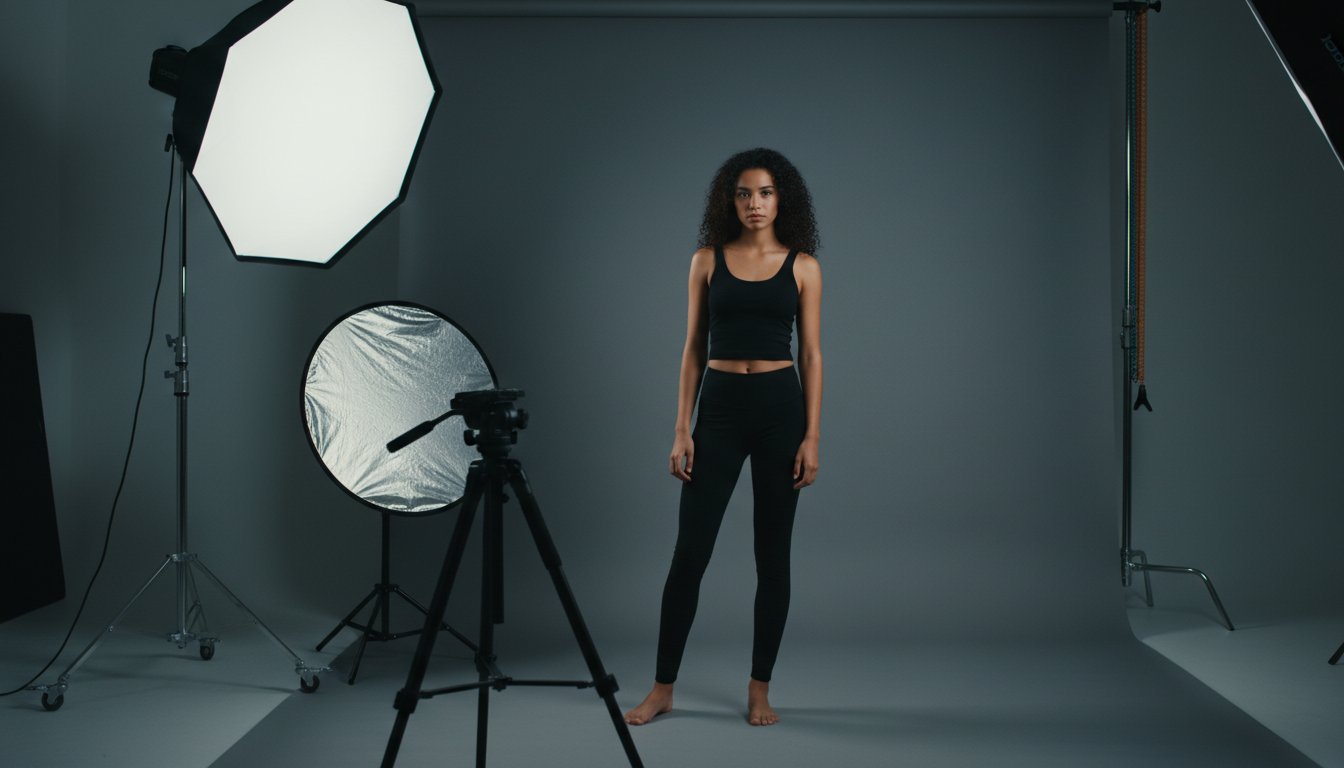
You don't need a high-end studio to produce winning shots. Modern smartphones are more than capable of capturing the "vetted" look agencies crave. Use Portrait mode to create a soft depth of field, but ensure the focus remains sharp on your eyes. Set your phone on a tripod at chest height to avoid distorting your proportions. Shooting from a high or low angle changes your perceived height, which leads to issues on set.
Lighting is the most critical element of your setup. Avoid "Golden Hour" for digitals. While it looks beautiful for social media, the orange tint masks your true skin tone. Use north-facing windows between 10:00 AM and 2:00 PM for even, neutral light. If you're still struggling to get the right look, a professional portfolio review for actors provides the expert feedback needed to stop guessing and start booking.
Keep your file sizes between 1MB and 3MB. Agency portals in 2026 often have strict upload limits. High-resolution images that are too large may crash the system, while low-resolution shots look amateur. Aim for 2000 pixels on the long edge for the perfect balance of clarity and speed. When you submit clean, correctly sized, and properly named files, you signal that you're a pro who understands the business.
Stop sending your materials into the void. Join the Unique Model & Talent Network to get your work seen by vetted industry professionals today.
Beyond the Photos: Using Digitals to Accelerate Your Career
If you want to move past the amateur phase, you've got to treat your photos as a business asset. Understanding what are digitals is only the first step; the second is knowing how to use them to bypass the industry "black hole." Most aspiring talent lose months waiting for responses from generic agency submission forms that 85% of agents rarely check. You can avoid this noise by utilizing a vetted network where your materials reach a human desk instead of a filtered inbox.
A second pair of eyes is vital before you hit "send" on any application. Community feedback helps you identify if your lighting is too harsh or if your posing feels forced. Transitioning from raw images to professional modeling career coaching allows you to refine your brand and align your look with current 2026 market demands. This strategic approach turns a simple photo set into a high-conversion portfolio that leads to real, paying jobs.
The Networking Advantage: Getting Your Digitals Seen
Hosting your digital package on a dedicated acting industry networking platform gives you a significant edge over those relying on social media. Data from 2025 talent surveys suggests that 92% of casting directors prefer curated platforms because they provide immediate, organized access to height, measurements, and location. This direct access removes the friction between you and the decision-makers. Adopting a "Founding Member" mindset means taking full ownership of your professional presentation. You aren't just waiting to be discovered; you're positioning yourself in a streamlined hub where professionals already gather to find vetted talent.
Turning Feedback Into Bookings
Rejection is often just redirected data. If an agency passes on your current look, use that feedback to pivot. Many models find that participating in acting workshops online helps them improve their "camera presence" for video digitals, which are now required for 75% of commercial castings. These workshops teach you how to maintain a natural energy that static photos can't capture. Your digitals should be an evolving document of your growth. As you refine your skills and update your look, your digital package stays fresh, ensuring you're always ready for the next "real, paying job" that comes your way. Stop guessing about your progress and start using these tools to build a legitimate, sustainable career.
Take Control of Your Professional Image
If you're serious about landing real, paying jobs in 2026, you can't afford to get the basics wrong. Understanding what are digitals is your first step toward industry legitimacy, but consistent execution is what keeps you booked. You now have the blueprint for the 5 essential angles and the wardrobe standards required to stand out to top-tier agencies. Remember that professional standards move fast; updating your photos every 3 to 6 months ensures casting directors see the most accurate version of your brand. Don't let your career stall because of unpolished submissions or outdated shots.
Success in this industry requires more than just a good photo; it requires a curated strategy and a protective community that filters out the noise. You don't have to navigate these technical requirements alone. Stop guessing and get your digitals reviewed by experts. Join The Network Membership today! You'll gain immediate access to live portfolio reviews by casting directors, a private community of vetted industry experts, and monthly skill-building challenges designed to refine your look. Your path to a legitimate career starts with the right guidance. We're ready to help you accelerate your growth and get really seen by the people who matter.
Frequently Asked Questions
Can I take modeling digitals on my own with a smartphone?
You can absolutely take high quality photos if you are wondering what are digitals and how to produce them using a modern smartphone. If you own a device like an iPhone 15 or Samsung S24, the camera resolution is more than enough for agency submissions. Set up a tripod against a plain white wall between 10:00 AM and 2:00 PM for optimal natural light. This DIY approach allows you to stop guessing about your lighting and focus on your angles.
Do I really have to wear no makeup for digitals?
Agencies require a completely clean face to see your natural skin texture and bone structure. If you feel you must wear something, limit it to a light moisturizer or clear lip balm. Avoid foundation, mascara, or concealer. Booking agents at top firms like IMG or Elite look for your raw potential, not your makeup skills. Showing your true self establishes the professional trust needed for real, paying jobs.
What should I wear if I don't have a black swimsuit?
If you don't own a black swimsuit, wear form-fitting basics like black leggings and a simple black tank top. The goal is to show your body proportions clearly to scouts. Avoid baggy clothes or busy patterns that distract from your physique. Stick to solid neutral colors like black, navy, or charcoal gray to maintain a professional standard. This streamlined look ensures your silhouette is the primary focus of every shot.
How often should I update my modeling digitals?
You should update your modeling digitals every 3 to 6 months to ensure your portfolio remains current. If you change your hair color, get a new tattoo, or lose 5 pounds, you need new photos immediately. Casting directors rely on these images to see exactly how you look today. Keeping your look updated helps you stop guessing and ensures you are ready for vetted casting calls at any moment without delay.
What is the difference between digitals and a comp card?
Digitals are raw, unedited photos used to show your natural appearance, while a comp card is a curated marketing tool. A standard 5.5 by 8.5 inch comp card features your best professional editorial shots and your physical statistics. While digitals answer the question what are digitals by providing a baseline, the comp card sells your range as a versatile performer. Both are essential for navigating the industry without the noise of social media.
Should I smile in my modeling digitals?
You must include at least one shot where you show a natural, friendly smile with teeth. Most agencies require a specific set of 5 to 7 photos, including a straight-on headshot, profiles, and full-body angles. While a serious look is common for high fashion, showing your personality through a smile is vital for commercial casting calls. If you want to be seen as a versatile professional, include a range of expressions.
Can I edit my digitals if I have a temporary blemish?
You should never edit or retouch your digitals, even for a temporary blemish. If you have a breakout on the day of your shoot, leave it as is or wait 3 days for it to clear. Agencies value integrity and need to see your real skin texture. Using filters or Photoshop creates distrust and can lead to being sent home from a professional set. Stay authentic to accelerate your career and build meaningful relationships.
Do actors need digitals, or is it just for models?
Both actors and models need updated digitals for modern casting workflows. While actors primarily use headshots, casting directors for 2026 productions frequently request full-body digitals to check current proportions. Having these ready in your digital hub allows you to respond to vetted casting calls instantly without the noise of traditional social media. If you are serious about your craft, these raw images are your most important business tool for securing work.


