

Your first paid booking is more than a chance to perform. It’s a professional business engagement, and knowing how to prepare for your first paid gig starts with understanding exactly what you’ve agreed to do. It’s normal to feel excited and unsure at the same time, especially when call times, wardrobe, payment, and image usage are new to you.
A clear plan helps you arrive organized, focus on the work, and protect your professional interests. Before you commit, review the offer and clarify the assignment, compensation, usage terms, and required materials. Then prepare for the day, communicate professionally, and make time afterward to reflect on what you learned. This guide walks you through each step, from reviewing an opportunity to following up after the booking. Portfolio and reel reviews, workshops, and expert Q&A sessions can also support your development as you build experience, one professional opportunity at a time.
Key Takeaways
- A paid booking is a defined assignment with agreed work, timing, and compensation, not an audition or practice session.
- To learn how to prepare for your first paid gig, reread the brief, confirm logistics, organize required materials, and follow the production’s wardrobe and grooming instructions.
- Review written terms for the assignment, compensation, payment timing, and stated usage before you commit.
- On the day, follow call instructions, check in with the designated contact, and listen closely before making changes to the agreed work.
- After the booking, keep records, confirm next steps, reflect on what you learned, and choose one skill to strengthen.
Your First Paid Modeling or Acting Gig: What Changes When You Book
A first paid booking is a professional assignment, not simply another chance to be seen. You’ve been selected to do defined work at an agreed time, with compensation attached to the booking. That shift brings practical responsibilities: understand what the production expects, where to go, and whom to contact if plans change. You don’t need to know every production custom before your first day. You do need to know what you’ve agreed to do.
An audition or callback is part of the selection process. You may be asked to read a scene, try a look, or meet the team, while selection and payment for the final work are still undecided. A test or practice opportunity has its own terms, so don’t assume it’s a paid booking unless the compensation and assignment are clear. Processes differ by project. Acting involves a broad range of skills and often requires extensive training. Preparation for a booked role, though, starts with understanding that specific role, not mastering every production situation in advance.
What counts as a first paid gig?
A commercial shoot, print session, or acting role can each be a first paid gig when you’ve been booked for the work and the basic terms are established. The format may vary: one production might confirm details by email, while another may use a different process. Focus on the substance of the offer. Are you selected for a specific assignment, and do you understand the work, timing, and compensation?
Being invited to audition or called back doesn’t automatically mean you’ve been hired. A test shoot or practice session also shouldn’t be treated as paid work unless payment has been agreed. Distinguishing these stages helps you respond professionally and avoid making plans around an opportunity that hasn’t become a booking.
What should you know before accepting?
Before saying yes, get a clear picture of the assignment. Review the brief and make sure you can identify:
- Role and project: What are you being asked to model or perform, and for what kind of production?
- Date, location, and duration: When and where should you arrive, and how long is the work expected to take?
- Contact: Who is your primary production contact, and what’s the best way to reach them?
- Preparation: Do you need to learn lines, prepare a specific performance, bring materials, or follow wardrobe or grooming instructions?
Don’t rely on assumptions about what to wear or bring. Follow the production’s instructions. If a practical detail is unclear, ask a concise question before the day. That’s a professional step, not a sign of inexperience. Clear information helps you plan and arrive ready to focus, though it can’t determine how the project will turn out.
A prepared performer knows the assignment, expectations, and next steps before arrival. That’s the foundation of how to prepare for your first paid gig. You’re not expected to have handled every kind of set or shoot. You are expected to understand this booking and take responsibility for your part in it.
How to Prepare for Your First Paid Gig Before the Call Time
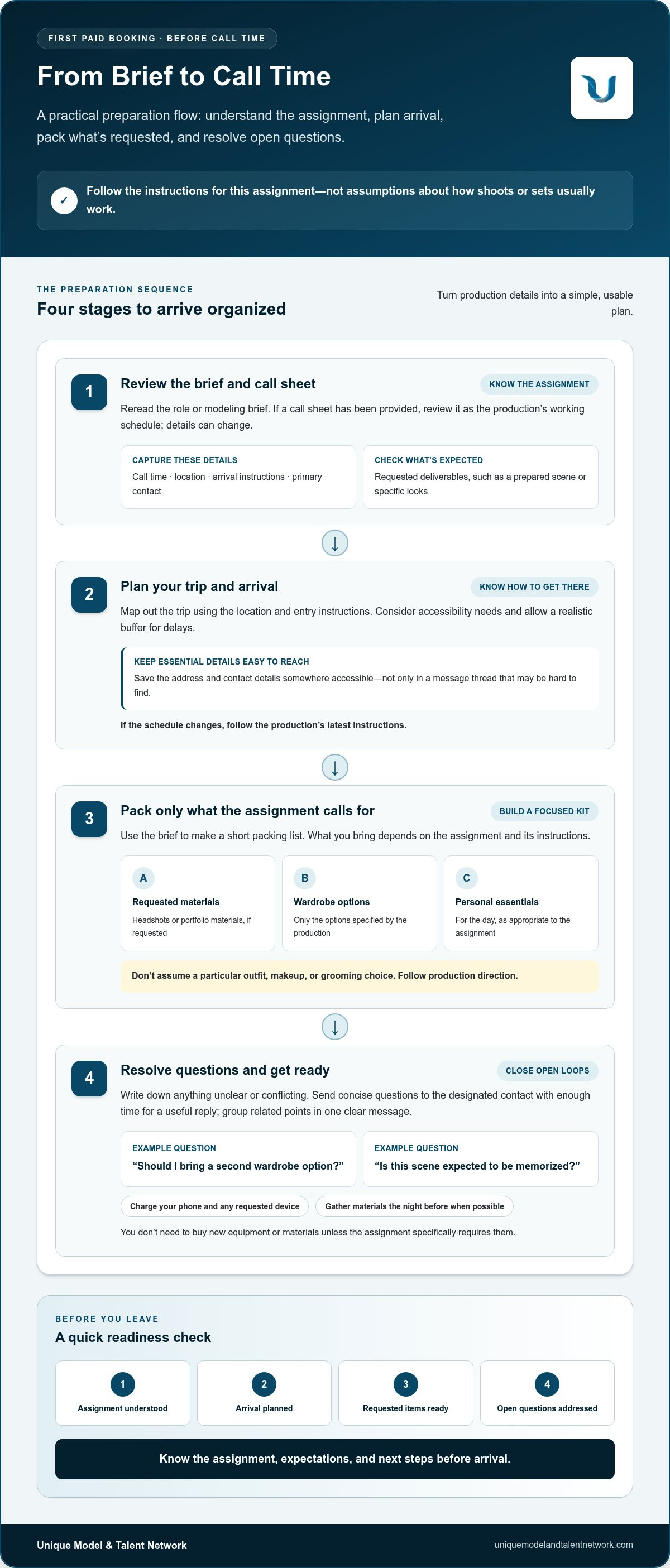
Preparation starts before you pack. A practical answer to how to prepare for your first paid gig is to turn the production information into a simple plan: know what you’re doing, where and when to be there, what to bring, and how to reach the right contact. Follow the instructions for this assignment rather than relying on assumptions about how shoots or sets usually work.
Turn the brief and call sheet into a plan
Reread the role or modeling brief, then review the call sheet if one has been provided. Treat it as the production’s working schedule, while remembering that details can change. Note the call time, location, arrival instructions, primary contact, and requested deliverables, such as a prepared scene or specific looks.
Next, map out your trip. Check transportation and the location’s entry instructions, consider accessibility needs, and allow a realistic buffer for delays. Save the address and contact details somewhere easy to reach, not only in a message thread you might struggle to find. If the schedule changes, follow the production’s latest instructions.
Pack only what the assignment calls for
Use the brief to build a short packing list. Depending on the assignment, that could include requested headshots or portfolio materials, specified wardrobe options, and personal essentials for the day. Don’t assume the production wants a particular outfit, makeup, or grooming choice. Follow its direction. If an instruction is unclear or conflicts with another, add it to your question list.
Charge your phone and any other requested device. Keep directions, production contacts, and key details accessible, and gather your materials the night before when possible. You don’t need to buy new equipment or materials unless the assignment specifically requires them. A focused kit is easier to manage than a bag packed for every scenario.
Before you finish preparing, write down unresolved questions and keep them concise. For example: “Should I bring a second wardrobe option?” or “Is this scene expected to be memorized?” Send questions to the designated contact with enough time for a useful reply, grouping related points into one clear message. This helps prevent last-minute confusion without burying the production team in unnecessary messages.
- Review: Recheck the brief, call time, location, contact, and deliverables.
- Plan: Confirm your route, arrival instructions, and travel buffer.
- Prepare: Pack requested materials and follow specific wardrobe or grooming direction.
- Clarify: Ask concise questions about details that affect your preparation.
Preparation also gets easier as you strengthen your craft and learn how to present your work. Explore professional workshops and portfolio support as resources for your next development step.
How to Check Payment, Usage, and Offer Legitimacy
A professional offer should give you enough information to understand what you’re agreeing to. Before accepting, look beyond the excitement of being selected: check the work, compensation, payment process, and any stated use of your image, voice, or performance. Clear terms help you make an informed decision. They don’t need to be complicated, but they should be specific enough that you can explain the agreement in your own words.
Questions to resolve before you accept
Ask for the key details in writing, whether they’re in an offer email, booking document, or contract. Confirm the expected work, schedule, location, compensation, and how payment will be handled. For example, “paid for the shoot” leaves important details open. A clearer agreement identifies the work and compensation, along with when and how payment is expected.
Usage matters, too. If your image, recording, or performance will be used, look for what the offer says about the context, such as a particular campaign or type of media. Note any stated limits on where or how long the material may be used. If the offer says “all media” or describes a buyout, make sure you understand what that means for this assignment before you agree. Rights and contract terms vary by project and location, so don’t treat a general example as a legal rule.
- Scope: What work are you being hired to do, and what deliverables are expected?
- Compensation: What is the agreed payment for the assignment?
- Payment process: When is payment expected, and are there steps you must complete, such as submitting an invoice?
- Usage: What use of your image, voice, or performance is described?
If an answer is missing, request clarification and keep the response with the offer documents. A written record helps prevent different assumptions about what was agreed. One practical test for how to prepare for your first paid gig is simple: before accepting, you should be able to explain the work, compensation, and agreed usage.
Warning signs that deserve a pause
Pause if the project identity is unclear, the requirements keep changing, or you’re pressured to decide immediately without time to review the terms. A legitimate opportunity should allow you to understand the assignment. Urgency alone doesn’t prove an offer is improper, but pressure should never replace clear information.
Be cautious about requests to pay upfront to secure a role or booking, especially when the reason and terms aren’t clearly explained. Protect sensitive personal or financial information, too. Share only what’s reasonably needed for the stated process, and don’t send highly sensitive details in response to an unexpected or vague request.
Save messages, documents, and any changes to the offer. If something still feels uncertain, pause and discuss it with a trusted person who understands professional agreements before committing. A careful review isn’t a lack of confidence. It’s part of treating your work and professional boundaries seriously.
What to Do on the Day of Your First Paid Gig
On the day, your job is to arrive ready to work with the people around you. Follow the production’s call instructions rather than assuming every photo shoot, commercial, or acting set runs the same way. Some assignments involve a quick check-in and short session; others may have several steps or schedule changes. Stay reachable, be attentive, and let the designated contact guide you through the process.
Arrive ready to work with the team
Use the stated arrival time and entrance, then introduce yourself to the production contact you were given. Keep requested materials organized so you can retrieve them without searching through your bag. Once you’ve checked in, pay attention to where you’re expected to wait and how the team will communicate with you.
Respect the schedule, and let your contact know promptly if an unexpected delay affects your arrival. Keep your phone accessible, but follow any instructions about silencing or putting it away during work. These small habits help the team coordinate and show that you take the booking seriously.
Take direction and manage nerves
Listen to the full direction before acting on it. If you’re unsure whether the photographer wants a different pose or the director wants a line delivered another way, ask one focused question. Confirm what you heard, then follow the direction. Don’t change the agreed work or add a new interpretation without checking first.
Nerves are normal. Before your first task, try a few steady breaths and remind yourself of the immediate next step, such as listening to the direction or finding your mark. You don’t have to feel completely calm to work professionally. Focus on one instruction at a time.
Schedules, setups, and creative choices can shift. A change in lighting, wardrobe, scene order, or shot list doesn’t automatically mean you did anything wrong. Stay flexible while keeping communication clear. If a change seems to alter the assignment you agreed to, pause and check with the appropriate contact instead of guessing. Calm questions help everyone stay aligned.
- Check in: Find the named contact and follow their instructions for getting started.
- Stay organized: Keep your requested materials and personal items easy to access.
- Listen first: Take in the full direction, then ask a concise question if something isn’t clear.
- Communicate changes: Speak up promptly about delays or uncertainties that affect the work.
That’s the day-of foundation for how to prepare for your first paid gig: be responsive, take direction, and clarify before making a change. If you want to build confidence with feedback and industry expectations, explore workshops with industry experts as part of your continued development.
After Your First Paid Gig: Follow Up and Build Your Next Step
The assignment may be finished, but a professional closeout helps you keep track of the work and carry useful lessons into your next opportunity. Don’t treat one booking as a verdict on your talent. Treat it as experience you can document, reflect on, and build from.
Close out the assignment professionally
Start by following any agreed process for paperwork, invoices, or requested deliverables. If the production has outlined a next step, such as submitting a form or waiting for a payment update, note it and take action at the appropriate time. A simple record can prevent confusion later, especially when you’re balancing several projects.
- Confirm next actions: Record any paperwork, deliverables, or follow-up steps you’re responsible for.
- Keep clear records: Note the project, date, agreed compensation, payment status, and usage details for personal reference.
- Send a brief thank-you: If appropriate, thank the relevant contact for the opportunity and their direction.
- Reflect and choose a focus: Write down what went well, what felt unfamiliar, and one skill to strengthen.
Keep a thank-you professional and low-pressure. A short message such as, “Thank you for having me on the project. I appreciated the opportunity to work with the team,” is enough. You don’t need to ask about future casting or prompt a response. Respecting the other person’s time is part of building good working relationships.
Turn the experience into career development
While the day is fresh in your mind, capture specific observations. Perhaps you followed direction confidently but want to improve your slate, or you felt prepared for the shoot but found transitions between setups unfamiliar. Choose one practical area to work on next rather than trying to fix everything at once.
Update your portfolio or reel only when you have permission to use the material and it’s appropriate for the project. A new booking doesn’t automatically mean the resulting images or footage are available for personal promotion. For ideas on organizing acting materials, use this acting portfolio guide as a reference, while following the permissions and terms that apply to your work.
Then match your learning goal to a useful resource. A portfolio review can help you assess how your materials present your current strengths; a workshop or expert Q&A can help you explore a specific craft or on-set question. The point of learning how to prepare for your first paid gig isn’t just to get through one booking. It’s to develop habits you can use again.
If continued learning and connection with peers and industry experts would support your next step, explore The Network Membership. Members can access a professional community and development resources, including workshops, portfolio and reel reviews, skill-building challenges, and expert Q&A sessions.
Build on Your First Booking
Your first paid assignment can be a starting point for a more deliberate career, not a measure of everything you’re capable of. Keep noticing what energizes you, where you want more practice, and which professional habits make you feel prepared. Then turn that insight into one manageable next step, whether it’s refining a portfolio, strengthening a specific skill, or learning more about the craft.
If you’re looking for continued direction, how to prepare for your first paid gig is only one part of your growth. A private community connecting emerging talent with industry experts can offer room to learn alongside others who take their development seriously. The Network Membership includes live workshops, portfolio and reel reviews, skill-building challenges, and expert Q&A sessions to support your learning and career development.
Explore The Network Membership and keep building your industry skills. Your first booking is one step, and the next can begin with the confidence and purpose you’ve earned.
Frequently Asked Questions
How do I know if my first acting or modeling gig is really paid?
Review the written offer for the agreed compensation, work scope, payment timing, and any conditions that affect payment. A confirmed booking identifies work you’ve been selected to do; an audition or callback may still be part of the selection process, with hiring and payment undecided. If the offer says only “paid opportunity” but leaves out how much or when payment is due, ask for clear terms before accepting. Practices and rules can vary by project and location.
What should I bring to my first paid modeling or acting job?
Use the project brief as your packing guide, not a generic industry checklist. Depending on the instructions, bring requested headshots or portfolio materials, specified wardrobe, and identification if requested. Have a charged phone, saved directions, and personal essentials such as water or any items you need during the day. Requirements vary by production, so don’t buy equipment or assemble a large kit unless the assignment calls for it.
How early should I arrive for my first paid gig?
Follow the stated call time and arrival instructions, then plan your trip with a reasonable buffer for the location and transportation. Check your route in advance, including the correct entrance or check-in point, since arriving at the address isn’t always the same as reaching the set. There’s no single arrival interval that fits every production. If a genuine delay comes up, notify the designated contact as soon as you can.
Can I ask questions before accepting a paid talent booking?
Yes. A concise question can prevent a misunderstanding about the role, schedule, location, compensation, payment process, wardrobe, or usage. Ask before committing if a detail could change your decision or preparation. For example, you might ask whether a wardrobe option is required or simply suggested. First reread the brief so you don’t ask for information already provided. Clear, focused communication is a useful part of how to prepare for your first paid gig.
What should I do if a casting or gig offer asks me to pay upfront?
Pause and review the request carefully, especially if it arrives with pressure to decide quickly, vague project details, or demands for sensitive information. An upfront payment request deserves clarification, but one detail alone doesn’t establish what an offer is. Save the messages and documents, avoid sending money or personal data while uncertain, and discuss the situation with someone you trust who understands professional work agreements.
What happens after my first paid modeling or acting gig?
Complete the agreed deliverables and paperwork, then keep a personal record of the project and payment status. A short thank-you may be appropriate, but you don’t need to ask for another booking. Note one lesson you can use next time, such as preparing materials more efficiently or practicing a particular skill. Only add project images or footage to a portfolio when the permission and terms allow it. Continued learning can help turn experience into steady professional development.


