

What if signing with an agent is the start of the work, not a signal that paid jobs will arrive right away? If you’re wondering what to do after signing with an agent, begin by building a clear, professional working relationship. A signed agreement is an exciting milestone, but representation doesn’t guarantee immediate auditions or bookings.
It’s normal to have questions about how often to check in, which materials your agent needs, and how quickly you should respond when an opportunity comes up. Clarifying expectations early can help you avoid guesswork and be ready when auditions do arrive.
This guide covers how to set communication expectations, organize your professional materials, share your availability, and prepare for auditions while continuing to develop your career. It also explains how education and peer connection can complement your agent relationship as you build a practical, sustainable career plan.
Key Takeaways
- Clarify what representation means under your agreement, and keep expectations realistic as your working relationship takes shape.
- Use an onboarding conversation to align on goals, contact preferences, submissions, auditions, and feedback.
- Keep your professional materials and availability current, and confirm which assets best fit your agent’s market.
- When deciding what to do after signing with an agent, focus on prepared updates and thoughtful questions rather than frequent, unstructured follow-ups.
- Set practical goals for your craft and career development. Workshops, reviews, and industry learning can complement representation.
What signing with an agent means, and what it does not guarantee
Signing a representation agreement can feel like a major step forward, but it may also raise questions: What happens next? How involved will your agent be? What should you expect first? The answers depend on your agreement and how you and your agent plan to work together. Start by understanding your specific arrangement rather than assuming every agent works the same way.
In plain language, representation means an agent may put you forward for opportunities that suit your profile and the terms of your agreement. A Talent agent can represent performers and help connect them with work, but the agent’s responsibilities and level of communication vary. Your agreement is the practical guide to what your agent handles and what remains your responsibility.
Representation is a working relationship built around opportunity and preparation, not a promise of employment. Your agent may present you for consideration, but you’re still responsible for keeping your materials current, responding professionally, and developing your skills.
What does an agent do for an actor or model?
An agent may submit you for auditions, castings, or other opportunities that appear to fit your experience, look, skills, and professional materials. They may also discuss which roles or projects suit your profile. How often you discuss these opportunities, how submissions are shared, and whether you receive feedback depend on the agent, your agreement, and the opportunity.
One agent may be in frequent contact with a client; another may reach out mainly when there’s a relevant submission or decision to discuss. Rather than comparing your experience with another performer’s, make sure you understand the communication and responsibilities you’ve agreed on.
Does signing with an agent mean work is guaranteed?
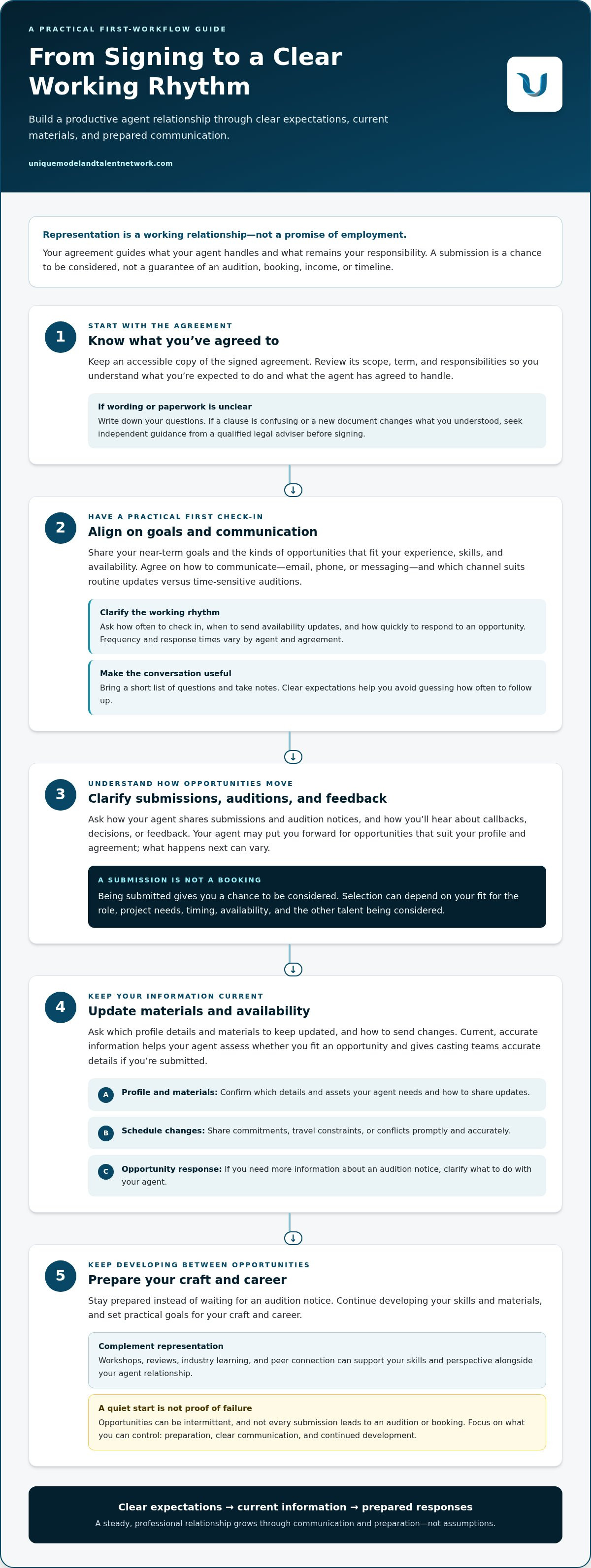
No. Signing doesn’t guarantee auditions, bookings, income, or a specific timeline. Being submitted gives you a chance to be considered, but it isn’t the same as being selected or hired. Outcomes can depend on your fit for a role, the project’s needs, timing, your availability, and the other talent being considered.
A quiet start doesn’t automatically mean your agent has lost interest or that you made the wrong decision. Opportunities can be intermittent, and not every submission leads to an audition or booking. Focus on what you can control: stay prepared, communicate clearly, and keep developing your craft and materials. If you’re deciding what to do after signing with an agent, treat representation as one part of your career plan, not a replacement for your own professional effort.
Your first conversations with a new agent: expectations, communication, and paperwork
Your first check-in doesn’t need to cover your entire career. Aim for a calm, practical conversation about how you’ll work together. Share your near-term goals and the kinds of opportunities that fit your experience, skills, and availability. Then ask how your agent prefers to communicate. Email, phone, and messaging may suit different situations, so agree on the right channel for routine updates and time-sensitive auditions.
Communication frequency and response times vary by agent and agreement. Ask how submissions are shared, how audition notices arrive, when to send availability updates, and whether feedback is typically provided. Clear expectations help you respond efficiently without guessing how often to check in.
Questions to clarify in your first check-in
Bring a short list of questions and take notes. For example, clarify:
- Which profile details and materials should you keep updated, and how should you send changes?
- How quickly should you respond to an audition notice or opportunity, and what should you do if you need more information?
- How should you share schedule changes, travel constraints, or a conflicting commitment?
- How will you hear about submissions, callbacks, decisions, or feedback?
These details matter when timing is tight. If you’re already committed to a class, work shift, or trip, a prompt, accurate availability update gives your agent useful information before they put you forward.
How to handle the representation agreement
Keep a complete copy of the signed agreement somewhere you can access it. Read it carefully and make sure you understand its stated scope, term, and responsibilities, including what you’re expected to do and what the agent has agreed to handle. Write down unclear wording or questions instead of relying on memory or assumptions.
If a clause is confusing or a new document changes what you understood, pause and seek independent guidance from a qualified legal adviser. Don’t treat general industry advice as a legal interpretation, and don’t assume a verbal conversation changes written terms. Take the time you need to understand additional paperwork before signing it, especially if you feel rushed.
Building your own reliable support system is also part of deciding what to do after signing with an agent. Alongside your agent relationship, industry workshops and peer learning can help you develop your skills and perspective.
Get audition-ready: keep your materials, skills, and availability current
Being represented doesn’t mean waiting for an audition notice before you prepare. A well-organized, current profile helps your agent assess whether you fit an opportunity and gives casting teams accurate information if you’re submitted. Current, accurate materials make it easier for your agent to assess your fit efficiently.
Keep your professional profile accurate
Review your materials with your agent’s guidance in mind. Different markets and opportunities may call for different assets, so confirm what to use and how to submit updates. Keep a clear, accessible set of current materials, such as:
- Photos: Recent images that reflect your present appearance, with styles suited to the market and roles you’re pursuing.
- Résumé or credits: Accurate credits, training, relevant skills, and experience. Update them as your work and qualifications change.
- Reel or clips: Footage that represents your current abilities and follows your agent’s preferences for length and format.
- Measurements and profile details: Current information relevant to modeling or specific casting requirements.
- Contact and location details: Correct phone, email, and location details, along with any changes that affect where or when you can work.
Keep an accurate calendar, too. Mark classes, travel, work commitments, and dates you’re unavailable. If something changes, send your agent a concise update through the agreed channel. Prompt, specific information helps them avoid putting you forward when you can’t attend or meet a project’s needs.
Prepare for auditions without waiting for a booking
For self-tapes, practice with a simple setup where practical: a quiet space, clear sound, steady lighting, and a neutral background. You don’t need to overcomplicate the process. Getting familiar with your recording setup can help you focus on the performance when a request arrives.
Read the audition sides and instructions closely. Note the deadline, file requirements, framing, and any direction about performance or reader. If something is unclear, ask your agent promptly rather than guessing. Respond to legitimate audition requests within the stated timeframe, and let your agent know quickly if a conflict or technical issue affects your ability to submit.
Afterward, treat the experience as practice as well as professional work. Review what you learned, apply useful feedback, and keep strengthening your craft. An audition is one opportunity, not a verdict on your ability or long-term potential. Staying ready helps you approach the next one with greater confidence.
How to build a productive agent relationship while avoiding common missteps
A productive relationship doesn’t require constant contact. It depends on clear, relevant communication and follow-through. Send useful updates when your availability or materials change, and ask focused questions when you need direction. Repeated messages without new information can make communication harder to organize. Reliability matters just as much: meet agreed deadlines, use the preferred channel, and tell your agent promptly if a commitment changes.
What to do when auditions or bookings are quiet
Silence can feel discouraging, but it doesn’t automatically mean rejection. If you’re unsure how things are progressing, follow the check-in cadence you and your agent agreed on. Keep your message brief and constructive: share a relevant update, ask whether your profile or target opportunities have changed, or confirm whether they need anything from you.
Use quieter periods to work on what you can control. Refresh your materials when appropriate, keep practicing, and pursue development that supports your goals. These steps can strengthen your readiness, but they can’t guarantee an audition, booking, or response. For continued craft development, explore this online acting workshop guide.
Recognize professional boundaries and warning signs
Be thoughtful about requests involving money, personal information, or unusual urgency. An optional service or purchase shouldn’t be presented as something you must buy to keep your representation. If you’re asked to pay a fee tied to representation, pause and review your agreement and the request carefully. Legitimate agents generally earn through commissions on work they secure, so an upfront payment request deserves particular scrutiny.
Not every unfamiliar request proves misconduct, but you’re entitled to understand what you’re being asked to do. Keep written records of important conversations and documents. If terms are unclear or a request concerns money or sensitive information, seek independent professional guidance before acting. Good judgment protects your interests without turning every uncertainty into a confrontation.
Career development can continue alongside your agent relationship. The Network Membership offers workshops, portfolio and reel reviews, skill-building challenges, and industry expert Q&A sessions to support learning and peer connection.
Keep growing beyond the signing: build skills, perspective, and a support network
Your agent relationship and your professional development have different roles. Representation may help connect you with suitable opportunities; ongoing learning helps you strengthen your craft, materials, and understanding of the industry. A practical answer to what to do after signing with an agent is to keep developing without expecting your agent to manage every part of your growth.
Start with goals you can act on, not outcomes you can’t control. Over the next month, choose one craft goal, one materials task, and one communication habit. For example, you might practice a specific on-camera skill, organize updated portfolio images, and send concise availability updates through the agreed channel. Fit those tasks around existing commitments and time you need to stay available for auditions.
Create a manageable 30-day career-development plan
Keep the plan realistic enough to follow. Schedule practice and preparation in your calendar, then review your progress at the end of the month. Ask what you completed, what felt useful, and what needs adjusting. Feedback from an agent, instructor, or review can help you refine your next steps. A plan should support steady progress, not become another source of pressure.
Use industry learning and peer connection intentionally
Choose learning resources that match your current goals. Use expert Q&A sessions to understand industry context and prepare focused questions. A portfolio or reel review can help you assess whether your materials support the work you’re pursuing. Live workshops and skill-building challenges offer structured ways to practice, while a peer community can connect you with others working toward professional goals.
Approach these resources as education and development, not as a route to representation or guaranteed work. For more on peer connection, read this acting industry networking platform guide.
Representation is one part of a sustainable career plan. Your craft, preparation, and industry perspective continue to grow alongside it. The Network Membership brings together workshops, expert Q&As, reviews, skill-building challenges, and peer connection to support that development.
Turn your new representation into steady professional growth
Signing with an agent is a meaningful step, but a strong career plan takes more than a signed agreement. Keep communication clear, your materials current, and your audition preparation consistent. If you’re deciding what to do after signing with an agent, focus on the steps you can control while allowing the working relationship to develop over time.
Representation and career development play complementary roles. Your agent may put you forward for suitable opportunities while you continue building your craft, industry knowledge, and professional support network. Live workshops and expert Q&A sessions can offer learning and perspective, while portfolio and reel reviews with industry professionals can help you assess your materials. A private, moderated community also creates space for peer connection.
Keep showing up prepared, curious, and professional. Progress doesn’t have to happen all at once. Choose a manageable next step, learn from the process, and adjust your plan as your experience grows. Explore the Unique Model & Talent Network for education and connection alongside representation. Your career is still yours to build, one thoughtful step at a time.
Frequently Asked Questions
What should I do immediately after signing with an agent?
Start by reviewing your agreement and arranging a practical check-in about goals, suitable opportunities, preferred contact methods, and how auditions will be communicated. Ask what materials or profile details your agent needs, then organize current photos, credits, reel footage, and availability information as relevant. If you’re wondering what to do after signing with an agent, focus first on clarity and preparation, not on expecting immediate auditions or bookings.
How often should I contact my agent after signing?
Follow the communication rhythm you and your agent agree on, since there’s no universal check-in schedule. Ask which channel they prefer for routine updates and how to respond to time-sensitive audition notices. Contact them when you have useful information, such as a change in availability, updated materials, or a focused question. If you haven’t agreed on a cadence, ask what works for them instead of sending frequent messages without a clear purpose.
Does signing with an agent guarantee auditions or acting work?
No. Representation doesn’t guarantee auditions, bookings, income, or a particular timeline. An agent may submit you for opportunities that fit your profile, but submission means consideration, not confirmed employment. Results can depend on factors such as project needs, timing, your availability, fit for the role, and other talent being considered. Keep preparing and developing your career, and don’t treat a quiet start as automatic proof that the relationship isn’t working.
Should I update my headshots and acting profile after signing?
Keep your profile accurate, but coordinate changes with your agent before replacing or adding materials. Ask which photos, résumé details, reel clips, skills, or other information suit your market and the opportunities they pursue. Update relevant details when your appearance, credits, training, contact information, or availability changes. Current materials help your agent assess your fit and submit an accurate profile. Avoid spending on new materials simply because you’ve signed unless there’s a clear professional reason.
What if my agent has not sent me auditions yet?
A period without audition notices doesn’t automatically mean your agent has rejected you or lost interest. Opportunities depend on timing, project needs, and how your profile fits current roles. Use the check-in cadence you agreed on, and keep your message constructive: share relevant updates or ask whether they need anything from you. In the meantime, maintain your skills and materials. These steps support your readiness, but they can’t guarantee a specific audition or response.
Should I pay for classes or services after signing with an agent?
Choose classes or professional services based on your goals and budget, not pressure to prove your commitment or keep your representation. Review your agreement and be cautious if someone says a purchase or upfront payment is required to remain represented. Ask for the request and its purpose in writing, and seek independent guidance if the terms are unclear. Training and career-development resources can be useful, but they’re separate from any promise of auditions or work.
Can I still develop my career independently after signing with an agent?
Yes. Agent representation and independent professional development can complement each other. You can continue building your craft, updating appropriate materials, learning about the industry, and connecting with peers while keeping your agent informed about relevant changes. Educational resources such as workshops, expert Q&A sessions, portfolio and reel reviews, and a moderated community can support learning and perspective. They don’t guarantee auditions, bookings, or employment.


