

The most polished image in your portfolio may not be the one that earns a casting director’s attention. Strong commercial headshot examples show more than a camera-ready face: they suggest a believable person who could connect with an audience and fit a specific role.
If you’re unsure whether to choose a warm smile, a relaxed expression, or a particular wardrobe and background, you’re not alone. A commercial look should feel approachable and authentic, while a theatrical headshot often signals dramatic range and a corporate portrait serves a different professional purpose. The goal isn’t to look generic or squeeze every possible type into one image. It’s to make your casting potential clear while still looking like yourself.
In this guide, you’ll explore commercial headshot examples by casting type, learn what each look can communicate, and compare commercial styles with theatrical and corporate portraits. You’ll also get a practical way to build a focused selection and assess whether your images create the impression you intend. Informed feedback can help you distinguish a headshot that simply looks polished from one that supports your professional presentation.
Key Takeaways
- Use commercial headshot examples to identify the casting impression created by expression, wardrobe, background, and framing.
- Match each image to roles you can credibly play instead of searching for one universally correct headshot style.
- Evaluate your selections for a genuine expression, clear presentation, and consistency with how you look in person.
- Build a focused portfolio by comparing images and deciding what each one adds to your casting range.
- Portfolio reviews, workshops, and expert Q&A can provide informed perspectives as you refine your portfolio plan.
Commercial Headshot Examples: What Casting Should Read at a Glance
A casting team scanning a headshot needs a clear first impression: who might this person credibly play, and would they feel at home in a commercial scene? The image should make that possibility easy to imagine without reducing the actor to a fixed “type.” Warmth, confidence, humor, or calm can come through in subtle choices while the face remains the focus. A headshot supports casting decisions; it can’t promise auditions, bookings, or a particular outcome.
A commercial headshot is an authentic, casting-focused portrait that presents an actor as approachable and credible for roles in advertising and other commercial productions.
That purpose shapes how the image works. It isn’t simply a flattering portrait or a showcase of styling. As The Wikipedia article on headshots outlines, headshots serve distinct purposes, including in entertainment. For actors, the useful question isn’t just whether an image looks polished, but what casting possibility it communicates at a glance.
How commercial headshots communicate casting potential
Expression, eye contact, and posture work together. A natural smile with direct eye contact might suggest ease in a customer-facing scene; a softer, thoughtful expression could suit a relatable, everyday moment. Relaxed shoulders and an unforced stance help the image feel like a person someone could meet, not a pose held for the camera.
Specificity comes from the whole impression, not a costume or exaggerated expression. A clean, casual look could fit a family-oriented ad, while a composed, energetic presence might feel plausible in a technology spot. These are possibilities, not labels. The strongest commercial headshot examples invite casting to imagine a role while still looking like the actor in real life.
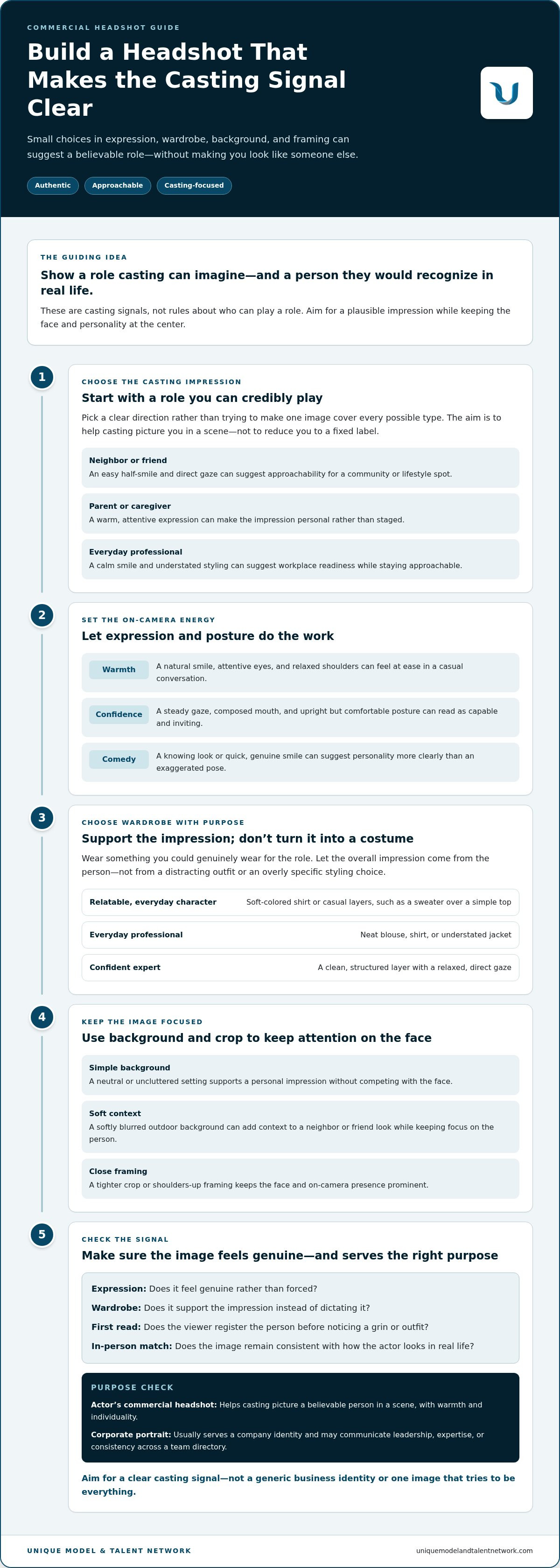
Check whether the expression feels genuine and whether the wardrobe supports, rather than dictates, the impression. If the viewer notices a forced grin or a distracting outfit before they register the person, the image may be sending the wrong signal.
Commercial actor headshots versus corporate portraits
A corporate portrait usually serves a company identity. It may communicate leadership, expertise, or consistency across a team directory. An actor’s commercial headshot has a different job: it helps casting picture the person in a scene, with enough warmth and individuality to suggest a believable character rather than simply a polished professional profile.
Wardrobe, expression, and framing can shift that reading. A tailored jacket and restrained smile may suit an executive portrait; a more relaxed shirt, open expression, and close framing may feel better suited to a commercial role. Neither approach is automatically better. Choose based on the image’s purpose and the roles the actor can credibly play.
Use corporate portraits as references for clarity and presentation, not as templates to copy. A professional finish matters, but an actor’s image should retain personality and feel connected to their on-camera presence. The aim is a clear casting signal, not a generic business identity.
Commercial Headshot Examples by Casting Type and On-Camera Energy
Think of these examples as casting signals, not rules about who can play which role. A parent in an ad might be any age or gender; a polished professional might have a quiet or expressive personal style. The aim is to make a plausible role easy to imagine while keeping the actor recognizable. Small choices in expression, clothing, background, and crop can shift the impression without turning the portrait into a costume.
Approachable neighbor, parent, and everyday professional looks
For a relatable, everyday character, aim for warmth rather than a fixed “friendly” stereotype. A natural smile, attentive eyes, and relaxed shoulders can suggest someone comfortable in a casual conversation. Choose wardrobe the actor could genuinely wear for the role. A simple background and close framing keep attention on the face.
- Neighbor or friend: A young adult in a soft-colored shirt, with an easy half-smile and direct gaze, could suggest someone approachable in a community or lifestyle spot. A softly blurred outdoor background adds context without competing with the face.
- Parent or caregiver: An actor of any age might use a warm, attentive expression with casual layers, such as a sweater over a simple top. A tighter crop and neutral setting can keep the impression personal, not staged.
- Everyday professional: A mature actor in a neat blouse, shirt, or understated jacket could convey readiness and approachability. A calm smile and softly lit, uncluttered background may suggest a workplace scene without reading like a company directory portrait.
Confident, comedic, and character-forward commercial looks
Confidence doesn’t require a stern face or formal styling. A steady gaze, composed mouth, and upright but comfortable posture can read as capable while remaining inviting. Comedy also benefits from restraint: a knowing look or a quick, genuine smile often suggests personality more clearly than an exaggerated pose. Let one distinctive detail guide the impression rather than overwhelm it.
- Confident expert: An actor with any personal style could wear a clean, structured layer and hold a relaxed, direct gaze. A simple background and shoulders-up framing keep the focus on assured presence, not status signals.
- Witty observer: A slight, amused expression, perhaps paired with an expressive eyebrow or head tilt, can hint at comic timing. Keep clothing familiar to the actor and the crop close enough to capture the subtle cue.
- Character-forward personality: Distinctive glasses, a textured shirt, or a signature hairstyle may add useful specificity if they’re part of the actor’s real presentation. A neutral background helps that detail register without making the portrait feel like a caricature.
Each example is a starting point, not a formula for casting success. Compare commercial headshot examples by asking what role each one makes plausible, then consider whether the impression still feels true to the actor. A portfolio review through the Unique Model & Talent Network can offer an outside perspective on whether your selected looks communicate the range you intend.
Commercial vs. Theatrical Headshot Examples: Choose the Right Signal
Commercial and theatrical headshots aren’t competing versions of a “correct” actor portrait. They’re different tools for different casting contexts. A commercial image often leans toward open, everyday energy; a theatrical image may suggest tension, complexity, or a more restrained presence. Neither style needs to erase your personality. Choose based on what the submission calls for and what the image communicates clearly.
Casting context matters more than category labels: choose the headshot that makes your most credible impression for the role in front of you.
What changes between commercial and theatrical examples?
The difference is often a shift in emphasis, not a strict set of visual rules. Commercial choices may feel brighter and more accessible, while theatrical choices can carry a quieter, more dramatic mood. Wardrobe and lighting support that distinction, but they shouldn’t become shorthand for a role or hide the actor’s authentic presence.
| Element | Commercial direction | Theatrical direction |
|---|---|---|
| Intended impression | Approachable, credible, and at ease in an everyday scenario | Layered, dramatic, or suggestive of a specific story world |
| Expression | Open or warm, with energy that feels conversational | More restrained, thoughtful, or emotionally charged |
| Wardrobe | Contemporary, familiar clothing that doesn’t distract | Simple pieces that support a mood without becoming a costume |
| Lighting | Often brighter and softer in feel | May use greater contrast or a moodier effect |
| Likely use | Advertising and other commercial submissions | Film, television, and stage submissions calling for dramatic range |
These are useful tendencies, not requirements. A warm expression can still carry complexity, and a theatrical portrait doesn’t need to look severe. In both styles, the actor should remain recognizable and the image should feel consistent with their real presence.
When one headshot can work across more than one category
Categories overlap. A natural, composed portrait might feel commercial because it’s inviting, yet also hint at a distinctive character through a thoughtful gaze or an unusual but authentic detail. The test isn’t whether the image fits neatly into one box. Ask whether it creates a clear, believable impression and whether that impression suits the role under consideration.
If you’re reviewing commercial headshot examples, compare each one with the actual submission context rather than choosing by label alone. A broadly appealing image may serve more than one purpose, but a role-specific option can make your intention easier to read when you have a choice. Identify what casting needs to see, then select the portrait that communicates it without overplaying the mood.
How to Evaluate Commercial Headshot Examples for Your Own Portfolio
Use a consistent review process instead of choosing the image you like best at first glance. A strong portfolio selection should make your casting direction legible, show a genuine version of you, and give each image a distinct purpose. Compare a small, intentional group rather than collecting several near-identical expressions or outfits.
- Define the roles you’re targeting. Name a few parts you could credibly play, such as a warm community volunteer, an assured consultant, or a quick-witted friend. These are working examples, not limits on your range. They give you a practical lens for judging what a headshot might communicate.
- Assess the first impression. Look at each image without reading its filename or hearing your explanation. What role or quality comes to mind? Does the expression feel relaxed and specific, or does it appear forced? Your image should reflect how you can present yourself on camera, not a character you can’t sustain.
- Review clarity and visual focus. Check whether your face and eyes draw attention first. A busy background, distracting accessory, dominant wardrobe detail, or heavy editing can pull focus from the impression you want to make. Notice whether the image still feels like you, including your current appearance.
- Compare the selections. Place your strongest options side by side. Keep images that communicate meaningfully different possibilities; remove duplicates that rely on nearly the same expression, framing, and styling. Each selected headshot should earn its place by adding a clear casting signal.
Check the image’s clarity, expression, and visual focus
Zoom out to the size at which a casting team might first see your profile, then look closely at the face. The eyes should remain clear, and the expression should read without effort. Next, check whether the background and styling support rather than compete with that expression. An authentic smile, thoughtful look, or composed gaze can be specific without being exaggerated.
Ask whether the portrait matches your real presentation. If friends or colleagues wouldn’t recognize the expression as yours, or retouching changes your features, reconsider it. The goal is a clear, current likeness, not an idealized version that creates a mismatch in person.
Match the headshot to the role and submission context
For each image, write down the roles it could credibly introduce. Then compare that impression with the casting brief or profile context. A relaxed portrait may fit a grounded everyday role; a more composed image may better support a capable professional. If the signal doesn’t match the submission, choose another image where possible.
For broader guidance on how images work within your materials, explore this acting portfolio guide. Portfolio reviews in the Unique Model & Talent Network offer another perspective on whether your images communicate the impression you intend.
Turn Commercial Headshot Examples into a Clearer Portfolio Plan
Reviewing images on your own can help you spot obvious differences, but it’s harder to judge whether a headshot communicates the impression you intend. An informed outside perspective can reveal what another viewer notices first, whether the image fits the roles you’re targeting, and whether several selections add distinct value. Bring a focused question, such as, “Does this look feel approachable and current, or more formal than I intend?” A specific question gives feedback a practical direction.
Use portfolio feedback to refine your headshot selection
A portfolio review can help you evaluate how your images work together, not just whether each one looks appealing in isolation. Ask a reviewer to describe the casting impression they get before you explain what you hoped to convey. If their read differs from your intention, you have useful information: perhaps the expression, styling, or overall selection needs another look. A professional portfolio review can also put headshot choices in the wider context of how you present your work.
To make the conversation productive, bring a small group of options and connect each to a role or submission context. Ask which image feels most specific, which one seems too similar to another, and whether the set represents a believable range. Feedback isn’t a verdict on your potential. It’s a way to make more deliberate portfolio decisions and keep developing your professional presentation.
Continue developing with industry guidance and peer support
Image selection is one part of a working actor’s ongoing development. Live industry workshops and expert Q&A sessions create opportunities to learn from industry professionals, while peer conversations can offer fresh perspectives on how your materials come across. In a private, moderated community, those discussions take place in a focused setting. For a broader look at building professional connections, explore this acting industry networking guide.
As you compare commercial headshot examples, keep a short note beside each image: the impression it creates, the roles it could introduce, and what you’d like a reviewer to assess. That record can help turn a folder of possibilities into a more purposeful portfolio plan. The Network’s membership includes portfolio and reel reviews, workshops, expert Q&A, and peer learning.
If you’d value a focused place to keep learning and connecting with industry peers, explore the Network community and its resources.
Make Your Next Portfolio Choice With Confidence
Your next step doesn’t have to be a complete portfolio overhaul. Choose one image you’re uncertain about and ask a focused question: does it communicate the role you have in mind, and does it still feel true to your on-camera presence? A clear answer can help you decide what to keep, refine, or develop next. Let commercial headshot examples inform your choices, but keep your own credible range at the center.
If you’d benefit from informed perspectives as you develop, the Unique Model & Talent Network connects talent with industry experts, including casting directors and photographers. Members can access portfolio and reel reviews, live workshops, skill-building challenges, and expert Q&A to support continued learning and professional connection.
Explore the Unique Model & Talent Network to find a supportive place to keep building your professional direction. Your next portfolio decision can be a thoughtful step forward.
Frequently Asked Questions
What is a commercial headshot?
A commercial headshot is an actor portrait designed to give casting professionals a useful, believable first impression for commercial roles. The strongest commercial headshot examples feel connected to the actor’s real presence rather than relying on a stock-photo smile. For instance, a calm, attentive expression may suit a grounded spokesperson role. Choose an image casting can recognize as you and that reflects roles you can authentically play; it can’t guarantee an audition or booking.
What is the difference between a commercial and theatrical headshot?
A commercial headshot often presents a relatable, everyday quality, while a theatrical headshot may suggest dramatic material or emotional complexity. These are broad tendencies, not fixed formulas. A role’s brief may call for an unexpected combination, such as warmth with an underlying edge. Review the intended use before choosing: consider the character, tone, and production context, then select the photo that best supports that specific submission.
Should I smile in a commercial headshot?
A smile can help, but you don’t need one in every commercial headshot. Choose an expression that feels natural for the roles you want to introduce. A relaxed, engaged look may feel more convincing than a wide grin that doesn’t reach your eyes. Try viewing the image at thumbnail size, as it might appear in a casting profile. If the expression still reads clearly and feels like you, it’s worth considering.
Can one headshot work for both commercial and theatrical submissions?
Sometimes one image can suit both, especially if it communicates a clear quality without leaning too heavily into one mood. Still, a photo that works broadly may not be the strongest choice for every role. Compare the headshot with the submission’s tone and character description. If you have alternatives, choose the image that fits the specific context best. Keep a versatile option available, but don’t assume it must represent your entire range.
What should I wear for a commercial headshot?
Wear something that feels like your real style and supports the impression you want to make. A simple top can work well if the casting signal should feel casual, while a structured layer may suit a role with a more polished context. Try options that differ in neckline, color, or formality, then compare how each affects the overall image. Avoid clothing that pulls attention from your face or makes you feel unlike yourself.
How often should I update my commercial headshot?
Update your headshot when it no longer looks like you or no longer reflects the roles you’re pursuing. A meaningful change in hairstyle, facial hair, or overall appearance may be a good reason to review it. You don’t need to replace a current, accurate photo just to keep your portfolio in constant motion. Compare it with your present-day appearance and ask someone who knows you whether they’d recognize you immediately.
Can I use a selfie as a commercial headshot?
A selfie can serve as a temporary reference, but check whether it’s clear and suitable for your casting profile before relying on it. A close camera angle can distort facial proportions, while uneven light may obscure details. Review the image on a different screen and at the size it will appear online. If the photo doesn’t look like you in person or feels more casual than your submission requires, choose a clearer alternative.


