

What if your next acting career move isn’t a move to Los Angeles at all? An acting career without moving to LA can take shape through local auditions, regional productions, self-tapes, and professional relationships built from where you live. It’s still fair to wonder how much meaningful work exists outside major hubs, whether remote auditions can lead anywhere, and whether staying put could slow your progress.
You don’t need to relocate before you have experience, a plan, or a clearer sense of which opportunities fit you. You do need a practical way to strengthen your craft, earn relevant credits, and connect with people in the industry. This guide explains how to make the most of your regional market, use online auditions and learning opportunities with purpose, and build relationships alongside in-person work. It also offers clear criteria for deciding whether a move makes sense for your career and when the timing may be right.
Key Takeaways
- An acting career without moving to LA is possible, but the opportunities you can pursue depend on your market, goals, and willingness to travel.
- Use self-tapes to audition remotely while building credits through local, in-person work.
- Compare your career goals, local opportunities, support system, travel needs, and readiness before deciding whether to relocate.
- Build momentum with a practical plan: research your market, train consistently, prepare audition materials, and track submissions.
- Use online workshops, reviews, and professional connections to complement your local practice, not replace it.
Can You Build an Acting Career Without Moving to LA?
Yes. Moving to Los Angeles isn’t a universal prerequisite for an acting career, but the opportunities available depend on your market and your goals. A performer pursuing local theater, commercials, independent film, or voice work may have different needs from someone seeking frequent in-person auditions and meetings in a major production center.
An acting career is built through more than a mailing address. It involves ongoing training, auditions, credits, and professional relationships. You can develop those elements across different locations and formats: train and perform locally, submit a self-tape for a project elsewhere, and build professional connections online or in person.
Career development means steadily building acting skills, audition experience, credits, and professional relationships. Relocation is a separate decision about where you live. The two can support each other, but one doesn’t automatically guarantee the other.
What does building an acting career from home actually mean?
It means treating your current location as a starting point for deliberate career-building, rather than assuming every opportunity must be nearby. Local productions can give you in-person experience, while remote submissions may let you be considered for projects in other markets. A self-tape can reduce travel for an initial audition, but callbacks or production may still require you to be in a particular place. Remote access creates possibilities, not guarantees of selection or employment.
The work still starts with the craft. Acting spans forms and techniques, as this overview of the art of acting illustrates. Choose training that develops skills relevant to your aims, then look for auditions and projects where you can apply them. Each experience can help you build confidence, learn how to prepare, and form relationships through professional collaboration.
Why do actors still consider moving to Los Angeles?
Proximity can make some parts of the business more accessible. Being in LA may make it easier to attend certain in-person auditions, training, production work, and industry gatherings, and to build relationships through repeated face-to-face contact. For actors whose goals depend on frequent access to those opportunities, location can be a practical advantage.
That advantage doesn’t make relocation essential for every performer. A move also changes your costs, support system, and daily routine, so weigh it against the work you’re actually pursuing. Ask whether your target roles require regular local presence, whether remote auditions are producing useful experience, and what you can build where you are. If your goals call for more consistent in-person access, relocation may become a considered career decision rather than a leap made without a plan.
How Self-Tapes and Regional Markets Expand Acting Opportunities
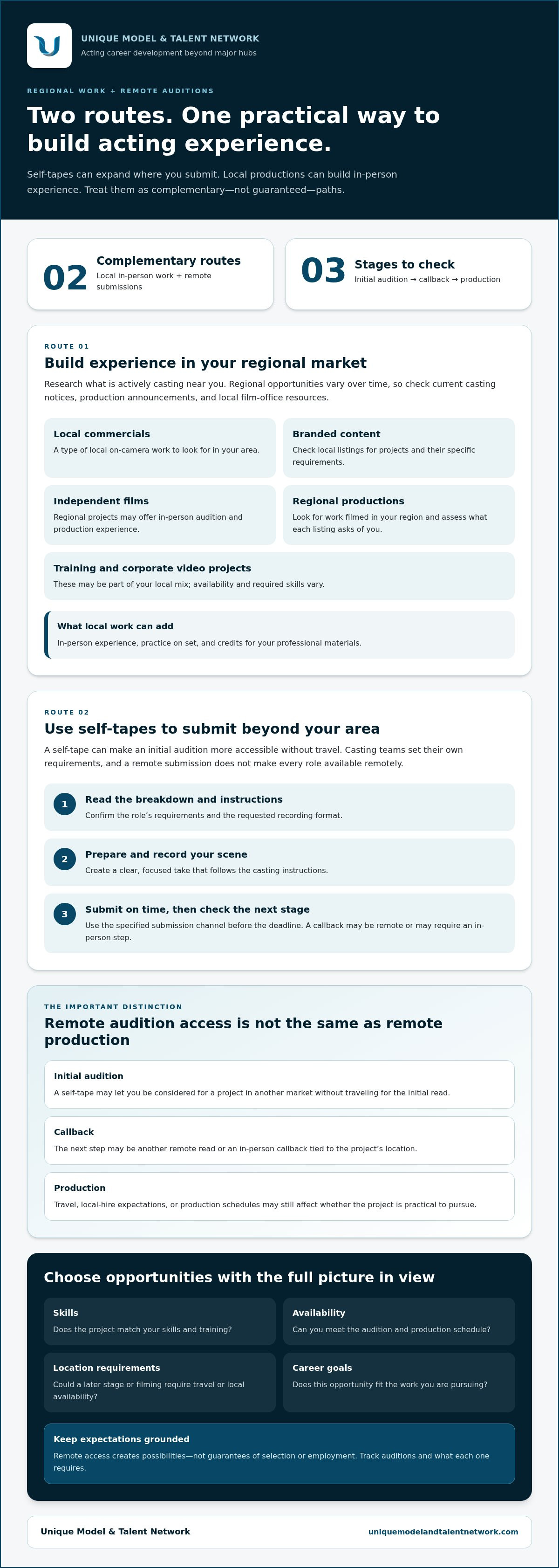
Self-tapes can make an initial audition more accessible from outside a major hub. Instead of traveling to read in person, you follow the casting instructions, record your scene, and submit it by the stated deadline. This can widen the range of projects you’re able to consider, but it doesn’t make every role available remotely. Casting teams set their own requirements, and callbacks, chemistry reads, or production may still depend on being in a particular place.
For an acting career without moving to LA, treat remote submissions and local work as complementary routes. A self-tape may put you forward for a project elsewhere; a local production can give you in-person experience, practice on set, and credits for your professional materials. Neither route guarantees selection or work, so focus on opportunities that match your skills, availability, and career goals.
What can self-tapes make possible from outside LA?
Start by reading the breakdown and audition instructions closely. Confirm the role’s requirements, prepare the scene, and record a clear, focused take that follows the requested format. Submit through the specified channel before the deadline. If you’re invited to a callback, review what the next stage requires. It may be another remote read or an in-person step tied to the project’s location.
Remote access is useful, but it doesn’t remove practical constraints such as travel, local-hire expectations, or production schedules. Understanding each stage helps you decide which auditions are realistic to pursue. For more guidance on preparing and approaching submissions, read this film industry auditions guide.
Which opportunities might exist in a regional market?
Your local mix depends on current production activity, so research what’s actually casting near you instead of assuming every region offers the same work. Look for local commercials, branded content, independent films, regional productions, and training or corporate video projects. These projects call for different skills and availability, and their presence varies over time. Check current casting notices, production announcements, and local film-office resources to see what’s active in your area.
Keep the two routes distinct as you assess each listing:
- Local on-camera work: Projects filmed in your region may offer in-person audition and production experience.
- Remote submissions: Projects based elsewhere may accept self-tapes, while later stages or filming can still require travel or local availability.
The U.S. Bureau of Labor Statistics’ overview of acting careers provides broader context on the profession and work environment. Pair that perspective with research into your own market, then track which auditions fit your goals and what each requires. Workshops and reel reviews can also help you refine your materials between submissions. An online acting network can provide structured feedback alongside local practice.
Unique Model & Talent Network offers workshops, portfolio and reel reviews, skill-building challenges, and expert Q&A sessions through its professional community.
Stay in Your Market or Move to LA? Compare the Trade-Offs
Living outside Los Angeles can limit access to some in-person auditions, training, and industry events, but it doesn’t end career development. Relocation is one possible strategy, not a required first step or an automatic advantage. Its value depends on whether being in LA would solve a specific access problem in your career and whether you’re prepared for the practical changes a move brings.
Decision principle: compare a move with your specific career needs, not with industry myths about where every actor must live. Use this framework to assess what your current market supports and what you might gain from being in LA.
| Factor | Stay in your market | Move to LA |
|---|---|---|
| Goals | Can suit goals that are achievable through local work and selective travel. | May better support goals requiring frequent in-person access to LA opportunities. |
| Local opportunities | Build experience through the projects, training, and auditions available nearby. | Gain proximity to LA-based activity, while still needing to pursue and earn opportunities. |
| Travel needs | Plan targeted trips when a relevant project calls for them. | Reduce distance to local events, though projects may still require travel. |
| Support system | Keep existing personal and professional support close. | Consider how a move may affect your support and daily routine. |
| Readiness | Continue developing while clarifying goals and next steps. | Move with a clear purpose and a workable plan, not just a hope of access. |
When might staying in your current market make sense?
Staying can be an active strategy if local projects, available training, and your schedule give you room to build experience. Personal responsibilities and support systems matter, too. You might pursue nearby work while planning selective travel for a particularly relevant audition or professional opportunity. Set review points for yourself: assess whether you’re developing skills, gaining useful experience, and finding opportunities that align with your goals. If not, adjust your approach rather than treating location as the only explanation.
What signs may make a move worth considering?
A move deserves consideration if your target roles, recurring auditions, or professional relationships depend on more frequent in-person access than you can manage from your current home base. Look for a pattern, not just one exciting possibility. Have you identified what you want to pursue, why LA is the right place for it, and how you’ll handle the practical transition? Your experience, finances, responsibilities, and support differ from another actor’s, so there’s no universal readiness threshold.
For an acting career without moving to LA, staying can still be a deliberate choice, while moving can be a strategic one. The Network Membership offers workshops, portfolio and reel reviews, skill-building challenges, and expert Q&A sessions to support development wherever you live.
How to Start Building Acting Experience Without Relocating
A productive plan turns “I want to act” into repeatable work you can review and improve. For an acting career without moving to LA, start with what you can do from your current home base, then use your progress to decide what to pursue next. Adapt the steps below to your experience, schedule, and local market.
Create a focused local opportunity and training plan
Choose a near-term goal, such as practicing auditions, earning a first credit, or strengthening a particular skill. Research local casting notices, productions, classes, and workshops that support that goal. Give the plan a regular place in your schedule, and track your activity without treating it as a promise of work.
- Define your goal. Be specific about what you want to develop next, whether that’s on-camera confidence, audition technique, or experience in a particular format.
- Research your market. Review current local casting notices and production information. Note relevant roles and projects, along with their stated requirements and deadlines.
- Schedule training and practice. Choose classes, workshops, or independent scene work that connect to your goal. Set aside consistent time to prepare and rehearse, then adjust your training as your needs change.
- Prepare useful materials. Keep your headshot, résumé details, and reel suited to your current experience and the roles you’re pursuing. A strong portfolio is focused and up to date, not simply packed with every image or clip. Use this acting portfolio guide to shape your materials.
- Track your submissions. Record the project, submission date, role requirements, and any response. Read notices carefully, follow their instructions, and keep expectations grounded: submitting is a professional step, not a guarantee of an audition or booking.
Prepare for auditions and measure progress
Self-tape practice can help you spot details to improve before an audition. Check your framing and sound, prepare the scene as directed, and review whether your choices communicate the character clearly. Keep audition materials easy to update as you gain experience rather than waiting for a major credit to make them useful.
Set a regular review point, such as after a period of consistent training and submissions. Look for patterns: are you building skills but seeing few relevant notices, or finding opportunities that call for more experience? Identify whether the main constraint is skill, local opportunity, access, or readiness. Then adjust your next steps, including whether selective travel or eventually relocating would address the specific gap.
Structured feedback can help you sharpen materials and identify useful areas to practice. The Network Membership’s portfolio and reel reviews can support your development alongside local training and auditions.
How an Online Acting Network Can Support a Career Built Anywhere
Casting platforms and professional communities serve different purposes. Casting platforms help actors find and submit for roles; a learning-focused network supports the work around those submissions, including developing skills, refining materials, and connecting with peers and industry experts. For an acting career without moving to LA, that kind of support can make professional development feel less isolated, wherever you’re based.
An online community doesn’t replace local auditions, in-person practice, or a project’s specific requirements. Think of it as an additional place to learn and get feedback, then apply what you gain to your training and opportunities at home. A casting notice still determines who can submit and what a role requires.
What can structured online professional development offer?
Structured learning gives you a focus beyond scrolling through casting notices. Live industry workshops, including sessions led by guest casting directors and photographers, offer professional perspectives and can help you strengthen your approach to your craft and materials. Learn remotely, then put those ideas into practice in local classes, auditions, or self-tape preparation.
Portfolio and reel reviews give you a chance to consider whether your materials represent your current experience and support the roles you’re pursuing. Skill-building challenges encourage regular practice, while expert Q&A sessions let you bring specific questions about your development. These resources work best when you arrive with a clear focus, such as improving a particular audition skill or deciding what to update in your reel.
For a closer look at learning through virtual sessions, this acting workshops online guide can help you consider how workshops fit into a broader development routine.
How to use a professional community without expecting guarantees
Make participation purposeful. Set a learning goal, attend sessions that connect to it, ask focused questions, and apply useful feedback to your next audition or practice session. Consistency helps turn advice into habits; simply joining a group doesn’t create credits or secure auditions.
The Network Membership connects aspiring actors with industry experts and peers in a private, moderated online community. It includes live workshops, portfolio and reel reviews, monthly skill-building challenges, and industry expert Q&A sessions. Use those opportunities to support your craft and professional development alongside local work.
Membership provides educational resources, feedback, and professional connections. It cannot guarantee auditions, representation, paid work, or career outcomes. Keep building through your own training, submissions, and professional choices.
For actors who want structured learning and peer connection, The Network Membership brings together workshops, reviews, challenges, and expert Q&A sessions.
Choose Your Next Step With Purpose
Your next career decision doesn’t have to answer every question at once. Choose one practical step you can take from your current home base, then use what you learn to refine your goals. That might mean committing to focused training, pursuing a relevant audition, or setting a clear point to reassess whether your market still fits the work you want. An acting career without moving to LA can grow through deliberate choices, not pressure to follow someone else’s timeline.
Progress is easier to sustain when you have room to learn, reflect, and stay connected with people who take the work seriously. Structured professional development can complement local auditions and training as you decide what to pursue next.
Explore The Network Membership for workshops, portfolio and reel reviews, skill-building challenges, and expert Q&A sessions to support your acting career wherever you’re based.
Frequently Asked Questions
Can I become a working actor without ever moving to Los Angeles?
Yes, you can pursue acting work while living outside Los Angeles, though the opportunities available depend on your location and goals. Define what “working actor” means for your path, such as regularly auditioning, building credits, or earning income from performance. Then review whether your recent activity is moving you toward that goal. An acting career without moving to LA is a possible path, not a promise of employment, just as relocating doesn’t guarantee work.
Is it better to gain acting experience before moving to LA?
Gaining experience first can help you make a more informed move, but there’s no universal timeline. Completing a local production or practicing a range of audition scenes may help you identify the skills and roles you want to pursue. Consider moving when you can explain what access it would add to your plan, rather than relying on the idea that experience must come first or that LA will solve every career challenge.
Can I audition for roles in Los Angeles from another state?
Yes, some roles accept submissions from actors in other states, while others have location or in-person requirements. Before preparing a tape, check the breakdown for details such as where filming takes place, whether travel is expected, and what availability the production needs. If those details aren’t clear in the notice, don’t assume you can meet them. Prioritize roles that fit your schedule and ability to participate through each stage.
How do I find legitimate acting auditions in my local area?
Look for casting notices through established local production, theatre, and film communities, and compare each listing with information from the production or casting source. A useful notice should give you enough detail to understand the role, submission process, and expectations. Be wary of claims that payment guarantees a role or representation. Keep a record of where you found each listing and what happened after you applied, so you can focus on reliable sources.
Do I need an agent to start acting outside Los Angeles?
No, an agent isn’t a universal prerequisite for beginning to audition, though some projects and markets may have their own submission expectations. Start by understanding how roles in your area invite submissions and whether the opportunity fits your experience. Keep your professional materials accurate, and don’t treat representation as a guarantee of employment. As you gain experience, assess whether representation would address a specific need in your career.
How much should I budget before pursuing an acting career locally?
There’s no single budget that applies to every actor. List the costs tied to your own plan, such as classes, materials, audition-related needs, and travel, then separate essentials from upgrades you can defer. Account for the time you can realistically give to training and projects, too. Avoid taking on expenses because someone promises a role or career result. Revisit your plan as your goals and circumstances change.
Can an online acting network help if I don’t live near casting professionals?
It can support your learning and professional development, even if you’re far from industry contacts. To get practical value, bring a specific question to a discussion, apply useful feedback to a scene, then note what you want to keep practicing. Online connections can broaden your perspective, but they don’t replace local experience or guarantee casting access, representation, or paid work. Choose a community that supports your learning goals and participate with clear expectations.


