

What if a working actor’s busiest day never takes them near a set? A day in the life of a working actor might mean preparing a self-tape at home, filming on a tightly scheduled production, or building skills between bookings. The career can look glamorous from the outside, but much of the work happens off set, and no two days are quite the same.
If you’ve wondered what actors actually do all day, the answer depends on the stage of the work. Audition days call for focused script preparation and recording; production days bring early calls, long hours, and collaboration on set. In between, actors still need to manage their careers.
This article explains how those workdays differ and offers practical ways to use quieter stretches for craft, professional materials, and development. You’ll also learn how workshops, portfolio and reel reviews, skill-building, and peer connection can add structure between jobs. None of these activities guarantees a booking, but they can help you make steady, informed progress while you prepare for the next opportunity.
Key Takeaways
- A day in the life of a working actor shifts with the project stage, from preparation and auditions to rehearsals, filming, and follow-up.
- Audition days focus on presenting for a role, while set days are organized around a production’s schedule and needs.
- Use time between bookings in manageable steps: review your goals, practise, refresh your materials, and connect professionally.
- Workshops, portfolio and reel reviews, and expert feedback can support ongoing development without guaranteeing a booking.
- Peer connection and structured learning can help bring focus and momentum to an unpredictable career.
A Day in the Life of a Working Actor: Why There Is No Single Routine
An actor’s day depends on the project they’re pursuing and the phase of their career. One day may involve paid production work; another may be devoted to an audition, rehearsal, or the practical tasks that keep a career moving. The public image often focuses on the finished performance, but the work around it can include preparation, coordination, waiting for updates, and follow-up.
An actor’s schedule isn’t one fixed routine; it’s shaped by the demands and timing of each project.
A useful way to understand the day in the life of a working actor is to look beyond whether they’re on set. Professional activity happens at different stages, and not every day leads directly to a booking or performance. For general context on the range and history of the field, see The acting profession.
What counts as a working actor’s day?
A booked production day is the clearest example of paid acting work: the performer is engaged to contribute to a film, television, theatre, commercial, or another production. Actors also spend professional time auditioning, rehearsing, and preparing for future opportunities. These activities have different purposes. An audition is a chance to be considered; rehearsal develops the work; production is where the performer carries out the role as part of the project.
Career-development tasks can also be part of the picture. An actor might review a script, practise a scene, update a reel, or organize professional materials. Those tasks aren’t booked work, and they don’t guarantee a job. They are part of managing a craft and career between engagements. The balance varies with an actor’s experience, current commitments, and goals.
The medium and role matter, too. A stage performer may have rehearsals and performances scheduled around a theatre production, while an on-camera role may involve a concentrated filming period. Location, project scale, and production needs all affect the workday. That’s why an hour-by-hour timetable can be misleading: it may describe one person’s day, but it can’t represent everyone’s.
Why the schedule changes from day to day
Casting and production follow different timelines. An audition may have a specific submission window, while a callback or next step depends on the project’s process. If an actor is booked, the production schedule determines when they’re needed and what preparation is involved. The actor may need to coordinate availability, learn material, or adjust plans as details develop. The sequence varies from one project to another.
Project-based work can bring busy stretches followed by quieter intervals. A performer might move from audition preparation into rehearsals and production, then return to seeking and preparing for new work. Others may balance several professional priorities at once. A gap between bookings doesn’t mean every day is empty, just as a busy period doesn’t mean every hour is spent performing.
That variability can feel unfamiliar if you expect a conventional workweek, but recognizing which phase you’re in can help you set realistic expectations. Production has its own demands, audition preparation has another focus, and quieter periods leave room to plan next steps. The routine changes; the value of approaching each phase with purpose remains.
From Auditions to Film Sets: The Different Modes of an Acting Career
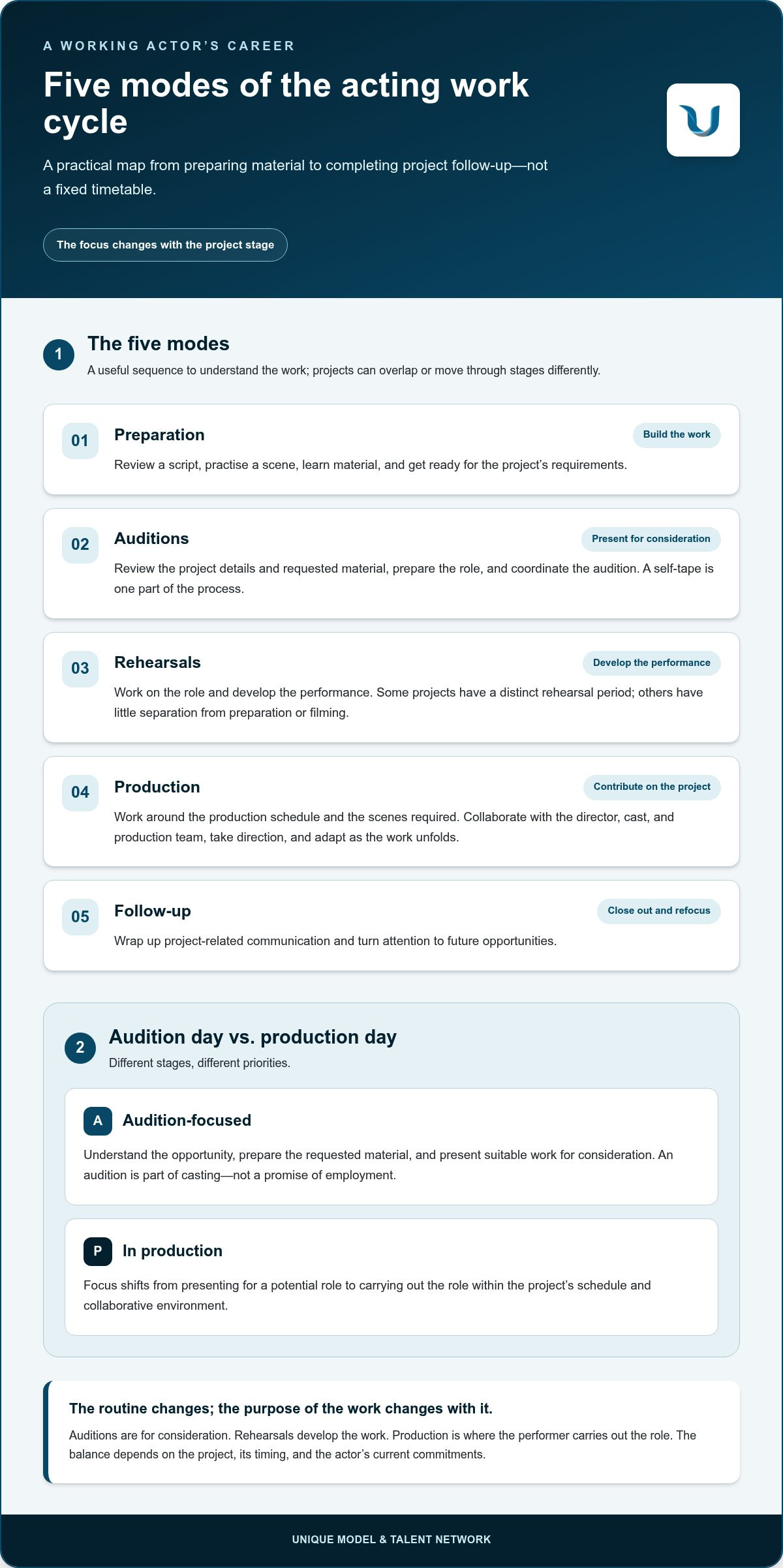
An acting career often moves through several modes: preparation, auditions, rehearsals, production, and follow-up. That sequence is a useful map, not a fixed timetable. A performer might audition for a new project while rehearsing another, or move straight from a booking into production. Some projects have a distinct rehearsal period; others have little separation between preparation and filming.
Each mode calls for a different kind of attention. Before an audition, an actor focuses on the role and the project’s requirements. During production, the priority shifts to delivering the performance within a collaborative, scheduled environment. Afterward, follow-up may include wrapping up project-related communication and turning attention to future opportunities. The U.S. Bureau of Labor Statistics’ Occupational Outlook for Actors offers broader context on the profession, including its work patterns and employment outlook.
This cycle helps explain why a day in the life of a working actor can look different from one week to the next. For a closer look at preparing to be considered for film roles, explore this film industry auditions guide.
What an audition-focused day may involve
An audition-focused day starts with understanding the opportunity. Review the project details, check the requested material, and decide how to prepare the role. You may also need to coordinate the audition around work, travel, or another rehearsal. If the audition is a self-tape, recording is one part of the process, not the whole day.
The aim is to present suitable work for consideration, then complete any required follow-up. An audition is one stage in a casting process, not a promise of employment. Keeping that distinction clear can help you approach each opportunity professionally without treating every submission as a guaranteed next step.
What changes when an actor is in production
Once an actor is working on a production, the day is organized around the project’s schedule and the scenes they’re needed for. The performer collaborates with the director, cast, and other members of the production team, takes direction, and adapts as the work unfolds. The emphasis is no longer on presenting for a potential role; it’s on contributing to the project in progress.
A call sheet communicates production-specific information, such as the schedule and where cast and crew need to be. Its details apply to that project, so working hours and daily requirements vary rather than follow one industry-wide template. Pay close attention to the information provided and stay ready for the needs of the day.
Between these modes, structured learning and peer connection can help actors keep developing their practice. The Network Membership connects actors with industry experts and peers through professional learning and community, supporting development without promising auditions or bookings.
Audition Day vs. Set Day: How an Actor's Priorities Compare
An audition day and a set day may both be part of professional acting, but they serve different purposes. An audition is an opportunity to present for a specific role. A set day is booked production work, focused on creating the project with the cast and crew. Comparing the two shows why a day in the life of a working actor can shift significantly with each commitment.
| Area | Audition day | Set day |
|---|---|---|
| Purpose | Present for consideration for a role | Contribute to a production in progress |
| Preparation | Review project details and prepare the requested material | Prepare for scheduled scenes and the day’s production needs |
| Collaborators | Casting professionals and audition personnel | Cast and production team, including the director |
| Schedule | Guided by the audition format and arranged time | Guided by the project schedule and call sheet |
| Likely next step | Wait for an update or move on to another opportunity | Continue with the production’s upcoming work |
An audition is a commitment to present for a role; a set day is a booked commitment to help deliver a production. Neither day type tells the whole story of an actor’s career. A performer may audition without booking, work through a production period followed by a quieter stretch, or balance other professional priorities alongside either kind of day.
How the goals and preparation differ
Audition preparation is role-specific. Review the available project information and focus on the requested material, whether the appointment is in person or involves a self-tape. The goal is to make a clear, considered presentation suited to that opportunity. Don’t assume what the casting team wants or treat an audition as a confirmed job.
On set, the goal changes. The actor works within the creative direction and practical needs of a particular production, responding to fellow performers and the team as scenes are made. Preparation supports the work, but the day’s priorities are shaped by what the production is scheduled to accomplish. An audition may lead to further consideration, but it doesn’t mean filming will follow.
How collaborators and schedules can change
An audition may involve casting professionals and a specific arrangement for presenting the material. Production expands the circle of collaboration: the actor works with the director, other cast members, and relevant crew as the project progresses. That difference affects how an actor communicates, prepares, and stays attentive to the day’s needs.
Schedules aren’t interchangeable. Audition instructions explain the requested format and timing, while production information, including the call sheet, outlines project-specific details. Follow the instructions for your own commitment rather than relying on assumptions about universal hours or routines. This helps set expectations without suggesting that every actor’s calendar or every project follows the same pattern.
How Actors Can Use Time Between Bookings Productively
Time between bookings can create space to strengthen your craft and organize the practical side of an acting career. It doesn’t need to become a full-time checklist. Choose a few useful priorities, make room for rest and other responsibilities, and adjust as your circumstances change. A sustainable routine supports progress without treating every quiet stretch as a test of commitment or a guarantee of future work.
Build a repeatable routine for quieter periods
Start with a flexible plan you can return to when your calendar allows. Review what matters most, then choose one skill or career task to focus on rather than trying to improve everything at once. You might set aside time to practise a scene, research a project, or handle a small piece of career administration. Adapt the plan around paid work, caregiving, health, and personal commitments.
A simple four-step cycle can help:
- Assess: Check your current goals and identify the next useful priority. Keep it specific, such as improving scene preparation or clarifying the kinds of roles you’re pursuing.
- Practise: Work on one aspect of your craft. Focused scene study or a short skills exercise is more manageable than an open-ended goal to “get better.”
- Refresh materials: Review your portfolio, reel, and professional information. Update items when they no longer reflect your current work or presentation.
- Connect professionally: Make time for constructive peer conversations, expert learning, or industry events that fit your schedule and goals.
These steps don’t have to happen every day or in a rigid order. If an audition or personal responsibility takes priority, adjust the plan. Rest is productive, too. Recovery can help you return to your work with focus instead of turning every open hour into another obligation.
Keep professional materials and skills current
Your materials should represent the work you can offer now. Reviewing a portfolio or reel can help you spot outdated content, unclear choices, or areas that may benefit from refinement. A second perspective can make it easier to see what’s working and decide what to improve next. Treat feedback as information for development, not as a promise of representation, auditions, or bookings.
Structured learning can give quieter periods a practical focus. If you’re considering classes or guided sessions, this acting workshops online guide can help you think through how workshops may fit your development. For a closer look at organizing materials, explore the acting portfolio guide.
The day in the life of a working actor includes choices made between projects as well as booked work. For expert-led learning, portfolio and reel feedback, and peer connection, explore The Network Membership and its development resources. These resources can add structure to professional growth without promising what comes next.
Make Career Development Part of Your Working Actor Routine
A varied schedule is easier to manage when career development has a place in it without taking over every open hour. A small, consistent learning goal can help you stay connected to your craft during quieter stretches, while leaving room for rest, paid work, and personal responsibilities. Think of development as support for your practice, not a formula for securing the next role. The day in the life of a working actor may change from project to project, but learning and reflection can fit across those different phases.
Where structured learning fits into an actor's week
Professional development works best when you choose resources that match your current priorities. You might focus on a specific acting skill, seek feedback on your materials, or make space to ask an industry expert a question. Structured options can provide direction when you’re deciding what to work on next:
- Live Industry Workshops offer opportunities to learn from industry professionals and explore aspects of the craft.
- Industry Expert Q&A Sessions create space to learn from expert perspectives and bring focused questions to the discussion.
- Portfolio & Reel Reviews can provide feedback on how your professional materials present your work and where refinement may help.
- Monthly Skill-Building Challenges give you a defined practice focus, which can help turn a broad development goal into a manageable activity.
You don’t need to take on every resource at once. If your priority is refreshing your reel, for example, feedback on that material may be more useful than adding several new goals. A workshop or challenge can support practice, while a review can help you reflect on what your materials communicate. Choose what’s relevant, then make time to apply what you’ve learned.
Find professional connection without expecting guaranteed outcomes
Acting can involve long stretches of independent preparation. A professional community offers another way to learn alongside peers and connect with industry experts. The Network Membership is a private digital community hosted on Mighty Networks, with access to workshops, reviews, challenges, and expert Q&A sessions. Peer exchange can help you share perspectives, stay engaged with your goals, and feel less isolated in the work.
Keep expectations grounded. Membership and networking aren’t talent representation or a booking service, and they don’t guarantee representation, auditions, or paid work. Their value is in professional learning, feedback, and connection. These resources can help you make deliberate choices about your development while recognizing that casting outcomes aren’t within your control.
If a structured community feels like a useful fit for your development, explore The Network Membership for learning and peer connection.
Build a Career Routine That Grows With You
The next step doesn’t have to be a complete career overhaul. Choose one area you’d like to strengthen, then decide what kind of guidance or practice would help you move forward. A day in the life of a working actor may keep changing, but a clear development focus can help you make intentional use of your time and opportunities.
If professional connection would support that focus, The Network Membership brings talent together with industry professionals and peers in a private, moderated community. Members can access live workshops, portfolio and reel reviews, and expert Q&A sessions as resources for learning and feedback. These opportunities support development, but they can’t guarantee representation or bookings.
Take the next step at a pace that works for you. Explore The Network Membership for a professional community focused on ongoing growth. Keep building your craft, stay open to learning, and give your career room to develop one purposeful step at a time.
Frequently Asked Questions
Is acting a full-time job?
Acting can be a full-time profession, but that doesn’t mean every actor has a steady, full-time schedule. Work is often tied to individual projects, so some performers take on other paid work between acting commitments. Whether acting can support someone as their primary job depends on the consistency and type of work they secure, their financial needs, and how they manage periods with fewer bookings.
What does an actor do on a typical day?
There isn’t one standard routine. A day in the life of a working actor might include reviewing a script, attending a scheduled audition, rehearsing, filming, or taking care of career administration. For example, an actor might use a non-filming day to organize upcoming commitments and practise a scene, while a performer on a project follows that production’s plans. The day depends on current work and priorities.
How many hours do actors work in a day?
There’s no single number that applies to every acting job. A production’s schedule, the actor’s role, and the day’s requirements all affect the length of a commitment. An audition appointment may take much less time than a production day, while preparation and travel can add time around either one. Use the specific schedule or instructions for your commitment rather than assuming a universal workday.
Do actors work every day?
No. Actors may have periods of scheduled work and intervals without a booking, so a continuous daily work pattern isn’t typical for everyone. Even on days without a rehearsal, audition, or production call, some actors choose to spend time on career tasks or practice. Others may prioritize another job, family responsibilities, or rest. A sustainable routine allows for changing demands instead of treating every day off as lost time.
What do actors do between jobs?
Between projects, actors can review what they want to pursue next, keep their professional calendar and materials organized, and make time for craft practice. They might also reflect on recent auditions or performances and identify one useful adjustment for the next opportunity. These activities are choices, not a requirement to fill every hour. Rest and other work matter, too, and preparation cannot guarantee when the next booking will come.
Can you be an actor without working on a film set every day?
Yes. Acting includes work beyond film sets, such as theatre, voice performance, commercials, and other kinds of recorded or live performance. Actors may also audition, rehearse, or develop projects without filming that day. The right mix depends on a performer’s interests, skills, and available opportunities. A film set is one setting for acting work, not a daily requirement or the only way to pursue the profession.


