
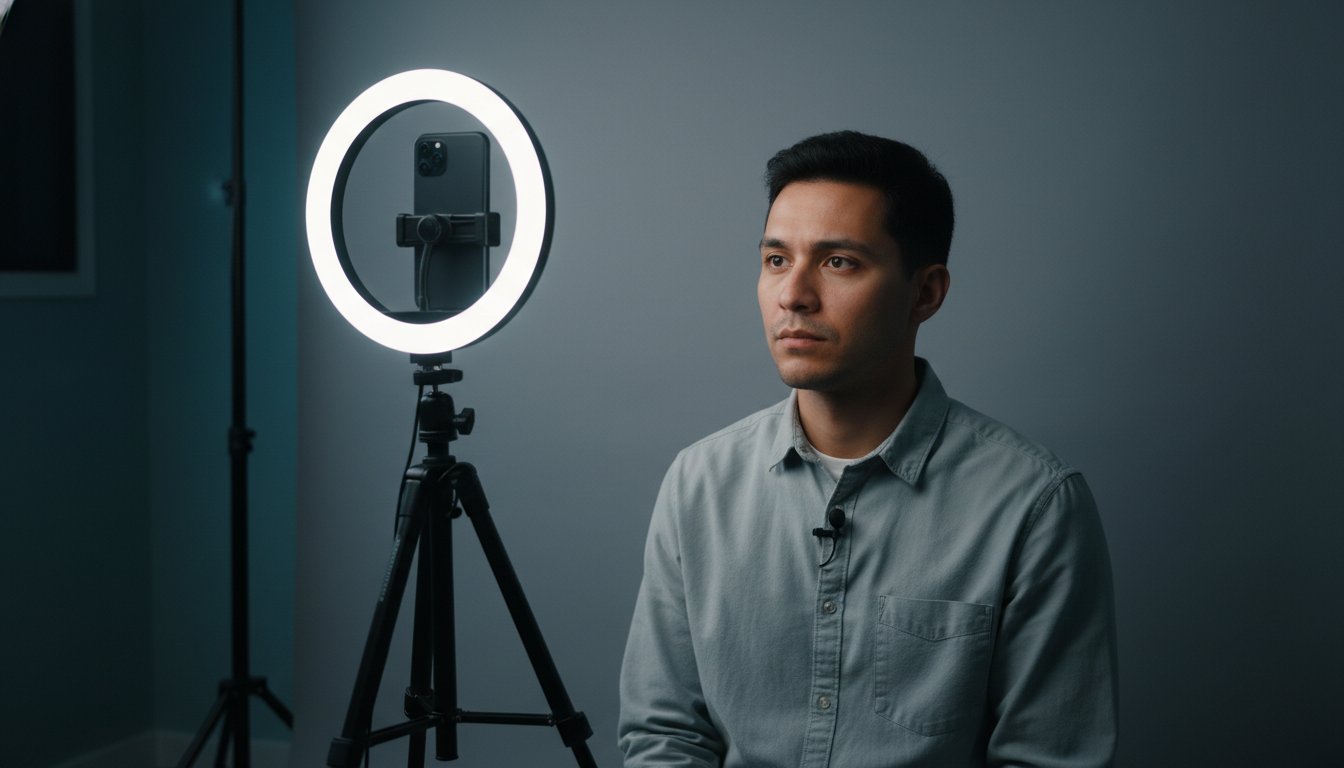
A high-end camera won't save a performance if the technical basics are distracting the person hiring you. You don't need a Hollywood budget to produce a tape that demands attention from top-tier casting directors. It's common to feel overwhelmed when searching for the best self tape equipment on a budget, especially when you're working with limited space and a tight bank account. You want to look like a professional, not a hobbyist, but the fear of looking "amateur" often creates a barrier to hitting submit.
This guide provides the clarity you need to build a repeatable, high-standard setup that meets 2026 industry expectations. We'll show you how to leverage essential tools like the UBeesize 12-inch ring light and the Hollyland Lark M2 microphone to meet official SAG-AFTRA standards without overspending. We're breaking down exactly how to secure a professional environment for under $100, ensuring your technical quality matches your career ambitions and leads to more callbacks. By prioritizing clarity and consistency, you can stop worrying about the gear and start focusing on the work that gets you cast.
Key Takeaways
- Learn how modern smartphone sensors have replaced the need for entry-level DSLRs, making professional quality accessible without heavy investment.
- Discover how to select the best self tape equipment on a budget by choosing between ring lights and softboxes based on your specific home studio dimensions.
- Master the three-point lighting system to eliminate distracting shadows and ensure your performance remains the central focus for casting directors.
- Identify why an external microphone is your most critical technical upgrade for removing the "amateur" distractions that ruin auditions.
- Understand how professional community vetting and reel reviews can identify technical flaws before you hit send on a major submission.
Defining the Professional Self-Tape Standard in 2026
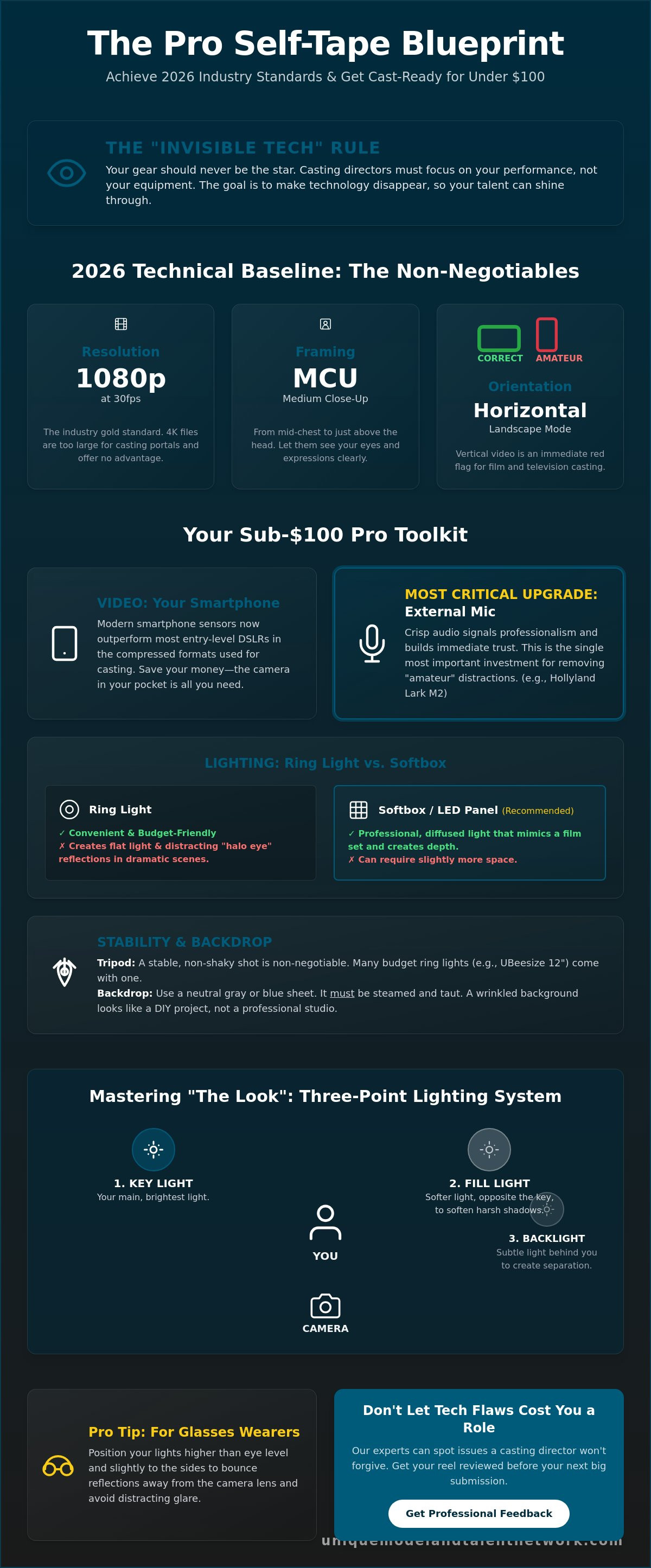
The "Invisible Tech" rule is the cornerstone of a professional audition. If a casting director spends even three seconds wondering what kind of ring light you're using or squinting because of a poorly placed shadow, you've already lost their attention. Your gear should never be the star of the show. By 2026, the technological gap has closed significantly. High-end smartphone sensors now outperform most entry-level DSLRs in the compressed formats used for casting, meaning you can stop obsessing over expensive camera bodies. Finding the best self tape equipment on a budget isn't about buying the cheapest items; it's about investing in the specific tools that eliminate technical friction.
High-quality audio carries a heavy psychological weight. When a tape sounds crisp, it signals to the production team that you're a professional who understands the business. It builds immediate trust. Understanding what a self-tape is in the modern era requires recognizing that you're producing a mini-film, not just a recording of a rehearsal. We advocate for a grounded approach that balances your high-level career goals with the reality of your current budget. You don't need to spend a fortune to look like you belong on a major network set. It's about being smart with your resources to ensure your craft is the only thing they remember.
The 2026 Technical Baseline for Auditions
Industry standards remain surprisingly consistent regarding resolution. While 4K is available on most devices, 1080p at 30fps is still the gold standard for submissions. It provides clear detail without creating massive files that crash casting portals. Your framing should always be a medium close-up, typically from the mid-chest to just above the head. This allows the viewer to see your eyes and facial nuances without distraction. Unless a specific social media campaign requires it, always film horizontally. Vertical video remains a hallmark of the amateur in the professional film and television world. Consistency in these basics creates a sense of career security for you and the casting team.
Why Budget Gear Doesn’t Mean Budget Results
The secret to a high-end look lies in environmental control rather than hardware specs. Professional lighting can mask a lower-quality camera sensor by providing the data the sensor needs to process a clean image. Even the best self tape equipment on a budget will fail if your space is cluttered. You can use a neutral gray or blue sheet as a backdrop, but it must be steamed and taut. A wrinkled bedsheet looks like a DIY project; a smooth, well-lit backdrop looks like a studio. Focusing on these small details ensures your setup reflects the high standards of the industry and positions you as a serious contender for every role you submit for.
Mastering "The Look": Affordable Lighting and Backdrop Solutions
Visual standards in 2026 have never been higher, yet the tools to achieve them have never been more accessible. The entertainment industry views your home studio as an extension of your professional office. If you're serious about your craft, you recognize that investing in professional self-taping equipment is a standard business requirement rather than a luxury. Achieving "the look" is about more than just brightness; it's about creating depth and dimension that makes you pop off the screen. The best self tape equipment on a budget allows you to implement a Three-Point Lighting system: a Key light for your primary illumination, a Fill light to soften harsh shadows, and a subtle Backlight to separate your shoulders from the background.
While many beginners reach for a basic ring light, savvy actors often prefer small softboxes or LED panels. Ring lights are convenient, but they often create a flat, "halo eye" reflection that can be distracting in dramatic scenes. Softboxes provide a larger, diffused light source that mimics a professional film set. If you wear eyeglasses, glare is your greatest enemy. Position your lights higher than eye level and slightly to the sides to bounce reflections away from the camera lens. For those looking to refine their visual presentation before their next big submission, our Portfolio & Reel Reviews provide the expert eyes needed to catch these technical errors before a casting director does.
Budget Lighting Kits That Punch Above Their Weight
Modern LED panel kits are the superior choice for small apartments. They run cool, take up minimal floor space, and offer precise color temperature control to match your environment. If you're starting with zero budget, the "Window Light" hack is your best friend. Position yourself facing a large window during the day for beautiful, soft light. Just remember that natural light is inconsistent; a passing cloud can change your exposure mid-take. You can soften any harsh budget light by "bouncing" it off a white foam board or hanging a sheer white shower curtain in front of the source.
Creating a Professional Backdrop in Any Room
- Collapsible Backgrounds: These are ideal for limited space, popping up in seconds and leaning against a wall.
- Color Theory: Stick to neutral grays or muted blues. Gray is versatile for all skin tones, while a deep blue can make blue or green eyes stand out. Avoid stark white, which can wash you out, or black, which can look too "theatrical."
- The Tension Rule: Wrinkles scream "amateur." Whether you use a curtain or a pop-up, ensure the material is taut. A cheap handheld steamer is an essential part of the best self tape equipment on a budget, ensuring your backdrop looks like a solid studio wall.
Crystal Clear Audio and Stability Without the High Price Tag
Audio is 50% of the viewer's experience. If a casting director has to strain to hear your dialogue, they'll stop watching before your first scene ends. External microphones are the single most important budget upgrade you can make. While smartphone cameras have reached parity with professional gear, their internal microphones remain a significant weak point. They're designed to pick up sound from every direction, which usually includes the hum of your air conditioner or the echo of a hard-floored room. In 2026, many actors rely too heavily on AI noise cancellation software in post-production. While these tools have advanced, they often strip the natural resonance from your voice, making you sound processed and distant. Capturing clean, organic audio from the start is a hallmark of a seasoned professional.
Acoustic treatment is often overlooked, but it's the secret to a high-end sound. You can dramatically improve your audio for under $20 by using simple household items. Throwing a heavy rug on the floor or hanging a thick duvet on the wall behind the camera will absorb sound reflections. This simple step eliminates the "bathroom" echo that instantly labels a tape as amateur. When choosing your gear, consider the best self tape equipment on a budget that fits your specific environment. A shotgun microphone is ideal for most actors because it sits out of frame and mimics the directional recording used on professional sets. If you live in a noisy city, a lavalier mic might be the better choice as it stays close to your mouth and rejects distant traffic noise.
Top Budget Microphones for Actors
Smartphone-compatible shotgun mics offer the best balance of quality and plug-and-play simplicity. Whether your device uses USB-C or a Lightning connection, a direct wired link is always more reliable than Bluetooth for critical auditions. When comparing options, pay close attention to the signal-to-noise ratio. Signal-to-noise ratio is the measurement of how much of your clear vocal performance is captured versus the electronic hiss or background hum produced by the hardware itself. A higher ratio ensures a cleaner signal, creates a more intimate sound, and allows your performance to remain the primary focus of the recording.
Stability and Mounting Solutions
Nothing ruins a professional reel faster than a shaky camera or an uneven frame. While "Gorilla" style flexible tripods are popular for vloggers, a traditional floor tripod is essential for a repeatable self-tape setup. It provides the height necessary to position the camera exactly at eye level. This eye-line creates a dominant, professional presence on screen, ensuring you're looking directly into the world of the scene rather than up or down at the viewer. Secure your device with a high-quality smartphone adapter. Look for mounts with a screw-tighten mechanism rather than a spring-loaded one to ensure your phone won't slip mid-take. Investing in these stability tools is a core part of securing the best self tape equipment on a budget.
Optimizing Your Workflow: Filming, Editing, and Digital Readers
The "One-Take" myth often holds actors back from submitting their best work. You don't need to deliver a flawless performance from start to finish in a single go. Professional curation is about choosing your strongest moments and editing for a seamless flow. Casting directors value efficiency. If your tape has ten seconds of dead air at the start because you were reaching for the record button, you're testing their patience and professionalism. Your software choices are just as vital as your hardware when assembling the best self tape equipment on a budget. Mastering the final hand-off is what separates the serious contenders from the hobbyists.
Final file management is the step where many actors stumble. Even a brilliant performance can be ignored if the file is too large to download or labeled incorrectly. Always follow the specific naming conventions provided in the breakdown; usually, this is "Name_Role_Project." If you've struggled with bad audio takes, modern AI noise reduction tools can act as a safety net. They help remove consistent background hums that your microphone might have caught, though they should never replace the acoustic treatment discussed in earlier sections. Consistency in your digital delivery builds a sense of career security for the production team hiring you.
Free and Low-Cost Editing Apps
You don't need expensive desktop software to produce a winning tape. Mobile-first apps like CapCut or iMovie provide more than enough power for standard auditions. Focus on basic color correction to ensure your skin tones look natural and vibrant. Avoid heavy filters that distort your actual appearance. Your title cards should be minimalist and stay on screen for no more than three seconds. Include your name, representation, the role you're reading for, and your height. Anything more is a distraction from the work itself.
The Reader Dilemma: Budget-Friendly Workarounds
Finding a reliable reader is a common operational bottleneck. While in-person readers are ideal for live energy, digital reader apps that play back your recorded lines are a valid budget-friendly alternative. They allow you to record on your own schedule without waiting for a friend. However, coordinating with peers for "tape swaps" remains the gold standard for maintaining professional bonds and performance quality. Remember that building an acting portfolio requires high-quality self-tape clips that demonstrate your ability to listen and react, which is always easier with a live partner. If you want to refine these technical transitions and get real-time feedback, join our Monthly Skill-Building Challenges to sharpen your workflow under industry-standard pressure.
Beyond the Gear: Elevating Your Auditions Through Professional Feedback
Technical perfection is a prerequisite, but it isn't the final goal. You can own the best self tape equipment on a budget and still fail to book if your eye-line is drifted or your performance lacks the nuance required for a medium close-up. High-end lighting and crisp audio are simply the tools that allow a casting director to see your talent without distraction. Once you've mastered the hardware, the next step is moving beyond the isolation of your home studio. Without professional feedback, it's easy to fall into habits that look "amateur" to an industry insider but remain invisible to you. Transitioning from a home hobbyist to a vetted professional requires a shift in focus from what you're using to how you're being perceived.
Professional mentorship provides a protective layer in an industry that can often feel chaotic. When you engage with a community of serious peers, you move away from the superficiality of social media and toward a grounded reality of business development. High standards aren't just about the resolution of your camera; they're about the legitimacy of your presentation and the consistency of your output. A professional setup creates a sense of career security, allowing you to focus entirely on the emotional truth of the scene. By removing technical distractions, you open the door for casting directors to focus on your craft rather than your equipment.
Getting Your Setup Vetted by Experts
Expert vetting is the missing link in most actors' workflows. Catching a slight flicker in your LED panels or a distracting reflection in your glasses before you submit can be the difference between a callback and a rejection. Our Portfolio & Reel Reviews offer a critical second set of eyes from those who understand the current market demands. Mastering film industry auditions starts with a technical check, ensuring your setup meets the high standards of the Unique Model & Talent Network. This direct access to casting perspectives removes the guesswork and provides the clarity needed to compete at a higher level.
Investing in Your Career, Not Just Your Kit
Consider the return on investment when deciding your next purchase. While it's tempting to keep buying more gear, the ROI of a professional community membership often far outweighs a slightly better lens. A professional community provides the direction needed to ensure your investment in the best self tape equipment on a budget actually translates into career acceleration. Our Live Industry Workshops and Industry Expert Q&A Sessions bridge the gap between owning gear and booking work. You'll learn to use your kit as a professional tool rather than a technical hurdle. Join the Unique Model & Talent Network for expert feedback on your self-tapes and start treating your auditions like the business development opportunities they are.
Take the Lead in Your Professional Development
Building a high-standard home studio doesn't require a Hollywood budget; it requires a commitment to professional excellence. You've learned that modern smartphone sensors have replaced the need for expensive DSLRs and that acoustic treatment is the secret to removing the "amateur" label from your auditions. Finding the best self tape equipment on a budget is only the first step toward career acceleration. The real transformation happens when you move beyond the hardware and start treating your self-tapes as a legitimate business product.
To ensure your technical setup meets the rigorous standards of today's industry, you need more than just gear. You need the perspective of those who make the hiring decisions. Our private community offers direct access to live workshops with casting directors and expert portfolio and reel reviews to catch the errors you might miss. We provide a secure, gated environment where you can focus on building professional bonds and sharpening your craft away from the noise of social media. Join the Network for Professional Portfolio Reviews and step into your next audition with the confidence of a vetted industry insider. Your career deserves a foundation built on clarity and high standards. We're here to help you build it.
Frequently Asked Questions
Do I really need a ring light for a professional self-tape?
You don't necessarily need a ring light to look professional. While they are a popular choice for the best self tape equipment on a budget, softboxes or LED panels often produce a more natural, cinematic look without the circular reflection in your eyes. If you have a large window with soft, indirect sunlight, natural light is a free and effective alternative that many seasoned pros still use to achieve a high-end look.
Can I use my iPhone for self-taped auditions?
Absolutely. By 2026, smartphone cameras have reached a level where they are the primary tool for most professional self-tapes. As long as you record in 1080p and maintain a stable frame with a tripod, your phone is more than capable of capturing a broadcast-quality audition. The focus should be on the lighting and audio surrounding the device rather than the phone itself.
What is the best background color for an acting self-tape?
Neutral gray and muted blue are the industry favorites. These colors are non-distracting and work well with every skin tone and hair color. Avoid stark white, which can wash you out and create exposure issues, or black, which can feel overly heavy and hide your physical movements. A solid, matte surface ensures the casting director stays focused on your eyes and facial expressions.
How do I record a self-tape if I don’t have a reader?
Digital reader apps are a reliable workaround when you're working solo. These tools allow you to pre-record lines with specific timing for your reactions. While this is efficient, we recommend coordinating with peers for a live Zoom or phone read whenever possible. A live partner provides the reactive energy and spontaneous moments that a recording simply cannot replicate, which often leads to a more compelling tape.
Is it okay to use a bedsheet as a self-tape backdrop?
It's acceptable only if the sheet is thick enough to be opaque and perfectly smooth. A wrinkled or translucent sheet instantly signals a lack of professional standards. If you choose this route, use a handheld steamer and secure the fabric tightly to a wall or stand. Investing in a dedicated collapsible backdrop is usually the better long-term move for those seeking the best self tape equipment on a budget.
How much should I spend on my first self-tape kit?
You can secure a high-quality, entry-level kit for under $100. This typically includes a 12-inch ring light with a tripod stand, a wired lavalier microphone, and a basic neutral backdrop. While you can certainly spend more on advanced LED panels or wireless audio systems, this initial investment is enough to meet 2026 casting standards and start submitting professional-grade auditions immediately.
What is the most common technical mistake actors make in self-tapes?
Distracting audio remains the most frequent technical error. Echoey rooms or loud background hums force casting directors to work harder to hear your performance, which often results in them skipping the tape entirely. Another common issue is filming vertically or having a cluttered background. These small mistakes suggest a lack of industry awareness and can overshadow even the most brilliant acting performance.
Does the quality of my self-tape equipment affect my chances of being cast?
Your gear doesn't get you cast, but it does remove the barriers to being seen. High-quality technical production signals that you're a disciplined professional who understands the requirements of the business. It builds trust with the production team before you even speak your first line. When your tape looks and sounds like a professional set, it allows your talent to be the sole focus of the evaluation.


