

A polished photo isn’t automatically a strong acting headshot. What makes a good acting headshot is a clear, tightly cropped portrait, usually framed from the shoulders up, that looks like you in person and communicates personality at a glance. It gives casting directors a useful first impression of your appearance and the roles you could credibly play.
It’s natural to focus on looking your best, but a headshot also needs to feel recognizable and specific, not overposed or heavily retouched. This article explains how to choose poses that suit your casting type, make thoughtful choices about hair and makeup, and bring natural expression and realistic retouching into the frame. These details help casting professionals read your look quickly and understand the energy you might bring to a role.
Key Takeaways
- Choose poses and expressions that fit the roles you’re pursuing and feel believable for you.
- Coordinate your outfit, hair, makeup, lighting, and background so the focus stays on your face and casting type.
- Use expressive eyes and a relaxed, connected look to make the portrait feel present rather than posed.
- Keep makeup natural and retouching subtle so your headshot reflects your real appearance.
- Use feedback and professional development opportunities to refine how your portfolio presents you to casting professionals.
1. Choosing poses to suit castable characters and audition roles
Start by matching each pose to the roles you’re pursuing. A headshot should show qualities you can genuinely bring to an audition, not a character you can’t convincingly play. Consider the parts you’re usually cast for and the roles you want next. A small head tilt, a three-quarter turn, or a direct gaze can shift the impression without making the image feel like a costume portrait.
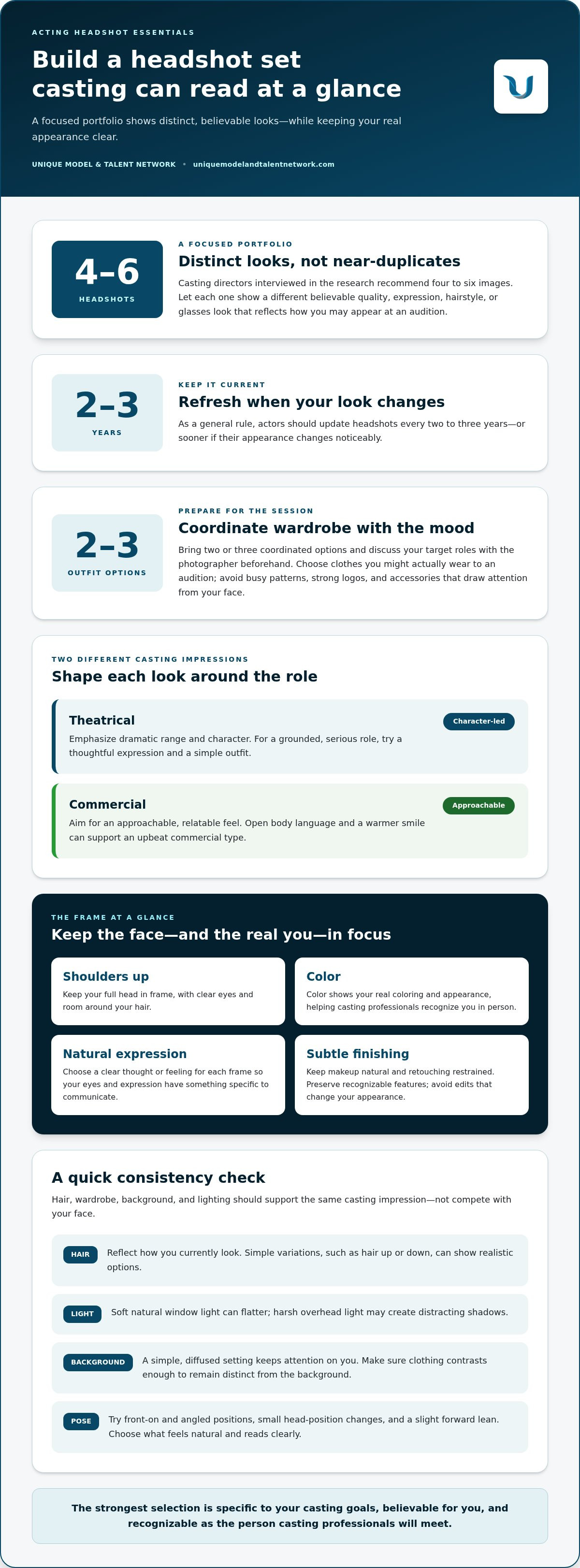
Theatrical headshots generally emphasize dramatic range and character, while commercial headshots tend to feel approachable and relatable for advertising roles. Build each look around the casting impression you want to convey. For a grounded, serious role, try a thoughtful expression and a simple outfit. For an upbeat commercial type, use open body language and a warmer smile.
During the session, try front-on and angled positions, then make small changes to your head position. A slight forward lean can feel warmer and more engaged. Ask the photographer to guide you through distinct expressions rather than repeating the same pose. Mention if you prefer one side of your face, and review images during the session to see which choices read clearly.
Choose clothing that suggests a role without turning the image into a costume. A neat jacket can suggest a professional character; a relaxed knit top can feel more casual and contemporary. Keep patterns and accessories from competing with your face. A useful outfit should feel like something you might actually wear to an audition, while leaving room for casting to imagine you in different roles.
A focused set is more useful than a crowded profile. Casting directors interviewed in the research recommend four to six headshots, with each image offering a distinct, believable look. Include variation in expression, hairstyle, or glasses when those changes reflect how you may appear at an audition. If you have a beard, consider including an image without it when both looks are realistic options for you.
Choose final images where your eyes and expression read clearly and the pose matches your casting goals. Keep retouching restrained: preserve recognizable features and avoid edits that change your appearance. Ask a trusted person for an honest opinion, then compare the strongest images side by side. Select the ones that show distinct, castable qualities rather than near-duplicates.
Ask the photographer in advance how the session will cover your target roles, and discuss your goals before the shoot so you arrive prepared.
As a general rule, actors should update headshots every 2 to 3 years, or sooner when their appearance changes noticeably. Choose poses that feel natural, specific, and consistent with the person casting professionals will meet in the audition room.
2. What About Hair and Makeup?
Build each headshot look from the role outward. Start with the character type, then coordinate your outfit, hair, makeup, and background to support the same mood. For example, a relaxed knit top and softly styled hair can feel approachable, while a structured jacket suggests a more formal presence. Keep your choices believable for your casting range, not like a costume.
Your hair should reflect how you currently look and how casting professionals might meet you. If you wear it straight most days, a dramatically curled style may make the image less representative. You can show simple variations, such as wearing your hair up in one image and down in another. Actors who wear glasses can include a look with them and one without, if both appearances fit their auditions.
Makeup works best when it supports your features without drawing attention away from them. Choose a natural finish that suits your coloring and keeps skin looking like skin. A headshot session isn’t the place for a dramatic stage look unless that’s genuinely part of your everyday appearance. Bring your usual products, then make small adjustments with the headshot photographer under the session lighting.
Acting headshots should generally be in color. Color helps casting professionals see your real coloring and appearance, supporting recognition when you meet in person. Black-and-white images can create a particular mood, but they don’t show those details. If you’re considering one, compare it with a color image and make sure the result still looks like you.
Keep the background simple and diffused so it doesn’t compete with your face. A neutral wall or softly blurred setting can suit different characters without locking you into a specific story. Match your clothing to the background: a dark top may disappear against a dark backdrop, while a contrasting shade can separate your outline. Avoid busy patterns, strong logos, and visible objects that pull the eye away.
Lighting and framing shape how those choices read. Soft natural light from a window can flatter your face, while harsh overhead light may create distracting shadows. Ask the photographer to check the image on camera and adjust your position if the background feels too sharp. A traditional headshot is cropped from the shoulders up; keep your full head inside the frame, with clear eyes and room around your hair.
Before the session, prepare two or three coordinated outfit options and discuss the intended mood with your photographer. Review images as you go, checking whether hair, wardrobe, background, and lighting tell the same story. If you want an industry perspective on how your presentation reads, explore industry-informed headshot guidance as you refine your choices.
3. Natural, relaxed expressions and light retouching
A strong expression gives the viewer something to read, not just a smile to notice. In the studio, choose a clear thought before the photographer takes each frame. Imagine hearing welcome news, waiting for an answer, or deciding whether to trust someone. That inner prompt can create a natural response in your eyes and mouth. The image feels more specific because the expression has a reason behind it.
Try a small range of emotions rather than forcing a dramatic face. For example, make one image feel open and curious, then shift to quiet determination. Keep your jaw unclenched and your shoulders relaxed. If you’re going for warmth, think of a friend you’re genuinely pleased to see rather than holding a fixed grin. The goal is to appear present, as if another person were just outside the frame.
Eyes carry much of that connection. A blank stare can make even a technically bright portrait feel distant, while a defined emotion gives casting a clearer sense of your energy. Ask the photographer to help you focus on a point just beside the lens, then look directly into it for another frame. Notice how each angle changes the feeling. Small shifts can make the image seem attentive, reflective, or direct.
Catchlights, the reflections of light in your eyes, can help them look lively. They come from the lighting setup, so ask the photographer to check how the light appears in your eyes on camera. If the studio light feels harsh, a softer position or a slight turn toward the light may create a more natural look. Your eyes should remain expressive, not artificially brightened in editing.
For a softer, warmer expression, gently raise your lower eyelids without squinting hard. Practise the movement in a mirror before your session, then compare it with your relaxed face. Keep the change subtle. A tense brow or tight mouth can make the expression look strained, while a relaxed face lets your eyes communicate thought, listening, or connection.
Between frames, release your face and take a breath instead of holding one expression. Then respond to a prompt from the photographer, such as remembering a conversation or reacting to an unexpected compliment. Review the images for emotional clarity: can you tell what the person is feeling without a caption? Keep retouching light, preserving the lines and features that make your expression recognizably yours. Peter Hurley’s rule is simple: if retouching is visibly obvious, it has gone too far.
4. Natural makeup and realistic retouching
Makeup should help the camera record your features, not create a different face. For an actor headshot, choose products that match your natural skin tone and avoid heavy contouring that changes your appearance on screen. A light base can even out temporary redness, while visible freckles and distinctive features should remain. Keep your real coloring, age range, and hair length recognizable in the finished image.
Prepare for the headshot session by checking your makeup under the actual lighting. A foundation that looks subtle in a bathroom may appear heavy under studio lights or on a bright screen. Bring your usual products and a mirror, then review a test frame. If powder makes your skin look flat, use less; if shine draws attention, blot gently rather than adding another thick layer.
Should an acting headshot be retouched, and what editing is acceptable? Yes, restrained retouching can polish an image, but it should still look like you in person. Correct exposure or color balance and soften a temporary blemish if needed; keep freckles, facial structure, and other recognizable details intact.
Use a practical test before approving edits: compare the final file with an unedited frame from the same session. Check the shape of your eyes, nose, jaw, and hairline. If smoothing removes natural skin texture or reshaping changes your features, ask for a lighter edit. Peter Hurley’s stated rule is that if an image visibly looks retouched, it has been retouched too much.
AI-generated headshots deserve particular caution because the image may alter details casting professionals rely on to recognize you. A picture can look polished on screen yet show different facial proportions, skin texture, or hair than you have in person. Use a photograph of your current appearance for submissions, and avoid edits that invent or erase identifying features.
Review the crop as well as the face. A traditional portrait shows the head and shoulders, so inspect the edges for unnatural hair outlines, blurred clothing, or mismatched background detail. Zoom in to spot editing artifacts, then view the image as a thumbnail to ensure your face remains clear. Both checks matter: close inspection reveals overediting, while a small display shows whether the portrait still reads naturally.
Before approving the final image, ask a trusted person who knows your current appearance to compare it with you. Have them look for changes in skin tone, hair length, and facial shape, not just whether the picture looks attractive. Good retouching supports a polished presentation while preserving the person casting professionals will meet.
5. Casting directors’ first impressions
A casting director uses your portrait to make a fast first assessment: does your appearance suggest a plausible fit for the role? Peter Hurley describes an actor’s headshot as needing to capture attention in the first second. That moment isn’t about looking perfect. It’s about presenting a clear, specific impression that invites a closer look.
For a paid speaking role, casting directors may review 2,000 to 3,000 headshots. At thumbnail size, a sharp face, readable expression, and clear lighting help your picture remain legible. Check that your eyes stand out and that your face doesn’t blend into the background. A portrait that relies on tiny details may lose its impact when displayed small.
What are the current U.S. casting industry requirements for acting headshots? Requirements can differ by casting notice, so follow its requested format and materials. In 2026, many Actors’ Equity Association Equity Principal Audition notices ask actors to bring a headshot and résumé stapled together; some request multiple copies.
Beyond submission instructions, the image should match the person who walks into the audition room. Current hair length, coloring, age range, and facial features help a casting director recognize you. If your headshot shows a beard but you arrive clean-shaven, or features a hairstyle you no longer wear, that mismatch can distract from the role-fit assessment.
Common mistakes include using filters, choosing a holiday snapshot, cropping off the top of your head, or submitting a heavily posed model image. These choices can obscure your current appearance or make the portrait feel less connected to acting. Also avoid distracting backgrounds, soft focus, and lighting that hides your eyes. Each detail should help casting read your face, not compete with it.
Specificity matters more than trying to look right for every character. A grounded, thoughtful portrait may suggest a different role range than a bright, openly warm expression. Keep each image aligned with roles you can credibly play, and choose a set that shows distinct casting possibilities. Four to six headshots provide a focused range without filling your profile with near-duplicates.
Before uploading, review the portrait at full size and as a small thumbnail. Ask whether your expression communicates a clear feeling, whether the lighting keeps your features visible, and whether someone who knows you would recognize the picture immediately. Then check the casting notice’s file or print instructions, since a strong portrait still needs to arrive in the requested format.
Use Live Industry Workshops to sharpen your understanding of how industry professionals assess presentation and role fit.
Unique Model & Talent Network: The Network Membership
Unique Model & Talent Network offers The Network Membership for actors seeking structured professional development alongside their craft. If you’re refining your headshot and broader portfolio, Portfolio & Reel Reviews can help you assess how your materials present you. Live Industry Workshops and Industry Expert Q&A Sessions offer opportunities to learn from entertainment professionals, while Monthly Skill-Building Challenges give you practical ways to keep developing.
Turn to these resources when you want informed perspective on your materials, clearer insight into industry expectations, or a focused way to continue building your skills. They support your professional development but don’t replace your own decisions about which images represent you best.
Explore The Network Membership and its learning opportunities at uniquemodelandtalentnetwork.com.
Take Your Next Step With Confidence
Your headshot is one part of a professional toolkit. Next, make sure the rest of your presentation supports the same clear sense of who you are and the roles you’re pursuing. Knowing what makes a good acting headshot gives you a stronger basis for these choices, while your materials and skills continue to develop alongside your career.
Unique Model & Talent Network offers The Network Membership, Live Industry Workshops, and Portfolio & Reel Reviews. These opportunities can help you build your industry knowledge and bring a considered perspective to your professional materials. Use them when you’re ready to develop beyond the photo and make intentional progress as an actor.
Explore the Network and take your next step. Keep refining your craft, stay open to informed feedback, and move forward with purpose.
Frequently Asked Questions
What is a headshot?
A headshot is a portrait used to introduce you professionally to casting teams and other industry contacts. For actors, it connects your name and audition materials with a recognizable image. Think of it as both an identification tool and a visual introduction: the picture should make it easy to recognize you, not suggest a character you can’t portray. Keep it current wherever you submit your profile.
Can I Take Headshots Myself or Have a Friend Do Them for Free?
You can make a practice image yourself or with a friend, especially while exploring expressions before a professional session. Choose a steady camera, clean lens, quiet setting, and soft light from a window. Ask your friend to take several frames while you respond naturally, rather than relying on a close selfie. Before submitting the result, inspect focus, framing, and whether the image matches your current appearance.
How Do I Pick the Best Photo?
Choose the image that communicates a clear, believable impression and still looks like you on an ordinary day. Compare your finalists in the format casting will see them, such as a small profile thumbnail. Ask a trusted person which image feels most recognizable and specific, rather than simply the most flattering. Remove near-duplicates; each selected photo should add a distinct, useful impression to your profile.
What About Hair and Makeup?
Keep your grooming consistent with how you expect to appear at an audition. Before the shoot, test your hairstyle and makeup in daylight, then take a phone photo to spot anything that looks unlike you. Bring a comb, blotting paper, and familiar makeup for small adjustments during the session. If you recently changed your hair, use the style you currently wear rather than presenting an outdated version of yourself.
What are “Looks” and How Many Should I Do?
A “look” is a coordinated outfit and backdrop that creates a particular visual presentation. Plan each around a distinct casting impression, such as contemporary professional or relaxed and approachable. Change only what serves that impression; a full costume can make the photo feel tied to one character. Decide the purpose of each look with your photographer before the session, so wardrobe changes create meaningful variety instead of several similar portraits.
What makes an acting headshot effective and industry-standard?
What makes a good acting headshot is its ability to present a recognizable actor and a clear sense of role fit. There isn’t one universal format for every submission, so follow the casting notice’s instructions for file type, dimensions, and delivery. As you review your image, check that it stays clear when reduced, represents your current appearance, and doesn’t rely on filters or visual effects to make an impression.
How should actors choose wardrobe, hair, makeup, and background for headshots?
Start with the roles you want to be considered for, then make choices that feel authentic to your everyday presentation. For instance, a simple collared shirt can suggest a polished, contemporary impression without becoming a costume. Keep accessories minimal, avoid visible logos, and check that your clothing contrasts clearly with the setting. A quick test photo in the chosen outfit can reveal distracting wrinkles, flyaway hair, or colors that compete with your face.
How do actors choose a headshot photographer and prepare for a session?
Review a photographer’s actor portraits for consistent focus, natural skin texture, and expressions that feel specific rather than staged. Contact them with the roles you’re targeting and ask how they’ll help you explore different expressions during the shoot. Before the session, prepare outfit options, decide which facial angles you prefer, and arrive with a clear idea of the images you need. Reviewing frames during the shoot helps you adjust while you’re there.


