

A child’s acting dream shouldn’t come at the cost of childhood. The practical way to support your child's acting dream is to fit acting practice around school, downtime, friends, and family, rather than letting auditions and rehearsals take over the calendar. Keep checking that your child enjoys the process, not just the idea of success.
It’s natural to want to encourage a young performer, especially when their excitement is clear. It’s just as important to protect the routines and relationships that help them feel grounded. Acting can be a rewarding way to explore creativity and confidence, but a healthy schedule leaves room for rest, hobbies, and ordinary time with friends.
This guide will help you choose age-appropriate acting classes, prepare practical materials, and support your child through auditions and rejection without making every result feel like a judgment of their talent. You’ll also find ways to make time for school, social life, and family while helping your child discover whether acting is right for them.
Key Takeaways
- Choose acting classes that match your child’s age, experience, and interests, and make room for practical performance experience.
- Keep headshots, resumes, reels, and casting profiles current and appropriate to your child’s stage of training.
- Protect time for school, friends, family, rest, and hobbies, and stay involved in your child’s interactions with industry adults.
- Help your child view auditions as learning experiences by recognizing effort and treating rejection as part of an uncertain process.
- Check in regularly about what your child enjoys, so their passion can grow without turning into pressure.
1. What should I look for in an acting class?
Families can find reputable acting classes and youth theater programs by searching local community centers, schools, and children’s theaters. Compare programs by age group, experience level, teaching focus, and opportunities to perform, then ask how instructors support young actors during class activities.
Acting classes are a useful starting point because they provide structure, feedback, and opportunities to practice. Choose a class that fits your child’s age and experience. A beginner may enjoy playful improvisation and storytelling, while a more experienced student may be ready for scene study or audition preparation. The right class should challenge your child without expecting them to work at an adult professional pace.
Match training to the kind of acting your child wants to explore. Screen acting often calls for camera awareness and adjusting a performance for close-ups. Stage classes can develop projection, movement, and performance for a live audience. A child interested in musical theater may want training that combines acting, singing, and movement. If your child is still deciding, a broad introductory class lets them try different approaches before focusing on one.
If screen acting is a goal, look for instructors with television or film experience. Check whether classes focus on skills your child wants to build, such as confidence, creativity, camera work, or audition preparation. Acting exercises can help children practice public speaking, listening to scene partners, and making clear choices. A short two-person scene, for example, gives a student practice responding naturally rather than just memorizing lines.
Training can extend beyond weekly classes. Live Industry Workshops and Industry Expert Q&A Sessions give young performers opportunities to learn from working professionals and hear practical perspectives. Performance experience matters too: a school play, youth theater production, or short scene for family can help a child apply classroom skills. A child-friendly production such as Matilda the Musical can show how acting, movement, and storytelling work together onstage.
Keep affordability and family routines in view. Local community centers may offer affordable acting classes, so include them in your search alongside school programs and youth theaters. Compare what each class teaches, not just its name. A nearby introductory class may be a better first step than a schedule that adds long travel or conflicts with homework and time with friends. Start with a manageable commitment, then review whether your child is learning and still enjoying the work.
Treat the first class as a chance to learn, not a career decision. After a class or workshop, ask your child what felt enjoyable, challenging, or confusing. Their answers can guide the next step: continuing with the same group, exploring stage or screen acting, or taking a break.
2. Headshots, resumes, reels, and casting profiles
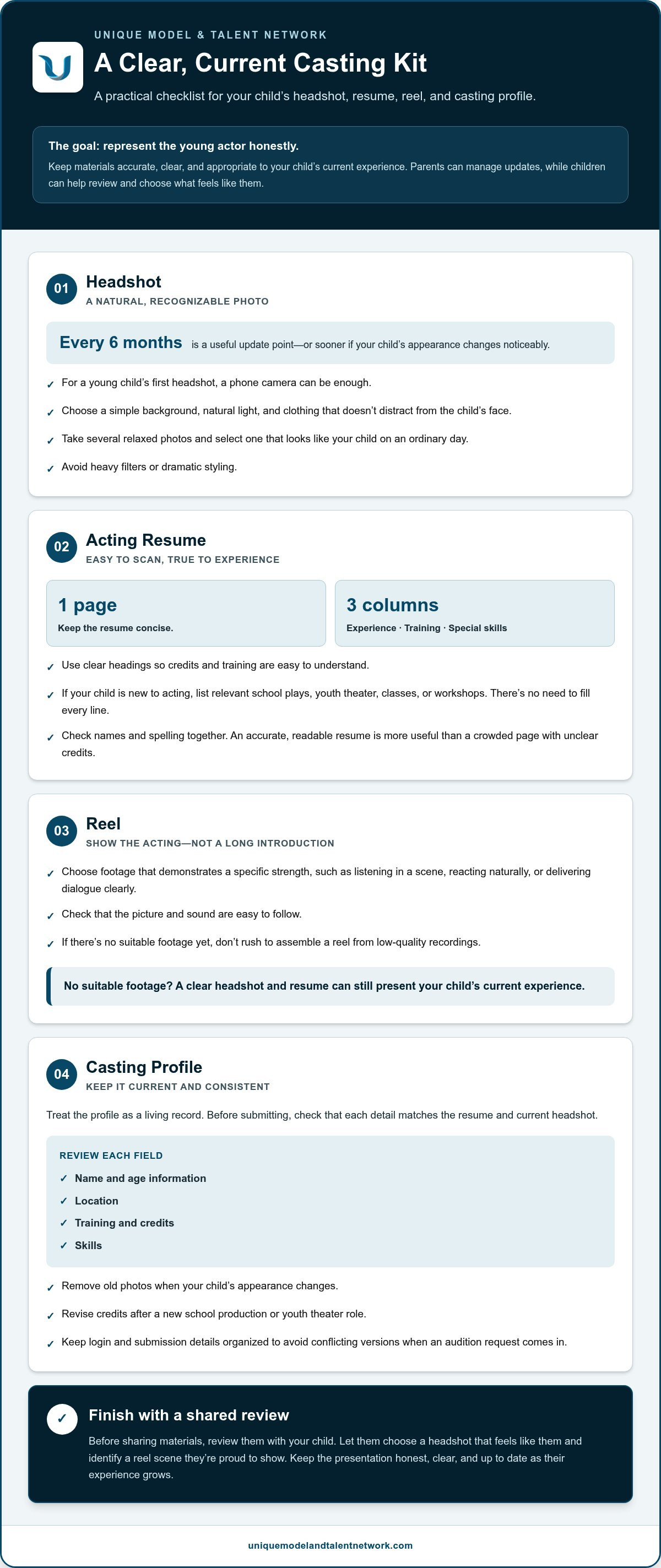
Build a child’s casting materials around accuracy, clarity, and their current experience. A headshot should look like the child who walks into the audition room, while a resume and profile should make training and performance credits easy to understand. Parents can manage updates to prevent outdated photos or details from confusing a casting director.
For a young child’s first headshot, a phone camera can be enough. Choose a simple background, natural light, and clothing that doesn’t distract from the child’s face. Take several relaxed photos and select one that looks like them on an ordinary day. Avoid heavy filters or dramatic styling. Update the headshot every six months, or sooner if the child’s appearance changes noticeably.
Keep the acting resume to one page and organize it in three columns, with clear headings for experience, training, and special skills. If a child is new to acting, list relevant school plays, youth theater, classes, or workshops rather than trying to fill every line. Check names and spelling together. An accurate, readable resume is more useful than a crowded page with unclear credits.
A reel should showcase a child’s acting, not a long introduction or unrelated clips. Choose footage that demonstrates a specific strength, such as listening in a scene, reacting naturally, or delivering dialogue clearly. Check that the picture and sound are easy to follow. If the child has no suitable footage yet, don’t rush to assemble a reel from low-quality recordings. A clear headshot and resume can still present their current experience.
Treat a casting profile as a living record. Before submitting, review each field: name, age information, location, training, credits, and skills should match the resume and current headshot. Remove old photos when the child’s appearance changes, and revise credits after a new school production or youth theater role. Keep login and submission details organized so a last-minute audition request doesn’t lead to conflicting versions.
Before sharing any materials, ask your child to review them with you. They can choose a headshot that feels like them and identify a reel scene they’re proud to show. This small step keeps the process collaborative instead of turning every photo or credit into an adult-managed project.
If you want focused input on a child’s existing materials, Portfolio & Reel Reviews can help you identify what to refine for a clearer presentation. Keep the goal practical: represent the young actor honestly, make key information easy to scan, and update it as their experience grows.
3. How can I balance my child’s social life with their acting career?
Start with a weekly calendar that gives school, sleep, friends, family, and acting practice their own space. Add fixed commitments first, such as school hours and a friend’s birthday, then fit auditions or rehearsals around them. If a rehearsal conflicts with family dinner, discuss the trade-off with your child before changing plans. A schedule should help the young actor participate without making every free afternoon available for career activities.
In the U.S., state child-performer and child-labor laws govern work hours, schooling, permits, and earnings. Requirements vary by state. Keep school responsibilities and the production schedule visible together so missed lessons or late rehearsals don’t come as a surprise. Ask the school how assignments can be managed during a production, and protect time for ordinary routines such as homework and seeing friends.
Include safety in the plan. For an audition, coaching session, or industry meeting, a parent or trusted guardian should understand where the child will be, who will be present, and what the activity involves. Keep communication transparent by including the guardian in messages and scheduling. Explain that your child can pause an interaction and come to you if an adult’s request feels uncomfortable. A professional opportunity should allow reasonable parental involvement.
Keep the career picture wider than acting. Skills developed through acting can lead to other entertainment-industry roles, including casting, management, teaching, producing, and directing. If your child enjoys analyzing performances, for example, discuss how that interest might connect with casting or directing. This broader view makes acting training useful as your child explores what kind of work suits them.
An industry assessment can help families decide which training or next step fits. Seek input from a vetted talent manager, acting coach or consultant, or casting director. Bring focused questions about your child’s strengths, experience, and goals, then discuss the feedback together. Coaching should offer specific guidance the child can understand, such as practicing clearer diction or listening more closely to a scene partner.
Use regular family check-ins to adjust the schedule. Ask what your child enjoyed, what felt tiring, and whether they still have enough time with friends. If auditions are crowding out a favorite hobby, decide together which commitment can shift. A sustainable journey leaves room for school milestones, weekend plans, and rest, not just the next casting opportunity. That balance helps parents support ambition while keeping the child’s daily life at the center.
4. Managing rejection and uncertain career prospects
If your child faces rejection or wants to quit acting, listen before offering solutions. Ask what feels difficult, acknowledge their disappointment, and give them room to decide whether they want a break or another audition. Celebrate preparation, courage, and effort instead of treating a booking as the only measure of progress.
Auditions are decisions about a particular role, not a complete judgment of a child’s talent. A represented actor can receive auditions as often as one per day, or as infrequently as one per month. That variation makes it difficult to expect a steady stream of opportunities. Help your child focus on what they can control: learning the material, arriving prepared, and treating readers and casting directors respectfully.
After an audition, try a short debrief. Ask your child to name one thing they felt proud of and one thing they might practice next time. If a director chooses another performer, avoid guessing why or criticizing the casting decision. Recognize the work your child put in, then return to ordinary routines such as homework, hobbies, and time with friends. A calm response helps keep one result from defining the whole experience.
Representation is one possible step, not a prerequisite for beginning. Children can start finding acting work without an agent or manager, while representation can help them advance and book larger roles. If your family considers representation, discuss the responsibilities and expectations together. An agent is entitled to 10% of work they help an actor book or negotiate. Make sure your child understands, in age-appropriate language, what signing an agreement could mean.
Involve your child in any decision about pursuing representation. Talk through why they want an agent or manager, which parts of acting they enjoy, and how representation might affect school and free time. A parent can help organize questions and review commitments, while the young performer shares their own goals. Leave room for interests to change.
Quitting doesn’t have to mean the experience was wasted. A child might pause auditions but continue enjoying acting classes, school productions, or creative play. They might also explore another entertainment-industry path later. Ask whether they want a temporary break, a lighter schedule, or a complete stop, then respect their answer. The goal is to support a healthy relationship with performing, not push a child toward a career they no longer want.
5. Supporting a child's passion
Let your child’s interest guide the pace. Parents often ask how to support your child's acting dream while keeping the experience child-led. A practical check-in after class or auditions can reveal whether they enjoy performing, want more practice, or need a pause. Ask what felt exciting and what felt uncomfortable, then listen without turning the answer into a career plan.
Notice skills beyond the performance itself. Acting can help children develop confidence, listening, reading, responsibility, independence, and social interaction. Learning a scene, for example, asks a young actor to understand written words, remember lines, and respond to a scene partner. Recognize these efforts specifically: “You listened closely before answering” gives clearer feedback than praise focused only on being talented.
Make practice playful and manageable. To strengthen memorization, learn a song together without looking at the lyrics, then let your child lead the next verse. To build stage presence, invite family friends or neighbors to watch a short song or small play. Encourage your child to introduce themselves and make eye contact in everyday conversations, without making each meeting feel like an audition.
Give acting a place in family life without letting it replace everything else. Attend a live performance at a local children’s theater, then talk about a scene your child enjoyed. If your child is homeschooled, acting activities can fit into the school day through reading dialogue, exploring character choices, or preparing a short performance. Keep other hobbies and rest on the calendar too, so acting remains one part of a full childhood.
Before auditions, help your child learn their lines and understand what their character wants. Ask them to describe the character in their own words, then rehearse the scene together without demanding a perfect take. Recognize preparation and effort whatever the casting result. If your child seems discouraged, return to a creative activity they enjoy rather than immediately scheduling another audition.
Stay connected with instructors about progress and practical ways to improve. A useful conversation might focus on one skill, such as clearer speech or stronger listening, rather than broad judgments about potential. Then agree on a small next step your child chooses. For families considering how to support your child's acting dream, this keeps feedback specific, supports a positive learning experience, and leaves room for their interests to change.
For structured ways to keep developing craft between performances, explore acting skill-building opportunities. Keep the measure of support simple: your child feels heard, has time for school and friends, and can enjoy acting without carrying the pressure of adult expectations.
Unique Model & Talent Network: The Network Membership
Unique Model & Talent Network gives aspiring actors a professional community for learning and industry insight. If your child wants structured development beyond classes and auditions, The Network Membership connects them with Live Industry Workshops, Industry Expert Q&A Sessions, Portfolio & Reel Reviews, and Monthly Skill-Building Challenges. These offerings can help families focus on craft, prepare materials, and learn about the industry while keeping the child’s interests and schedule in view.
Choose the support that fits your child’s current goal, whether that’s feedback on a reel or fresh practice through a skills challenge. To learn more about The Network Membership, visit uniquemodelandtalentnetwork.com.
Let your child’s next step grow from their own goals
The next step doesn’t need to define an entire career. Choose one small goal with your child, such as getting feedback on a reel, exploring an acting skill, or learning more about the industry. Then let their response guide what comes next. That keeps how to support your child's acting dream centered on the young performer’s interests, not pressure to move faster.
If your family would value continued learning and professional insight, Unique Model & Talent Network offers The Network Membership, Live Industry Workshops, and Portfolio & Reel Reviews. These options can support a young actor’s development as they continue shaping their own path.
Contact Unique Model & Talent Network to explore a next step that fits your family. Keep the conversation open, protect space for childhood, and encourage your child to follow the parts of acting they genuinely enjoy.
Frequently Asked Questions
How can I balance my child’s social life with their acting career?
Set a family rule that acting commitments don’t automatically override plans with friends. For example, agree that a birthday party already on the calendar stays protected unless your child wants to discuss a change. Use a shared calendar to spot conflicts early, and let your child help choose priorities. This gives them practice communicating about commitments while keeping friendships and family routines part of everyday life.
WHAT DO I DO NOW?
Ask your child what they want to try next, then choose one manageable action together. That might mean attending a school production, reading a scene at home, or looking at a beginner class. Agree on a time to revisit the decision after they’ve tried it. If they’re unsure, there’s no need to rush into auditions or career commitments. Curiosity and enjoyment can guide the next step.
What should I look for in an acting class?
Look for a class where students get time to participate, not only watch the instructor. During a sample lesson, notice whether children take turns, receive clear feedback, and have a chance to try a scene more than once. Ask how the instructor adapts exercises for beginners and what students typically work on. A class should give your child useful practice without making public performance feel like a test.
How can parents encourage a child interested in acting without pressuring them?
Let your child lead the conversation about acting. If they mention a favorite performer or scene, ask what they liked rather than immediately suggesting auditions. Offer choices, such as watching a play together or practicing a short scene, and accept “not today” without criticism. Praise specific actions, like remembering a line or listening to a scene partner. That shows you value effort and enjoyment, not just bookings.
What are the steps for a child to start acting in the United States?
Begin with an activity that lets your child try acting, such as a school production or beginner class. If they want to continue, build experience through practice and age-appropriate performances, then prepare basic casting materials as opportunities arise. Discuss each audition with your child and keep a parent or guardian involved in communications and scheduling. Requirements for professional work vary by state, so understand the rules that apply where the child will work.
How much do children's acting classes, headshots, and audition materials cost?
Costs depend on factors such as location, class format, instructor experience, photographer, and the materials needed for a particular audition. A community program may differ from private coaching, while an initial headshot can be simple before professional materials become useful. Start with your child’s current goals, set a family budget, and avoid paying for extras that don’t address an immediate training or audition need.
How can parents find legitimate auditions and talent agencies for children?
Use a consistent process: review the project details, identify who is conducting the casting, and keep a parent or guardian involved in all communication. For representation guidance, seek a vetted talent manager, acting coach or consultant, or casting director. Read any proposed agreement carefully with your child’s interests in mind. An agent is entitled to 10% of work they help an actor book or negotiate.
What are the warning signs of acting scams or unsafe casting situations involving children?
Pause if someone pressures your family to decide immediately, asks a child to meet privately without a guardian, or makes a booking sound guaranteed. Keep communication in channels a parent can review, and don’t let a child attend a meeting or audition alone. If instructions feel unclear or uncomfortable, stop and discuss the situation with a trusted adult before sharing materials or making commitments.


