
An agency scout doesn't want to see your most polished social media filter; they want to see the blank canvas that a high-end client can actually hire. If you feel paralyzed by the belief that you need a professional studio or an expensive photoshoot to get noticed, you're not alone. Most aspiring talent worry that taking modeling digitals at home will look amateurish or fail to meet the rigorous standards of top-tier scouts. It's a common hurdle, especially when you're trying to decode the "natural" look or find workable light in a limited space.
You possess the tools to secure your professional future right now. This guide will teach you how to master the art of taking agency-standard digitals using only your smartphone and natural light. We'll show you exactly how to produce a set of 5 to 8 clean images that meet the latest 2026 industry expectations. You'll learn the specific poses agencies demand, how the New York Fashion Workers Act impacts your career security, and the technical steps to ensure your "raw" photos look like they belong on a lead agent's desk. It's time to stop guessing and start submitting with the confidence of a seasoned industry insider.
Key Takeaways
- Understand why top agencies prioritize unedited "raw" images to evaluate your potential as a versatile blank canvas.
- Master the technical setup for taking professional-grade modeling digitals at home by leveraging soft, indirect natural light.
- Identify the essential industry uniform and grooming standards that ensure your natural physique remains the primary focus.
- Execute the five core shots every scout looks for, from the perfect headshot to the full-body profile.
- Learn the precise file organization and professional email protocols required to move your submission to the top of the pile.
The Strategic Purpose of Modeling Digitals: Why 'Raw' is Better
Modeling digitals, often called "polaroids" in industry circles, are the most critical tool in your professional development kit. Unlike the high-fashion editorials you see in magazines, these are unedited, raw images that capture your natural state. In 2026, the industry has shifted decisively away from overly staged or "produced" home shoots. Agencies now demand absolute authenticity. Digital filters and AI-generated imagery have made it harder to trust a "perfect" photo, so your raw shots act as a badge of integrity. When you take modeling digitals at home, you aren't trying to create a masterpiece; you're providing a technical blueprint of your physical features.
The "Blank Canvas" concept is the foundation of this process. An agent needs to see you without the distraction of heavy makeup, intricate styling, or dramatic lighting. They are looking for the potential to transform. If they can't see your bone structure or skin texture clearly, they can't pitch you to clients for diverse roles. By stripping away the artifice, you allow scouts to visualize you in a variety of campaigns, from commercial beauty to high-fashion runway. They want to see the real you before the hair and makeup team arrives. This transparency builds trust between you and the agency from day one.
Digitals vs. Portfolio: Knowing the Difference
A portfolio is a curated collection of your best work, designed to showcase your range and acting ability in front of a lens. It highlights what you can become with a full creative team behind you. Conversely, your digitals show exactly who you are today. Agencies often prioritize these raw shots over studio images because they offer an honest, up-to-date look at your current hair length, skin condition, and physique. These images serve as the primary source material for The Strategic Purpose of Modeling Digitals and the initial vetting process. While a portfolio builds your brand, your digitals secure the meeting. Agencies value the "unfiltered" look because it proves you can deliver on the promises made in your professional book.
The Agency Perspective: What Scouts Look For
Scouts view your shots as a diagnostic tool. They look for specific markers of professional potential: the symmetry of your bone structure, the health of your hair, and the clarity of your skin texture. They also want to see a spark of personality. Even in a neutral pose, your ability to maintain "life" in your eyes tells an agent if you have the presence required for a high-stakes set. Digitals are the industry's universal language for talent evaluation. Taking modeling digitals at home allows you to prove you can follow technical direction without the crutch of a professional photographer. It shows you are disciplined, organized, and ready for the professional demands of the 2026 market.
Setting Up Your Home Studio: Lighting and Background Essentials
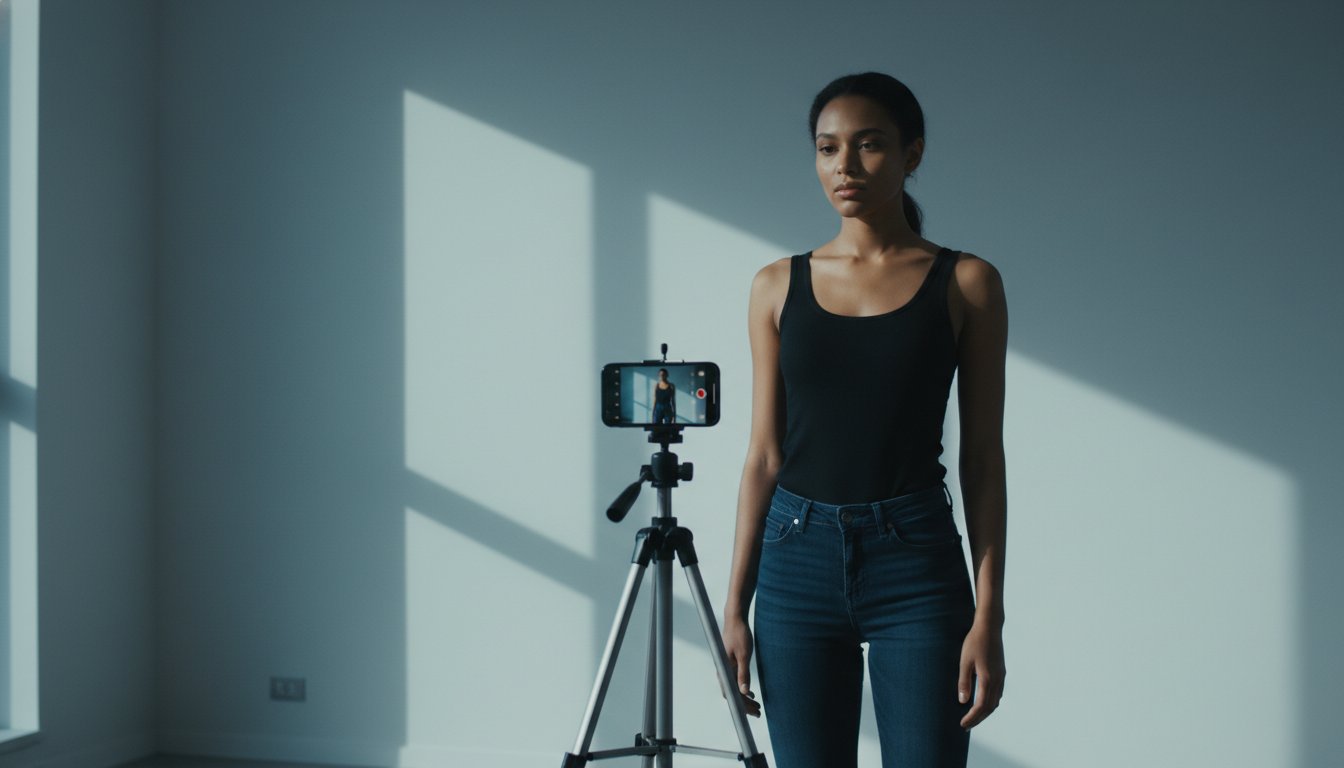
Transforming your living space into a scouting-ready environment is simpler than you think. You don't need expensive gear to produce high-quality modeling digitals at home. The primary objective is to create a clean, distraction-free setting that allows your features to take center stage. Start by identifying a blank wall in a neutral color like white, light grey, or beige. If your walls have busy patterns or heavy texture, a simple white bedsheet, steam-ironed and taped securely to the wall, serves as an effective makeshift backdrop. This creates the "blank canvas" look that agencies require for a professional evaluation.
Lighting is the most influential factor in your final images. The Golden Rule is to use soft, indirect natural light. Position yourself near a large window, but never stand in the path of direct, harsh sunlight. Direct sun creates unflattering shadows and causes you to squint, which ruins the "natural" look scouts expect. Similarly, turn off all overhead room lights and keep your camera flash off. Artificial lighting often introduces strange yellow or blue color casts that obscure your true skin tone and texture. Clean, natural light is the only way to ensure your skin looks healthy and your bone structure is visible.
Mastering Natural Light at Home
Positioning is everything. Stand at a 45-degree angle to your light source to create subtle, flattering depth on your face. If one side of your face looks too dark, use a white foam board as a cheap reflector. Hold it on the shadowed side to bounce light back onto your skin. The best time for photos is usually mid-morning or late afternoon when the light is consistent. Midday sun is often too vertical and creates "raccoon eyes" even when you're indoors. For those who want to refine these technical skills, participating in Live Industry Workshops can provide the professional feedback needed to perfect your setup.
Minimalist Equipment for Professional Results
Your smartphone is more than capable for this task. Set your camera to 2x zoom to eliminate the lens distortion that often makes features look wider than they are. Always clean your lens with a microfiber cloth before you begin. A tiny smudge is the most common cause of blurry, amateur-looking shots. Use a tripod or a stable surface at eye level to ensure your framing remains consistent across all shots. Relying on a friend to hold the phone can lead to inconsistent angles, which agents find distracting. If you're shooting solo, use the self-timer function or a Bluetooth remote to maintain a steady, professional frame while you focus on your posing.
Wardrobe and Grooming: The 'Blank Canvas' Aesthetic
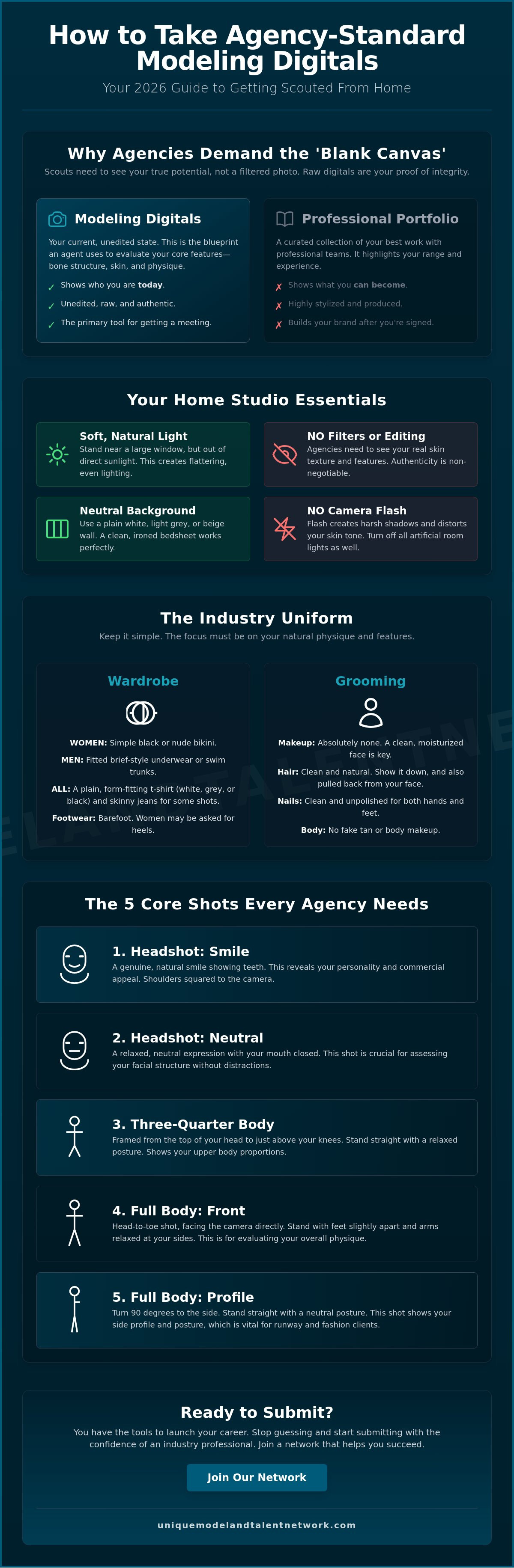
The industry uniform is not a fashion statement; it is a tool for visual clarity. When you prepare for modeling digitals at home, your clothing must act as a secondary thought to your physical proportions. Agents need to see the architecture of your body without the distraction of trends, logos, or bulky fabrics. If your wardrobe is too loose or your colors are too vibrant, you risk obscuring the very silhouette an agency needs to evaluate. Stick to a palette of black, white, or classic blue denim. These tones are universally accepted because they don't cast reflected colors onto your skin, ensuring your natural complexion remains the focus of every frame.
Grooming follows the same principle of professional transparency. In 2026, the standard for "natural" has shifted toward absolute authenticity. This means scouts expect to see your skin texture, freckles, and even minor imperfections. Attempting to hide these with heavy foundation or contouring is a red flag that suggests you aren't comfortable in your own skin. A prepared model understands that "no-makeup" means a well-moisturized face and groomed brows, not a full face of "natural-look" cosmetics. Your goal is to look like you just woke up on your best day, ready for a creative team to build upon.
The Digital Wardrobe Checklist
To ensure your submission meets professional standards, organize your wardrobe into these three essential categories:
- The Top: A simple, form-fitting tank top or T-shirt in black or white. Avoid anything with visible branding, lace, or distracting necklines.
- The Bottom: Skinny jeans or high-quality leggings that clearly show the length and shape of your legs. Denim should be a solid wash without heavy distressing.
- Swimwear: If you are submitting for commercial or high-fashion divisions, include a plain, solid-colored bikini or one-piece. Avoid high-cut strings or overly decorative hardware that might break the line of the body.
Grooming Standards for 2026
Preparation for modeling digitals at home requires a disciplined approach to grooming. Your skin should be clean and hydrated; use a lightweight moisturizer and a clear lip balm to prevent dryness. Keep your hair in its most natural state. If you have curls, let them breathe. If your hair is straight, ensure it is clean and frizz-free. You must provide one set of photos with your hair down and another with it tied back in a clean ponytail to reveal your jawline and ears. Finally, check your nails. They should be short, clean, and either unpolished or coated in a sheer, neutral tone. Any chipped polish or bright colors will immediately pull a scout's eye away from your face, which is the most common amateur mistake in home submissions.
The Master Shot List: Posing for Maximum Agency Appeal
Posing for modeling digitals at home is a technical exercise rather than a creative one. You aren't trying to sell a product or a mood; you're selling your physical architecture. Agencies need to see your structure from every angle to understand how you'll fit into future bookings. If you over-pose or use dramatic angles, you obscure the very information a scout is looking for. High-level professionals maintain a neutral, confident presence that allows their natural features to do the talking. This is the "blank canvas" in motion.
The standard industry submission requires five core shots. These images provide a 360-degree view of your potential:
- The Headshot: A clear, front-facing shot focused on your eyes and jawline.
- The Profile: A side view that highlights the silhouette of your nose, chin, and neck.
- The 3/4 View: A slight turn that shows the depth of your facial features.
- The Full Body: A head-to-toe shot to evaluate your proportions and stance.
- The Back: A rear view to show shoulder alignment and overall physique.
Framing Your Shots Like a Pro
Correct framing prevents your photos from looking like casual snapshots. For headshots, crop from the shoulders up, ensuring your eyes are the focal point. Full-body shots must include your entire frame, from the top of your head to your feet, with enough "breathing room" around the edges so you don't look cramped. When capturing your profile, stand perfectly perpendicular to the camera. This ensures your features are captured without distortion. If you find yourself struggling with these specific angles, participating in Monthly Skill-Building Challenges can help you refine your technical execution under professional guidance.
The 'No-Pose' Posing Technique
Achieving a relaxed but professional look requires a specific physical strategy. Shift your weight to your back leg to create a natural, elongated stance that avoids looking stiff or "wooden." Use the "breath-in" technique: take a deep breath to relax your shoulders and lengthen your neck just before the shutter clicks. Avoid common amateur mistakes like "claw hands" or the "duck face," which signal a lack of professional awareness. To maintain 'alive eyes' during a static shoot, think of a specific person or an internal goal to ensure your expression remains engaged and focused. This subtle internal energy is what separates a hobbyist from a professional talent ready for representation.
Leveraging Your Digitals: Submitting to Agencies and Networks
The work doesn't end once you've captured your modeling digitals at home. How you organize and present these files is the final test of your professional readiness. Scouts at top-tier agencies review hundreds of submissions daily; they have little patience for unorganized attachments or vague subject lines. To stand out, you must demonstrate that you understand the business side of the industry. This starts with a disciplined naming convention for every image. Use the format Name_ShotType_Year, such as JaneDoe_FullBody_2026. This simple step ensures your files remain searchable and easily identifiable within an agency’s internal database.
Your submission email should be a model of efficiency. Keep it brief, professional, and strictly fact-based. Avoid emotional pleas or long backstories. Instead, focus on providing the data points scouts need to make a quick "yes" or "no" decision. Most importantly, never apply filters, "facetune," or any digital alterations to your images. In the 2026 market, authenticity is your greatest asset. If an agent discovers that your photos have been edited to hide skin texture or alter your proportions, you will likely be blacklisted for lack of professional integrity. If you're unsure if your shots meet the mark, securing a portfolio review is the most effective way to get an objective, expert opinion before you hit send.
Submission Etiquette and Strategy
Every agency has a preferred method of contact. Research whether they use a specific submission portal on their website or a dedicated "new faces" email address. When you submit, include your accurate statistics: height, bust/waist/hip measurements, eye color, and hair color. Accuracy is non-negotiable. If you're signed based on false measurements, the relationship will end the moment you walk through the door for a fitting. Once your submission is out, exercise professional patience. The standard follow-up timeline is two to four weeks. If you haven't heard back by then, a single, polite check-in is acceptable, but avoid pestering the desk.
The Role of Professional Networks
Navigating the transition from aspiring talent to signed professional is often the most confusing part of the journey. Joining a modeling career coaching platform provides a protective layer of mentorship that helps you refine your strategy. These networks allow you to get your modeling digitals at home vetted by industry insiders who know exactly what current scouts are looking for. Furthermore, these clean images aren't just for modeling; they serve as a foundational tool if you choose to build a professional acting portfolio. By leveraging a community of experts, you move away from the uncertainty of social media and toward a structured, secure path to career success.
Secure Your Professional Future with Technical Precision
You've moved past the uncertainty that holds most beginners back. By mastering the technical requirements of taking modeling digitals at home, you've demonstrated a level of professional discipline that top-tier agencies value. You now understand that a "raw" aesthetic is a strategic choice rather than a lack of effort. You've optimized your lighting, refined your wardrobe, and executed the five essential shots that scouts demand to see your true potential.
The next step is ensuring your work passes the final industry inspection before you hit submit. Ready to get your digitals reviewed by industry pros? Join The Network today. As a member, you'll gain exclusive access to live workshops with casting directors and expert portfolio and digital reviews. You'll also become part of a private community of vetted talent where professional clarity replaces social media noise. Don't leave your career acceleration to chance when you can build it on a foundation of proven standards. Your journey toward representation starts with the images you've created today; make sure they are undeniable.
Frequently Asked Questions
Can I take my modeling digitals with an iPhone or Android?
Yes, you can absolutely use an iPhone or Android to capture your shots. Modern smartphone cameras provide more than enough resolution for agency standards in 2026. Agencies prefer these raw, accessible images because they offer an honest look at your potential without the distraction of professional studio equipment. Just ensure your lens is clean and you use the 2x zoom to avoid facial distortion during your shoot.
Should I wear makeup for my modeling digitals?
You should not wear any makeup for your digital submission. The goal is to present a "blank canvas" so scouts can visualize you in various creative concepts. Stick to a lightweight moisturizer and a clear lip balm to ensure your skin looks healthy and hydrated. Heavy foundation or contouring is often seen as a red flag because it hides the very features agents need to evaluate before signing you.
What should I wear for my first set of model digitals?
Wear form-fitting basics that clearly define your silhouette without being distracting. A simple black or white tank top paired with skinny jeans or high-quality leggings is the industry standard. This "uniform" allows scouts to assess your proportions and body alignment accurately. Avoid busy patterns, large logos, or baggy fabrics that might obscure your natural frame during your session of modeling digitals at home. It shows you are ready for work.
How often should I update my modeling digitals at home?
You should update your modeling digitals at home every three to six months to keep your files current. It's also mandatory to take new photos immediately if you change your hair color, get a significant haircut, or experience noticeable changes in your physique. Agencies rely on these images to pitch you to clients, so providing outdated photos can lead to professional friction during a booking or a casting call.
Do I need a professional photographer for agency digitals?
No, you don't need a professional photographer for your digitals. In fact, many top-tier agencies prefer raw smartphone photos because they're more authentic and harder to manipulate than studio shots. Spending hundreds of dollars on professional "digitals" is often unnecessary for a first submission. Focus on mastering your lighting and posing at home to prove you can follow industry standards independently without needing an expensive creative team.
What is the best lighting for taking model photos at home?
Soft, indirect natural light from a large window is the best option for your home setup. This type of lighting fills in shadows and highlights your bone structure without the harshness of direct sun. Avoid using your camera's flash or overhead room lights, as these create unappealing yellow or blue color casts. Consistent, natural light ensures your skin texture and eye color are represented accurately to scouts who value transparency.
How many photos should be in a standard digital submission?
A standard digital submission should include between five and eight clean, well-framed images. This set must cover the master shot list: a front-facing headshot, a side profile, a three-quarter view, a full-body shot, and a back view. Providing too many photos can overwhelm a scout, while providing too few might leave them with unanswered questions about your proportions or facial structure. Keeping your selection focused and high-quality shows that you're organized.
Why do modeling agencies ask for unedited photos?
Agencies require unedited photos to see your true physical features and skin texture. In an era of heavy digital manipulation, raw images act as a vital diagnostic tool for scouts. They need to know exactly what you look like before you arrive at a shoot so they can accurately match you with a client's needs. Authenticity builds professional trust and ensures you're booked for the right roles without any surprises on set.


