

Theater training gives you a strong foundation for screen work, but acting for the camera calls for adjustments. Learning how to transition from theater to film acting means refining your performance, preparing screen-focused materials, and understanding auditions and casting decisions.
If you’re used to performing for a live audience, you may wonder whether your stage skills translate to screen. They do: character analysis, vocal control, and responsiveness remain valuable. Film often calls for smaller, more precise choices that read clearly through the lens.
This guide explains how casting typically moves from audition materials to callbacks and decisions, and what to prepare at each stage. You’ll learn how to adapt your acting technique, approach self-tapes and in-person auditions, and build a screen-ready portfolio and reel. Understanding what casting professionals evaluate can help you make the transition deliberately and focus your training on the opportunities you want to pursue.
Key Takeaways
- Carry your theater strengths into screen auditions, while tailoring each performance to the camera’s close focus.
- Prepare a clear, concise slate of materials so casting professionals can quickly assess your screen presence and fit.
- Practice listening, stillness, and small adjustments on camera to make performances feel natural rather than projected for a stage.
- Use targeted workshops, reel feedback, and skill-building challenges to strengthen your screen-readiness and industry understanding.
Screen-industry career preparation
Screen work involves more than adapting stage technique. Prepare your performance and materials, understand the audition process, and review production agreements before committing.
Transferring and Adjusting Acting Skills
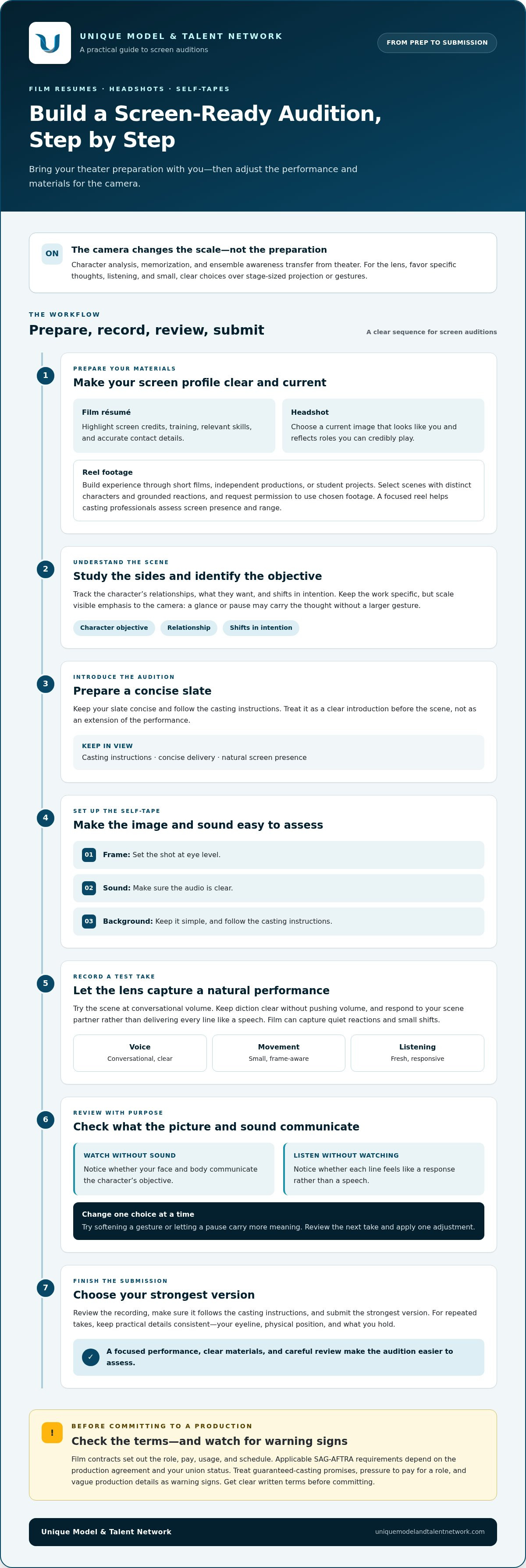
Theater skills such as character analysis, memorization, and ensemble awareness transfer well to film. Adjust your projection and gestures for the camera: rehearse a scene at conversational volume, then record a close-up to assess your eye focus and facial detail.
Film contracts set out the role, pay, usage, and schedule. Applicable SAG-AFTRA requirements depend on the production agreement and your union status. Costs for acting classes, camera workshops, headshots, and reels vary according to the instructor, format, location, and production needs.
Building Film Experience and a Reel
Build screen experience through short films, independent productions, or student projects. Choose scenes that show distinct characters and grounded reactions, then request permission to use selected footage in a reel. A focused reel helps casting professionals assess your screen presence and range.
According to Colorado Office of Film, Television and Media, Colorado’s film incentive program has generated economic impact in 58 counties in Colorado. According to Colorado Office of Film, Television and Media, it has created over 6,900 cast and crew positions. According to Colorado Office of Film, Television and Media, the incentive offers a performance-based refundable tax incentive of up to 22% of qualified expenses.
Treat promises of guaranteed casting, pressure to pay for a role, and vague production details as warning signs. Get clear written terms before committing.
Film Resumes, Headshots, and Auditions
A film résumé should highlight screen credits, training, relevant skills, and accurate contact details. Choose a current headshot that looks like you and reflects the roles you can credibly play. For auditions, study the sides, identify the character’s objective, and prepare a concise slate. For a self-tape, frame the shot at eye level, use clear sound, keep the background simple, and follow the casting instructions. Record a test take, review it, and submit your strongest version.
What acting skills transfer from theater to film, and what skills need adjusting?
Theater actors bring valuable tools to screen work: script analysis, character objectives, memorization, and ensemble awareness. Learning how to transition from theater to film acting means holding on to those strengths while adapting how they appear on camera. A close-up can capture a glance or pause, so a character’s thoughts may read clearly without a larger gesture or vocal emphasis.
Keep the preparation that helps you understand a character. Track relationships, mark shifts in intention, and identify what the character wants in each beat. Then scale those choices for the screen. A stage performance must reach the back row; film can show a quiet reaction, so prioritize specific thoughts over visible emphasis.
Compare your choices in the same short scene. Perform it with your usual stage projection, then record another take at conversational volume. Watch once without sound to see whether your face and body communicate the objective. Listen without watching to notice whether each line feels like a response rather than a speech. Adjust one choice at a time, such as softening a gesture or letting a pause carry more meaning.
Stage habits can also help you stay consistent across repeated takes. Keep the character’s objective steady while responding freshly to your scene partner. Film scenes may be recorded out of story order, so note physical details that help you return to the moment, including where you stand, what you hold, and the scene’s urgency.
A practical way to learn how to transition from theater to film acting is to set one camera-focused goal for each practice session. A Monthly Skill-Building Challenge can give that practice a clear focus, such as listening without anticipating a line. Review each recording, choose one adjustment, and apply it in the next scene.
How does film acting differ from theater acting in performance, voice, and movement?
Film captures small reactions, while theater must communicate across a room. In a close-up, a changed breath or brief hesitation can reveal a character’s thoughts. A stage actor might underline that beat with a gesture, but on camera the same gesture can distract. Play the character’s objective, then let the lens capture the response. Framing also shapes the performance: a wide shot includes posture, while a close-up emphasizes the face.
Voice needs similar control. Theater projection helps every seat hear the dialogue, but a film microphone can capture conversational speech. Keep your diction clear without pushing volume, and avoid emphasizing every important word. For example, deliver a tense line as if speaking privately to one scene partner. A microphone picks up quiet detail, so a natural pace and clean articulation often serve the scene better than a stage-sized vocal shape.
Movement is shaped by framing, focus, and continuity. A step that feels small onstage may take your face out of frame or interrupt focus. Follow blocking and marks, then repeat practical details across takes: which hand holds a cup, where your eyes land, and how you turn. In a two-person conversation, a slight shift toward your partner can read clearly without taking you out of frame or competing with the dialogue.
Film scenes are recorded in separate shots, not always in story order. Match the emotional level, eyeline, pace, and physical position between takes, even when the camera angle changes. If a scene moves from a wide shot to a close-up, preserve the same objective while refining your gesture for the tighter frame. Rehearse with a phone camera, then review the framing, sound, and whether each movement supports the moment. Make one adjustment at a time, such as softening a hand gesture or letting a reaction land before speaking. This builds control without flattening the character’s energy.
What exercises help stage actors develop subtle, natural on-camera performances?
Use a phone camera to see how small choices register on screen. Pick a short scene with a clear objective, such as persuading a friend to stay. Record one take with your usual stage energy, then another with fewer gestures and a quieter delivery. Compare them. Notice which version makes the character’s thoughts easiest to follow, not which looks most restrained.
Try a silent-reaction exercise. Ask a scene partner to read a line that changes your character’s situation, then listen without speaking. Record your face as you process the news. Watch the playback with the sound off and identify when your understanding shifts. Repeat the exercise with a different response, such as disbelief or relief, without signaling it visibly before the thought lands.
A listening drill can loosen rehearsed timing. Have a partner read the same line in different ways, such as warmly, impatiently, or uncertainly. Respond to each delivery rather than preparing one fixed reaction. Keep your eyes on your partner’s eyeline, and let each response shape your next choice. This trains you to stay present in the scene instead of anticipating a cue.
To practice movement control, tape a simple frame on a mirror or monitor and perform a short scene within it. Deliver the lines while sitting, then repeat while standing, keeping each gesture purposeful and inside the frame. Review whether a hand movement, turn, or step distracts from the character’s objective. Change one element in the next take so you can see its effect clearly.
Build a repeatable review habit: watch each take once for facial expression, once for sound, and once for physical choices. Write one observation after each viewing, such as “I looked away before hearing the answer.” Then record a fresh take using that note. Explore focused on-camera acting practice to keep developing these skills with structure and feedback.
On-camera practice is part of a larger filmmaking environment. Filmmaking includes development, pre-production, production, post-production, and distribution. Colorado’s Regional Film Liaisons share expertise with filmmakers and help attract productions to their communities, giving actors a wider perspective on the screen industry.
Unique Model & Talent Network: The Network Membership
Unique Model & Talent Network gives theater actors a professional community for developing screen-industry skills and connections. If you’re ready to turn camera practice into focused career preparation, The Network Membership offers a place to learn alongside aspiring talent and industry professionals.
Use Live Industry Workshops to build practical knowledge, Portfolio & Reel Reviews to strengthen your materials, and Monthly Skill-Building Challenges to keep your on-camera practice purposeful. Industry Expert Q&A Sessions can also help you understand casting perspectives and make more informed career decisions. These resources support your development; they don’t replace auditioning, training, or building experience.
If a structured community would help you take your next step, visit uniquemodelandtalentnetwork.com to explore The Network Membership.
Turn Your Screen-Acting Goals Into a Working Plan
A practical approach to how to transition from theater to film acting is to choose one screen-career goal and take consistent action toward it. You might sharpen a self-tape, select scenes for a reel, or learn how casting professionals assess a performance. Track what you’re practicing and where you want feedback, so each opportunity helps you decide on your next move.
If you’d benefit from structured development, Unique Model & Talent Network connects The Network Membership with Live Industry Workshops and Portfolio & Reel Reviews. These offerings support your learning and help you refine professional materials as you pursue screen work. They’re resources for your development, not substitutes for your preparation and audition choices.
Contact Unique Model & Talent Network to explore a next step that fits your screen-acting goals. Keep your craft at the center, stay deliberate about your development, and bring your theater experience into the frame with confidence.
Frequently Asked Questions
How should theater actors find film auditions, casting calls, and agents in the United States?
Find auditions through legitimate casting notices, production announcements, and professional connections. Track each opportunity’s role details, submission instructions, and deadlines. Build a targeted agent query with a concise résumé, current headshot, and relevant screen footage; explain the roles you’re pursuing instead of sending a generic introduction. Research an agent’s clients and professional standing before engaging. The Network Membership offers industry education and networking, not talent representation.
What contracts, union rules, and SAG-AFTRA requirements should theater actors know when moving into film?
Film contracts set out the role, pay, usage, and schedule. Applicable SAG-AFTRA requirements depend on the production agreement and your union status.


