

A photograph and permission to use it are two different things. If you’re asking what a model release form is, it’s a legal document in which a person gives permission for their image, voice, or likeness to be used in specified ways, often for commercial purposes. It covers how an image may be published, not who owns its copyright.
It’s easy to think a signed form is just a shoot-day formality. In practice, clear terms help the person photographed and the people using the images understand what they have agreed to, especially when photos may appear in advertising or online.
This guide explains what to include in a release, how to describe digital and social media use, and why permission for a minor needs particular care. It also covers when a release may matter, how to link consent records to the images they cover, and why rules can differ across countries. These basics can help you handle image permissions with greater clarity and professionalism.
Key Takeaways
- Set the release terms before the shoot, and identify the project, intended uses, and people or organization authorized to use the images.
- Keep consent clear and specific: distinguish commercial promotion from editorial use, and describe digital use, editing, and any time limits.
- For a subject under 18, obtain a guardian’s consent and keep the signed paperwork connected to the images it covers.
- Organize executed forms by the subject’s name, shoot date, and project so permissions can be matched to images later.
- Build confidence in professional practice through structured learning, portfolio feedback, and industry insight.
What is a model release form?
To understand what a model release form does, focus on permission for image use, not permission to take a photograph. Administer it before the shoot, while the terms can be discussed clearly.
-
Administer and Sign Releases
Get the signed release before the shoot, whether the model is paid or unpaid. Identify the model by full name, date of birth, and contact details, and name the photographer or company using the photos. Describe the project and intended uses, such as online ads or brochures. Explain the terms and include a consent statement confirming that the model understands and agrees.
Ask fashion models to sign before makeup, and use a separate release for each shoot. Photography or legal-document organizations may provide a free model release form template. Treat it as a starting point: tailor the stated uses to the project and have the form legally reviewed. A witness signature and compensation details are optional. Having a witness is good practice, not a legal requirement.
-
Specify Rights Transferred by Signing
State exactly what the model permits: publication or licensing of the covered images, the intended purposes, and any time limit. Releases commonly grant image-use rights indefinitely, though some specify an end date. Once signed, they’re typically irrevocable, and the model waives the right to sue over commercial use covered by the agreement.
Keep the scope precise. A release doesn’t transfer copyright, which is separate from the subject’s privacy and publicity interests. Nor does it grant unlimited permission for every possible use. Explain whether the photographer or company may use the image promotionally or license it commercially, and avoid wording that leaves the project or permitted use unclear.
-
Distinguish Commercial and Editorial Releases
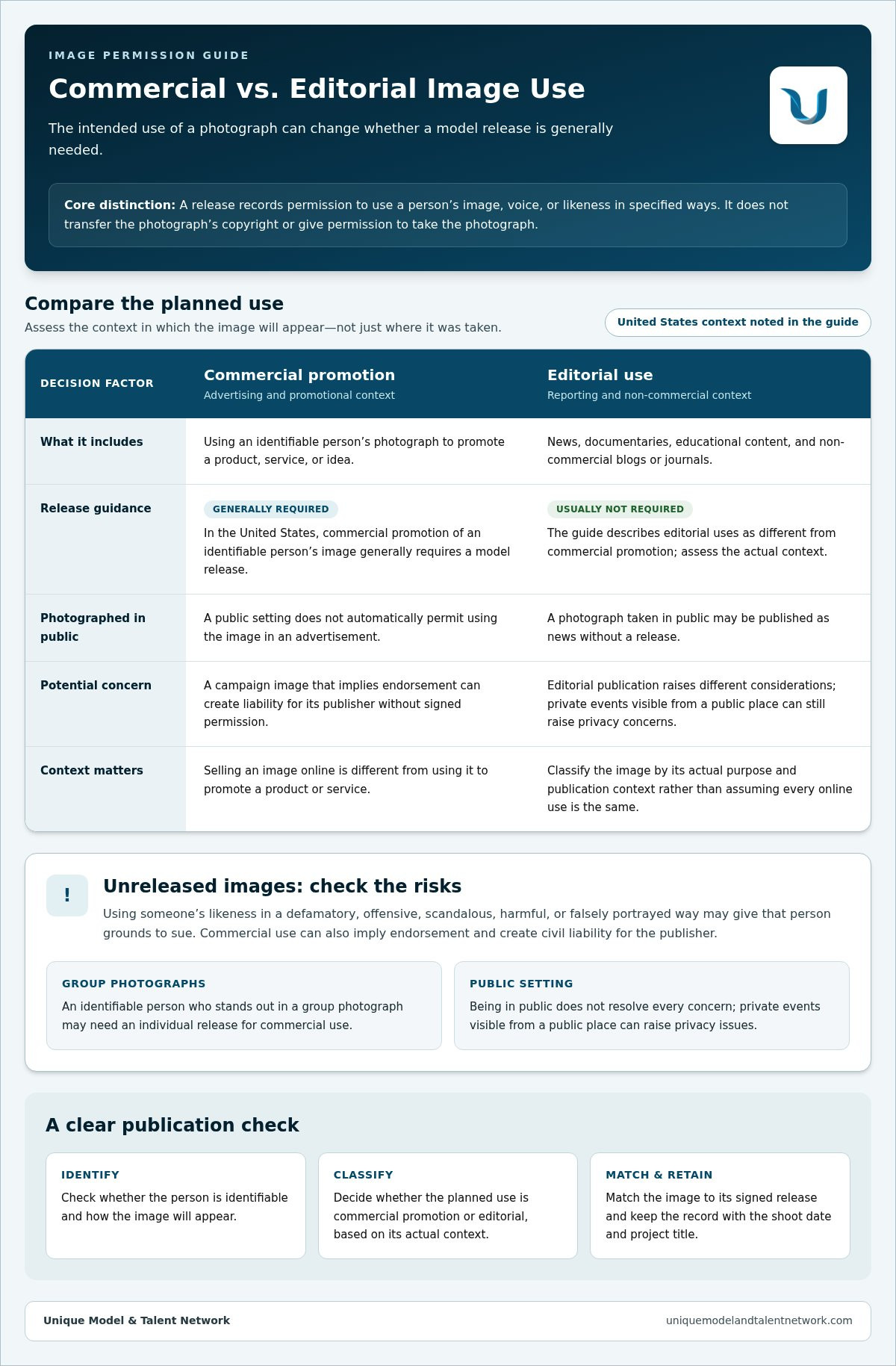
Classify each planned use before requesting permission. In the United States, using an identifiable person’s photograph to promote a product, service, or idea generally requires a model release. A campaign image that implies endorsement can create liability for its publisher without signed permission.
Editorial use is different. A release is usually not required for news, documentaries, educational content, or non-commercial blogs and journals. A photograph taken in public may be published as news without a release, but that doesn’t automatically permit using it in an advertisement. Selling an image online is also different from using it to promote a product or service, so assess the actual context.
-
Assess Risks of Unreleased Photos
Before publishing, check whether a person is identifiable and how the image will appear. Without a release, using someone’s likeness in a defamatory, offensive, scandalous, harmful, or falsely portrayed way may give that person grounds to sue. A commercial image can also imply endorsement and create civil liability for its publisher.
Don’t assume a public setting resolves every concern. Identifiable people who stand out in a group photograph may need individual releases for commercial use. Editorial publication raises different considerations, while private events visible from a public place can raise privacy concerns. Match each image to its intended use, and retain the signed release with the shoot date and project title.
Definition and purpose of a model release form
A model release is an agreement that records permission to use a person’s image, voice, or likeness. Define its scope before drafting the terms so the subject and image user share a clear understanding.
-
Define the Form’s Purpose
Explain why the project needs permission and what the release will cover. A model release is a legal document typically signed by the photographed person, allowing publication in specified ways. It addresses privacy and public use, including commercial publication. It doesn’t give permission to take the photograph.
Use the form to make the agreement clear to both parties. For example, tell a model whether the images will appear in a clothing campaign or a photographer’s promotional portfolio. Describe the project plainly, then check that the stated purpose matches the shoot. Avoid broad wording that could make a narrow project sound like permission for every future use.
-
Describe the Release’s Scope
Identify the person granting permission and the photographer or company that will use the images. Include the model’s full name, date of birth, and contact details, along with the project description and intended uses. A consent statement should confirm that the model understands and agrees to the terms.
Specify whether permission covers a particular image, a shoot, or a defined group of images. State the permitted uses, such as online advertising or printed brochures, and include any time limit. Releases commonly grant image-use rights indefinitely, though some set an end date. Make sure the scope matches the planned publication and doesn’t leave important limits unclear.
-
Identify What the Form Authorizes
State whether the agreement authorizes publication, promotional use, or commercial licensing of the covered images. A signed release can allow the photographer or company named in the form to use the subject’s likeness for those stated purposes. It doesn’t transfer copyright, which is separate from permission to use a person’s image.
Review the wording from the model’s perspective before asking for a signature. The model should be able to understand where the photos may appear and whether the use could promote a product, service, or idea. A release may waive the model’s right to sue over covered commercial use, so keep the authorization specific and explain its practical effect. For wider career guidance, explore model and talent industry guidance.
Digital and social media permissions
Define each digital use before publishing photos online. A release should make clear where images may appear, how they may be edited, and which consent record covers them.
-
Set Digital and Social Media Permissions
Name the platforms and purposes covered by the permission. For example, distinguish a company website, paid social media advertising, and an organic post on a brand account. State the intended duration and types of permitted use rather than relying on a broad phrase such as “online use.” Many social media releases waive monetary compensation for use of a model’s image or likeness, so explain the compensation terms plainly.
Separate promotional use from a model’s own portfolio use. If the agreement allows posting only on a campaign account, don’t treat that as permission for unrelated posts or later campaigns. Match the wording to the actual plan, including whether another organization may reuse the image. Clear limits help the model understand the digital permission being granted.
-
Address Digital Manipulation Clauses
Describe edits that may change how the model appears. A digital manipulation clause is especially relevant when edits alter physical traits, such as reshaping a face or changing body proportions. Explain whether retouching, compositing, or digital effects are planned, and avoid wording that could be read as blanket approval for any alteration.
Connect the clause to the image’s intended context. Routine color correction, for example, differs from changing a model’s apparent features in an advertisement. Describe material alterations in straightforward language, then confirm the release covers the actual editing approach. This helps the model understand how final photos may differ from the shoot images.
- Link each signed release to the images it covers. After a shoot, attach proofs or thumbnails to the relevant consent record, then label it with the model’s name, shoot date, and project title. This makes it easier to identify the permission for a specific image before it appears in a social post or digital campaign.
Keep consent forms in one place instead of scattering them across email threads and local folders. A digital asset management system can restrict file access and record when and how content may be used. Organize records by project and model, and store the signed form alongside references to the covered images. This workflow reduces confusion when teams select photos for publication.
- Build a publication check into the digital workflow. Before a social post goes live, compare the selected image, caption, platform, and campaign purpose with the release terms. If permission covers a website portfolio but not paid advertising, don’t use that image in the ad campaign. Record the decision alongside the image so editors can follow the same limits later.
Review the workflow whenever a project adds a new channel or use. A photo first posted organically may later be considered for an advertisement, changing its context. Match the proposed use to the recorded permission before reusing the image, and keep the release linked to the relevant versions, proofs, and final files.
Parent or guardian consent for minors
For a model under 18, treat consent as a separate part of planning the shoot. A signed release and a legal guardian’s approval help clarify who can authorize image use.
- Confirm the model’s age before preparing the release. In most U.S. states, a person under 18 is considered a minor for model-release consent purposes. Use the applicable age threshold for the shoot’s location, since rules vary between countries. Record the young person’s details accurately, and don’t assume an adult release alone covers a minor’s participation.
- Obtain a release for the minor and guardian consent before the shoot. At least one legal guardian should be available to approve the arrangement. Explain the project, intended image use, and any planned publication in language both can understand. For example, distinguish a school portrait from a commercial campaign so the guardian can assess the actual purpose.
- Give the guardian time to review the contract before signing. Explain the permitted uses, duration, and compensation terms, then answer questions without rushing the decision. Involve the young person in an age-appropriate way rather than treating guardian approval as a substitute for respectful communication. Store the signed consent with the project record and identify the images it covers.
- Plan the working day around protections for young performers. In the United States, meals, breaks, and working hours for minors are tightly regulated. If a production requirement is unclear, contact the relevant permitting office before scheduling the shoot. Build breaks into the plan, communicate the schedule to the guardian, and don’t assume an adult’s working arrangement applies to a minor.
- Handle requests to withdraw consent carefully. Model releases are typically irrevocable once signed, but anyone considering revocation should seek legal advice before taking action. Don’t promise that a signed agreement can be cancelled or that every existing use will automatically stop. Keep the original release, document the request, and have the specific contract and proposed response reviewed.
- Keep the permission record complete after publication. Link the guardian’s signed release to the minor’s name, shoot date, project, and covered photographs. If a campaign changes from a portfolio display to advertising, compare the new purpose with the existing authorization. This helps the production team avoid relying on consent that doesn’t match the planned image use.
What a model release form is
Use the document to connect a person’s consent with a specific image use. Its practical value lies in making the intended permission clear before publication.
- Describe the form as written permission from the person photographed. It records how their image, voice, or likeness may be published, including for commercial use. The agreement should identify the project and the people or company using the image. For example, a release for a clothing campaign should describe that campaign, not imply unrestricted approval for unrelated future projects.
Keep the purpose clear. A model should be able to understand what they’re authorizing without having to guess what broad phrases mean.
- Separate permission to use an image from permission to take a photo. A photographer may take a photograph, but the release concerns potential publication and use of the subject’s likeness. In the United States, using an identifiable person’s photo to promote a product, service, or idea generally requires a release.
For instance, a portrait taken during a public event and later used in an advertisement serves a different purpose from taking the portrait. Write down the planned use rather than relying on where the photo was made.
- Distinguish a model release from a photo release. A model release records a subject’s permission for a specified use of their likeness. The photographer signs a photo release to let a client print copies. These documents cover different permissions, so one doesn’t automatically replace the other.
Keep copyright separate, too. A model release concerns privacy and public use of a photograph, while copyright concerns ownership of the image. For example, a model’s permission doesn’t by itself transfer the photographer’s copyright to a brand.
- Match the release to the publication context. Editorial use, such as a news article, documentary, or educational content, usually differs from using a photo to promote a service. In the United States, publishing an identifiable person’s photograph taken in public as news generally doesn’t require a release. Commercial promotion can raise different consent issues.
Review the caption and placement as well as the image. A photo placed beside an endorsement-style claim may suggest that the person supports a product. The form should describe the actual project and intended use, not simply say “publication.”
- Review the complete document before anyone signs. Confirm that it names the image user, describes the project, identifies intended uses, and includes a consent statement. A witness signature and compensation details may be included, but they’re optional. Keep the completed form with the project’s image records so teams can connect permission to the correct photographs.
Have legal or data protection teams review and approve the template, especially for international work, where personality and privacy rights differ. If you’re building professional judgment around image permissions, explore industry learning and expert guidance.
Unique Model & Talent Network: The Network Membership
Unique Model & Talent Network helps aspiring models and actors build practical industry knowledge, including image-permission basics. If you’re preparing for shoots and want informed feedback on your professional materials, The Network Membership offers a community focused on industry development.
Use Live Industry Workshops to learn from industry professionals, Portfolio & Reel Reviews to strengthen how you present your work, and Monthly Skill-Building Challenges to keep developing your craft. These opportunities support career preparation; they don’t replace legal review of a release or advice about a specific contract.
If you’re ready to build your industry knowledge and creative practice, visit uniquemodelandtalentnetwork.com.
Build Your Next Step With Confidence
Understanding what a model release form means is one part of building a professional practice. Strengthen your judgment, ask informed questions, and present your work with purpose. These habits help you approach future collaborations clearly and communicate professionally with photographers, casting teams, and other creatives.
Unique Model & Talent Network supports that development through The Network Membership, Live Industry Workshops, and Portfolio & Reel Reviews. Use these opportunities to grow your industry knowledge, refine how you present your work, and learn from professionals who understand the field. They complement careful consent practices but don’t replace legal review of a specific release.
Take the next step in your creative development and connect with Unique Model & Talent Network. Keep building your skills and professional confidence, one informed decision at a time.
Frequently Asked Questions
When do you need one?
Get a release when you plan to use an identifiable person’s likeness for commercial promotion, such as a model’s image in a brand campaign. Secure permission before the shoot, then link it to the specific images and planned use. For a public group photo, pay particular attention to people who stand out instead of treating the crowd as one anonymous subject. Editorial news publication raises different considerations.
When do photographers or businesses need a model release form?
Photographers and businesses generally need permission when using an identifiable person’s image to promote a product, service, or idea. Consider where the image will appear: a photo licensed for sale on a website differs from one placed in an advertisement for a business. Before licensing or repurposing a photo, match the proposed use to the permission on file and clarify who will publish it.
Is a model release form legally required in the United States?
There isn’t one rule that makes a release necessary for every photograph in the United States. Commercial promotion using an identifiable person’s likeness generally requires consent, while editorial news publication raises different considerations. State laws can also matter. New York’s Right of Privacy law and California’s Civil Code are examples of state laws requiring consent for likeness use. The planned use and applicable state law are key factors.
Are model release forms different for adults and minors?
Yes. For a subject under 18, obtain a release and guardian consent; in most U.S. states, people under 18 are treated as minors for this purpose. An adult release is generally intended for someone over the age of majority. For example, if a young performer appears in a campaign, include a legal guardian in reviewing and approving the permission, and keep that approval with the relevant project records.
Can a model release form be limited or revoked after signing?
A release can set limits, such as the campaign, permitted uses, or duration; some releases grant rights indefinitely. Releases are typically irrevocable once signed, so define the scope before signing rather than relying on later withdrawal. Anyone considering revoking a signed release should seek legal advice before taking action. Keep a copy of the signed agreement and any written communication about the request.
Can a model release form be signed electronically?
An electronic signature can be used when the applicable law and signing process recognize it. Requirements can vary by country, so international projects need particular care with the form’s language and review. Keep a complete copy of the signed document, including the signer’s identity, date, and agreed terms, and link it to the covered photos. This record helps the production team retrieve the permission when planning publication.


