

Commercial modeling covers print, television, and internet advertising, and it doesn’t require you to be 6 feet tall. To understand how to get started in commercial modeling, build a focused portfolio with a professional headshot and full-body photo, then approach agencies with clear digital images and your measurements. You can also develop your presence on social media, prepare for castings, and build professional connections that help you learn how the industry works.
It’s understandable to think an agency is the only way into modeling. You can also get started by presenting yourself professionally, recognizing legitimate opportunities, and building relationships with people who understand casting and creative work.
This guide explains what commercial modeling involves and how to take practical first steps, from preparing a portfolio and submitting to agencies to using social media, attending castings, and connecting with industry professionals. You’ll find a clearer plan for building your presence and approaching the work with confidence.
Key Takeaways
- Commercial modeling spans advertising across print, television, and online media, with opportunities for varied looks and body types.
- Make agency submissions easy to assess with clear digital photos, accurate measurements, and a concise application.
- Use social media as a professional portfolio: present your look consistently and build genuine industry connections.
- Prepare for go-sees by practicing your poses, planning your presentation, and arriving early.
- Use Unique Model & Talent Network’s workshops, reviews, and skill-building challenges to strengthen your industry knowledge and professional readiness.
What is commercial modeling?
Commercial modeling puts people in print, television, and internet advertising. Campaigns can feature different ages, looks, and body types, including fitness, swimsuit, plus-size, and stock photography work. Unlike traditional runway expectations, commercial modeling doesn’t require a height of 6 feet. Clients cast for the audience, product, and scene, so a convincing presence can matter more than fitting one narrow look. If you’re considering how to get started in commercial modeling, focus first on the work you want to be considered for.
How much do commercial models get paid in the US? There isn’t one standard rate. Compensation depends on the project, your role, where the images appear, how long they’re used, and whether the agreement restricts other work.
How do commercial modeling rates, usage rights, and buyouts work? The rate covers the work agreed for a booking, while usage rights define where and for how long the client may use the images. A buyout generally means a broader grant of usage rights. Before signing, read the specific terms on usage, exclusivity, and payment.
- Build a focused portfolio. Start with a professional headshot and a clear full-body shot. Aim for 5-10 high-quality photos that show different expressions, styling, and energy. A casting team should quickly understand how you might fit an advertising brief. Choose images that look like you now, not a heavily altered version of your appearance.
- Prioritize variety over volume. Select 10 strong photos from 5 outstanding shoots rather than filling your portfolio with 100 images from 50 shoots. Include close-ups, full-length frames, and varied expressions. For example, a relaxed smile, a focused look, and an approachable expression can suggest different campaign uses without changing your natural appearance.
- Keep the presentation natural. Use clean, simple images that make your face and features easy to assess. Avoid distracting backgrounds, dramatic retouching, or styling that hides your everyday look. Agencies commonly request digital headshots, full-body photos, and measurements, so keep those details current and consistent with your portfolio.
- Show versatility through posture and expression. Practice a comfortable upright posture, relaxed shoulders, and small shifts in angle. Try the same pose with a warm smile, a neutral expression, and a candid laugh. These controlled changes help you see what feels authentic on camera and prepare you for different advertising briefs.
- Build a career through steady practice. Treat each test shoot, casting, and portfolio update as a chance to learn. Review your images for consistency, replace weaker shots, and keep your Instagram presentation aligned with your portfolio. A practical approach to how to get started in commercial modeling includes seeking focused feedback through Portfolio & Reel Reviews and developing repeatable habits with Monthly Skill-Building Challenges.
Finding and applying to reputable modeling agencies
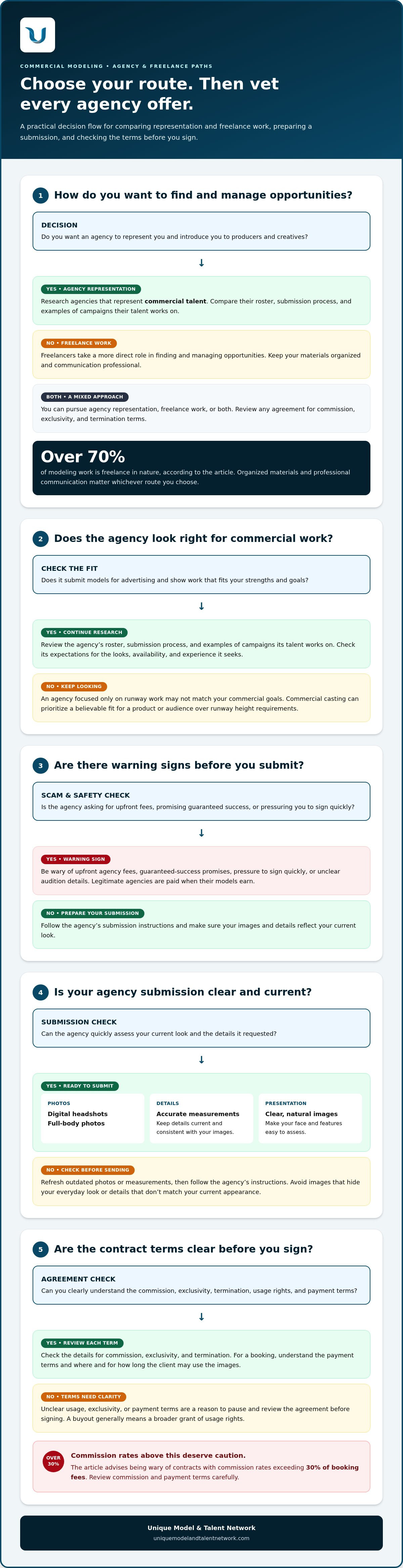
If you’re wondering how to get started in commercial modeling, researching agencies is a practical first step. Compare agency representation with freelance work, prepare a tailored submission, and read any proposed agreement carefully.
What fees and expenses do new commercial models typically pay? Be wary of agencies that charge upfront fees. Legitimate agencies are paid when the model earns. Distinguish agency commission from optional expenses you choose to take on, and review payment terms before agreeing.
What should I include in a commercial modeling agency submission? Prepare digital headshots, full-body photos, and your measurements. Follow the agency’s submission instructions, and make sure your images and details reflect your current look.
How can I spot modeling scams and avoid unsafe contracts or auditions? Upfront agency fees, pressure to sign quickly, and unclear audition details are warning signs. Before signing, review the terms for commission, usage rights, exclusivity, and payment. Keep audition plans and communications clear.
-
Research Reputable Agencies
Look for agencies that represent commercial talent and submit models for advertising, rather than focusing only on runway work. Review each agency’s roster, submission process, and examples of the campaigns its talent works on. Compare those details with your strengths and goals. Avoid agencies promising guaranteed success or demanding upfront fees. Legitimate agencies earn when their models earn.
-
Compare Representation and Freelance Work
Decide whether you want agency representation, freelance work, or both. An agency may introduce represented talent to producers and creatives; freelancers take a more direct role in finding and managing opportunities. Over 70% of modeling work is freelance in nature, so organized materials and professional communication matter whichever route you choose. Review agreements for commission, exclusivity, and termination terms.
-
Review Agency Expectations
Check each agency’s expectations before submitting, including the looks, availability, and experience it seeks for commercial assignments. Commercial casting can prioritize a believable fit for a product or audience over runway height requirements. Provide accurate measurements rather than adjusting them to match a preferred profile. Be wary of contracts with commission rates exceeding 30% of booking fees. Review usage and payment terms, too.
-
Prepare an Agency Submission
Gather clear digital headshots, full-body photos, and current measurements, then follow the agency’s submission method. Keep your introduction concise and mention relevant skills, such as acting experience or comfort delivering lines on camera. If you’re under 18, a parent or legal guardian must make the submission. A practical step in how to get started in commercial modeling is to seek focused feedback through a Portfolio & Reel Review before sending your materials.
Creating a professional social media presence
Use Instagram and other social media platforms to present your look and connect with other aspiring models. Treat each profile as a working portfolio: keep images consistent, make your style clear, and set visible professional boundaries.
- Choose a clear professional focus. Decide what you want casting professionals to understand from your profile. You might emphasize lifestyle advertising, fitness, or fashion, rather than posting unrelated content without context. You can still show range. Use a short bio that identifies you as a model, includes your location if useful, and provides a professional way to reach you.
Use the same name and core description on Instagram and any other active platform. Consistency helps people recognize your work as they move between profiles.
- Curate images that show your current look. Choose photographs that accurately represent your appearance, with clean lighting and uncluttered backgrounds. Include a close-up, a full-length image, and a few frames showing different expressions or styling. A relaxed portrait and a simple fashion look, for example, can communicate distinct moods without making your feed feel inconsistent.
Review each image before posting. Avoid filters or edits that change your features, skin tone, or body shape. Casting teams need an accurate sense of the talent they may meet in person.
- Show character through purposeful content. Pair polished photos with posts that show how you work. A short caption about a posing exercise, a behind-the-scenes note from a permitted shoot, or a practice clip can convey focus and personality. Keep the subject relevant to modeling, and get permission before sharing images from a professional set.
Use captions to add context, not to claim bookings or experience you can’t support. Specific details, such as the look you were exploring, give viewers a clearer sense of your creative choices.
- Make the profile easy to navigate. Organize highlights into useful categories such as portraits, lifestyle, movement, or on-camera practice. Check that the first images visitors see reflect your current direction. Replace outdated photos when your appearance or portfolio changes, and remove posts that undermine the professional impression you want to make.
Before publishing, read your bio and recent captions from an agency or casting professional’s perspective. Correct typos, broken contact details, and unclear wording so the next step is obvious.
- Build connections with professional care. Follow photographers, casting professionals, and other models whose work aligns with your goals. Leave a specific, thoughtful comment about a project instead of sending repeated generic messages. Instagram can help you connect with other aspiring talent, but respectful exchanges are more useful than chasing attention.
Keep private information private, and set clear boundaries when conversations move to direct messages. Don’t share personal documents or agree to unclear arrangements through social media. Treat each interaction as a professional introduction, then keep building skills and relationships beyond the platform.
Preparing for auditions and casting calls
Commercial modeling castings, also called go-sees, let casting teams assess how you might fit a campaign. Open calls may welcome talent without an individual invitation, while other auditions follow a specific brief.
-
Find Castings and Open Calls
Look for casting notices through your agency, professional contacts, and established industry channels. Read each brief carefully for the role, location, submission method, and requested materials. Open calls can offer access without a personal invitation, but still require a professional approach. Avoid opportunities with unclear details or requests for personal information unrelated to the casting.
-
Understand the Audition Process
Read the casting instructions before attending, follow the check-in process, and listen closely to the casting director. You may be asked to introduce yourself, pose, move naturally, or perform a short acting prompt. For example, a household-product campaign might ask you to react naturally while demonstrating a simple task. Take direction calmly and keep your performance grounded.
- Prepare your materials and details. Bring the photos and measurements requested in the casting notice, and make sure your information matches your current appearance. Prepare a concise introduction with your name and relevant experience. If the brief asks for acting, practice the lines aloud and focus on clear delivery rather than adding gestures the scene doesn’t need.
- Plan your arrival and presentation. Arrive 15 minutes early, as recommended for commercial model castings. Allow time to find the location, check in, and settle before meeting the casting team. Choose simple clothing that fits the instructions and lets directors see your look clearly. Bring only what you need, such as requested materials and a way to review the brief.
- Practice adaptable, natural choices. Before the audition, rehearse a relaxed introduction, a few comfortable poses, and small changes in expression. Practice taking direction, too. If a director asks for a more energetic reaction, adjust without forcing it. In a lifestyle scene, a believable response to an imaginary conversation often feels more natural than a fixed pose. Stay attentive between takes.
- Follow up professionally. After the casting, note the project and any instructions for future communication. If the casting team provides a follow-up process, use it and keep your message brief. Don’t repeatedly contact directors for a decision. A clear, courteous interaction leaves a professional impression, whether or not you get that role.
Networking with industry professionals
Build relationships by bringing a professional attitude to every conversation, not by asking for work right away. Genuine connections with photographers, agents, casting directors, and other models can help you understand the business and stay visible for relevant opportunities.
- Start with a specific professional goal. Before attending an event or contacting someone, decide what you want to learn. You might ask a photographer how they prepare talent for a lifestyle shoot, or an agent what makes a commercial submission easy to review. A focused question respects their time and gives the conversation a natural direction.
- Choose industry spaces where real conversations happen. Look for workshops, portfolio discussions, casting education sessions, and professional events that bring models and industry experts together. Read the event description beforehand and prepare a relevant question. A session about commercial photography, for example, is a useful setting to meet photographers and discuss how they work with talent.
- Make a thoughtful introduction. Share your name, the kind of work you’re pursuing, and a genuine reason for starting the conversation. Try: “I’m developing toward lifestyle campaigns, and I liked how your recent shoot captured natural expressions.” Keep it concise. Don’t lead with a request for representation, a booking, or a personal favor.
- Follow up with context. After meeting an agent, photographer, or casting professional, send a short message recalling your conversation. Mention the event or a specific subject you discussed, then thank them for their insight. If they suggested a resource or skill to practice, follow through before contacting them again. A useful follow-up builds credibility through action, not repeated messages.
- Develop relationships through consistent professional conduct. Arrive prepared, communicate clearly, and respect boundaries on set and online. Ask permission before sharing a photographer’s images, for example, and credit collaborators as agreed. Treat fellow models as peers, not competitors. A reputation for being reliable and authentic can strengthen collaborations and give industry contacts a reason to remember working with you.
Keep building your network through focused conversations and shared learning. Join a professional modeling network to connect with industry experts and strengthen those relationships.
Unique Model & Talent Network: The Network Membership
Unique Model & Talent Network helps aspiring models and actors build industry knowledge and connect with professionals, including casting directors and photographers. If you’re refining your materials or want a structured way to learn, The Network Membership brings that professional community together in one place.
Use Live Industry Workshops and Industry Expert Q&A Sessions to gain practical insights, Portfolio & Reel Reviews to strengthen your presentation, and Monthly Skill-Building Challenges to keep developing your craft. These offerings support learning and professional connections; they are not talent representation or commission-based booking services.
If you’re ready to keep building your skills and industry relationships, visit Unique Model & Talent Network.
Turn Your Next Step Into a Career Habit
A modeling career grows through deliberate choices, not a single breakthrough. Set a practical goal for your next stage, such as improving your on-camera confidence or building stronger professional connections. Then choose one action you can maintain, whether that means practicing a scene, refining your materials, or learning from an industry conversation. Consistency helps you move forward with purpose.
If you’re deciding how to get started in commercial modeling, informed feedback and support can make the process clearer. The Network Membership connects aspiring talent with an industry-focused community. Live Industry Workshops offer a chance to learn from professionals, while Portfolio & Reel Reviews help you assess how you present your work. Choose the resources that match your goals, then put what you learn into practice.
Take the next step at a pace that suits your development. Contact Unique Model & Talent Network to explore ways to keep building your skills and professional community. Your path is yours to shape, and every thoughtful step can bring greater clarity.
Frequently Asked Questions
What does modeling for beginners in NYC involve?
In New York City, beginners may explore commercial castings, agency submissions, and open calls, while learning how to present themselves professionally. Don’t confuse runway standards with commercial requirements: traditional NYC women’s runway divisions often note a starting height around 5 feet 8 inches, and men’s runway boards have typically scouted models around 6 feet and above. Commercial roles can call for a broader range of looks.
What are the requirements to become a commercial model in the US?
There isn’t one height or appearance requirement for all US commercial modeling; projects seek talent suited to their specific audiences and products. For an agency submission, the submitter must be at least 18, or a parent or legal guardian must submit for someone younger. Casting teams may also look for clear communication, reliability, and the ability to follow direction, especially for scenes involving natural movement or spoken lines.
How do I build a commercial modeling portfolio and digitals?
Build digitals that show your current appearance plainly, using natural light, simple clothing, and minimal editing. Include close-up and full-body views, then add images that demonstrate distinct expressions or styling. A portfolio can begin with 5-10 strong photos rather than an oversized collection. For example, a warm smile, a neutral portrait, and a casual movement shot can each communicate a different quality to casting teams.
How can I find and apply to reputable commercial modeling agencies?
Look for agencies whose rosters and casting focus align with commercial work, then follow their stated submission process. Prepare current photos and accurate measurements, and keep your introduction concise. Be wary of agencies charging upfront fees; legitimate agencies are paid when models earn. Before signing, read the contract closely, especially the terms for commission, usage rights, exclusivity, and payment, so you understand what the agreement covers.
What is the difference between commercial, fashion, and lifestyle modeling?
Commercial modeling promotes products or services through advertising, including print, television, and online campaigns. Fashion modeling presents clothing or designer concepts, often for editorial images or runway shows, where casting criteria can differ by assignment. Lifestyle modeling is commonly used in advertising to depict relatable everyday moments, such as friends sharing a meal or a family relaxing at home. One model may fit more than one category.
Can I get commercial modeling jobs without an agent?
Yes. Freelance models can pursue opportunities without agency representation, though they handle more of the search and communication themselves. That may mean submitting directly to casting notices, keeping materials organized, and clarifying usage and payment terms before accepting work. An agent can introduce represented talent to producers and creatives, but an independent approach can suit models comfortable managing professional relationships and submissions.
How do I find commercial modeling opportunities in my city?
Start with local casting notices, open calls, agency submission channels, and professional events in your area. Search using your city alongside terms such as “commercial casting” or “lifestyle campaign,” then compare each brief with your look and skills. Keep a record of the project, contact, submission requirements, and follow-up instructions. Clear details and professional communication help you focus on relevant opportunities and avoid rushed decisions.


