

A polished email isn’t the whole answer to how to find a talent manager. Research professionals whose work fits your goals, then follow each manager’s or agent’s submission policy with a concise, tailored introduction. Your next step depends on whether you need career guidance, help pursuing auditions, or an agent to negotiate work on your behalf.
Managers and agents don’t do the same job, and a strong email can’t make the distinction irrelevant. Understanding their different roles helps you direct your outreach and present yourself with purpose. This guide covers how to research representation, what to include in a submission email, and how managers and agents differ. Use it to assess fit, respect professional boundaries, and choose a clear next step.
Key Takeaways
- Research managers and agents by matching their professional focus to your goals, reviewing their submission preferences, and approaching outreach with care.
- Make your representation email concise and tailored, with relevant materials that help the recipient quickly understand your work.
- Choose the right kind of support by distinguishing a manager’s career guidance from an agent’s role in pursuing and negotiating opportunities.
- Build industry knowledge and strengthen your materials through professional learning, portfolio feedback, and focused skill development.
1. Researching potential managers and agents
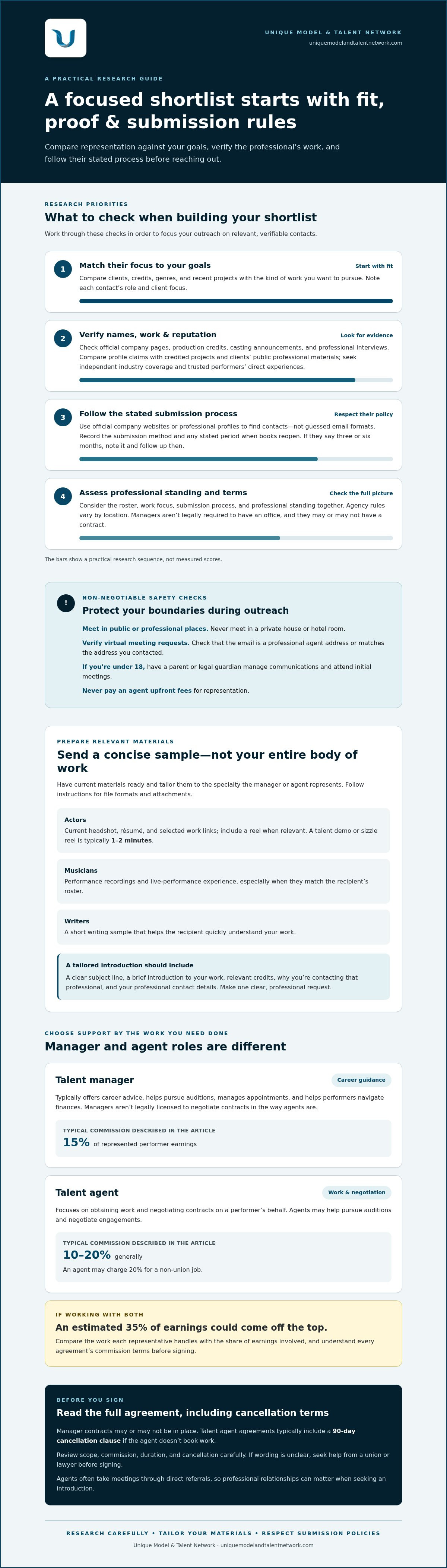
An effective approach to how to find a talent manager starts with a focused shortlist. Compare managers’ and agencies’ clients, credits, genres, and recent projects with your own goals. Search official company pages, production credits, casting announcements, and professional interviews for verifiable names and relationships. Note each contact’s role, client focus, and submission method. A talent demo or sizzle reel is typically 1–2 minutes, so select a concise sample that shows your strongest work.
To assess a manager’s experience, clients, and reputation, compare names on their official profile with credited projects and clients’ public professional materials. Look for independent industry coverage, too, and ask trusted working performers about their direct experiences. Focus on consistent, verifiable details rather than relying on a single online post.
Find talent manager contacts through official company websites or professional profiles, not guessed email formats. Record each person’s role, client focus, submission instructions, and any stated period when their books reopen. If an agency says it will reopen its books in three or six months, note the date and follow up then. A simple tracker helps you follow each policy instead of sending mass messages.
Assess an agency’s roster, work focus, submission process, and professional standing together. Rules governing talent agencies can vary by location, so check the requirements that apply where you plan to work. Managers aren’t legally required to have an office, and they may or may not have a contract. Consider these details alongside verifiable work and clear communication. Never pay an agent upfront fees for representation.
If you’re learning how to find a talent manager, include personal safety in your research plan. Meet in a public or professional place, never a private house or hotel room. For a virtual meeting, verify that the request comes from a professional agent email address or matches the address you contacted. If you’re under 18, have a parent or legal guardian manage communications and attend initial meetings.
2. How should I format an email when seeking representation?
Keep your email brief, specific, and tailored to the recipient’s submission policy. Use a clear subject line, such as “Actor submission: [Your Name],” then introduce your work, relevant credits, and reason for contacting that professional. Sign off with your professional contact details. Don’t call agencies or send private social messages unless they welcome those approaches.
Prepare a current headshot, résumé, and links to selected work before reaching out. Actors can include a reel; a talent demo or sizzle reel is typically 1–2 minutes. Choose clips that show the ability you want represented, rather than attaching every project. Musicians can share performance recordings, while writers can provide a short sample. Follow the recipient’s instructions about file formats and attachments.
Before contacting talent managers, gather your strongest, most current work samples, a concise résumé, professional contact details, and a short explanation of your goals. Tailor the materials to the kind of talent or specialty the manager represents.
Representation isn’t the only route while you build experience. Self-represented performers can submit directly for suitable opportunities, track responses, and strengthen their credits. An agent may help pursue auditions and negotiate work, while a manager can offer career guidance and help organize professional opportunities. Co-operative agencies use a shared participation model, so learn how membership and responsibilities work before choosing that structure.
Match your outreach to your next career step. If you’re a voice actor, prioritize contacts whose clients work in voiceover; if you’re a musician, highlight recordings and live performance experience. Explain why your work fits that roster, and make one clear, professional request. Build experience through classes, auditions, independent projects, or focused skill-building challenges. A targeted email shows respect for the recipient’s time and gives them relevant material to assess.
3. Differences between talent managers and agents
Managers and agents support different parts of a performer’s career. Managers typically offer career advice, help pursue auditions, manage appointments, and help performers navigate finances. Agents focus on obtaining work and negotiating contracts on a performer’s behalf. Talent managers aren’t legally licensed to negotiate contracts in the way agents are, so identify the support you need before considering representation.
An actor building a career plan, for example, may value a manager’s guidance and help organizing opportunities. An actor ready to pursue specific auditions and negotiate engagements may need an agent. Agents often take meetings through direct referrals, so professional relationships can matter when seeking an introduction. The roles may overlap in day-to-day communication, but their responsibilities aren’t interchangeable.
Compensation also differs. Talent managers generally charge 15% of a represented performer’s earnings, while talent agents generally charge 10–20%. An agent may charge 20% for a non-union job. Working with both could mean an estimated 35% of earnings comes off the top, so understand each agreement’s commission terms before signing. Compare what each representative handles against the share of earnings involved.
Contract details deserve the same attention as role and commission. Talent managers may or may not have a contract with a performer. Talent agent agreements typically include a 90-day cancellation clause if the agent doesn’t book work. Read every term thoroughly, including scope, commission, duration, and cancellation. If the wording is unclear, seek help from a union or lawyer before signing.
Use a practical decision test: list the tasks you need handled, then match them to the representative’s role. If you need career advice and coordination, explore manager relationships. If contract negotiation and pursuing paid engagements are priorities, investigate agents. If you consider both, clarify responsibilities in each agreement to avoid confusion or overlapping commissions. The best fit is the one whose defined role supports your current goals.
4. Where can actors, musicians, and other creatives find reputable talent managers?
Start with credits attached to work you respect. If you’re an actor, note who represents performers in productions that match your screen or stage goals. Musicians can review management credits on artists’ official pages and album materials. Record each manager’s name, client focus, and contact route, then compare those details with professional profiles.
Agency and management company websites can help you identify representatives by specialty. Look for roster examples that fit your craft, such as voice actors, touring musicians, or commercial models. Read each submission policy before making contact. If a manager’s site says their books reopen in three or six months, note the timing and follow up then.
Build introductions through people who know your work. Ask an acting instructor, photographer, casting director, or working musician whether they can recommend a relevant contact. Be specific: an actor seeking commercial representation needs different guidance from a songwriter pursuing management. A clear question makes it easier for a professional to offer a useful connection.
Industry events and educational sessions can help you learn who works in your field. Use a workshop or expert Q&A to ask about career development, representation specialties, and professional expectations. Treat the conversation as relationship-building, not an immediate pitch. Afterwards, note the person’s role and any suggested next step before following up professionally.
Online searches can reveal names, but verify them against company profiles, client credits, and public professional materials. Spotlight advises performers not to call agencies or use private social media messages unless those methods are welcome. Keep your research organized and contact people through the route they specify. If an agency asks for an upfront representation fee, don’t pay it.
Want to strengthen your industry connections while researching representation? Explore a professional talent network and build relationships with people who understand creative careers.
Unique Model & Talent Network: The Network Membership
Unique Model & Talent Network gives emerging performers a place to build their craft and industry knowledge while pursuing representation. The Network Membership supports that work with practical learning through Live Industry Workshops, Portfolio & Reel Reviews, Monthly Skill-Building Challenges, and Industry Expert Q&A Sessions.
If you’re refining your materials before approaching managers, a Portfolio & Reel Review can help you assess how your work comes across. Workshops and expert Q&A sessions offer opportunities to learn from industry professionals, while skill-building challenges help you stay focused on your development. These resources support preparation and professional growth; they aren’t talent representation or commission-based booking services.
Explore The Network Membership and see how its learning opportunities fit your creative goals. Visit Unique Model & Talent Network to learn more.
Turn your research into a career-building practice
A clear plan for how to find a talent manager can do more than shape one outreach email. It can help you define the work you want, identify professional relationships that support that direction, and keep developing as you pursue them. Treat each conversation, project, and piece of feedback as a chance to sharpen your professional profile.
If you want structured support as you prepare for your next steps, The Network Membership offers a place to keep learning. Live Industry Workshops bring practical industry perspectives, while Portfolio & Reel Reviews help you assess how your materials present your work. Use these opportunities to build clarity and make your next career move with intention.
Explore The Network Membership and choose a next step that fits your goals. Keep backing your ambition with focused preparation, strong work, and professional relationships. Your career direction starts with the choices you make today.
Frequently Asked Questions
How should I format an email when seeking representation?
Make your email easy to scan: use a subject line that identifies your craft and name, then write a brief introduction and give one clear reason for reaching out. An actor, for example, might mention a recent stage role that aligns with the manager’s client roster. Close with a concise sign-off. Before sending, check that names, credits, and links are accurate and accessible.
What key questions should I ask during an agency meeting?
Ask how the agency would approach your career, which opportunities fit your current strengths, and how communication typically works. Clarify who would handle your account and what responsibilities the agency expects you to manage. Ask about commissions, contract terms, and cancellation, then request time to review the agreement. Take notes so you can compare the answers with your career priorities afterward.
What safety precautions should I take for an initial meeting?
Meet in a public or professional setting, not a private home or hotel room. For a virtual meeting, verify that the request comes from a professional agent email address or matches the address you used. If you’re under 18, have a parent or legal guardian manage communications and attend initial meetings. Share the meeting details with someone you trust.
What does a talent manager do, and how is a manager different from an agent?
A talent manager can advise on career direction, help pursue auditions, coordinate appointments, and support financial planning. An agent’s role includes pursuing work and negotiating contracts on a performer’s behalf. Consider your immediate need: an actor mapping a career path may value a manager’s guidance, while an actor seeking negotiated engagements may need an agent. Their roles can complement each other.
How do I know when I’m ready to find a talent manager?
You’re better prepared to approach managers when you can explain your goals, show your work, and identify the guidance you need. A performer with recent credits, for example, might be ready to seek help planning auditions and choosing suitable opportunities. Readiness doesn’t require a flawless résumé; it means presenting your current work honestly and discussing a realistic next step.
How do I approach a talent manager and write an effective query email?
Choose a manager whose clients and specialty align with your work, then follow their stated query process. Personalize your message with a specific reason for contacting them, such as a shared focus on commercial acting or independent film. Include only the requested materials and make any portfolio or reel links easy to open. A respectful, tailored query is stronger than sending the same pitch broadly.


