
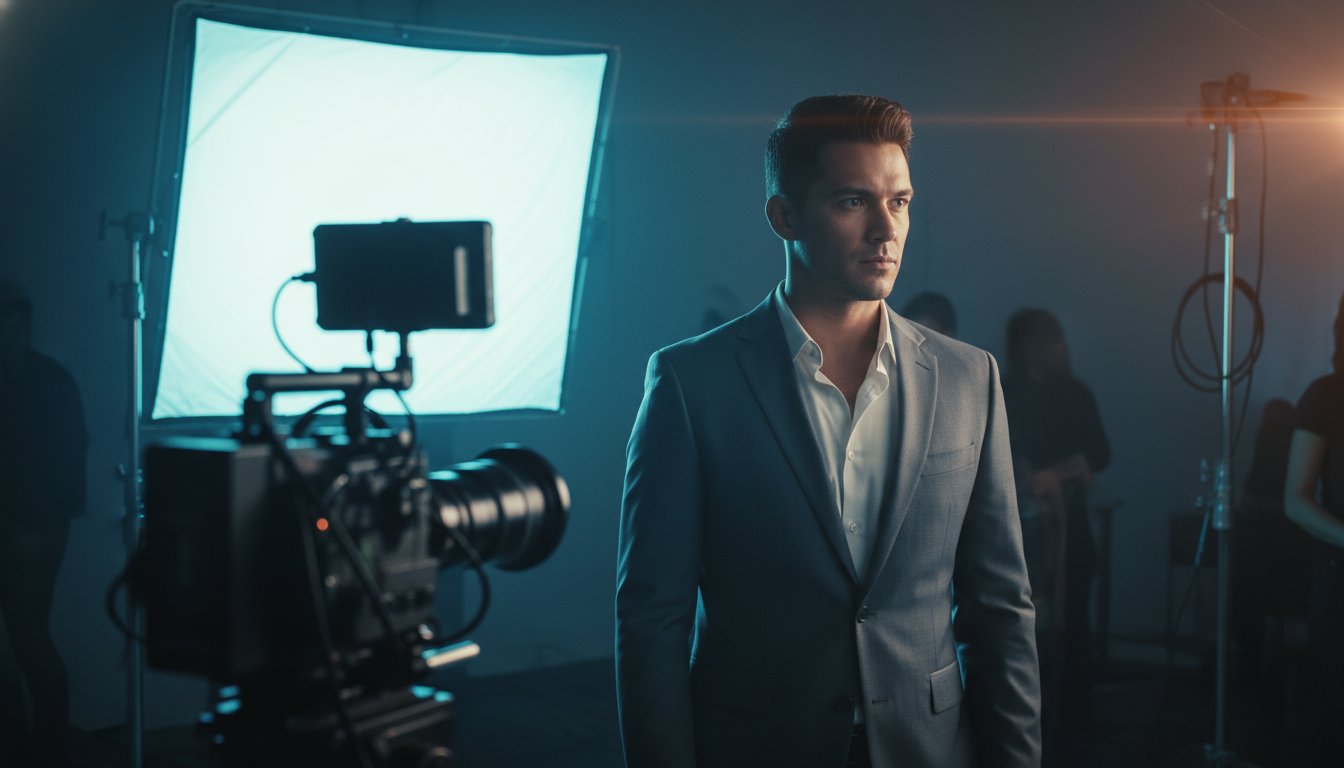
Landing a national commercial in 2026 isn't a matter of luck or having a theater degree; it's about becoming a strategic asset for a brand. If you've ever felt locked out of professional casting calls or worried about being scammed by "fake" agencies, you aren't alone. Mastering commercial acting for beginners requires moving past the superficiality of social media and toward the grounded reality of professional business development. It's exhausting to feel confused by technical jargon like session fees and buyouts while you're just trying to get your first audition.
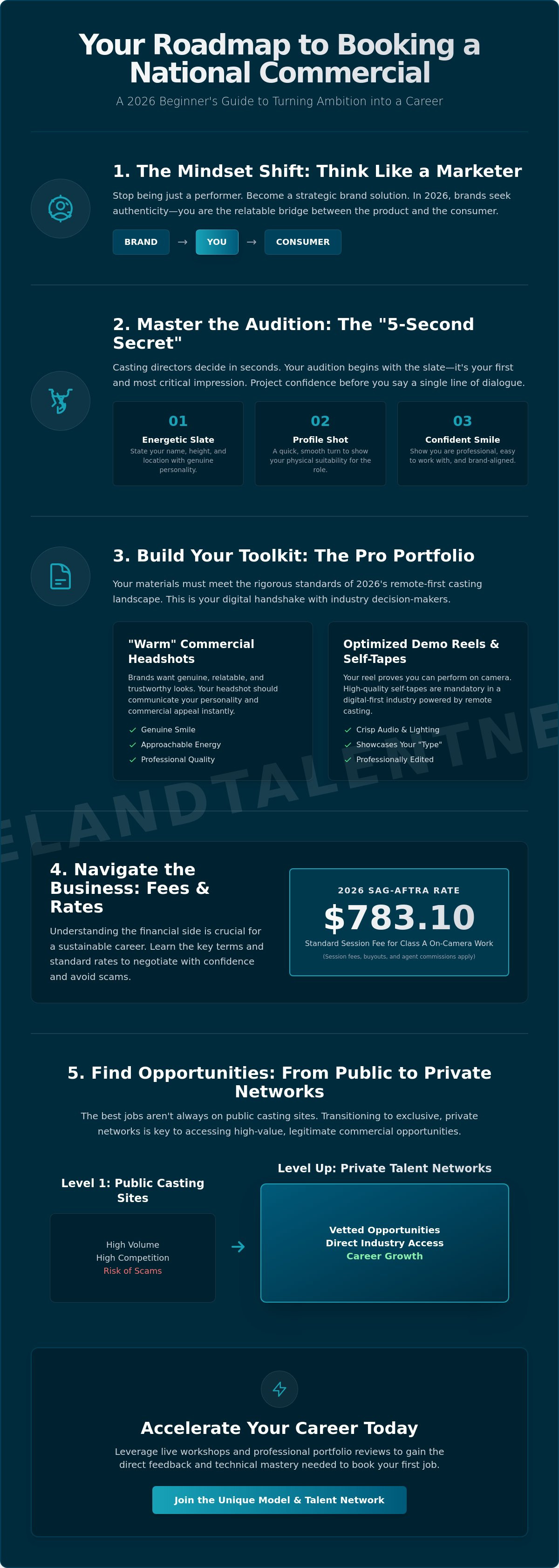
This guide provides a clear roadmap to your first booking by teaching you how to master the "slate" and access the private networks where high-value opportunities live. We'll explore the current 2026 SAG-AFTRA rates, such as the $783.10 session fee for Class A on-camera work, and show you how to build the professional materials that command attention from casting directors. From understanding agent commissions to optimizing your digital presence, you're about to learn how to turn your ambition into a legitimate career.
Key Takeaways
- Define the intersection of marketing and performance to position yourself as a strategic brand solution rather than just a performer.
- Master the "five-second secret" of a professional slate to capture a casting director's attention before you even deliver your first line.
- Discover the specific "warm" headshot looks and reel structures required to build a commercial portfolio that industry decision-makers trust.
- Navigate the transition from public casting sites to exclusive communities to find the best opportunities in commercial acting for beginners.
- Leverage live workshops and professional portfolio reviews to gain the direct feedback and technical mastery needed to book your first job.
What is Commercial Acting? Understanding the Entry Point of the Industry
Commercial acting isn't about disappearing into a complex character over a three-act play. It's the strategic intersection of marketing and performance. You aren't just playing a role; you're serving as the relatable bridge between a brand and its consumer. For those exploring commercial acting for beginners, this field offers the most efficient path to earning professional credits. While a major film might take months to cast, commercial projects move at lightning speed, often casting and shooting within a single week. This high volume of work creates a constant demand for fresh talent who can deliver a message with authenticity.
In 2026, the industry has moved toward "Real People" casting. Brands are no longer looking for the polished, unattainable models of the past. They want your unique look, your genuine laugh, and your specific personality. Your "flaws" or unconventional features are often your greatest assets because they make a product feel accessible to a real audience. This shift has democratized the industry, allowing talent from all backgrounds to find a place in the market without needing a decade of classical training first.
Commercial vs. Theatrical Acting: The Key Differences
Theatrical acting in film and television focuses on the journey and the character arc. Commercial acting focuses on the "Moment of Truth." This is the specific second where you interact with a product or experience a shift in emotion that solves a conflict. Understanding the craft of acting helps you realize that while the stakes are high, the performance must remain grounded. Commercial sets are the ultimate film school. You'll learn how to hit technical marks, work with professional lighting, and take rapid-fire direction from a director. These skills are transferable and build the professional foundation you need for every other area of your career.
The 2026 Landscape: Digital, Social, and AI Casting
Social media ads have redefined what a commercial looks like. A 15-second vertical spot for a tech brand is now just as common as a national broadcast commercial. This shift has made casting remote-first, placing a premium on your ability to deliver high-quality self-tapes from home. As AI begins to play a larger role in initial talent filtering, your human essence becomes your competitive advantage. Algorithms can scan for physical traits, but they can't replicate the spark of a genuine reaction. Staying "human" in a digital world is how you stand out. Our Network Membership and Live Industry Workshops are designed to help you navigate these technical shifts, ensuring your materials meet the rigorous standards of 2026 casting directors.
Mastering the Commercial Audition: Personality, Improv, and the 'Slating' Secret
Success in the room, or on the self-tape, depends on your ability to be a benefit to the brand immediately. Casting directors often decide your suitability in the time it takes to sip coffee. For those diving into commercial acting for beginners, the audition begins the moment the camera starts rolling, not when you deliver your first line. Your job is to prove you're a professional who is easy to direct and perfectly aligned with the brand's energy. This starts with the "slate," your first five seconds of screen time. It's not just a technical requirement; it's your first impression. You aren't just stating your name. You're showing the team that you're comfortable, confident, and ready to work.
To prepare effectively, use a three-question prep framework. Ask yourself: What is the product? Where am I? What is my relationship to the person I'm with? This foundation ensures your performance feels rooted in reality. If you're selling a high-end tech gadget, your relationship to the environment is different than if you're selling a family breakfast cereal. You aren't just a performer; you're a strategic partner for the marketing team. Practicing these nuances in Live Industry Workshops can help you feel more comfortable when the pressure is on.
The Perfect Slate: A Step-by-Step Framework
When you slate, state your name, height, and location with genuine energy. Don't just recite facts; let your personality peek through. The "Profile" shot is equally vital. It's a quick turn to show your range and physical suitability for the role. A professional commercial smile is a tool of confidence used to invite the viewer in, rather than a static pose meant for a yearbook. This brief moment tells the director if you have the "look" and the professional demeanor they need for a fast-paced shoot.
Improv for Non-Improvisers
Many auditions are SOC, or "Silent On Camera." This means you won't have any lines to rely on. Improv in this context is about reacting, not talking. If you're using props, handle them naturally to ground your performance. If you're holding a cold drink, let the audience feel that refreshment through your eyes and posture. Use the "Button" technique to end your audition. This is a small, memorable reaction after the main action finishes, like a satisfied nod or a quick laugh. It leaves the casting director with a lasting impression of your personality and shows you can find the "moment" in any scene.
Essential Materials: Building a Commercial Portfolio That Casting Directors Trust
Your portfolio is your professional calling card. In the fast-paced world of commercial acting for beginners, your materials must communicate your brand within seconds. Unlike theatrical headshots that might lean into dramatic lighting or intense expressions, commercial headshots require a warm look. This means bright lighting, approachable energy, and a genuine connection with the lens. Casting directors are looking for someone who feels like a neighbor, a trusted advisor, or a relatable friend. They need to see that you can represent a brand's values with a single glance.
A significant trend in 2026 is the crossover of the modeling "Comp Card" into the acting world. While traditionally used for fashion, these cards allow you to showcase multiple archetypes on a single digital or physical sheet. This provides a snapshot of your versatility, proving you can pivot from a corporate executive to a weekend adventurer instantly. For a deeper dive into organizing these assets, check out The Ultimate Guide to Building an Acting Portfolio That Books in 2026. Having these professional-grade materials ready is the first step toward gaining direct access to casting directors.
The 'Look' Strategy: Identifying Your Commercial Archetypes
Casting directors don't just look for "actors"; they look for specific archetypes that fit a brand's target demographic. Are you the "Young Professional" who looks comfortable in a modern boardroom? Perhaps you're the "Cool Parent" or the "Tech Genius" who can explain complex apps with a smile. Identifying your top three archetypes is essential for your marketing strategy. When dressing for these roles, don't wear a costume. If you're the tech genius, a simple, well-fitted hoodie or a clean t-shirt works better than a lab coat. Keeping a "wardrobe kit" of solid-colored, ironed basics allows you to respond to last-minute audition requests without stress.
The 30-Second Commercial Reel
You don't need to wait for a booking to have a reel. Many successful beginners start with "spec" commercials. These are high-quality self-tapes where you perform existing commercial copy to show you understand the genre's rhythm and tone. When editing, prioritize pace. Casting directors often stop watching after 10 seconds if they haven't seen your personality shine. Use this time to highlight special skills like playing an instrument, speaking a second language, or sports proficiency. These value-adds often make the difference between a pass and a callback. If you're unsure if your footage hits the mark, our Portfolio & Reel Reviews can provide the professional perspective you need to refine your presentation.
Navigating the Business: Agents, Casting Sites, and Private Talent Networks
Many beginners believe a talent agent is the first requirement for success. It's actually the opposite. In the professional world of commercial acting for beginners, agents look for talent who already have a momentum of their own. This creates a "catch-22" where you need a network to get an agent, but you think you need an agent to access the network. Breaking this cycle requires you to take ownership of your professional development. You must prove you're a vetted professional before an agency will risk their reputation on you. By the time you're ready for representation, you should already have a portfolio that demonstrates your marketability and technical skill.
Public casting sites like Actors Access or Backstage are useful tools, but they're often crowded with thousands of applicants for a single role. This "noise" makes it difficult for a beginner to stand out without a pre-existing relationship with a casting director. For a detailed breakdown of these platforms, read The Best Casting Websites in 2026. While public sites are a starting point, private communities offer a more concentrated focus. These gated environments remove the distractions of social media and provide direct access to industry experts through Q&A sessions and workshops. This level of networking is significantly more effective than cold submissions because it builds professional bonds based on trust and verified standards.
Public Sites vs. Private Networks: A Comparison
Public platforms are open to everyone, which means the competition is fierce and the quality of projects varies wildly. You'll often find yourself sifting through low-pay or non-union gigs with little protection. Private networks act as a protective mentor. They filter out the "hobbyist" noise and focus on legitimate, high-value opportunities. When you engage with a private community, you're often getting in front of the same casting directors who handle major national spots. If you're serious about your craft, join our Network Membership to gain the clarity and direction needed to navigate this competitive field.
The Financials of Commercials: Rates, Buyouts, and Residuals
Understanding your worth is vital for career security. As of April 2026, the SAG-AFTRA Class A national broadcast rate for on-camera work is $783.10 for the first use. Beyond this session fee, you may receive residuals or buyouts. A session fee covers your time on set, while a buyout is a lump sum paid for the right to use your image for a specific period. You must also account for the Pension and Health (P&H) contribution rate, which has increased to 23.5% of covered earnings in 2026. Be aware of "conflicts." If you book a commercial for a major soda brand, you're usually restricted from working for their competitors for the duration of the contract. Always track your earnings and usage cycles to ensure you're being paid fairly for every spot you book.
Protect yourself from common industry scams. Legitimate agencies don't charge upfront "registration fees" or force you to attend their specific "modeling schools." Red flags include "open calls" that turn into high-pressure sales pitches for expensive photo packages. A real professional opportunity is based on your talent and materials, not your willingness to pay an agency for a promise of work. If an offer feels predatory or lacks financial transparency, it's best to walk away and stick to verified, accredited networks.
Accelerating Your Career with the Unique Model & Talent Network
The industry can feel like a labyrinth designed to keep you out; it doesn't have to stay that way. The Unique Model & Talent Network acts as a protective mentor for those pursuing commercial acting for beginners, bridging the gap between raw ambition and professional bookings. Instead of guessing what a casting director wants, you'll gain clarity through a structured environment that prioritizes your growth. Our system is designed to remove the chaos of unorganized social media groups and replace it with a focused, business-driven community.
The fastest way to get vetted in this industry is through our Live Industry Workshops and Portfolio & Reel Reviews. These sessions aren't just tutorials; they're high-level evaluations that ensure your materials meet the 2026 standards we've discussed. For a comprehensive look at how these tools fit into the broader industry, explore The Ultimate Acting Industry Networking Platform Guide for 2026. By participating in these reviews, you're essentially bypassing the trial-and-error phase that stalls most careers.
Audition readiness is a perishable skill. To keep your instincts sharp, we offer Monthly Skill-Building Challenges. These exercises force you to interpret new copy, master technical self-tape requirements, and receive feedback in a low-stakes environment before the "real" call comes. This constant practice ensures that when you do get in front of a major brand, your performance feels effortless and professional.
Direct Access to Decision Makers
Industry Expert Q&A Sessions remove the mystery surrounding the casting process. You'll hear directly from the people who hold the keys to the room, learning exactly what makes them watch a reel or discard a headshot. This direct access allows you to build relationships built on professional respect rather than desperation. Getting real-time feedback on your headshots and reels from those who actually book talent is an invaluable shortcut. These interactions often lead to the referrals and agency signings that define a long-term career.
A Community of Professionals, Not Hobbyists
There is a profound psychological benefit to surrounding yourself with a gated, moderated peer group. In our network, you aren't competing with hobbyists; you're collaborating with serious professionals who share your dedication to the craft. This sense of shared ownership and prestige creates an environment where everyone is pushed to excel. It's time to stop being a spectator and start being a participant. Join the Unique Model & Talent Network today to move from an aspiring talent to a booked professional.
Your Path to a Professional Commercial Booking
Success in this industry isn't about waiting for a lucky break. It's about the deliberate execution of professional standards. You've learned that commercial acting for beginners is a business of relatability and technical precision. By mastering your slate and identifying your specific archetypes, you've already moved ahead of the hobbyist crowd. Now, it's time to stop navigating the business alone and start building the direct relationships that lead to real bookings.
Professional growth requires a community that values integrity and results. You deserve a space where you can get direct access to casting directors and receive live portfolio reviews that sharpen your competitive edge. Our monthly skill-building challenges ensure you stay audition-ready for the fast-paced demands of 2026. Ready to book your first commercial? Join the Unique Model & Talent Network today! Your journey from aspiring talent to a working professional starts with the right direction. We're ready to open the door when you're ready to walk through it.
Frequently Asked Questions
Do I need an agent to start commercial acting?
You don't need an agent to launch your career. Most people beginning their journey in commercial acting for beginners find success by self-submitting on vetted platforms and joining private networks. Agencies typically look for talent who already have a proven track record and professional materials. By building your own momentum first, you position yourself as a low-risk, high-reward partner for future representation.
How much do beginner commercial actors typically make?
Earnings vary based on the contract type and the specific usage of the advertisement. For union projects in 2026, the SAG-AFTRA session fee for on-camera work is $783.10. Non-union projects often pay a flat fee for the session and usage combined. It's vital to understand these rates early so you can evaluate the financial legitimacy of every offer you receive from a brand.
What is a 'buyout' in commercial acting?
A buyout is a one-time payment that grants a brand the right to use your image for a specific period. This fee is paid instead of ongoing residuals. In the non-union market, buyouts are standard and usually cover all media platforms for a set duration, such as one year. Ensure the buyout amount reflects the length of the usage cycle and the geographic reach of the ad.
Do I need to live in LA or NYC to do commercials in 2026?
You no longer need to reside in a major entertainment hub to book professional work. The 2026 industry landscape is remote-first, with nearly all initial auditions conducted via self-tape from your home. While major national shoots may require travel, many regional and digital commercials are cast and produced in smaller markets. This shift allows you to build a legitimate career from almost any location.
Can I do commercial acting if I have a full-time job?
Balancing a career with a full-time job is possible but requires strategic planning. Since most first-round auditions are now self-tapes, you can record them outside of standard business hours. However, commercial shoots almost always take place on weekdays. You must have the flexibility to accept a booking with relatively short notice if you want to maintain a professional reputation with casting directors.
What should I wear to a commercial audition?
Your wardrobe should suggest the character's archetype without becoming a full costume. If you're auditioning for a "young professional" role, choose a clean, well-fitted button-down or a smart blouse. Avoid distracting patterns, large logos, or bright white fabrics that can wash out on camera. The goal is to help the casting director visualize you in the role without the clothes becoming the focus.
How do I know if a commercial casting call is a scam?
Legitimate casting calls never require an upfront fee to audition or "register" with a database. If a company demands payment for mandatory acting classes or specific photography packages as a condition of representation, it is a scam. High-pressure tactics and vague promises of fame are also major red flags. Professional opportunities are based on your talent and materials, not your willingness to pay.
What is the difference between a commercial and a theatrical headshot?
Commercial headshots focus on approachability and "warmth" to appeal to advertisers. They feature bright lighting and a friendly, engaging expression that says you are easy to work with. Theatrical headshots are designed for film and television, often using moodier lighting to showcase your dramatic range. For those starting commercial acting for beginners, having at least one solid, approachable commercial look is the absolute priority.


