
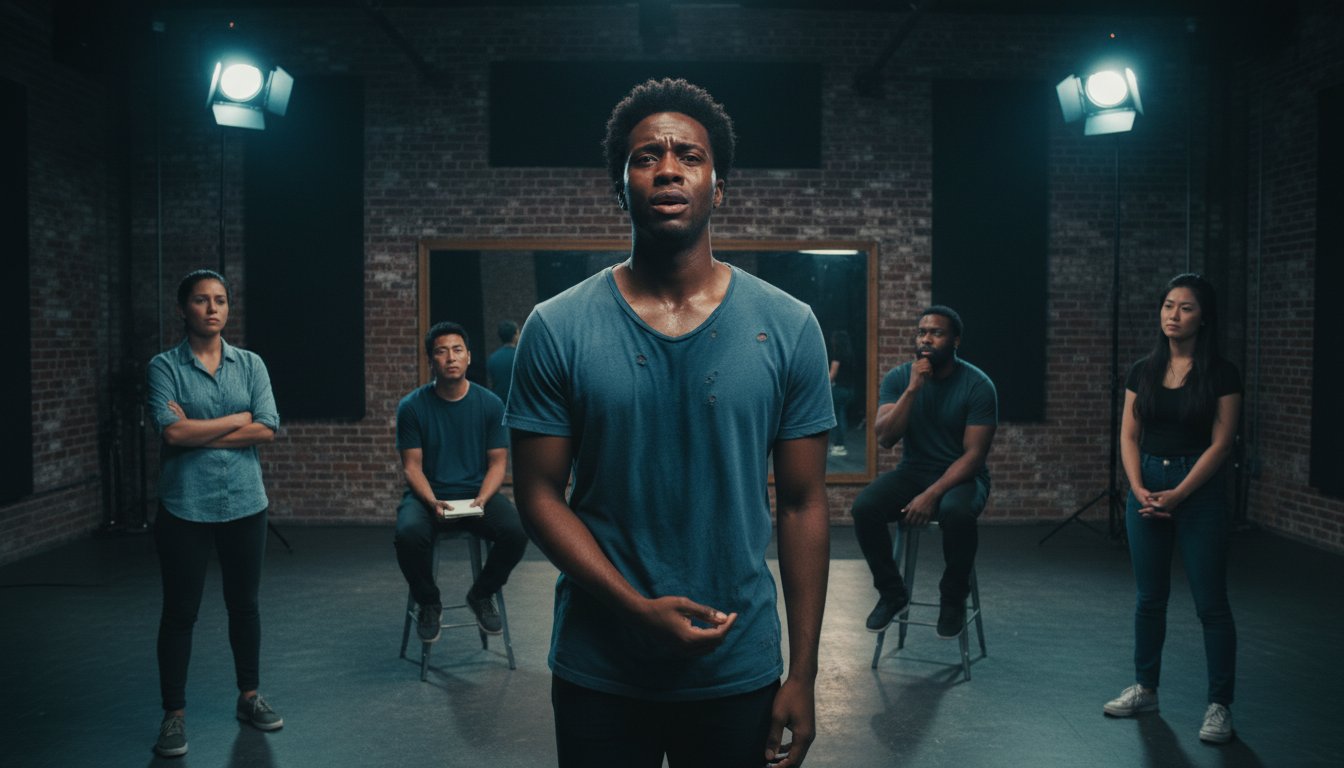
Most actors treat their auditions like a lottery ticket, hoping for a lucky break while their craft stays stuck in a repetitive loop. It's exhausting to feel stale during self-tapes or to realize you've lost the emotional flexibility that first brought you to this industry. You're likely tired of the noise and looking for a way to ensure your performance stands out, especially when a single casting director workshop in 2026 can cost up to $199. We understand that you need more than just "passion" to secure real, paying jobs. You need a technical edge that makes your talent undeniable to every person watching your reel.
If you want to elevate your performance and reclaim your confidence, you must stop guessing about your daily preparation. This guide delivers the professional acting exercises used by industry veterans to sharpen emotional range and technical precision within the on-camera frame. You'll master a concrete practice routine designed to build your audition-room stamina and help you master the "gym work" required for consistent professional bookings. We're going to break down the exact drills that turn an average self-tape into a signed contract.
Key Takeaways
- Bridge the gap between raw talent and professional consistency by mastering the Meisner Repetition technique for grounded, reactive truth.
- Master the "Eyeline Challenge" to maintain technical precision and build a believable world within the tight frame of a self-tape.
- Apply "Hot Seating" to develop rapid-fire character depth and spontaneity, ensuring you stay memorable even in 15-second commercial spots.
- Refine your cold reading skills through targeted acting exercises that focus on "Verb-Action" intentions to give every line a specific, bookable purpose.
- Accelerate your career and stop practicing in a vacuum by integrating structured skill-building challenges and expert feedback into your routine.
Foundational Acting Exercises for Emotional Truth and Presence
Professional consistency is the hallmark of a vetted actor. While hobbyists wait for inspiration to strike, industry pros use acting exercises to build a reliable emotional baseline. Think of these drills as your technical gym work. They transform unpredictable raw talent, turning it into a curated skill set that casting directors can trust for high-stakes bookings. Much of this methodology evolved from Stanislavski's system, which shifted the focus from theatrical posturing to authentic human experience. In 2026, where a single acting class in Los Angeles can cost $200 per session, mastering these foundational drills at home provides a massive competitive advantage without the high price tag.
The Meisner Repetition Drill: Mastering Spontaneity
The Repetition Drill is the ultimate tool for presence. If you’re struggling with stale auditions, this exercise forces you to stop planning and start listening. It builds the "reactive truth" required for modern, grounded performances.
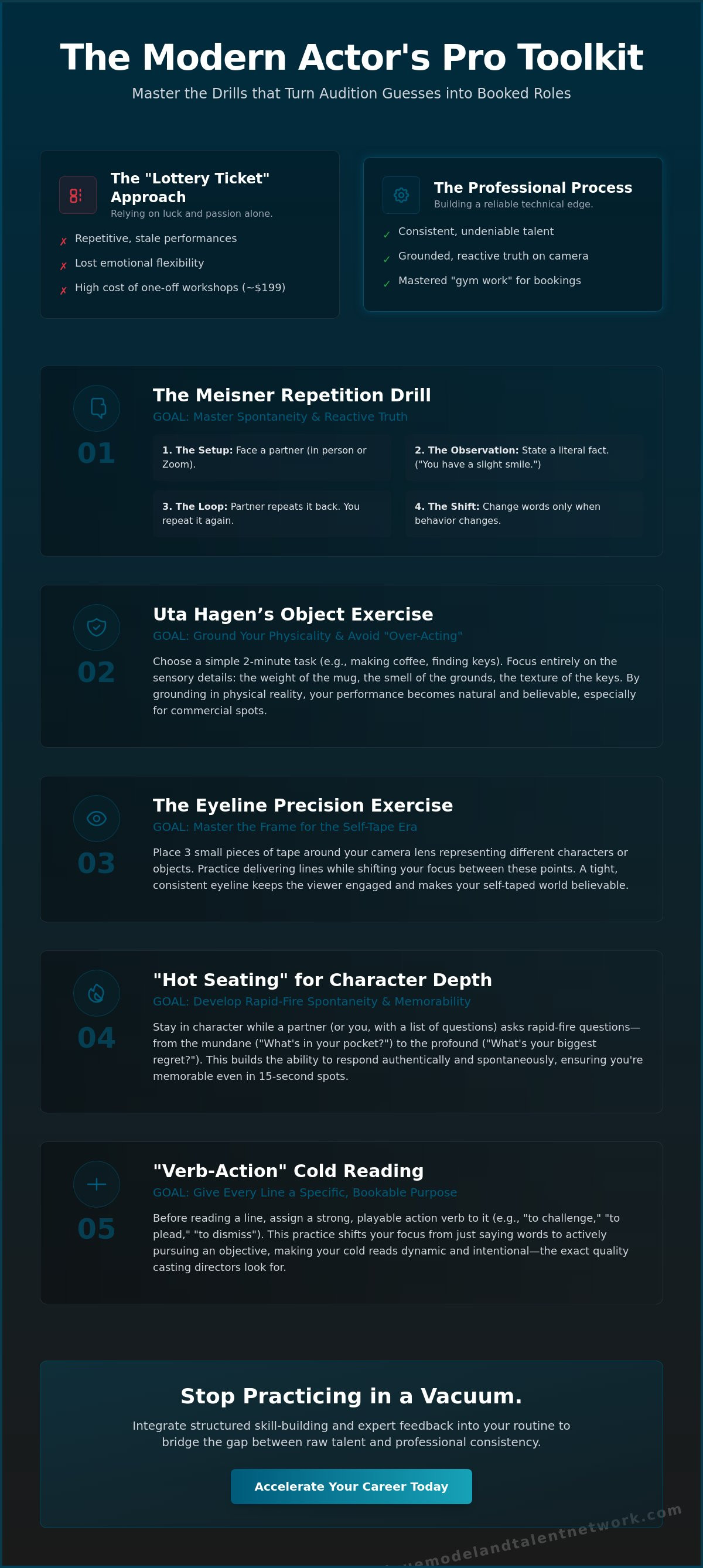
- The Setup: Face a partner. If you’re practicing via Zoom, ensure your connection is stable so you can catch micro-expressions.
- The Observation: State a literal, undeniable fact about your partner, such as "You have a slight smile."
- The Loop: Your partner repeats it back exactly: "I have a slight smile." You repeat it again.
- The Shift: Don't change the words until your partner’s behavior changes. If they look annoyed, you might say, "You’re getting frustrated."
This drill is critical for staying in the moment. It teaches you that your performance isn't about your lines. It's about how you react to your scene partner. Moving from literal repetition to emotional behavior happens naturally when you stop guessing what your partner will do next and simply respond to what is happening.
Uta Hagen’s Object Exercise: Grounding Your Physicality
Commercial casting calls often require you to perform mundane tasks while remaining natural. Hagen’s Object Exercise is the secret weapon for these sessions. Choose a simple two-minute task like brewing a cup of coffee or searching for a lost set of keys. Focus entirely on sensory details. Feel the weight of the mug. Smell the grounds. Notice the temperature of the water.
By focusing on the physical reality, you avoid indicating or over-acting the emotion. This exercise ensures your movement is grounded and realistic. It's a vital skill for 15-second spots where you must look like a real person rather than an actor playing a role. Mastering these acting exercises allows you to walk into any room with a process that works every time, regardless of nerves or distractions.
On-Camera Agility: Acting Exercises for the Self-Tape Era
By May 2026, the industry has fully cemented the self-tape as the primary gatekeeper for professional bookings. Transitioning from the stage to the screen requires more than just "turning it down." It demands a specific mastery of the frame. If you treat your camera like a theater audience, you'll likely appear over-animated and unpolished. Professional acting exercises must now account for the technical reality that your performance is being judged on a small screen, often by a casting director who is viewing dozens of tapes an hour. You need to look like a pro who understands the medium, not an amateur guessing at the lens.
Success in the digital casting room often comes down to technical precision. While classical character development exercises help you find the "who," on-camera drills help you find the "where." With the average cost of an intermediate home studio setup reaching $150 in 2026, simply owning the gear isn't enough. You must train your body to work within that specific lighting and frame. This is where frame awareness becomes a decisive factor in your booking rate.
The Eyeline Precision Exercise
Consistency is the key to a believable world. To practice this, place three small pieces of colorful tape around your lens: one for your primary scene partner, one for a secondary character, and one for a specific environmental object. Practice transitioning your focus between these points while delivering your lines. A "tight" eyeline, usually just off-camera, keeps the viewer engaged. If your eyes wander too far from the lens, the audience loses the connection to your internal life. This drill ensures your focal points remain sharp and intentional throughout the take.
The Internal Monologue Self-Tape Test
The camera doesn't just record your face; it records your thoughts. For this exercise, record a 30-second silent clip where you react to a shocking piece of news using only an internal monologue. When you review the footage, look for the "thought-to-eye" connection. If the eyes look blank, your monologue isn't specific enough. On-camera work requires a thought-to-eye connection where the active internal monologue is so specific that it manifests as visible behavior without the need for physical effort. If you want to refine this further, consider participating in monthly skill-building challenges to get the structured practice you need.
Finally, practice "Frame Awareness" by marking your "safe zone" on the floor. Drill your movements to ensure you never break the shot or move out of your lighting's sweet spot. Mastery of these technical acting exercises proves to casting directors that you are a vetted professional who is ready for the technical demands of a high-budget set.
Character Development and Spontaneity for Commercial Success
Many actors mistakenly believe that commercial work requires less craft than theatrical roles. This is a trap that leads to generic, forgettable performances. In a market where 15-second spots dominate the 2026 media landscape, your ability to instantly convey a lived-in character is what secures real, paying jobs. If you don't have a specific point of view, you're just a body in the frame. Using targeted acting exercises to build rapid-fire character depth ensures you stand out to casting directors who are looking for authentic, vetted talent without the noise of amateurish guessing.
Hot Seating: Building a 360-Degree Backstory
Hot seating is a high-intensity drill designed to sharpen your instincts. Have a friend, or even a generative AI tool, ask your character questions about their life. These shouldn't just be about the specific scene. They should cover mundane details: What’s in your character’s fridge? What was their last argument about? The key is to provide immediate, non-planned responses to build a reactive instinct that feels real on camera.
This process builds a 360-degree backstory that informs your physical presence. When you stop guessing about who you are, your choices become bold and specific. For a commercial audition, you then translate this entire history into a single, playable choice. If you know your character is a perfectionist who just burnt toast, that specific energy will color how you hold a product or deliver a line. It makes the performance feel grounded and spontaneous, even if you only have five seconds of screen time.
The Gibberish Game: Emotional Connection Over Words
Intellectual acting is the enemy of commercial success. If you find your delivery feels flat or monotone, the Gibberish Game is the solution. Perform your entire commercial scene using a completely made-up language. Since the words no longer have literal meaning, you're forced to rely entirely on your physical and emotional intent to communicate. This stops you from hiding behind the script and forces you to actually connect with your scene partner or the lens.
This is one of the most effective acting exercises for breaking through mental blocks. It reconnects you with the "why" behind the copy. Once you return to the English text, the emotional muscle memory remains. This gives your delivery a natural, conversational rhythm that feels authentic to the viewer. This level of technical mastery is exactly how monthly skill-building challenges grow your resume by preparing you for the fast-paced reality of professional sets. By practicing these drills, you move away from the noise of traditional social media and toward the professional standard of a seasoned pro.
Professional Preparation: Exercises to Master the Casting Room
Mastering the casting room is about technical execution under pressure. In May 2026, with casting director workshops often costing between $75 and $199 per session, you can't afford to walk into a professional opportunity without a refined process. Talent gets you noticed, but professional preparation keeps you booked. If you want to ensure your behavior matches your craft, review our latest acting career advice regarding room etiquette and professional standards. These drills help you stop guessing about what a director wants and instead provide a flexible, vetted performance that is ready for redirection.
The Intention Flip: Preparing for Redirection
Directability is the number one trait casting professionals look for during a session. If you can't change your performance after receiving a note, you're a liability on set. The "Intention Flip" is one of the most effective acting exercises for building this flexibility. Take a single line from your script and perform it with three wildly different verbs: to command, to beg, and to tease.
This drill prevents you from getting "locked in" to a specific delivery. It trains your brain to associate words with actions rather than sounds. When a director asks for a different "vibe," you won't panic. You'll simply swap your internal verb. This level of agility proves you're a professional who can handle the fast-paced adjustments of a real, paying job. To refine this skill further with industry experts, join our Network Membership and participate in live workshops.
The Cold Read "Lift-Off" Technique
Cold reading isn't just reading aloud; it's a technical skill that requires specific acting exercises to master. The "Lift-Off" technique focuses on maintaining a connection with your reader even when you haven't memorized the script. Practice looking at the page, "grabbing" a full line of text with your eyes, and then lifting your head to deliver that line directly to your partner.
Don't speak while your eyes are on the paper. This creates a disconnect that kills the scene's tension. Instead, use a 10-minute daily drill where you practice this "look, grab, deliver" rhythm with random text. Over time, your reading speed and comprehension will improve. You'll find yourself making more eye contact and building a stronger emotional connection, even with material you've only seen for sixty seconds. This technical mastery ensures you look like a seasoned pro who is ready for any challenge the casting room throws your way.
Accelerating Your Career through Community and Expert Feedback
Practicing in a vacuum is the fastest way to plateau in your career. You can spend hours on acting exercises alone in your room, but without a professional "eye" on your work, you're likely reinforcing bad habits rather than building bookable skills. In May 2026, the entertainment industry is more competitive than ever. With over 70% of initial casting now occurring through digital submissions, the margin for error is razor-thin. This is why you need a curated community that replaces the "noise" of public platforms with the clarity of expert guidance. Our network serves as the ultimate "gym" for your craft, providing a disciplined environment where your technical drills meet real-world scrutiny.
If you're serious about your craft, you understand that growth doesn't happen in isolation. A protective "safe haven" allows you to fail, adjust, and eventually master the nuances of the on-camera frame. By moving away from the superficiality of social media and toward a sense of legitimate career security, you position yourself as a vetted professional. This structured approach ensures you stop guessing about your progress and start building a portfolio that decision-makers actually want to see.
The Power of the Skill-Building Challenge
Monthly challenges are designed to force you out of your comfort zone. They take the technical acting exercises we've discussed—like the Meisner repetition or the "Lift-Off" technique—and apply them to specific, high-stakes scenarios. These challenges simulate the pressure of a real set, requiring you to deliver a polished performance on a deadline. This isn't just about practice; it's about being "really seen" by industry pros who understand what a bookable performance looks like in the current market. Check out our acting workshops online to see how structured access to experts can accelerate your career growth.
Vetted Feedback vs. Social Media Noise
Public platforms often value vanity over craft, creating a "messy" environment that can actually damage your professional reputation. In contrast, a private, gated community offers a streamlined hub for meaningful relationships and professional business development. When your work is reviewed by decision-makers rather than hobbyists, you receive practical guidance that leads to real, paying jobs. This vetted feedback is the bridge between being a "talented amateur" and a "working professional." It provides the behind-the-scenes insights you need to navigate the industry with confidence and integrity.
Ready to stop practicing in isolation and start booking? Join the Network to access live workshops and expert feedback and turn your daily gym work into a sustainable, professional career.
Turn Your Training Into Professional Bookings
Success in the 2026 entertainment market isn't about luck; it's about the technical precision you bring to every frame. You've learned how foundational acting exercises like the Meisner repetition and Uta Hagen's object work bridge the gap between raw talent and professional consistency. You've also seen why mastering frame awareness and intent-based redirection is vital for booking real, paying jobs in an era dominated by self-tapes and rapid-fire commercial spots.
Don't let your craft stall by practicing in a vacuum. If you're ready to stop guessing and start being really seen, it's time to join a vetted community that values your professional growth. Join the Unique Model & Talent Network to master your craft with industry experts. You'll gain exclusive access to live workshops with casting directors, monthly skill-building challenges for all levels, and a private network designed to help you succeed without the noise of social media. Your career deserves a safe haven where discipline meets opportunity. We're here to help you accelerate your journey and secure the bookings you've worked for.
Frequently Asked Questions
Can I do acting exercises alone at home?
Yes, you can effectively practice many acting drills alone in your home studio. Solo acting exercises like sensory work or Hagen’s object drills are perfect for developing focus without a partner. In 2026, you can also use smartphone recordings to review your progress. This self-review process helps you identify technical issues in your on-camera frame before you ever step into a professional casting room.
How often should I practice acting exercises to see results?
You should aim for a daily practice routine of 20 to 30 minutes to see professional growth. Consistency is more important than duration. Actors who maintain a disciplined "gym" schedule often report a 50% increase in their audition-room confidence within three months. By making it a habit, you ensure your emotional and technical muscles are always ready for a last-minute self-tape request.
What are the best acting exercises for beginners?
Beginners should start with foundational drills like the "Magic If" and simple observation tasks. These acting exercises build the essential connection between your imagination and your physical behavior. Focus on learning how to be present and reactive. This early work creates a stable foundation for your creativity to grow, eventually preparing you for the more technical demands of professional on-camera work and commercial bookings.
How do acting exercises help with audition anxiety?
These drills help by replacing the noise of internal doubt with a clear, technical process. When you have a reliable routine, you focus on your actions rather than your anxiety. This shift allows you to stay in the moment and react truthfully to your scene partner. Most industry pros find that having a vetted process is the most effective way to manage nerves during high-stakes auditions.
Do professional actors still do exercises?
Absolutely, even the most successful actors return to their foundational drills throughout their careers. Craft is a muscle that requires constant maintenance to avoid becoming repetitive or stale. Many A-list professionals engage in monthly skill-building challenges to keep their work fresh. They understand that staying vetted in a changing industry requires a commitment to ongoing business development and technical refinement.
What is the "Magic If" in acting and how do I practice it?
The "Magic If" is a technique where you ask how you would personally behave if you were in the character’s specific circumstances. You practice it by taking a script and finding the personal parallels in your own life. It moves you away from indicating an emotion and toward experiencing a reactive truth. This simple shift ensures your performance is grounded in reality rather than theatrical guesswork.
How can acting exercises improve my self-tape quality?
Specific drills like the "Eyeline Challenge" and frame awareness exercises directly improve the technical polish of your tapes. Since 90% of initial casting calls in 2026 are handled digitally, your technical mastery is just as important as your talent. These drills teach you how to stay within your lighting's sweet spot and keep the viewer engaged through a consistent, tight eyeline that looks professional.
Where can I get professional feedback on my acting drills?
Seek out private, gated communities that offer live workshops and direct feedback from casting professionals. Public platforms are often filled with contradictory noise that can confuse your process. Instead, look for a network that provides portfolio reviews and skill-building challenges. This ensures the guidance you receive is curated, highly accredited, and aimed at helping you secure real, paying jobs in the industry.


